
Mace in Perfumery: Nutmeg's Aromatic Twin
Mace is the lacy crimson aril of Myristica fragrans from the Banda Islands, and its lighter ylang-carnation top sits over the nutmeg-warm heart connecting it to its better-known relative.
By Julia Moretti 6 min read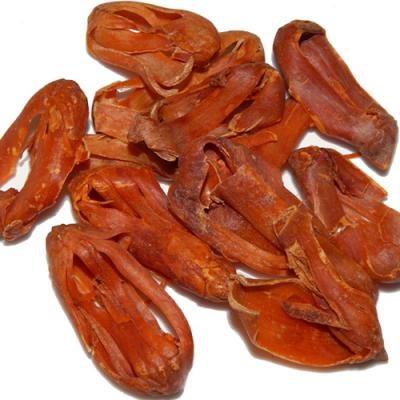
What Is Mace and How Does It Smell?
Mace is one of perfumery's best-kept secrets — a spice material of extraordinary aromatic richness that works mostly behind the scenes, enriching compositions without demanding the spotlight. Derived from the dried aril, the lacy crimson membrane that wraps around the nutmeg seed within the fruit of Myristica fragrans, mace is simultaneously more delicate and more complex than nutmeg itself. Where nutmeg is warm, slightly woody, and densely spicy, mace is lighter and more nuanced — floral in places, resinous in others, carrying a slightly sweet, almost caramelized warmth that integrates beautifully with a wide range of other perfumery materials.
The smell of fresh mace is memorable from the first encounter. There is the familiar warmth of the nutmeg family, certainly, but mace opens with a brighter, more volatile top note that has a distinctly floral quality — something almost reminiscent of ylang-ylang or carnation in its initial impression. This quickly gives way to the spicy, warm heart that connects mace to its close relative nutmeg. The base note of mace is woody and resinous, with a slightly earthy, almost balsamic depth that persists long after the brighter top notes have faded. In perfumery, mace oil and absolute contribute this full spectrum of sensations, making them uniquely versatile spice materials capable of functioning as top, heart, or base note depending on context.
Historical Context: Mace in the Spice Trade and Perfumery
The story of mace in perfumery cannot be separated from its history as one of the world's most coveted spices. The nutmeg tree, Myristica fragrans, is native to the Banda Islands in the Maluku (Moluccas) archipelago of eastern Indonesia, and for centuries this remote island group was the only source of both nutmeg and mace in the world. The spice trade built and destroyed empires: Portuguese, Dutch, and British colonial powers fought bitterly for control of the Banda Islands, recognizing that monopoly over nutmeg and mace meant enormous commercial power.
In medieval and Renaissance Europe, mace and nutmeg were among the most expensive substances available — more valuable by weight than gold at certain periods — and their use in perfumery and medicine was as significant as their culinary application. Aromatic preparations incorporating mace appeared in apothecary recipes for perfumed waters, pomanders, and medicinal preparations across the sixteenth, seventeenth, and eighteenth centuries. When the spice trade gradually democratized these materials through the eighteenth and nineteenth centuries, mace found its way into the emerging fine perfumery industry of France and England, where it was used in oriental and fougere compositions.
In the twentieth century, mace became an important component of classic masculine fragrances and oriental perfumes. The fougere family — built on lavender, coumarin, and oakmoss — often used spice notes including mace to add aromatic complexity. The oriental tradition, which was pioneered in the early twentieth century and reached its commercial peak in the 1970s and 1980s, relied heavily on spice materials as key middle note components, and mace was frequently part of these spice accords alongside cinnamon, cloves, and cardamom.
Extraction and Key Molecules
Mace essential oil is obtained by steam distillation of the dried aril, yielding a pale yellow to light orange liquid with the characteristic warm-spicy-floral smell of the fresh material. Mace absolute, produced by solvent extraction, is a darker, more viscous material with a richer and more complex olfactory profile that includes more of the resinous and balsamic base notes. Both forms are used in fine perfumery, with the choice between them depending on whether the perfumer needs lighter, more volatile spice contribution (oil) or deeper, more tenacious presence (absolute).
The primary aromatic compounds in mace include myristicin, which gives the spice a slightly woody, slightly peppery character, and elemicin, which contributes a warm, spicy-floral note. Safrole — a phenylpropanoid compound also found in sassafras — adds a slightly sweet, spicy warmth. Terpenic compounds including alpha and beta pinene, sabinene, and limonene provide freshness and volatility. The compound eugenol, shared with cloves and contributing a characteristic carnation-like spiciness, is present in significant quantities and is largely responsible for mace's floral-spicy middle character. This complex chemistry explains why mace can function simultaneously as a top note, a heart note spice, and a base note fixative, depending on how it is used.
Famous Fragrances Featuring Mace
Mace is more often found as a secondary supporting note than as a featured star, but its contribution to some of perfumery's great compositions has been substantial. Old Spice, the iconic 1937 fragrance that became a global phenomenon, used a spice accord incorporating mace and nutmeg alongside cinnamon and cloves to create its distinctive warm, powdery, slightly caramelized base. This formulation established a template for warm spice-centered masculines that persists in various forms to this day.
In the contemporary era, mace appears in a number of the most celebrated warm and spicy fragrances. Viktor & Rolf Spicebomb uses a complex spice accord in which mace-adjacent materials contribute to the characteristic warm, almost edible spiciness. Parfums de Marly Layton, one of the most lauded contemporary masculine fragrances, builds a warm, spiced floral accord in which nutmeg and mace-like materials contribute significantly to the composition's characteristic richness. Tom Ford Tobacco Vanille layers mace-adjacent spice with tobacco and vanilla to create its extraordinary gourmand depth.
Note Interactions: Mace's Best Partnerships
Mace is one of the great team players of the spice palette — it integrates easily with an exceptionally wide range of other materials and consistently improves the compositions it joins. In the context of woody fragrances, mace adds exactly the kind of aromatic warmth that prevents wood notes from feeling cold or austere. Paired with sandalwood, it creates a spiced-cream accord of considerable beauty. With cedar, mace adds a warm, resinous richness to what might otherwise be a dry, austere wood note.
In the oriental family, mace is an almost indispensable component of the classic spice accord. Its combination with cinnamon, cloves, and cardamom creates a full-bodied, warm spiciness that is both complex and coherent. The addition of mace to this accord contributes a slightly floral quality that prevents oriental spice blends from becoming too aggressively dark or medicinal. With amber and tonka bean, mace is softened and sweetened, creating a warm, cozy quality that is particularly well suited to evening fragrances and cold-weather wear.
On the floral side, mace's eugenol content makes it a natural partner for carnation-type florals and for rose, both of which share eugenol as part of their aromatic profile. The combination of mace and rose is particularly sophisticated — the spice deepens and complicates the flower while the flower brightens and softens the spice, creating an accord that smells simultaneously ancient and contemporary. Those interested in this rose-spice territory will find our guide to rose in perfumery essential reading.
Wardrobe Context: When to Wear Mace Fragrances
Fragrances in which mace plays a significant role tend to be warm-weather allies of the cooler seasons. Their spicy richness is at its most comfortable in autumn and winter, when the note's warming qualities resonate with the desire for olfactory comfort and coziness. They work particularly well for evening wear and for occasions that call for a certain warmth and sophistication — dinner parties, evenings out, and any context where you want to make a quietly confident statement rather than an aggressive one.
Mace-accented fragrances within the broader oriental fragrance family represent some of the most rewarding long-term investments in a fragrance wardrobe — these are compositions that reveal new facets over hours of wear and that seem to change with the warmth of skin and the evolution of the day. They are fragrances that reward patience, and that tend to smell increasingly beautiful as the hours pass and the more challenging top notes give way to the deeper, warmer, more harmonious heart and base.