

Nutmeg in Perfumery: The Warm Spice That Anchors Autumn and Evening Fragrance
Nutmeg is a warm spice that adds depth and dimension to perfume, a note every fragrance lover should learn to recognise on skin.
By Julia Moretti 9 min read
The warm spice that bridges autumn and evening perfumery
Nutmeg is one of perfumery’s great quiet workhorses. Warm, slightly sweet, faintly woody, with a softly aromatic-spicy character that immediately reads as comfort and warmth, nutmeg appears in dozens of contemporary fragrance compositions where perfumers want spice without heat. Where cinnamon delivers fiery aromatic edge and clove brings sharp dental warmth, nutmeg contributes something rounder and more approachable: the smell of a winter kitchen, of mulled wine, of grandmothers’ spice cabinets, of comfort food and quiet ritual.
This is the guide to nutmeg as a perfumery material. What nutmeg actually is, the chemistry that gives it aromatic distinctness, the cultural history of nutmeg in fine fragrance, the famous fragrances that put nutmeg to work, the Fragrenza compositions that use the warm-spice register, and how to think about nutmeg in your own wardrobe.
What nutmeg is in perfumery
Nutmeg in fine fragrance comes from the seed of Myristica fragrans, a tropical evergreen tree native to the Banda Islands of Indonesia. The tree produces a single round fruit that splits when ripe, revealing a hard brown seed (nutmeg) wrapped in a bright crimson, lacy aril that becomes the second perfumery spice from this fruit: mace. Both materials are used in perfumery, with nutmeg being the heavier, sweeter, more aromatic of the two; mace is sharper, lighter, and less oily.
Nutmeg essential oil is produced by steam distillation of the dried seed. The yield is roughly 5 to 15 percent depending on origin and processing. Two main commercial origins matter for fine fragrance: East Indian nutmeg (Indonesian, primarily from Banda) and West Indian nutmeg (Grenada). The two have notably different aromatic profiles — East Indian is generally warmer, more aromatic, slightly more medicinal; West Indian is lighter, sweeter, more refined. Most fine fragrances specify East Indian for serious aromatic depth.
The aromatic profile of nutmeg essential oil is built around several molecular families. Sabinene contributes the fresh, slightly piney top character. Myristicin (the molecule that gives the spice its name) contributes the warm, slightly narcotic, faintly medicinal core character. Alpha-pinene and beta-pinene add green-resinous facets. Limonene contributes faint citrus brightness. The combination produces the distinctive nutmeg character that fine perfumery has used for centuries.
What nutmeg actually smells like
Nutmeg in fine fragrance has a warm, slightly sweet, mildly aromatic-spicy character with a faint woody undertone and a quiet medicinal edge. Compared to other warm spices, nutmeg is rounder than cinnamon and clove, less sharp than cardamom, less sweet than vanilla, more aromatic than allspice. The note carries the smell of winter baking and mulled wine without the sugar-bright sweetness those associations might suggest in food.
The wear on skin reads warm, comforting, slightly aromatic, with a soft spicy-woody character that distinguishes nutmeg-direction compositions from purer floral or citrus perfumery. Nutmeg is rarely the headline note on a fragrance bottle, but where you see “warm spice,” “mulled,” or autumn-and-winter-themed gourmand structures, nutmeg-direction materials are usually contributing structurally to the wear.
Cultural and compositional history
Nutmeg has one of the longest perfumery histories of any spice. The material was prized in Roman antiquity for incense and aromatic preparations, became a major item of medieval European trade (the Banda Islands were the only commercial source until the late eighteenth century), and entered fine perfumery as soon as steam distillation made the essential oil reliably available.
The classical fougere structures of late nineteenth century French perfumery used nutmeg alongside lavender, oakmoss, and coumarin to deliver warm-aromatic depth. Houbigant Fougere Royale (1882) included nutmeg-direction warmth at the heart. The mid-twentieth-century oriental and chypre families used nutmeg structurally in countless compositions, including Caron L’Heure de Nuit and Givenchy’s line of orientals from the 1960s and 1970s.
The contemporary use of nutmeg leans toward two registers. Aromatic-spicy masculine compositions (Old Spice and its descendants, modern fougeres, the spicy-oriental men’s fragrances of the 2000s and 2010s) use nutmeg structurally as a warm-spice element. Gourmand-and-mulled compositions use nutmeg in the chai-tea, hot-toddy, mulled-wine register that has become a contemporary winter-perfumery staple. The note is now a structural staple of feminine, masculine, and unisex fine perfumery, particularly in compositions designed for cooler weather.
Famous nutmeg-direction fragrances
Several compositions deserve study because they show what nutmeg can do at the structural center. Houbigant Fougere Royale (1882) used nutmeg-direction warmth in one of the founding fougere compositions. Old Spice (1937) placed nutmeg, cinnamon, and orange in a barbershop-aromatic structure that has anchored masculine perfumery for nearly a century. Caron L’Heure de Nuit and several Caron orientals used nutmeg in the warm-spice base register.
In the contemporary niche space, several Diptyque, Le Labo, and Maison Francis Kurkdjian compositions use nutmeg as a structural element of warm-aromatic blends. The chai-and-coffee gourmand compositions of the 2010s onward (various Lush, Nest, and indie perfumers) lean heavily on nutmeg-and-cardamom-and-cinnamon accords. Tom Ford Cafe Rose, several Atelier Cologne fall releases, and many contemporary masculine compositions place nutmeg at the heart or base for warm-spice depth.
Nutmeg direction in the Fragrenza line
Several Fragrenza compositions place nutmeg at the structural center of the wear.
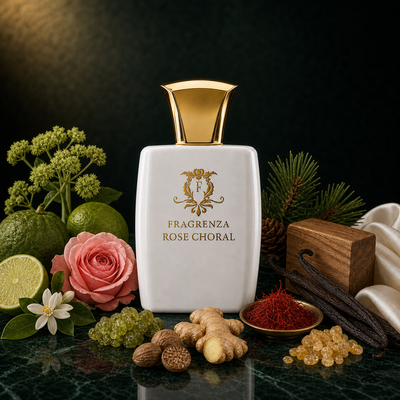
is the most directly relevant — the opening explicitly combines saffron, cinnamon, incense, and nutmeg, with pear, apple, and oud building a warm-spice oriental that places nutmeg right at the front of the wear. places nutmeg in the heart alongside ginger, saffron, and galbanum, supported by a base of sandalwood, vanilla, frankincense, and musk — the more refined niche-niche register where nutmeg works beautifully with rose.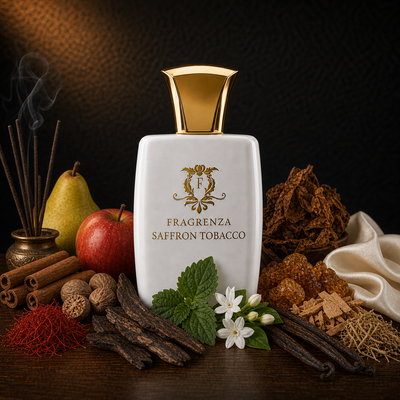
In the broader warm-spice direction,
uses cinnamon, clove, and cardamom in a peach-rose-sandalwood-tonka structure where nutmeg-direction warmth rounds out the spice profile. And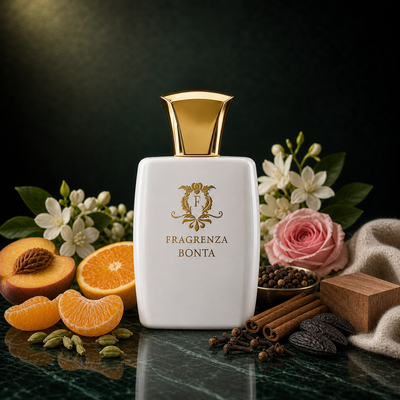

For more on related warm-spice perfumery, see our entries on cinnamon, cardamom, and clove — each part of the broader warm-aromatic vocabulary modern perfumery draws on.
How nutmeg interacts with other notes
Nutmeg is a structurally generous material. Its warm, slightly sweet, faintly woody character bridges across many compositional patterns.
With cinnamon, clove, and cardamom, nutmeg builds the classical mulled-spice accord that has anchored fougere and oriental perfumery for over a century. The combination is the structural backbone of Old Spice, classical fougeres, and most warm-spice masculine compositions.
With vanilla and gourmand bases, nutmeg creates the chai-tea-and-hot-toddy register that defines a meaningful share of contemporary winter perfumery. The combination is warm, comforting, and seasonally specific.
With rose, nutmeg adds warm-spice depth to a classical floral register. The combination is the territory of Tom Ford Cafe Rose, several niche rose-and-spice works, and contemporary spicy-floral compositions where nutmeg keeps the rose from feeling too classically powdery.
With tobacco and incense, nutmeg amplifies the dry-aromatic-spicy character of tobacco-direction compositions. Several niche tobacco-and-spice works use nutmeg structurally to bridge tobacco’s sweet-leafy character with the deeper aromatic spices.
With amber and resinous bases, nutmeg deepens warm-oriental compositions. The combination of nutmeg, amber, and woods reads as classical oriental at its most enduring.
With citrus and aromatic herbs, nutmeg contributes warm-spice depth to fougere structures. Lavender, bergamot, oakmoss, and nutmeg are the classical fougere materials that anchor a meaningful share of masculine perfumery.
Nutmeg in the modern wardrobe
Nutmeg-direction compositions wear especially well in autumn and winter, where the warm aromatic character settles comfortably into cooler air and the heavier base materials project at full depth. The category is the natural habitat of evening wear, holiday occasions, and cool-weather environments where heavier perfumery has space to breathe. The combination of warmth and aromatic complexity makes nutmeg a particularly seasonal note — spring and summer wear is more constrained than for many other materials.
The note carries no inherent gender coding. Nutmeg-direction materials anchor classical fougere masculine perfumery, classical oriental feminine, and contemporary unisex warm-spice compositions equally well. The structural function of the note is the same; only the surrounding materials shift the perceived gender of the composition.
Application is conventional: pulse points, light spray, allow the heart and base to develop. Nutmeg-direction notes generally express most clearly in the heart and base of a composition rather than the top — the volatile pinenes contribute a brief opening lift, but the warmer myristicin character emerges as the wear develops, becoming most prominent thirty to ninety minutes into the wear and persisting through the dry-down.
Frequently asked questions
What does nutmeg smell like in perfume?
Warm, slightly sweet, mildly aromatic-spicy, with a faint woody undertone and a quiet medicinal edge. Rounder than cinnamon and clove, less sharp than cardamom, more aromatic than allspice. The character carries the smell of winter baking and mulled wine without the sugar-bright sweetness those food associations might suggest.
What is the difference between nutmeg and mace in perfumery?
Same fruit, different parts. Nutmeg is the seed at the center of the fruit; mace is the lacy crimson aril that wraps the seed. Mace yields a sharper, lighter, less oily essential oil with brighter aromatic facets. Nutmeg is heavier, warmer, sweeter. Many compositions use both materials together to deliver a fuller spice character.
Is nutmeg a natural perfumery material?
Yes — nutmeg essential oil is produced by steam distillation of the dried seed and is commercially available at multiple grades. East Indian nutmeg (Indonesian) and West Indian nutmeg (Grenada) have meaningfully different aromatic profiles. Most fine fragrances use natural nutmeg essential oil, sometimes alongside synthetic captives that amplify specific facets.
Is nutmeg safe in perfume?
Yes, at the concentrations used in fine fragrance. Nutmeg essential oil contains myristicin, a compound that has psychoactive effects at very high oral doses but poses no concern at the trace concentrations used in perfumery. The IFRA (International Fragrance Association) limits on nutmeg use in fine fragrance keep all formulations well within safe parameters.
Is nutmeg a feminine note?
Conventionally coded toward warm-aromatic masculine perfumery (Old Spice tradition, classical fougeres) and warm-oriental feminine perfumery, with a long contemporary use in unisex compositions. The note has no inherent gender coding. Modern niche perfumery treats nutmeg as a fully gender-neutral material useful in any warm-spice register.
What season is nutmeg best for?
Autumn and winter, by a wide margin. The warm, comforting, slightly aromatic character of nutmeg-direction compositions is at home in cool air and cool environments. Spring is possible for lighter nutmeg-and-citrus structures, but summer wear is the most constrained season for the note — warm-spice perfumery generally feels out of register against bright sunshine and high heat.
What perfumes use nutmeg well?
Houbigant Fougere Royale (1882) and Old Spice (1937) are early canonical references. Contemporary niche use is broad: various Diptyque, Le Labo, and MFK compositions, the chai-and-coffee gourmand wave of the 2010s, Tom Ford Cafe Rose, and many masculine and unisex warm-spice compositions across the spectrum.
The structural importance of nutmeg
Nutmeg has been an aromatic material for as long as fine perfumery has existed in the West. The note’s combination of warm sweetness, gentle aromatic edge, and quiet medicinal depth makes it useful across categories, decades, and gender registers. Whether you are wearing a classical fougere, a mulled-spice gourmand, a chai-and-coffee winter composition, or a contemporary spicy-floral, nutmeg is probably contributing more to the wear than the front-of-bottle marketing language admits. A century of fine perfumery has built around it.