

Aqueous Notes in Perfumery: The Cool Water Register from Lotus to Dewy Florals
Aqueous is one of perfumery's most beloved floral notes, a note every fragrance lover should learn to recognise on skin.
By Julia Moretti 9 min read
The water register of contemporary perfumery
Aqueous notes are perfumery’s most distinctly modern aromatic family. Cool, transparent, slightly clean, with a freshness that smells like still water on stone and dewy florals at dawn rather than the salty-ocean character of the marine register, aqueous notes did not exist in fine fragrance until late twentieth-century synthetic chemistry made them possible. Where marine notes evoke the open sea, aqueous notes evoke the lotus pond, the dewy garden at first light, the cool transparency of a glacial mountain stream. The category overlaps with the marine register but sits in a distinct space — cleaner, lighter, more floral-adjacent.
This is the guide to aqueous notes as a perfumery category. The synthetic materials that built the family, the distinction between aqueous and marine perfumery, the cultural moment that brought the category into the mainstream, the famous fragrances that put aqueous notes to work, the Fragrenza compositions that use the water register, and how to think about aqueous perfumery in your own wardrobe.
What aqueous notes are in perfumery
Aqueous notes are essentially synthetic. The natural materials that hint at watery character — lotus absolute, water-lily extracts, cucumber notes — deliver only fragments of the full aqueous register. The cool, transparent, dewy-floral character that defines modern aqueous perfumery comes from a small set of synthetic molecules, often shared with the marine register but used in different proportions and combinations.
Floralozone (developed by IFF) is one of the foundational aqueous molecules. The material smells fresh, slightly ozonic, transparent, with a cool floral-water character that distinguishes it from the saltier Calone. Floralozone anchors a meaningful share of contemporary aqueous and ozonic perfumery.
Helional contributes a soft marine-floral-aqueous facet, lighter and more diffusive than Calone. Helional appears in many contemporary aqueous compositions where the perfumer wants water character without the full Calone weight.
Calone (methylbenzodioxepinone) overlaps with marine perfumery but at lower concentrations delivers a cleaner, more aqueous-floral character. Many compositions use Calone at trace levels to bring the aqueous facet without the full 1990s aquatic signature.
Dewy-floral and ozonic captives (various aldehydes, isoamyl salicylate at trace levels, hydroxycitronellal) contribute the dewy-petal character that distinguishes serious aqueous compositions from purely synthetic-water structures.
Water lily, lotus, cucumber, and melon-direction materials are reconstructed accords that deliver specific aqueous-floral facets. Water lily reads as cool floral-water; lotus reads as creamy-aqueous-floral; cucumber reads as crisp-cool-vegetal-water; melon reads as juicy-water-fruity.
What aqueous notes actually smell like
Aqueous notes in fine fragrance read as the smell of fresh water transformed into perfumery aromatic profile. Cool without being cold, fresh without being sharp, transparent without being thin, with a slightly floral or slightly vegetal character depending on the formulation. The aromatic profile sits between the cool-marine register and the soft-floral register, distinct from both.
The wear on skin reads cool, fresh, slightly clean-laundry, with an air of openness and spaciousness. Aqueous compositions tend to project lightly and stay close to the skin. They are also among the most volatile structures in fine perfumery — the aqueous molecules dissipate relatively quickly, and most aqueous fragrances rely on musk, ambergris, and woody base materials to extend the wear past the first hour.
The distinction between aqueous and marine notes is one of register rather than fundamental difference. Marine perfumery emphasizes the salty-ozonic-ocean facet; aqueous perfumery emphasizes the cool-transparent-floral-water facet. Many compositions use both registers together, with proportions shifted to favor one or the other.
Cultural and compositional history
Aqueous perfumery is barely older than the millennium. The category emerged with the same late-1980s synthetic chemistry that built marine perfumery, and the two registers developed in parallel. Issey Miyake L’Eau d’Issey (1992, Jacques Cavallier) is sometimes credited as the founding aqueous-floral composition because it used Calone alongside lotus, peony, and clean musks to deliver a register that read more as cool-floral-water than salty-marine.
The 2000s saw aqueous perfumery extend significantly. Comme des Garcons Series 8 Energy C: Lily of the Valley used aqueous-floral character for a niche minimal composition. Hermes Un Jardin sur le Nil used aqueous-green-fruit character in a Mediterranean-luxury structure. Prada Infusion d’Iris and various contemporary feminine compositions used aqueous facets to lift powdery-floral structures into modern transparency.
The contemporary moment has refined aqueous perfumery into a structural element used selectively rather than a dominant aesthetic register. Niche perfumers (Maison Francis Kurkdjian, Le Labo, Comme des Garcons, Diptyque) use aqueous captives alongside florals, light woods, and clean musks to deliver freshness without committing to full aquatic identity.
Famous aqueous fragrances
Several compositions deserve study because they show what aqueous notes can do at the structural center. Issey Miyake L’Eau d’Issey (1992) is the canonical aqueous-floral feminine and one of the founding works of modern aqueous perfumery. Davidoff Cool Water (1988) overlaps with marine perfumery but uses aqueous facets in its lavender-and-water structure.
In the contemporary niche space, Hermes Un Jardin sur le Nil places aqueous-fruit character at the heart of a Mediterranean structure. Prada Infusion d’Iris uses aqueous-iris character in a contemporary luxury structure. Comme des Garcons Series 8 Energy C: Lily of the Valley uses aqueous-floral material at the structural center. Various Maison Francis Kurkdjian aqueous-floral compositions have refined the category in recent years.
Aqueous notes in the Fragrenza line
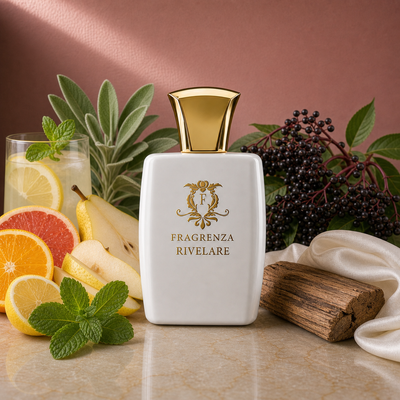
Several Fragrenza compositions place aqueous character at the structural center of the wear.
is the most directly relevant — lotus, orchid, and aquatic mystery materials sit in the heart alongside ylang ylang and jasmine, supported by a base of patchouli, sandalwood, vetiver, vanilla, amber, musk, and dark chocolate. The aqueous-floral-with-depth structure is the contemporary luxury aqueous register at full development. uses orange blossom and lemon in the opening alongside rose, geranium, rosemary, and lavender in the heart, with a base of lychee, tonka, sandalwood, vetiver, and musk — the cool-clean-skin register adjacent to aqueous perfumery.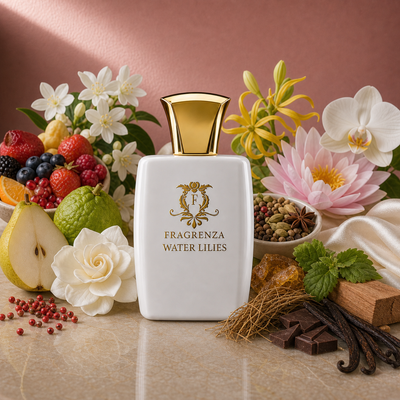
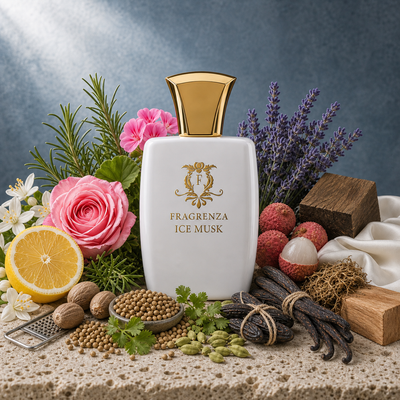
In the salt-and-water direction,

For more on related fresh and water-direction perfumery, see our entries on marine notes, water lily, and lily of the valley — each part of the broader fresh-clean vocabulary modern perfumery draws on.
How aqueous notes interact with other materials
Aqueous notes are compositionally selective. Their cool, fresh, slightly transparent character pairs well with some materials and resists others.
With light florals (especially lotus, water lily, lily of the valley, peony, magnolia), aqueous notes create the floral-aqueous register that L’Eau d’Issey defined. The combination is the structural template of modern feminine aqueous perfumery.
With citrus (especially bergamot, mandarin, grapefruit), aqueous notes amplify the bright-fresh character into the modern fresh-citrus-aqueous opening. Most contemporary fresh compositions use this pattern.
With clean musks, aqueous notes extend into the contemporary fresh-musk register that has anchored unisex perfumery for two decades. The aqueous character provides cool freshness; the clean musk provides warm-skin presence.
With iris and powdery materials, aqueous notes lift powdery-floral structures into contemporary transparency. Prada Infusion d’Iris demonstrates the pattern at its most refined.
With violet leaf and green materials, aqueous notes create the dewy-garden register that several contemporary niche compositions have explored. The combination reads as cool-spring-morning.
Aqueous notes resist heavy florals, gourmand sweetness, and warm-oriental bases. The cool-fresh character of the aqueous register fights with the dense character of these other categories.
Aqueous notes in the modern wardrobe
Aqueous compositions wear especially well in spring and summer, where the cool-fresh character settles comfortably into warm air. The category extends into autumn for the lighter aqueous-floral compositions but generally feels out of register in winter, where heavier perfumery has more presence. Aqueous notes are especially associated with daytime wear, work environments, and warm-weather casual contexts.
Aqueous notes carry no inherent gender coding. L’Eau d’Issey established strong feminine associations through its commercial success, but contemporary unisex aqueous compositions are common, and many masculine fragrances use aqueous character as a structural element. The note family has no inherent gender.
Application is conventional but generous: pulse points, light spray, consider applying to clothing in addition to skin because aqueous compositions tend to project less aggressively from skin alone. The volatile aqueous molecules dissipate relatively quickly — expect strong projection in the first thirty to forty-five minutes, then a gradual settling into the heart and base over the following hours.
Frequently asked questions
What does an aqueous note smell like in perfume?
Cool, fresh, slightly transparent, faintly floral or vegetal depending on the formulation. Aqueous notes smell of still water on stone, dewy florals at dawn, and the cool transparency of water rather than the salty-ocean character of marine perfumery. The category sits between marine and floral perfumery and is distinct from both.
What is the difference between aqueous and marine notes?
Register rather than fundamental difference. Marine perfumery emphasizes the salty-ozonic-ocean facet; aqueous perfumery emphasizes the cool-transparent-floral-water facet. Many compositions use both registers together, with proportions shifted to favor one or the other. The molecules that build the two categories overlap considerably.
Are aqueous notes natural?
Almost entirely synthetic. The natural materials that hint at aqueous character (lotus absolute, water-lily extracts, cucumber notes) deliver only fragments of the full aqueous register. The cool, transparent, dewy-floral character that defines modern aqueous perfumery comes from synthetic molecules including Floralozone, Helional, and Calone at low concentrations.
Are aqueous fragrances feminine?
L’Eau d’Issey established strong feminine associations through its commercial success, but the note family has no inherent gender coding. Contemporary unisex aqueous compositions are common, and many masculine fragrances use aqueous character as a structural element. The category is functionally gender-neutral.
What season are aqueous fragrances best for?
Spring and summer, by a wide margin. The cool, fresh, transparent character of aqueous perfumery is at home in warm weather where heavier compositions can feel oppressive. Aqueous compositions extend into autumn through the lighter aqueous-floral register but generally feel out of register in winter.
What perfumes use aqueous notes well?
Issey Miyake L’Eau d’Issey (1992) is the canonical aqueous-floral reference. Hermes Un Jardin sur le Nil places aqueous-fruit character at the heart. Prada Infusion d’Iris uses aqueous-iris character in a contemporary luxury structure. Many other compositions use aqueous materials structurally without naming them on the front of the bottle.
Do aqueous fragrances last well?
Generally less well than warmer perfumery families. The volatile aqueous molecules dissipate relatively quickly, and most aqueous compositions rely on musk, ambergris, and woody base materials to extend the wear past the first hour. Layering with body lotion or applying generously to clothing extends the wear of aqueous compositions significantly.
The structural place of aqueous notes
Aqueous notes brought the cool, transparent, dewy-water register into fine perfumery in the late 1980s and have anchored a meaningful share of contemporary fresh fragrance ever since. The category’s combination of cool freshness, transparent character, and dewy-floral or dewy-vegetal facets makes it useful for compositions designed to read clean, modern, and seasonally specific. Whether you are wearing a 1990s aqueous classic, a contemporary lotus-and-iris niche composition, a fresh-floral feminine, or a clean-musk unisex structure, the aqueous molecules are doing structural work that pre-1980s perfumery simply could not deliver. The category is now as central to fine fragrance as marine perfumery, and the two together define the contemporary fresh register.