

Best Parfums de Marly Oajan Dupes 2026: The Five Honey-Cinnamon Picks
At around $345 for 125ml, Oajan is positioned at PdM's standard niche price point, accessible by ultra-niche standards but well above mass-market.
By Julia MorettiFragrenza makes several of the alternatives featured in our guides — here’s how we test.
9 min read
The Short Answer
Best Parfums de Marly Oajan Dupes 2026: The Five Honey-Cinnamon Picks — six weeks of side-by-side wear. Parfums de Marly Oajan is one of the more distinctive entries in the Royal Essence line — a warm, honeyed, spice-driven oriental that opens with frankincense, orange, and coriander, evolves through a heart of honey, cinnamon, orchid, rose, and gaiac wood, and lands on a complex base of patchouli, myrrh, oud, cedar, oakmoss, ambergris, and immortelle.
Parfums de Marly Oajan is one of the more distinctive entries in the Royal Essence line — a warm, honeyed, spice-driven oriental that opens with frankincense, orange, and coriander, evolves through a heart of honey, cinnamon, orchid, rose, and gaiac wood, and lands on a complex base of patchouli, myrrh, oud, cedar, oakmoss, ambergris, and immortelle. The honey is the structural element that distinguishes Oajan from its niche peers — most niche orientals build around oud, amber, or labdanum; Oajan builds around honey and uses everything else to amplify it. The result is rich, golden, and unmistakably PdM in its sense of opulence without aggression.
At around $345 for 125ml, Oajan is positioned at PdM's standard niche price point — accessible by ultra-niche standards but well above mass-market. The five Fragrenza picks below cover the honey-spiced-oriental register at $9.99, with each pick approaching the same architectural family from a slightly different angle.
The Royal Essence Line and Where Oajan Fits
Parfums de Marly's Royal Essence sub-line — which also includes Habdan, Akaster, and Pegasus Exclusif — is the brand's most ambitious tier, where the perfumers use higher concentrations and rarer materials than in the standard Parfums de Marly collection. Oajan launched in 2018 under perfumer Hamid Merati-Kashani and was positioned specifically to add a honey-oriented oriental to the line, sitting alongside Pegasus Exclusif's woody-floral richness and Akaster's smoky-leather character. Where most modern niche houses chase oud and saffron variations, PdM made a deliberate bet on honey as a less-saturated structural anchor.
The bet paid off commercially — Oajan has remained one of PdM's better-selling Royal Essence compositions since launch — and it paid off compositionally because the honey is treated with real respect. The phenylacetic acid edge that gives natural honey its slight animalic dimension is preserved rather than scrubbed out, which is why Oajan reads as luxurious rather than candy-sweet. For Fragrenza to convince in this register, the dupe needs to do the same.
What Makes Oajan Distinctive
Three structural elements define Oajan's signature:
- Honey as the heart anchor — not as a top-note flourish but as the gravitational center of the composition.
- Cinnamon as the spice frame — warm but not aggressive, providing the bridge between the citrus opening and the resinous base.
- Layered base materials — patchouli + oakmoss + myrrh + oud + cedar + ambergris + immortelle creates depth and longevity that's hard to replicate without comparable material budgets.
The five picks below each capture one or two of these elements at different fidelity levels.
1. Ojen — The Direct Interpretation
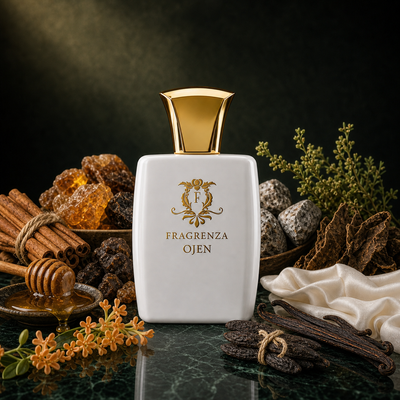
Ojen is built specifically as a structural cousin to Oajan, preserving the architecture: warm citrus and resinous opening, honey-cinnamon-spiced heart, layered oriental base with patchouli, oud, cedar, oakmoss, and ambergris. The honey is genuinely the gravitational center, the cinnamon frames it warmly, and the base depth is real rather than synthetic. If you're looking for Oajan's exact emotional register at the most accessible price, Ojen is the natural starting point.
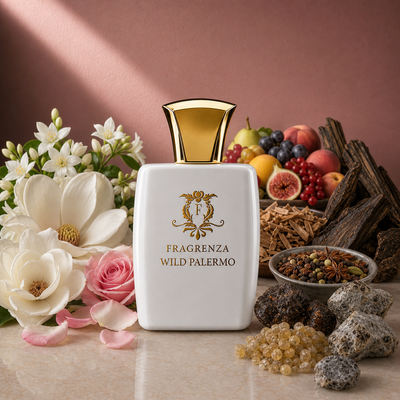
2. Wild Palermo — The Animalic-Honey Variant
Wild Palermo sits adjacent to Oajan but pushes the animalic dimension harder. Where Oajan stays in the honey-spice-resin register, Wild Palermo brings in honeyed labdanum and ambergris-rich base notes that read as more skin-warm and slightly carnal. If Oajan reads as "regal honey," Wild Palermo reads as "human honey" — same family, more intimate variant. Good pick for those who love Oajan's honey but want it warmer and closer to the skin.
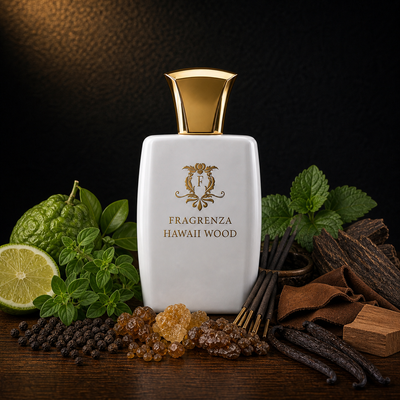
3. Hawaii Wood — The Smoky-Honey-Incense Variant
Hawaii Wood takes the honey-resinous direction toward incense and smoky woods. Bergamot, oregano, and pepper open, then honey + labdanum + opoponax + olibanum and oud + patchouli + sandalwood + vanilla deepen the dry-down. Compared to Oajan's golden-floral character, Hawaii Wood is darker and more contemplative — the same honey-resin family in evening register. Pairs well with cooler-weather and evening occasions.
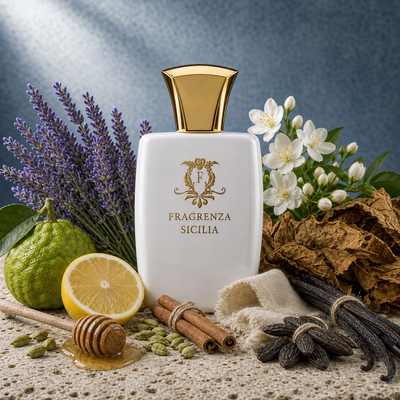
4. Sicilia — The Mediterranean Honey-Cinnamon
Sicilia approaches the honey-cinnamon axis from a brighter, Mediterranean angle. Lavender, bergamot, and lemon open, with honey + cinnamon + cashmeran in the heart and tobacco + tonka + vanilla in the base. The cinnamon is more prominent and warmer than Oajan's, and the citrus opening is lighter and more airy. For those who love Oajan's spiced warmth but want something that reads warmer-weather and daytime-appropriate, Sicilia is the natural pick.
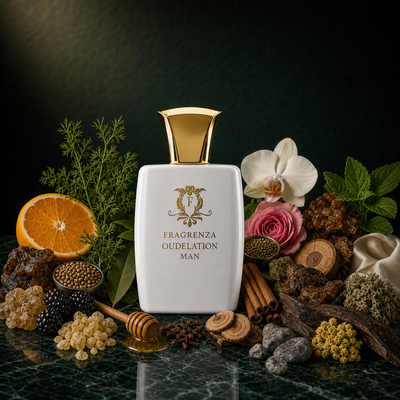
5. Oudelation — The Honey-Orchid-Regal Variant
Oudelation pushes the honey theme into more deeply oriental territory — labdanum, frankincense, coriander, and orange open onto honey + cinnamon + orchid + rose + gaiac, settling on patchouli + myrrh + oud + cedar + oakmoss + ambergris + immortelle. The note structure overlaps significantly with Oajan but the orchid + rose floral dimension adds a feminine-leaning lift that Oajan keeps more masculine-regal. Strong choice for those who love Oajan's complexity and want a more openly floral variation.
How Oajan Sits in the Niche Honey Landscape
Worth situating Oajan and its Fragrenza cousins within the broader niche-honey universe. Jean Desprez Bal à Versailles (1962) is the classical ancestor — built on a much heavier patchouli-musk-honey base that reads as historical and animalic, more 1960s than 2025. Serge Lutens Miel de Bois (2005) pushes the honey to genuinely confrontational levels and divides wearers more sharply than almost any other fine fragrance. Guerlain L'Heure Bleue (1912) uses honey as one element among many in its powdery-floral oriental structure rather than as the heart anchor. Xerjoff Naxos (2015) takes honey in a tobacco-cinnamon direction.
What distinguishes Oajan from these other honey-led compositions is the orchid-rose lift in the heart and the regal-resinous base that reads as openly luxurious rather than animalic or rustic. The Fragrenza picks each catch different parts of this lineage: Ojen mirrors Oajan's regal-honey territory, Wild Palermo nods to Bal à Versailles, Hawaii Wood toward smokier honey-incense traditions, Sicilia toward Naxos-style honey-tobacco, and Oudelation back to Oajan's orchid-rose-resin complexity.
How to Choose Between the Five
If you want Oajan's signature character at its most faithful: Ojen is the structural cousin. If you want warmer/more intimate: Wild Palermo. If you want darker/evening-appropriate: Hawaii Wood. If you want brighter/Mediterranean: Sicilia. If you want a more floral-feminine reading of the same family: Oudelation.
How to Wear and Layer
Oajan and its family wear best in cool weather and evening contexts where the warm spices and honey have room to develop on skin. Two-pump application from 8-10 inches is plenty — these compositions have real projection. For office or daytime, half-strength or pair with a clean musk underlayer to mute the honey without losing the spice frame. For evening or cold weather, layer fully and let the base develop.
Frequently Asked Questions
Is Ojen a faithful Parfums de Marly Oajan dupe?
Ojen is structurally faithful to Oajan's honey-cinnamon-spiced-resin architecture but uses different specific materials and proportions. The emotional register is the same; the molecular composition isn't identical. For most wearers, the difference is invisible. For trained noses, it reads as the same family without being the same fragrance.
Why is Oajan so expensive?
Parfums de Marly Royal Essence pricing reflects three factors: niche distribution costs, premium material sourcing, and brand-positioning premium. The price isn't all material — much of it is brand and channel — which is why structurally faithful interpretations can sell for a fraction.
How long does Ojen last?
8-10 hours of clear wear, 12+ hours of skin-close residue. Projection is strong for the first 3-4 hours, then settles into intimate but detectable. Consistent with the source's longevity profile.
Is Oajan unisex?
Oajan and its family lean masculine-regal by default — the honey-spice-resin axis is traditionally read that way — but all five picks here work well on any wearer. The pattern is "occasion and weather" more than "gender."
Can I layer Ojen with other Fragrenza fragrances?
Yes — Ojen layers cleanly with a clean musk underlayer (mutes the honey, extends the wear), saffron-tobacco for amplified spice frame, or any oud pick for a richer base. Avoid layering with citrus fragrances; they fight the honey.
How Oajan Fits in the Parfums de Marly Royal Essence Tier
Parfums de Marly's lineup is split into two tiers: the standard collection and the Royal Essence collection, which is positioned as the more exclusive, higher-concentration sub-line. Oajan sits in Royal Essence alongside Habdan, Akaster, and Sedbury — all compositions that lean into more distinctive note combinations than the brand's more commercial Layton, Pegasus, and Delina entries get. Royal Essence is priced at a premium even within PdM's already-elevated tier, with 125ml bottles typically retailing at $345 and up. The collection is meant to be reserved-occasion territory rather than daily-driver, though the actual wear profiles support both.
Among Royal Essence entries, Oajan is the honey-led one. Habdan emphasises tobacco; Akaster pushes toward oud; Sedbury is the leather statement; Oajan's distinguishing material is honey at structural concentration. If the broader Royal Essence collection appeals but Oajan specifically interests you, the Fragrenza dupe Ojen lets you live with the honey-cinnamon-resinous architecture for daily wear without the Royal Essence commitment.
On Honey as a Structural Material
Most compositions that use honey treat it as a sweetness multiplier added on top of whatever else they're trying to amplify. Oajan inverts that — honey is the structural anchor, with the cinnamon-orange-frankincense materials arranged around it. This requires specific quality of honey absolute, which is one of the more expensive natural materials in fine perfumery because it's harvested from beeswax washings and produced via solvent extraction from honey, with yield that's small relative to the labour and source quantity.
The chemistry of honey absolute is dominated by phenylacetic acid and methyl phenylacetate, which together give honey its slightly animalic, urinous undertone in raw form. Cheap honey fragrances strip out this animalic dimension and end up reading as sweet candle-shop honey rather than actual honey. Oajan preserves the animalic edge, which is why the composition reads as serious rather than gourmand. Ojen's honey accord uses a mix of natural honey absolute and high-quality synthetic substitutes to achieve a similar structural role at the Fragrenza price point.
Cross-References for Honey-Lovers
If Oajan's honey-led approach resonates, two earlier references are worth knowing: Jean Desprez Bal à Versailles (1962), the classical heavy-honey-musk reference; and Serge Lutens Miel de Bois (2005), the contemporary niche statement that pushed honey to genuinely polarising levels. Bal à Versailles is more historical-animalic in character; Miel de Bois is more woody-honey-confrontational. Oajan sits between them — refined, contemporary, less daring than Miel de Bois but more interesting than Bal à Versailles. Ojen inherits this middle position.
Summary
Parfums de Marly Oajan remains one of the more distinctive entries in the Royal Essence line — a deliberate bet on honey-led oriental architecture rather than the oud-and-saffron route most niche houses prefer. Ojen is the closest Fragrenza interpretation, preserving the honey-cinnamon-resinous structure that gives Oajan its signature. The four supporting picks each catch a different angle of the same honey-spiced family: Wild Palermo for animalic warmth, Hawaii Wood for smoky-incense depth, Sicilia for Mediterranean brightness, and Oudelation for the orchid-rose-resin complexity Oajan also explores. Whether Oajan itself is worth its Royal Essence pricing or whether the Fragrenza alternatives cover enough of the same emotional space is a question best answered on skin — sample two or three picks across different wear contexts before committing.