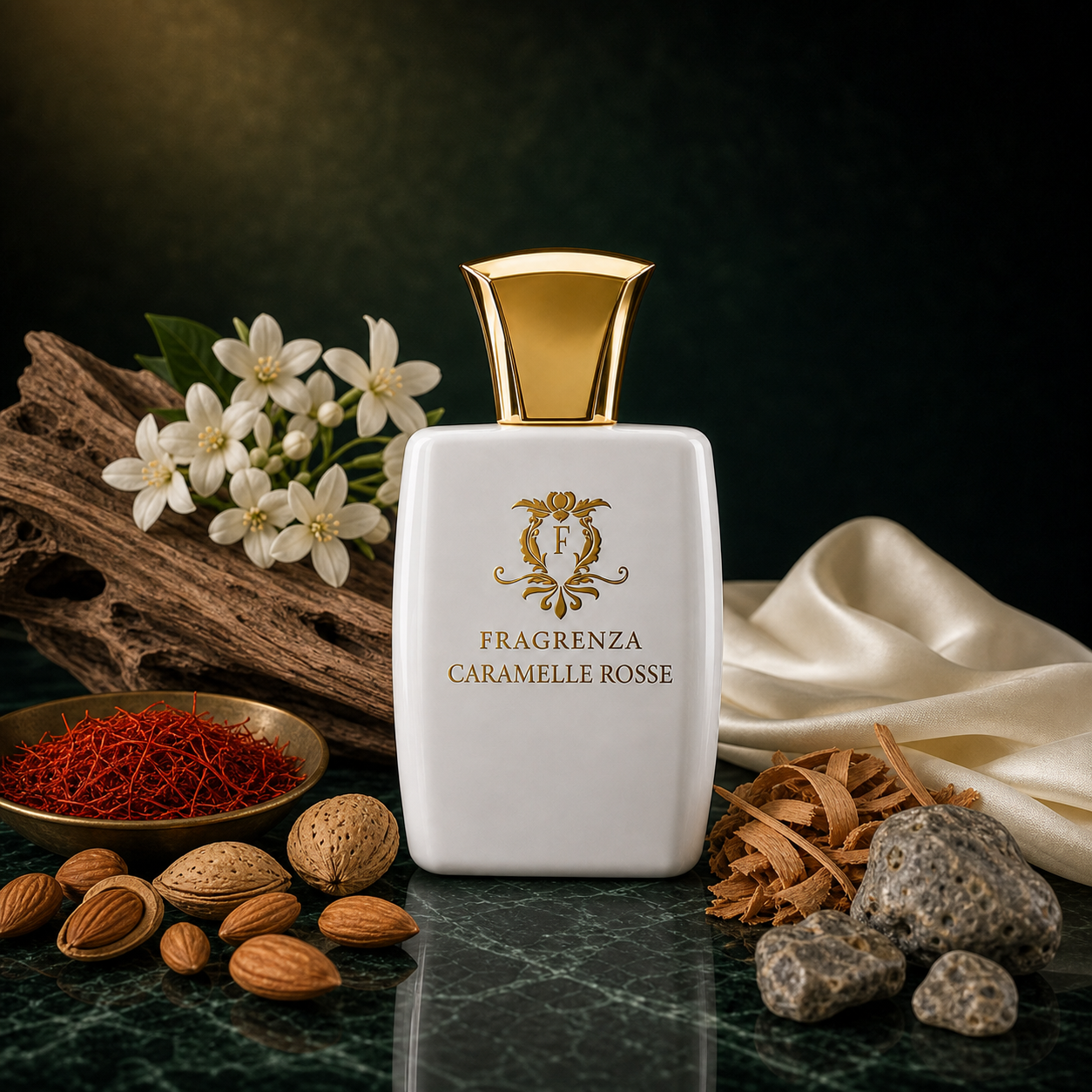


Are Fragrance Dupes Legal? The Complete 2026 Guide to Perfume Alternatives
Trademark protects brand names and logos; patented synthetics like Iso E Super clear after twenty years; formulas remain in trade-secret territory.
By Julia MorettiFragrenza makes several of the alternatives featured in our guides — here’s how we test.
5 min read
The Short Answer
Yes. Fragrance dupes are fully legal in most jurisdictions when they operate within trademark and patent law. Quality dupe houses (Fragrenza among them) operate fully compliantly with applicable law. There is no legal restriction on creating affordable alternatives to luxury fragrances, provided the alternatives do not use protected brand names, logos, or specific patented compositional structures.
This article explains what is and is not legally protected in fragrance, how quality dupe houses operate compliantly, and what to look for to confirm that any specific dupe house is operating within the law.
What Is Legally Protected in Fragrance
Three categories of intellectual property protect aspects of luxury fragrance.
Trademark law protects brand names, logos, bottle designs, and distinctive packaging. A dupe house cannot legally market its product as "Chanel Coco Mademoiselle" or use the Chanel logo on its packaging. A dupe house can legally describe its product as "inspired by Chanel Coco Mademoiselle" or "a Coco Mademoiselle alternative" — the reference to the luxury original is permitted as comparative marketing, but the actual sale must be under the dupe house's own brand name.
Patent law protects specific molecular compositions and manufacturing processes. Patented synthetic perfumery materials (Iso E Super, Cashmeran, Calone, ambergris-style synthetics like Ambroxan, Karanal, and others) are protected by patent during their patent life. After the patent expires (typically 20 years from filing), the molecule enters the public domain and can be used by any manufacturer. Many of the most widely used perfumery materials are now out of patent and freely available.
Trade-secret law protects specific fragrance formulas as confidential business information. The exact composition of, say, Chanel No. 5 is a trade secret — Chanel has never published the formula, and reverse-engineering it would not violate trade-secret law if done through legal means (gas chromatography, mass spectrometry, etc.). However, a dupe house cannot misappropriate the formula through illegal means (hiring former Chanel perfumers, industrial espionage, etc.).
What Is NOT Legally Protected
Crucially, the architectural family of a fragrance is not legally protected. The fact that Tom Ford Tobacco Vanille is built around tobacco, vanilla, cocoa, and tonka is not protected — anyone can compose a tobacco-vanilla-cocoa-tonka fragrance. The fact that Baccarat Rouge 540 uses saffron and amberwood is not protected — anyone can compose a saffron-amberwood fragrance.
This is why the dupe market is fundamentally legal and legitimate. Quality dupe houses identify the architectural family of luxury originals and compose new fragrances that occupy the same emotional register, using their own choice of specific materials within the same family. The result is an alternative that is not legally a copy but is legitimately in the same architectural conversation.
How Quality Dupe Houses Operate Compliantly
Five compliance principles separate quality dupe houses from grey-market knockoff operations.
Independent branding. Quality dupe houses sell under their own brand names and do not use luxury house trademarks, logos, or bottle designs. Fragrenza products carry Fragrenza branding throughout.
Original compositions. Quality dupe houses compose original fragrances within architectural families rather than attempting to copy exact luxury formulas. The compositions are original creative works that occupy the same emotional register as their inspiration.
Transparent comparative marketing. Quality dupe houses can and do reference luxury originals in editorial content as architectural inspiration, but they do not represent their products as the luxury originals. The Fragrenza editorial pattern of "alternative to" or "inspired by" specific luxury fragrances is comparative marketing that is fully permitted under most trademark regimes.
Material compliance. Quality dupe houses use only legally available perfumery materials — out-of-patent synthetics, freely available natural materials, and licensed-when-required novel synthetics. No patent infringement is involved in the compositions.
Origin transparency. Quality dupe houses are transparent about manufacturing origin, ingredient lists (as required by applicable cosmetics regulations), and the fact that their compositions are inspired-by rather than original-formula reproductions.
What to Look For in a Compliant Dupe House
If you are evaluating whether a specific dupe house is operating compliantly, look for three signals.
First, the dupe house should sell under its own brand name (not the luxury brand name). Anyone selling "Chanel Coco Mademoiselle" for £30 is selling either a counterfeit or an outright illegal reproduction.
Second, the dupe house should reference luxury originals only as architectural inspiration, not as identity claims. "Our alternative to Coco Mademoiselle" is fine; "Coco Mademoiselle equivalent" with the Chanel logo is not.
Third, the dupe house should publish ingredient lists and origin information as required by applicable cosmetics regulations (in the UK and EU, this means a full INCI ingredient list and identifying responsible-person information on the packaging).
Frequently Asked Questions
Can I get into legal trouble for buying or wearing a fragrance dupe?
No. The legal restrictions apply to the dupe manufacturer's marketing and compositional choices, not to the consumer's purchase or wear of the product. Wearing a quality dupe is no different legally from wearing any other personal fragrance.
Are some fragrance dupes actually illegal?
Yes — specifically, outright counterfeits that use luxury brand names, logos, or bottle designs without authorisation. These are sometimes sold through grey markets and are not what quality dupe houses produce. Stick to reputable dupe houses with their own branding.
Why don't luxury houses sue dupe houses out of existence?
Because quality dupe houses operate within the law. The architectural family of a fragrance is not legally protected, and dupe houses that compose original fragrances within those families have nothing actionable to sue over. Luxury houses do sue counterfeiters (those who use luxury brand names without authorisation), and those lawsuits typically succeed. They do not sue compliant dupe houses because there is nothing to sue over.
What about the European Union and UK cosmetics regulations?
Quality dupe houses comply fully with EU/UK cosmetics regulations (1223/2009 and the UK equivalent). This includes full INCI ingredient lists, responsible-person identification, and safety assessment documentation. Fragrenza products carry full compliance documentation.
What about IFRA restrictions on perfumery materials?
IFRA (International Fragrance Association) sets industry-standard restrictions on the use of specific perfumery materials based on safety research. Quality dupe houses comply with current IFRA standards, just as luxury houses do. The IFRA restrictions apply to material concentration, not to whether a composition is an original or an alternative.
How do I report a counterfeit if I encounter one?
In the UK, Trading Standards is the appropriate authority for counterfeit consumer products. In the EU, national consumer protection agencies handle counterfeit reports. The luxury houses themselves typically have anti-counterfeit teams that accept consumer reports of suspected counterfeits.
The Bottom Line
Fragrance dupes are fully legal when produced by quality dupe houses that operate compliantly with trademark, patent, and cosmetics regulations. The Fragrenza approach — original compositions within architectural families, sold under our own brand name, with full compliance documentation — is the legally and ethically sound model. Stick to reputable dupe houses with their own branding, transparent ingredient lists, and clear regulatory compliance, and you will never have anything to worry about.