

How to Wear Savory Gourmand Without Smelling Like Dessert
Tonka, vanilla, caramel, benzoin and labdanum are dense, slow-evaporating materials amplified by body heat, which is why two sprays on bare clean skin often tip the wear into bakery territory.
By Julia MorettiFragrenza makes several of the alternatives featured in our guides — here’s how we test.
13 min read
The most common complaint about gourmand fragrance is also the easiest to address: it reads as dessert. Coffee, caramel, tobacco, vanilla, saffron, oud sweetened with cacao - these are the materials that anchor the contemporary savory gourmand register, and on the wrong wearer, in the wrong context, applied wrong, they can tip into smelling like baked goods rather than fine fragrance. The wear becomes the wearer's lunch order rather than their olfactory signature.
The solution is not to give up on the register. Savory gourmand is one of the most rewarding directions in contemporary fine fragrance, and the third-wave wave has produced compositions that hold genuine artistic ambition. The solution is to wear the register correctly. Five rules, applied consistently, are the difference between smelling like a perfume and smelling like the bakery you passed on your morning walk.
For the broader savory gourmand register, see the savory gourmand and burnt sweet 2026 pillar. For the layering theory that complements the wearing-pattern rules below, see the layering pillar.
Why savory gourmand reads as dessert on some wearers
Four forces are doing most of the work when a savory gourmand tips into dessert territory.
Dose is too high. The single most common cause of a gourmand reading as dessert is overspraying. Savory gourmand materials (tonka, vanilla, caramel, benzoin, labdanum) are dense, slow-evaporating, and amplified by body heat. Two sprays on bare clean skin will project for hours. Three sprays push the wear into food-coded territory on most wearers; four guarantees it. The instinct to apply more is the instinct of someone used to lighter compositions; savory gourmand inverts that instinct.
Skin chemistry amplifies the sweet facets. Wearers with warmer or oilier skin amplify the sweet-honeyed materials in any gourmand composition. The same fragrance can read dignified-evening on a wearer with cooler skin and dessert-coded on one with warmer skin. This is not a wearer flaw; it is a skin-chemistry interaction with the specific volatility curves of the materials. The skin chemistry deep-dive covers the full account.
Application points are too central. Savory gourmand applied to the neck and chest projects outward in the closest social radius. When the wearer's body heat rises (as it does through the day), the projection extends further and reads as a strong gourmand statement. The fix is to apply lower on the body, where heat dissipation is slower and projection is naturally limited.
Occasion is wrong. Savory gourmand worn in the wrong context (sunny outdoor daytime, hot weather, casual professional setting) reads as out of place even when the wear itself is appropriate by composition. Context establishes the audience's expectations; a gourmand in an evening context registers as deliberate, while the same composition in a daytime context registers as misjudged. The fragrance has not changed; the social reading has.
The five rules of wearing savory gourmand
Rule 1: Apply less than you think you need
The most important rule. One spray on bare clean skin will project for two to three hours. Two sprays gives you a four-to-six-hour wear. Three sprays is the absolute maximum for any of the savory gourmand archetypes. If your instinct is to add another spray, resist it; the existing two are already developing on your skin as body heat releases the materials in slow pulses through the day.
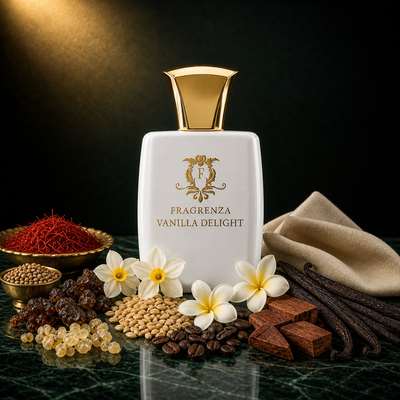
For Fragrenza picks specifically,
Rule 2: Apply lower on the body
The conventional wisdom of applying perfume to the neck and chest is the wrong instinct for savory gourmand. The neck and chest sit at the body's warmest point and project outward into the closest social radius - exactly where you do not want a dense gourmand composition to live. Apply lower instead: lower chest under the collarbone, inner forearm, inner upper arm, behind the knees, or the inner thigh. Heat dissipation at these points is slower, projection is naturally limited, and the wear extends inward toward intimate range rather than outward toward room range.
The behind-the-knee application is particularly useful for evening events where a partner or close conversation companion will encounter the wear at close range. The technique was favored by Marlene Dietrich and remains the most elegant single application point for the savory gourmand family.
Rule 3: Wear in cool weather and evening contexts
The savory gourmand register has a natural season (fall and winter) and a natural daypart (evening) for good reason. The dense materials project less aggressively in cold air and develop more slowly, which lets the composition unfold without becoming heavy. Evening contexts also establish the social reading that frames the wear as deliberate rather than misjudged.
For Fragrenza picks,
is the canonical example of an evening-coded savory gourmand. The saffron-and-spice opening, tobacco-and-jasmine heart, and tobacco-amber-wood-vanilla base are designed to develop slowly in cool air over a long evening. Apply at the start of the evening; the wear matures through dinner and reads as deliberate by the time the night settles.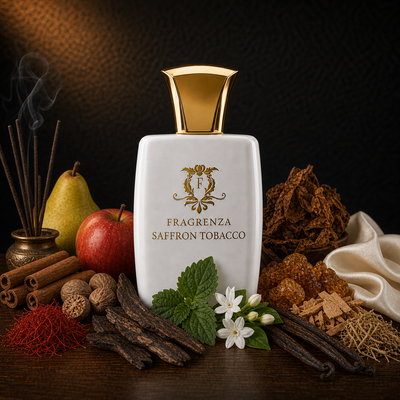
Rule 4: Layer with a skin scent for daytime wear
If you want to wear a savory gourmand during daytime contexts where the register is not naturally appropriate, layering is the tool. Apply a transparent clean musk skin scent broadly across the chest, neck, and inner arms; add a single spray of the savory gourmand to one pulse point. The clean musk extends across the body's projection radius and softens the gourmand's character; the gourmand reads as a characterful focal voice rather than as the dominant wear.
For the technique applied to the C2 register specifically,
is the cleanest base. Apply broadly to the chest, neck, and inner arms; then apply a single spray of a savory gourmand to the inner wrist or behind the ear. The combination lets you wear evening-coded compositions in daytime contexts without the wear reading as out of place. The full technique is covered in the how to layer skin scents guide.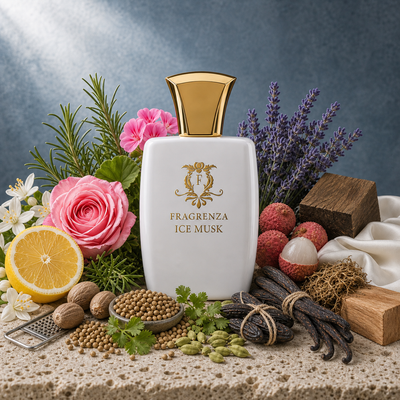
Rule 5: Test for four hours before judging
The opening of any savory gourmand is the most projecting and the most food-coded part of the wear. Materials like coffee, caramel, vanilla, and tonka are most chemically present in the first thirty to sixty minutes; thereafter they integrate into the base materials (labdanum, benzoin, oud, woody anchors, musks) and the wear becomes dramatically less dessert-adjacent. If you judge a savory gourmand on the first hour, you will reject compositions whose dry-down would have been beautiful on your skin.
The four-hour wear test is the diagnostic. Apply, wait four hours, and judge the wear at that point. The dry-down is what you will actually carry for the bulk of the day; the opening is a transient phase. Many savory gourmands that read as too sweet at the thirty-minute mark settle into something polished and entirely wearable by the four-hour mark.
What not to wear with savory gourmand
Three combinations consistently fail and produce the dessert-coded reading the register is most often accused of.
Savory gourmand layered with another gourmand. The wear becomes saturating. Two gourmand compositions on the same body in the same wearing produce a sensory overload that pushes the combined character into pure dessert territory. If you love savory gourmand, layer with skin scents (musk, ambroxan-driven compositions, transparent florals) rather than with other gourmands.
Savory gourmand applied to clothing as a fixative. The technique works beautifully for some categories (tobacco, oud, leather) but pushes the savory gourmand register into the wear-on-fabric direction that emphasizes the food-coded surface character. The materials need to interact with skin chemistry to develop properly. Apply to skin, not fabric, except as an occasional accent on a wool scarf for the smokier savory archetypes.
Savory gourmand worn in hot weather outdoors. The dense materials project more aggressively in heat, and the sweet character can read as cloying when warm air does not let the base anchors develop. The wear that would read as deliberate in a cool autumn evening reads as misjudged at a summer afternoon outdoor event. The fragrance is not at fault; the seasonal pairing is.
How to make a savory gourmand smell more sophisticated
Beyond the wearing-pattern rules above, three techniques shift the way a savory gourmand reads on the wearer.
Choose archetypes that lean savory rather than sweet. The seven savory gourmand archetypes from the pillar guide sit at different points along the sweet-to-savory spectrum. Saffron-spiced tobacco, smoky-sweet woods, and caramel-oud lean savory; tobacco-vanille and burnt-vanilla suede sit in the middle; coffee-tonka dark and burnt-saffron sugar lean toward the sweeter end. If your skin amplifies the sweet facets, start with the savory-leaning archetypes; if your skin amplifies the dry facets, the sweeter archetypes will read more naturally.
Pair with a single bright top to extend the wear's appropriateness. A bergamot, neroli, or orange-blossom cologne applied to a single pulse point reads in the opening and fades over the first hour; the savory gourmand carries the wear through the rest of the day. The bright top establishes a sophisticated opening that prevents the wear from reading as immediately dessert-coded; the gourmand base contributes the wear-through-the-day character.
For wearers who want a savory gourmand with built-in characterful depth that prevents the dessert reading from emerging at all,

Develop the composition before social contact. Apply at home before leaving for an event, not in the car or in the lobby. The first thirty minutes of a savory gourmand wear are the most projecting and the most food-coded; if you arrive at an event after a full hour of development, the wear has already settled into its more dignified mid-section character.
Savory gourmand in a fragrance wardrobe
In a well-constructed fragrance wardrobe, savory gourmand occupies a specific role: the evening register for cool-weather occasions where the wear should declare a clear point of view. Most wearers find that one well-chosen savory gourmand is enough for this slot; two pieces from contrasting archetypes (one classical, one smoky-outdoor or saffron-spiced) cover essentially every cool-weather evening context.
The natural complement to a savory gourmand in the wardrobe is a clean musk skin scent that serves as the layering base when daytime wear is needed. Pair one of each, learn how the two interact across application patterns, and you have a flexible savory gourmand presence that works across context without the risk of reading as dessert.
Most serious savory gourmand wearers do not own more than two pieces from the family. The register is distinctive enough that diminishing returns set in past two pieces, and the wear pattern becomes recognizable on the wearer in ways that make additional picks less useful than picks from contrasting families (woody, oud, leather, floral) that round out the wardrobe.
Related reads
- Savory Gourmand and Burnt Sweet: The 2026 Pillar
- Best Tobacco Fragrances 2026: The Six Archetypes
- Best Saffron Fragrances 2026: The Four Archetypes
- Coffee Perfumes 2026: The Roasted Anchor
- How to Layer Skin Scents With Vanilla, Oud, or Florals
- Why Skin Scents Smell Different on Everyone
- How to Build a Fragrance Wardrobe
- The Layering Pillar
FAQ
Why does my gourmand fragrance smell like baked goods on me when it smells sophisticated on others?
Two reasons, usually working together. Skin chemistry: wearers with warmer or oilier skin amplify the sweet-honeyed materials in any gourmand composition, while cooler or drier skin amplifies the dry-spiced facets. Dose: most wearers apply too much of dense materials like tonka, vanilla, caramel, and benzoin, which produces a saturating sweet wear that reads food-coded. Try one spray instead of three, apply lower on the body, and wait four hours before judging. The composition that read as cake on you at thirty minutes may read as sophisticated at four hours.
How many sprays of savory gourmand should I apply?
One to two sprays on bare clean skin is typically the right dose. Three is the absolute maximum for the densest savory gourmand archetypes (caramel-oud, burnt-saffron sugar, tobacco-vanille at concentration). Resist the instinct to apply more during the first hour; the wear continues to develop and project for several hours after application, and what feels insufficient at twenty minutes will read as substantial at the two-hour mark. If your composition genuinely fades within four hours, you may need a different fragrance rather than more sprays of the same one.
Where should I apply savory gourmand?
Lower on the body than the conventional pulse points. Lower chest under the collarbone, inner forearm, inner upper arm, behind the knees, or the inner thigh. These points dissipate heat more slowly than the neck and wrists, which limits the outward projection and keeps the wear in intimate-radius rather than room-radius. The behind-the-knee application is particularly elegant for evening events where close-quarters conversation is expected.
Can I wear savory gourmand to work?
Generally not, with one exception. The savory gourmand register is evening-coded in most professional environments, and the projection profile reads as out of place in shared daytime workspaces. The exception is layering: apply a transparent clean musk broadly and a single spray of a savory gourmand to one pulse point. The musk dominates the projection radius; the gourmand contributes characterful depth as a focal voice. The combination is appropriate for most office contexts in cool weather, particularly the savory-leaning archetypes (saffron-tobacco, smoky-sweet woods).
Why does my savory gourmand smell different at hour four than at hour one?
Because the volatility curves of the materials are doing exactly what they were designed to do. The sweet-coded top materials (caramel, fruity esters, light vanillin) evaporate within the first one to two hours. The heart materials (tobacco, saffron, coffee, jasmine, rose) develop progressively through hours two to four. The base materials (labdanum, benzoin, oud, patchouli, certain musks) hold the wear from hour four onward. The dry-down is the wear you will carry for the bulk of the day, and it is almost always more sophisticated than the opening.
Are there savory gourmand archetypes that work in summer?
Not really. The dense base materials project too aggressively in heat and develop badly in warm air. The closest you can get is the coffee-chocolate Skin Scents 2.0 crossover archetype, which has a close-skin wear pattern that keeps projection contained even in warmer weather; even there, the composition is happier in fall and winter. For summer evenings, switch to lighter contemporary registers (skin scents, white florals, citrus-aromatic compositions) and save savory gourmand for the cooler months when the register's emotional warmth is welcome rather than oppressive.
Is there a way to dial back a savory gourmand that is too sweet on me?
Yes. Three techniques work, alone or combined. First, reduce the dose: apply one spray instead of three. Second, layer with a clean musk skin scent broadly across the chest and neck before applying the gourmand to a single pulse point. Third, apply lower on the body to limit projection radius. If the wear still reads as dessert after all three adjustments, the specific composition is likely not compatible with your skin chemistry; consider a savory-leaning archetype (saffron-tobacco, smoky-sweet woods) rather than a sweeter archetype (coffee-tonka dark, burnt-saffron sugar).
The bottom line
Savory gourmand reads as dessert when wearers apply too much, apply in the wrong places, wear in the wrong contexts, or judge the wear on the opening rather than the dry-down. Five rules fix the problem in nearly every case: apply less, apply lower, wear in cool weather and evening, layer with skin scents for daytime, and test for four hours before deciding.
The savory gourmand register is one of the most rewarding directions in contemporary fine fragrance, and the wear pattern is what determines whether you smell like a perfume or like the bakery. The composition is the same; the technique is what produces the difference. Apply with restraint, choose your context deliberately, and the register reveals the sophistication that the contemporary moment has built into it.