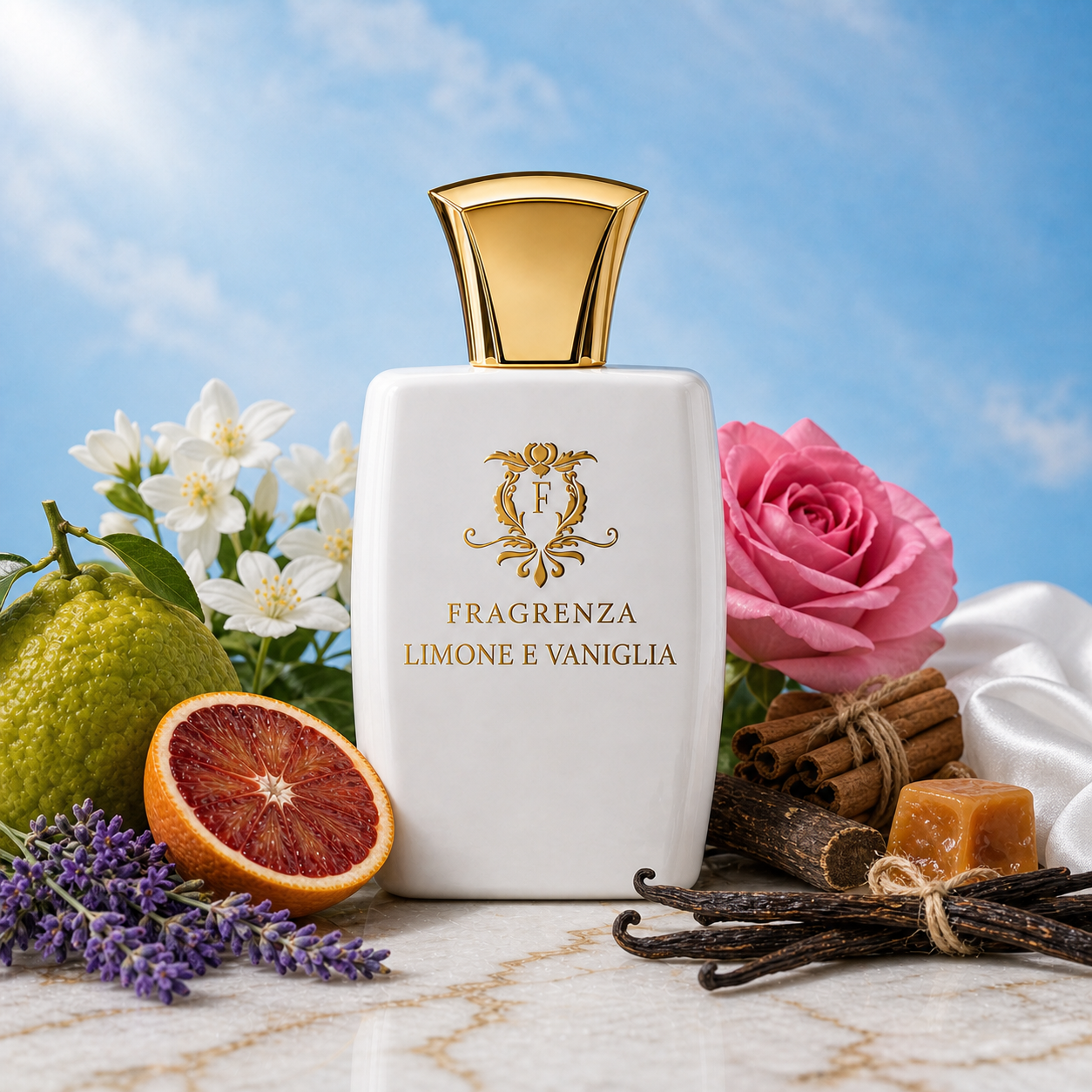
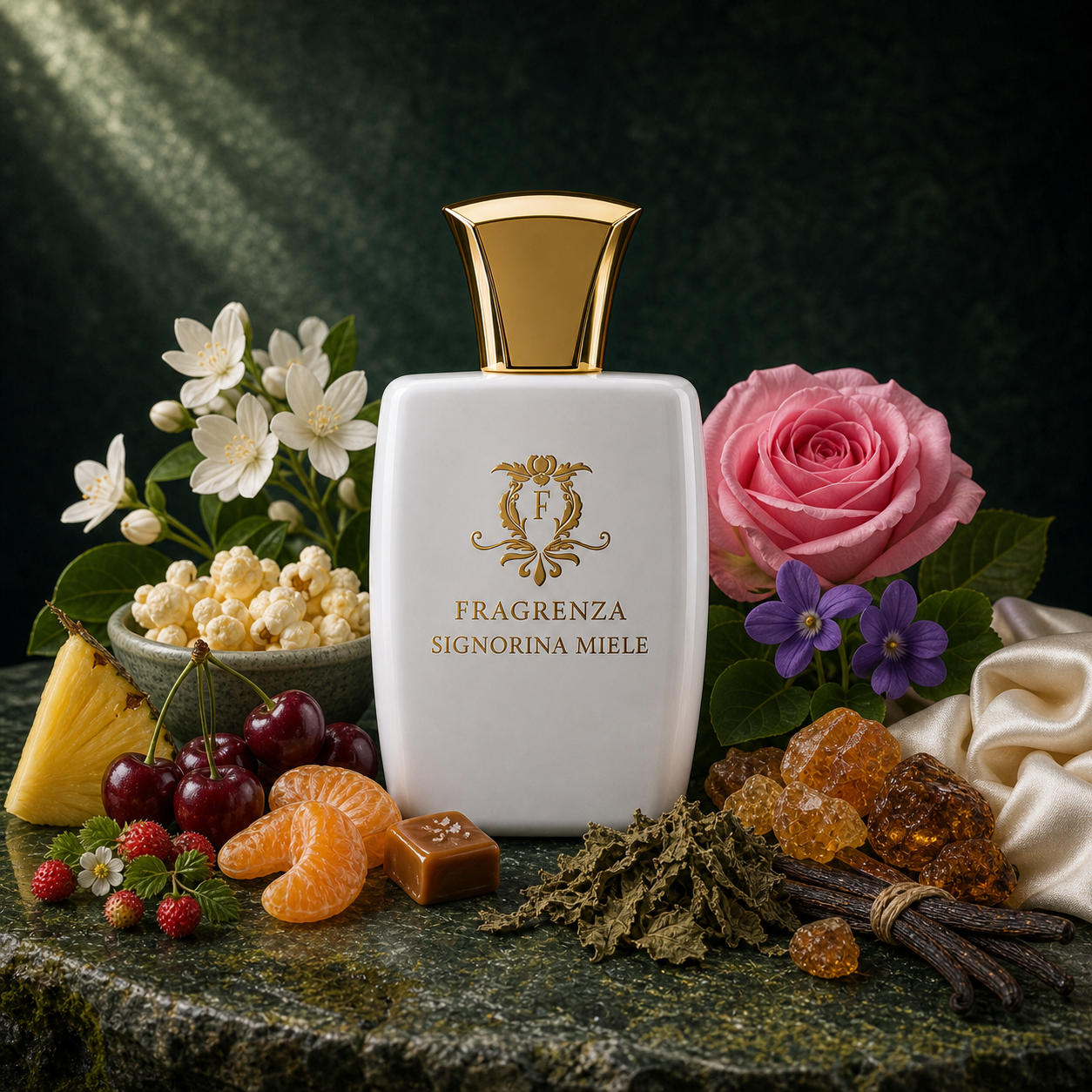
How to Layer Skin Scents With Vanilla, Oud, or Florals
Ambroxan, white musks, cashmeran and lactones bind closely to skin oils and release in slow pulses, leaving headroom for a vanilla, oud or floral focal point applied to a single pulse point.
By Julia MorettiFragrenza makes several of the alternatives featured in our guides — here’s how we test.
15 min read
Skin scents are the most layerable category in fine fragrance. Built to wear close to the body with low projection and high tactile warmth, they leave room for a second voice without competing for the same airspace. A skin scent applied broadly and a richer fragrance applied to a single pulse point produces something neither composition could deliver alone: the intimate, second-skin character of the base layer with the focal personality of the top.
The three categories that pair most rewardingly with skin scents are vanilla, oud, and florals. Each interacts differently with the clean-musk foundation that defines the modern skin-scent register, and each produces a distinctive wearing experience worth knowing on its own terms. This guide walks through the technique for each, with specific Fragrenza pairings that illustrate how the layering works in practice.
For the broader theory of fragrance layering, see the full layering pillar guide. For the skin-scent register itself, see the Skin Scents 2.0 pillar and the complete guide to skin scents.
Why skin scents layer better than projecting fragrances
The principle is structural. Skin scents create a quiet halo, often described as the wearer's own skin amplified rather than a perfume layered on top. The molecules that produce this effect (white musks, Ambroxan, Iso E Super, Cashmeran, lactones) bind closely to skin oils and release in slow pulses, which means the fragrance fills the body's immediate radius rather than projecting outward.
That close-radius wear pattern leaves room for a second fragrance to do something different. A projecting fragrance applied over a skin scent does not compete with it; the two occupy different volumes of space. The skin scent is the intimate base; the second fragrance is the distinct character at the focal point. Done well, this is the closest thing fine fragrance has to a custom composition built around your own skin.
The opposite is also true: most projecting fragrances do not layer well with each other because they compete for the same projected airspace. The result is muddiness rather than complexity. Skin scents avoid this entirely by occupying the radius closest to the body where most projecting fragrances are not actively present.
This is why the most reliable layering pattern in fine fragrance starts with a skin scent base. The base does the long-wearing skin-close work; the top layer does the focal-character work. The two never fight because they are not competing for the same listening space.
The base layer: choose your skin scent first
Before deciding what to layer with, decide which skin scent you are anchoring the wear on. The base layer determines how the rest of the composition will read, so choose it deliberately.
For a clean, transparent base,
is the cleanest expression of the modern register. Bergamot and orange-blossom freshness up top, a quiet aromatic and spiced heart, and a final dry-down of clean musk on skin. This base reads as your own skin at its freshest, and it is the natural starting point for any layering experiment because it adds character without imposing one of its own. The vanilla, oud, or floral layered on top will dominate the focal voice while the musk supplies the intimate halo.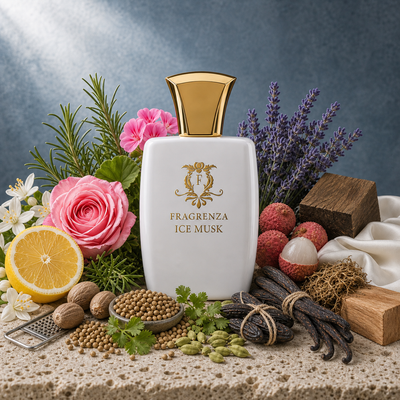
For a slightly warmer base with more textural depth,
sits in the modern Skin Scents 2.0 register. Iris and orange blossom in the heart, black currant and pink pepper up top, a base where coffee, dark chocolate, and tonka give the composition real weight. Layering with this base produces a richer wearing experience than ice-musk allows; the second fragrance has more material to interact with, but the second-skin character is preserved.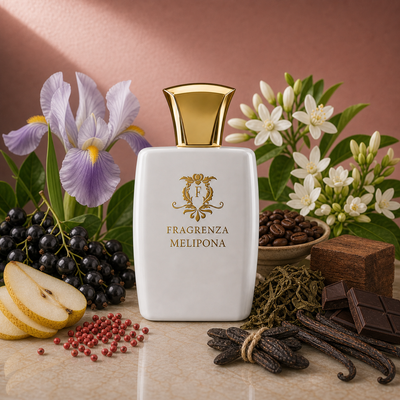
For a masculine clean base,
uses bergamot, grapefruit, and lemon with cranberry and lavender, a heart of saffron, jasmine, violet, and lily of the valley, and a base of amber, vanilla, and leather. The composition is precise and skin-close, with enough aromatic structure to anchor stronger top layers without losing definition.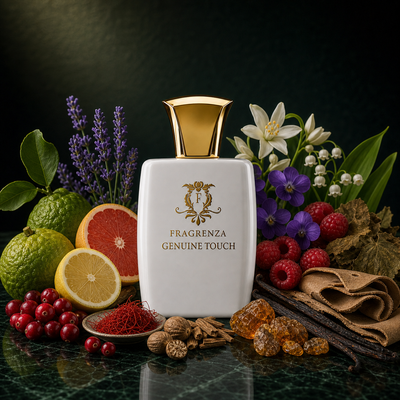
Apply the base layer broadly across the chest, neck, and inner arms. Coverage matters more than concentration: the goal is to establish the intimate halo over the largest possible skin surface so the second layer has a foundation to work against.
Layering with vanilla
Vanilla is the friendliest material to layer on top of a skin scent. The two registers share a soft, warm, intimate character, and the addition of vanilla turns a clean skin scent into something gourmand-adjacent without breaking the wearing-pattern logic. The combination reads as enriched skin: still close, still personal, but with a sweet creamy halo that adds genuine warmth.
The technical reason this works: vanilla materials (vanillin, ethyl vanillin, vanilla absolute, the various reconstitutions) live on a similar molecular volatility curve to many white musks. They do not project strongly. They sit close to the body, release slowly, and bind to skin oils much like musks do. Layered together, the two materials reinforce rather than compete with each other.
How to apply. Apply your chosen skin scent broadly across the chest, neck, and inner arms. Then apply a smaller amount of a vanilla-forward fragrance to a single pulse point (inner wrist, behind the ears, or the base of the throat). The skin scent fills the radius; the vanilla concentrates at the focal point. As body heat develops the wear over the first hour, the vanilla and musk integrate at the focal point while the skin-scent halo extends across the rest of the body.
The Fragrenza pairing. For a vanilla-on-skin layered wear, apply
broadly and add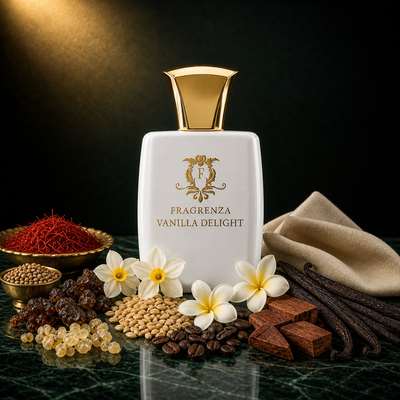
When to wear it. The vanilla-over-musk combination is exceptional for cooler weather, evening contexts, and any setting where a comforting, intimate warmth is the desired effect. It is too sweet for hot weather or formal daytime contexts unless applied with restraint. Start with a single spray of the vanilla layer; a second spray usually pushes the wear into too-rich territory.
Layering with oud
Oud is the most ambitious skin-scent layering partner because the two registers seem to be opposites. Oud is dense, complex, traditionally projecting, often loud. Skin scents are quiet, transparent, intimate. Pairing them seems contradictory until you recognize what the layering accomplishes: the skin scent softens the oud's projection and integrates it into the wearer's own skin chemistry, while the oud adds the structural complexity that pure musk cannot supply.
The result is one of the most consistently rewarding layered effects in fine fragrance: an oud that no longer dominates the room but still anchors the wear with characterful depth, plus a skin-close radius that makes the wearing feel personal rather than performative.
How to apply. Apply your chosen skin scent broadly across the chest, neck, and inner arms. Apply a small amount of oud (usually a single spray) to one pulse point, ideally the inner wrist or the side of the neck. Less is more: oud is potent enough that one spray will project for hours, and layering it under a skin scent does not reduce the molecular wear time, only the projection volume.
The order matters here. Skin scent first, oud on top. Reversing the order does not work as well because oud applied to bare skin establishes itself as the dominant voice before the skin scent has a chance to anchor the wear pattern. Applied in the correct order, the skin scent creates the close-skin baseline, and the oud sits at the focal point as the characterful second voice.
The Fragrenza pairing. Apply
broadly for the cleanest expression of this technique, and add
For a richer layering with more weight,
as the base and joyful-oud as the focal voice produces a deeper register with more body. The 2.0-musk base provides more material for the oud to interact with, and the wearing experience leans more sensual than the ice-musk version.When to wear it. The oud-over-musk combination is most rewarding in evening contexts, cooler weather, and settings where a sophisticated, slightly unconventional wear is the right register. It is also a useful technique for wearers who love oud but find traditional oud fragrances too loud for daily wear. The musk base brings the projection down to a wearable radius while preserving the characterful depth.
Layering with florals
Floral-over-musk is the layering technique that most successfully reframes a heady floral into something personal and skin-close. White florals at full strength (jasmine sambac, tuberose, gardenia, orange blossom) can be overwhelming when worn alone; layered over a skin scent, they become intimate and slightly more wearable. Soft florals (peony, magnolia, rose) gain depth and presence rather than losing volume.
The technical principle: floral materials interact dynamically with musks at the molecular level. Indolic florals (jasmine, orange blossom, tuberose) contain trace amounts of indole, the same compound responsible for the slightly fecal warmth at the heart of many natural florals. Musks soften the indolic character and let the brighter top notes of the floral read more cleanly. The result is the floral idea of a flower rather than the full carnal weight of the natural material.
How to apply. Apply your chosen skin scent broadly across the chest, neck, and inner arms. Apply a smaller amount of the floral fragrance to a single pulse point. For the most refined effect, apply the floral to the inner forearm rather than the wrist, which projects less aggressively in close-quarters social settings.
The Fragrenza pairing. For a refined floral-musk layered wear, apply
broadly and add a soft floral-musk fragrance on top. The genuine-touch base supplies a masculine clean-skin radius that holds floral materials beautifully; the floral focal voice can lean soft (peony, violet, magnolia) or richer (jasmine, neroli, orange blossom). The combined wear reads as polished and quietly distinctive.For a feminine floral-over-musk effect,
over produces a peony-and-plum-blossom focal voice anchored on the cleanest skin-musk base. The peony stays close to the body, the musk halo extends across the wear, and the composition reads as the floral idea of fresh skin rather than as an overlay.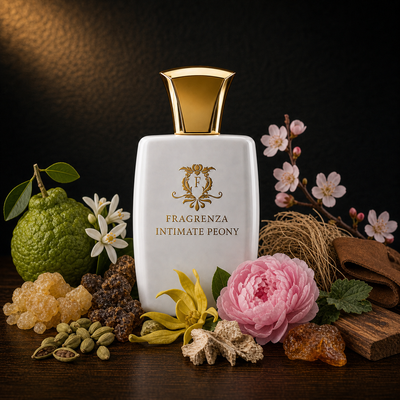
When to wear it. The floral-over-musk combination works in nearly any context. The technique is particularly useful for office environments where a strong projecting floral would be inappropriate, indoor formal settings where intimate scent matters more than statement, and any wearer who loves florals but finds them too loud at full strength.
General principles for skin-scent layering
Three rules carry across all three layering categories above.
Base goes broad, top goes focal. Apply the skin scent across the largest possible skin surface and the top layer to a single pulse point. This establishes the wear-radius hierarchy and prevents the top layer from competing with the base layer's halo.
Top layer goes light. When you are unsure about quantity, use less of the top layer than you would if wearing it alone. A single spray on one pulse point is often enough; two sprays is the upper bound for most layered combinations. The skin-scent base amplifies the top layer's presence, so the wearer's perception of the focal voice will be stronger than the same dose would produce on bare skin.
Test on skin for at least four hours. Layered combinations evolve more dramatically than single fragrances because two compositions are developing simultaneously and interacting with each other and with the wearer's skin chemistry. The first thirty minutes may not represent how the combination ultimately reads. Give the wear four hours before deciding whether the pairing works. The dry-down is the wear you will actually carry through the day; judge the combination on that, not on the opening.
When skin-scent layering does not work
Two common failure modes are worth knowing.
Top layer is too volatile. Bright citrus colognes (lemon, bergamot, neroli-forward compositions) layered on top of a skin scent often disappear within the first hour, leaving only the skin scent. This is not a failed layering so much as a mismatched volatility curve; the citrus does its job in the opening and the skin scent carries the rest of the wear. If you want the citrus character to last, choose a fragrance with citrus in the heart rather than only in the top notes.
Top layer is too dense. Heavy orientals, gourmand bombs, or very dense projecting fragrances do not layer well with skin scents because they overwhelm the close-skin radius. The result is that the projecting fragrance reads as the only fragrance present and the skin-scent base contributes nothing detectable. For these compositions, wear them alone rather than layered.
The sweet spot is the middle range: fragrances with characterful focal voices that do not require massive projection to register. The vanilla, oud, and floral pairings above all fall into this range; the technique works because each of those categories has natural fragrance materials that interact constructively with the musk-based skin-scent foundation.
Building a skin-scent layering wardrobe
A minimum viable skin-scent layering wardrobe needs three things: one clean skin scent as the everyday base, one warm-or-richer skin scent as the alternate base for richer occasions, and two or three focal-character fragrances (one vanilla-forward, one oud-forward, one floral) to layer on top.
With this five-bottle setup, you have access to up to twelve distinct wearing experiences: each base alone, each focal alone, and the layered combinations across both bases and each focal. The combinatorial flexibility scales rapidly as you add to the wardrobe, which is why the skin-scent register has become the foundation of so many serious fragrance collections in 2026.
For more on wardrobe construction, see the complete fragrance wardrobe guide. For the broader Skin Scents 2.0 cluster, the 2.0 pillar covers the molecules and brands driving the modern register.
Related reads
- How to Layer Fragrances Like a Perfumer (The Pillar)
- Skin Scents 2.0: Musk, Ambroxan, and Iso E Super
- What Are Skin Scents? The Complete Guide for 2026
- Musk Perfumes: Clean, Creamy, Powdery, Sensual
- Clean Perfumes vs. Skin Scents
- Why Skin Scents Smell Different on Everyone
- Ambroxan Perfumes Explained
- How to Build a Fragrance Wardrobe
FAQ
Should the skin scent go on first or last?
The skin scent should always go on first, applied broadly across the chest, neck, and inner arms. The top layer (vanilla, oud, or floral) goes on second, applied to a single pulse point. Reversing the order makes the projecting fragrance dominate the wear before the skin scent establishes the close-skin radius. Order matters because the first-applied fragrance binds to skin oils and creates the wearing-pattern baseline.
How much of each fragrance should I apply?
Apply the skin scent generously across the body (two or three sprays each to chest, neck, and inner arms). Apply the top layer sparingly to one pulse point - usually a single spray on the inner wrist or behind the ear is enough. The skin-scent base amplifies the top layer's perceived presence, so the same dose reads stronger when layered than when worn alone.
Can I layer two skin scents on top of each other?
Yes, and the result is often a richer version of either base. A clean transparent musk applied broadly with a warmer creamy musk on a pulse point produces a layered wear that combines the cleanness of the first and the depth of the second. This is the most subtle layering technique in skin-scent perfumery and rewards patient testing because the differences between two layered musks are smaller than the differences between musks and contrasting categories.
Why does my layered oud combination smell different than I expected?
Two reasons. First, oud reads dramatically different on different skin chemistries - the same oud composition can wear as smoky, sweet, animalic, or medicinal depending on the wearer's pH, sebum levels, and underlying body-odor signature. The musk base amplifies the wearer's own skin character, which amplifies the oud's interaction with that character. Second, layered fragrances often need 60-90 minutes to settle into their stable wearing pattern; the first hour is often unrepresentative of the final wear.
Can I layer a floral perfume with a different floral skin scent base?
You can, but the effect is subtler than the contrasting-category combinations above. Layering similar registers produces a slightly richer, slightly more detailed version of the same idea rather than a new wearing experience. If you want a distinctive layered effect, contrast the base and the focal voice. Skin musk + jasmine reads as floral-over-skin. Floral musk + jasmine reads as a slightly richer floral.
Is there a wrong way to layer skin scents?
The two reliable failure modes are top layers that are too volatile (bright citruses that evaporate before the wear settles) and top layers that are too dense (heavy orientals that overwhelm the close-skin radius). Bright top notes can still be useful if you want a strong opening that fades into the skin scent; dense projecting fragrances are best worn alone rather than layered. Otherwise, most well-built fragrances layer over skin scents to good effect.
How do I know if a layered combination is working for me?
Apply the combination on a day when you can wear it through a full four hours, and pay attention to three things: do you still smell good to yourself at hour four? Do other people respond to the wear without commenting on a strong projection? Does the combination feel like you, or does it feel like you're wearing something? The best layered combinations read as the wearer's amplified self rather than as a perfume statement. If the combination feels imposed rather than personal, try less of the top layer or switch to a different focal voice.
The bottom line
Skin scents are the foundation that makes complex layering possible. The close-skin radius leaves room for a second voice without conflict, the musk-driven materials interact constructively with vanilla, oud, and floral materials, and the resulting layered compositions read as personally amplified rather than as performative. Choose your base deliberately, choose your focal voice deliberately, apply the base broadly and the top sparingly, and give the wear four hours to settle into its stable character. The reward is a layered wearing experience that no single bottle can match: the intimate halo of a skin scent with the focal personality of a chosen second fragrance, integrated through your own skin chemistry into something only you can wear.