How to Describe a Fragrance: The Language of Perfumery
Humans have an impoverished vocabulary for smell compared with sight or sound, so perfumery borrows from texture, mood and place to describe what the note pyramid alone never quite captures.
By Julia MorettiFragrenza makes several of the alternatives featured in our guides — here’s how we test.
3 min read
"I like it but I can't explain why" is one of the most common things people say about fragrance. Scent is famously difficult to put into words — linguists note that humans have a comparatively impoverished vocabulary for smell compared to sight or sound. But with a little practice and the right vocabulary, you can learn to describe fragrances with confidence and precision.
Being able to articulate what you smell doesn't just make you sound knowledgeable — it helps you find fragrances you'll love, communicate your preferences to others, and deepen your own experience of wearing scent.
Start With the Notes
The most basic language of perfumery is the note system. Fragrance ingredients are described as notes, and they are organised into three tiers based on when they appear and how long they last:
- Top notes — the first impression; volatile ingredients that appear immediately and fade within 15–30 minutes. Common examples: citrus (lemon, bergamot), herbs (basil, mint), aldehydes.
- Heart notes — the core character of the fragrance, emerging once the top notes fade. Common examples: rose, jasmine, spices, woods.
- Base notes — the deep, lasting foundation. These emerge last and linger longest. Common examples: musks, amber, vanilla, vetiver, oud, sandalwood.
When describing a fragrance, try to identify what you can detect from each layer. "This opens with something citrusy, then moves into something floral, and dries down to a warm, woody base" is already a precise and useful description.
Texture Words
Texture words describe the physical sensation or character of a fragrance — how it feels rather than what it smells like:
- Powdery — soft, smooth, like face powder or talcum powder. Often associated with iris, musk, or certain florals.
- Creamy — rich and smooth, with a dairy or vanilla quality. Found in sandalwood-heavy or gourmand compositions.
- Sharp — angular, clear-cut, with a bright or slightly harsh edge. Often associated with aldehydes, green notes, or certain citrus.
- Dry — austere and clean without sweetness. Vetiver, cedar, and tobacco can produce dry characteristics.
- Soft — gentle and unobtrusive, close to the skin. Many musks and light florals are described as soft.
- Thick or dense — rich and voluminous, almost physically heavy. Heavy oriental and oud fragrances often feel dense.
- Airy — light and spacious, with a sense of weightlessness. Aquatics and some light florals are airy.
For instance, Fragrenza's
— inspired by Delina — could be described as a powdery, floral rose with a creamy, musky base. Fragrenza's Bologna Dreams is dense, rich, and sweet with a dry tobacco underpinning.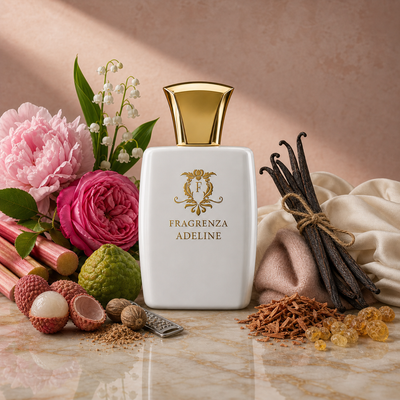
Mood and Atmosphere Words
Some of the most evocative descriptions in perfumery are emotional and atmospheric:
- Warm — comforting, cosy, inviting. Ambers, vanillas, and resins tend to feel warm.
- Cold or cool — refreshing, crisp, sometimes chilly. Aquatics and menthol accords are cold.
- Dark — deep, mysterious, with a sense of shadow. Oud, leather, and smoky notes are dark.
- Fresh — clean, bright, invigorating. Citrus, green, and aquatic notes are fresh.
- Earthy — grounded and natural, like soil or undergrowth. Vetiver, patchouli, and moss.
- Animalic — raw, carnal, intensely human. Certain musks, castoreum-type accords, and leather.
- Boozy — resembling alcohol, wine, or spirits. Found in some orientals and leather fragrances.
Evocative Comparisons
Don't be afraid to describe fragrance in terms of places, seasons, people, or experiences. In fact, these associative descriptions are often the most accurate:
- "It smells like a library — dry, slightly dusty, warm paper and wood"
- "It smells like the first cold morning of autumn — clean, sharp, slightly woody"
- "It smells like sunscreen at the beach — coconut, warmth, salt"
These descriptions communicate something essential about the fragrance's emotional and atmospheric quality that a list of notes never quite captures.
Putting It All Together
A good fragrance description covers: the note structure (what you smell and when), the texture (how it feels), the mood (what emotion or atmosphere it evokes), and your personal impression (whether you find it appealing and in what context you'd wear it).
Practice is the best teacher. The more fragrances you smell and try to describe, the richer your olfactory vocabulary becomes.
Start expanding your fragrance vocabulary today — browse Fragrenza's best-selling fragrances and practise describing each one as you explore.