Natural vs Synthetic Fragrance Ingredients: What's the Difference?
Iso E Super, Ambroxan and Hedione opened compositional territory that natural extraction cannot reach, while oakmoss and treemoss restrictions were prompted by allergenic naturals not synthetics.
By Julia MorettiFragrenza makes several of the alternatives featured in our guides — here’s how we test.
3 min read
"All natural" sounds appealing. But in the world of fragrance, the natural versus synthetic debate is far more nuanced than marketing language suggests. Both have genuine strengths and significant limitations — and understanding the difference will make you a smarter, more informed fragrance buyer.
What Are Natural Fragrance Ingredients?
Natural fragrance ingredients are extracted directly from plant, animal, or mineral sources. The most common extraction methods include:
- Steam distillation — passing steam through plant material to capture aromatic compounds. Used for essential oils like lavender, patchouli, and vetiver.
- Cold pressing — used mainly for citrus peels to extract the fragrant oil without heat.
- Enfleurage — a traditional, labour-intensive method where flowers are pressed against fat to absorb their scent. Now rarely used commercially.
- Solvent extraction — used for fragile flowers like rose and jasmine that can't withstand steam, producing absolutes and concretes.
Examples of prized natural ingredients: Bulgarian rose absolute, Madagascan vanilla, Haitian vetiver, Indonesian patchouli, Indian sandalwood, French iris.
What Are Synthetic Fragrance Ingredients?
Synthetic aroma chemicals are molecules created or isolated through chemistry rather than extracted from nature. They fall into two broad categories:
- Nature-identical synthetics — molecules that occur naturally but are recreated in a lab because extraction is too expensive, too environmentally damaging, or too inconsistent. Linalool (from lavender) and limonene (from citrus) are common examples.
- Novel synthetics — molecules that don't exist in nature, created by chemists. Many of modern perfumery's most distinctive notes fall here: Iso E Super (woody, cedarwood-like), Ambroxan (warm, ambergris-like), Hedione (light, jasmine-inflected).
The Case for Natural Ingredients
Natural ingredients offer genuine qualities that are difficult to replicate:
- Complexity and depth — a rose absolute contains hundreds of individual molecules, creating a richness no single synthetic can fully replicate
- Unpredictability and character — the slight variations between harvests give naturals a living, organic quality
- Heritage and craft — many of perfumery's greatest works are built on rare natural materials
The Case for Synthetic Ingredients
Synthetics offer advantages that have genuinely transformed perfumery:
- Consistency — synthetics are chemically identical batch to batch, unlike naturals which vary by season and source
- Sustainability — many natural extraction processes are ecologically destructive or require enormous amounts of plant material. Rose oil requires approximately 5 tonnes of petals to produce 1 litre. Synthetics sidestep this entirely.
- Cost — synthetics are dramatically cheaper than rare naturals, making high-quality fragrance accessible to more people
- Safety — some natural materials cause allergic reactions or sensitisation at certain concentrations. Synthetics can be precisely controlled.
- Creative freedom — synthetics allow perfumers to create scents that simply don't exist in nature: clean laundry, ocean air, space, freshly cut wood
The IFRA and Restricted Naturals
Interestingly, many natural ingredients are the subject of safety restrictions from the International Fragrance Association (IFRA). Oakmoss and treemoss — key components of classic chypre fragrances — are now heavily restricted or banned in fine fragrance due to their high sensitisation potential. Certain coumarin (from tonka bean), cinnamaldehyde, and eugenol (from clove) concentrations are also regulated.
This is one reason many classic fragrances have been reformulated over the decades — not to cheapen them, but to comply with safety requirements relating specifically to natural ingredients.
Why Fragrenza Uses High-Quality Synthetics
At Fragrenza, our Italian-inspired fragrances are built on quality aroma chemicals and sophisticated synthetic formulations. This approach allows us to:
- Deliver consistent, high-performing fragrances at accessible prices
- Reduce environmental impact compared to extracting rare natural ingredients
- Replicate the character of iconic prestige scents with precision and reliability
Our
captures the warm creaminess of sandalwood using carefully selected materials. evokes the deep complexity of oud woods through precise synthetic craftsmanship. The result is fragrance that performs beautifully — without the premium extraction costs being passed on to you.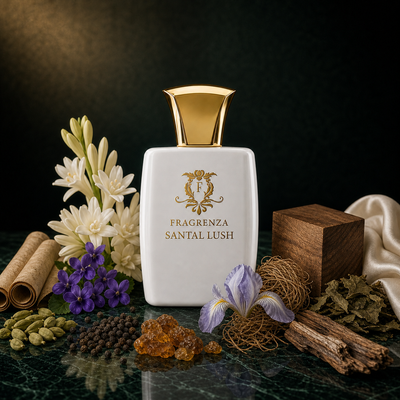

Natural or Synthetic: What Matters Most
The most important question isn't whether a fragrance uses naturals or synthetics — it's whether the overall composition is well-crafted and whether it smells good on your skin. The world's finest perfumers use both, judging each ingredient on its merits.
Discover the quality of thoughtfully formulated fragrance for yourself — browse Fragrenza's best-sellers and experience what great modern perfumery can deliver at an honest price.