

Where to Buy Niche Perfumes in 2026: A Practical Guide
Where to Buy Niche Perfumes in 2026: A Practical Guide, an editorial deep-dive on notes, character, and how to wear it
By Julia MorettiFragrenza makes several of the alternatives featured in our guides — here’s how we test.
7 min read
Niche perfumery used to be a closed world. A handful of boutiques in Paris, Milan, and New York carried the brands worth knowing, and everyone else made do with whatever the local department store deigned to import. That world is gone. The internet has made niche fragrance globally accessible, but it has also flooded the category with mediocre brands, knockoffs, and questionable retailers who exploit the niche label without delivering the substance.
This guide walks through where to actually buy niche perfume in 2026, the architectural families that define the niche world, the brand-and-house lineages worth knowing, and how Fragrenza fits into the modern niche-accessible landscape. It's the orientation guide for anyone moving beyond the department-store catalog into the broader world of perfumery.
What "Niche" Actually Means
The word "niche" in fragrance is more cultural than legal. Roughly, it refers to brands that operate outside the mass-market distribution model — typically smaller production runs, higher-quality ingredients, distinctive perfumer signatures, and pricing that reflects both the production economics and the prestige positioning. Brands like Parfums de Marly, Roja Parfums, Initio, and Maison Francis Kurkdjian are commonly described as niche.
The boundary between niche and luxury-mainstream has blurred over the past decade. Tom Ford operates as a mainstream luxury brand with niche-adjacent product positioning; Creed has institutional history but increasingly mainstream distribution; Le Labo was niche, became LVMH-owned, and now occupies a hybrid position. The label matters less than understanding what each brand actually delivers.
The Architectural Families of Modern Niche
Niche perfumery organizes loosely around several architectural families. Modern oriental fragrances — warm-base, often with oud, saffron, or amber anchors — dominate one wing of the niche world. Refined floral orientals like the Parfums de Marly lineage occupy another. Gourmand and skin-scent compositions, exemplified by Maison Francis Kurkdjian and Initio, have grown rapidly in the past five years. And ultra-niche artisanal compositions — small-batch, perfumer-driven, often experimental — occupy the high end of the category.
Understanding these families helps you navigate the niche world without buying randomly. Each family has its conventions, its star performers, and its emerging brands. Fragrenza's catalog is built explicitly around these families, with picks that capture the architectural essence of the most influential niche references. For deeper material on note structures, see our notes-in-perfumery archive.
Adeline — The Refined Floral Oriental Reference
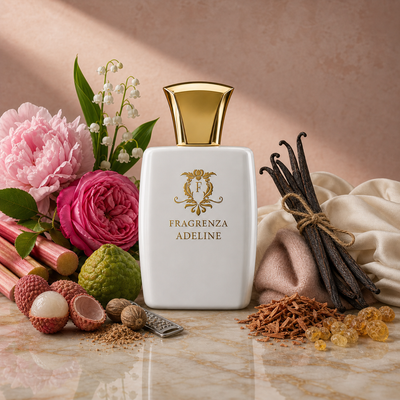
Adeline is Fragrenza's reference point for the refined floral oriental space exemplified by Parfums de Marly Delina — a category that has defined a generation of niche feminine fragrance. The architecture is rose-and-lychee with warm-base support, projecting at the confident-but-not-loud range that characterizes the modern niche feminine. Adeline captures the structural essence of this category without the four-figure price tag.
Understanding Adeline as a reference fragrance is useful even if you don't buy it directly — it tells you what to look for in the broader refined-floral-oriental category. The combination of cool-floral top, warm-fruit middle, and amber-and-musk base is the architecture that defines this whole family of modern niche compositions.
Pompeii Fantasy — The Smoky-Oriental Reference
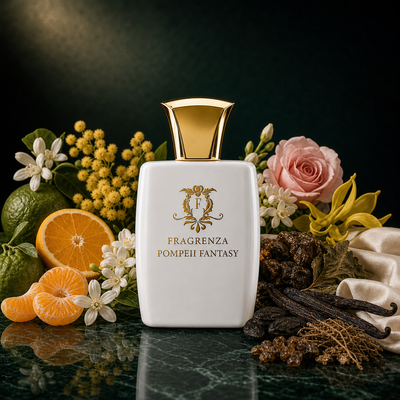
Pompeii Fantasy operates as Fragrenza's reference for the smoky, slightly mysterious oriental tradition exemplified by certain Roja Parfums and Amouage compositions. The architecture combines warm spices with smoky undertones and a long, slightly resinous base — the kind of fragrance that signals serious niche literacy without crossing into goth-perfumery cliché.
This family of fragrance reads as grown-up and architecturally complex, which is why it remains a touchstone for serious collectors. Pompeii Fantasy captures the essential structural appeal of the family while remaining wearable in real-world contexts — not every smoky oriental needs to be reserved for theater openings and gallery vernissages.
Hawaii Wood — The Warm-Wood Niche Reference
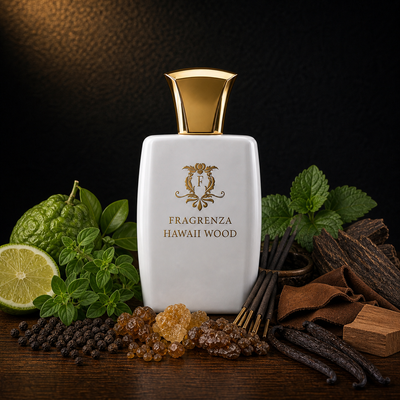
Hawaii Wood references the warm-wood, slightly tropical wing of niche perfumery exemplified by certain Initio and Atelier Cologne compositions. The architecture combines soft tropical fruit notes with creamy woods and a clean musk base, producing the kind of fragrance that reads as both relaxed and refined — a difficult balance to strike, and one that defines a specific slice of contemporary niche.
This family of fragrance has grown rapidly in the past five years as buyers have shifted away from heavier orientals toward warmer-but-lighter compositions. Hawaii Wood demonstrates how the family works architecturally and gives wearers a credible entry point into this style without the niche-house price tag.
Caramelle Rosse — The Gourmand-Niche Reference
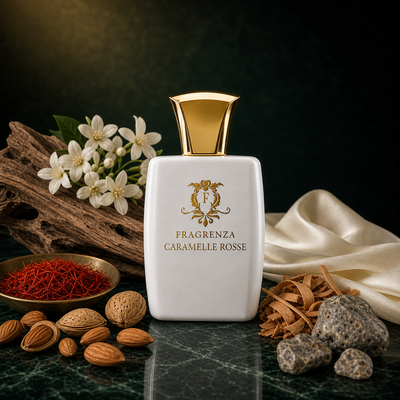
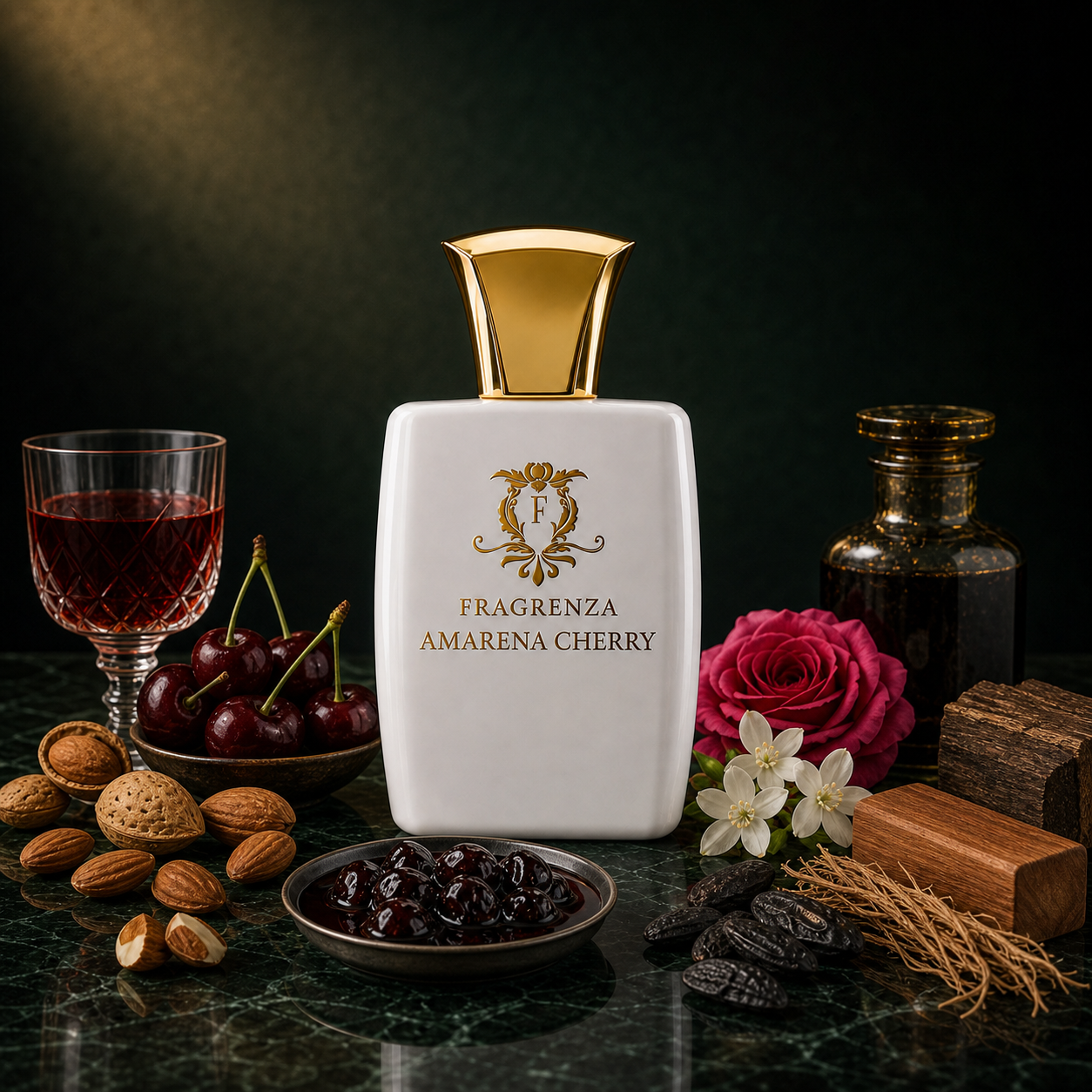
Caramelle Rosse references the modern niche gourmand category that has dominated bestseller lists for the past three years — the family that includes Tom Ford's Electric Cherry, Kayali's various cherry-and-vanilla compositions, and the broader "sweet-but-grown-up" niche tradition. The architecture combines fruit-forward top notes with creamy gourmand bases, calibrated for projection that registers without overwhelming.
The gourmand-niche category is one of the easiest entry points to niche fragrance for buyers coming from mainstream perfumery, because the warm-sweet architecture maps comfortably to familiar reference points. Caramelle Rosse demonstrates how this family works at scale, with the kind of architectural rigor that separates serious niche gourmands from candy-sweet mainstream alternatives.
Where to Actually Buy
Authorized retailers remain the safest source for established niche brands. Luckyscent, Twisted Lily, Aedes Perfumery, and similar specialty retailers carry curated selections with reliable provenance. Bergdorf Goodman, Saks, and select Nordstrom locations carry the larger niche houses. For the smaller artisanal brands, direct-from-brand purchases are often the only reliable option.
Beware of the third-party Amazon and eBay marketplace for niche fragrance — counterfeits and degraded gray-market stock are common, and authentication is difficult. The price differential rarely justifies the risk. For Fragrenza-style architectural references built at accessible price points, direct-from-Fragrenza purchasing avoids both the counterfeit problem and the niche-house pricing problem simultaneously.
How to Sample Before You Buy
Niche fragrances cost too much to buy blind. Decant services — The Perfumed Court, Surrender to Chance, and similar sample-sellers — allow you to try expensive fragrances in 1ml to 10ml samples for a fraction of full-bottle prices. Many niche brands also offer official discovery sets or sample programs. Use these aggressively before committing to a full bottle.
The Fragrenza catalog offers a related advantage: the price-to-quality ratio makes the trial-cost much lower than testing established niche houses. You can experiment across the architectural families without the financial barrier that has historically made niche perfumery a high-cost category to learn.
Building Your Niche Literacy
Niche perfumery rewards study. Spend time understanding the architectural families before chasing individual fragrances. Read perfume reviews on Fragrantica, Basenotes, and similar communities to understand how experienced wearers describe the niche houses. Pay attention to which perfumers built which fragrances — the same nose often produces consistently appealing work across multiple houses.
For internal foundations on how niche perfumery is structured architecturally, see our anatomy of a perfume guide. For wearing strategies that work for the niche-architecture family, see our occasions guide.
Related Reads
- Anatomy of a perfume
- Different fragrances for different occasions
- Perfume concentrations
- Perfume storage tips
- Oud in perfumery
- Saffron as a note
- Fragrance etiquette
Frequently Asked Questions
What's the difference between niche and designer fragrance?
Designer fragrance is produced by fashion and luxury brands as part of broader brand ecosystems — Chanel, Dior, Tom Ford, etc. Niche fragrance is produced by smaller houses focused primarily on perfumery. The boundary has blurred significantly: Tom Ford produces niche-positioned Private Blend alongside mass-market designer scents, and brands like Le Labo have been acquired by luxury conglomerates while retaining niche positioning. The label matters less than the substance.
Are niche fragrances actually better than designer?
On average, yes — niche fragrances typically use higher-quality ingredients, longer development cycles, and more distinctive perfumer signatures. But "better" depends on what you're optimizing for. A well-built designer fragrance can outperform a mediocre niche one. Quality is composition-by-composition, not category-by-category.
How much should I expect to pay for niche fragrance?
Established niche houses typically price between $200 and $400 for a 75-100ml bottle, with ultra-luxury and artisanal brands extending well above $500. Fragrenza-style architectural references that capture the niche-family essence at accessible pricing typically run between $40 and $80 for similar sizes, which is part of the appeal for buyers moving into the category.
Can I trust niche fragrances sold on Amazon?
Generally, no. Third-party sellers on Amazon and similar marketplaces have a documented counterfeit problem with niche fragrance, and authentication is difficult for buyers. Even when the product is authentic, gray-market stock has often been stored under poor conditions. Buy from authorized retailers, direct from the brand, or from established niche specialty retailers.
What's the easiest niche family to start with?
The refined floral oriental category (exemplified by Parfums de Marly Delina, and referenced architecturally by Adeline) is one of the most accessible niche entry points. The structure is approachable, the projection is calibrated for daily wear, and the architectural conventions translate easily from mainstream feminine perfumery. Gourmand niche fragrances are another easy entry point for the same reasons.
Should I buy decants before committing to a full bottle?
Yes, always, for fragrances above $150 per bottle. Decants let you wear the fragrance across multiple days and contexts before committing, which catches mismatches that an in-store sample test won't reveal. Spending $15 on a 5ml decant to avoid a $400 buyer's-remorse purchase is the most reliable money in niche perfumery.
The Bottom Line
Where to buy niche perfume depends on what you mean by niche. Authorized specialty retailers and direct-from-brand purchases are the safest sources for established niche houses. Decants services let you sample before committing. And Fragrenza's architectural-reference catalog offers an accessible alternative for wearers who want the structural essence of the niche families without the heritage-brand pricing. Build your niche literacy through study and sampling, and the broader world of perfumery becomes navigable rather than overwhelming.