

Bitter Almond in Perfumery: The Dark, Powdery Note Behind Iconic Scents
Bitter Almond sits as a slow, soft gourmand anchor: sugar-warm, cream-soft, low-lit, lingering close to skin past the heart.
By Julia Moretti 5 min read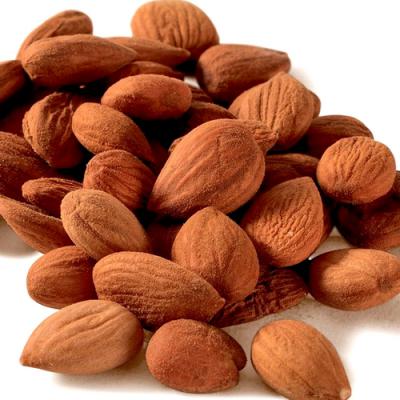
A Fruit with Deep Roots: The Ancient Story of the Almond
The almond tree has been cultivated for thousands of years across the Mediterranean, the Middle East, and Central Asia. Ancient Greeks revered it as a symbol of fertility, linking the tree to the goddess Phyllis, who was said to have transformed into an almond tree upon her death — and bloomed again when embraced by her beloved. In early Christian iconography, the almond shape, known as the vesica piscis, framed images of the Virgin Mary, associating the fruit with purity and divine femininity.
There are two distinct species of almond: the sweet almond we eat, and its wilder, more volatile sibling — the bitter almond. The bitter almond tree (Prunus dulcis var. amara) produces a kernel that is chemically complex and, in its raw state, genuinely dangerous. It contains amygdalin, a compound that releases hydrogen cyanide when processed. This makes raw bitter almond oil toxic and strictly controlled. Yet it is precisely this dangerous intensity that makes its refined, purified derivatives so captivating in perfumery.
How Bitter Almond Smells: The Duality of Danger and Delicacy
Once the toxic hydrocyanic acid is removed, bitter almond essential oil reveals a scent that is simultaneously familiar and mysterious. At its core is benzaldehyde — a molecule that smells unmistakably of marzipan and cherry liqueur, with a slightly sharp, almost medicinal edge. It is richer and more complex than sweet almond: warmer, slightly nutty, with soft balsamic undertones and a faint ghostly whisper of cherry and fresh hay.
The most striking quality of bitter almond is its powdery depth. Where sweet almond reads as gentle and confectionery-soft, bitter almond carries a darker, more sophisticated character. It sits beautifully between gourmand and floral, between nostalgia and luxury. There is something almost retro about it — reminiscent of vintage French pastry counters, of amaretti biscuits wrapped in tissue paper, of an old-fashioned dressing table scattered with face powder.
From Kernel to Perfume: Extraction and Chemistry
The production of bitter almond oil is a delicate industrial process. The dried kernels — often obtained as a byproduct of apricot, peach, or plum processing — are cold-pressed and then steam-distilled to yield the primary aroma compound, benzaldehyde. Because natural bitter almond oil contains trace hydrocyanic acid, it must be rigorously processed before it can be used safely in cosmetics and fragrance. The final ingredient used by perfumers is typically either rectified natural benzaldehyde or a fully synthetic version.
Several related molecules are also used to build the bitter almond facet in modern perfumery. Heliotropin (piperonal), discovered in the 19th century from heliotrope flowers, introduces a powdery, floral almond quality with vanilla undertones. Anisic aldehyde contributes a sweeter, more honeyed almond note. Amandolene, developed by Firmenich, adds delicate, green-floral almond character. Together, these molecules allow perfumers to build nuanced, multidimensional bitter almond accords — from sharp and crystalline to creamy and enveloping.
How Perfumers Use Bitter Almond
Bitter almond is not an easy ingredient to work with. Its character is bold and directional — it tends to push a fragrance toward the gourmand or oriental spectrum. Used with a heavy hand, it can smell unpleasantly medicinal or overpoweringly of marzipan cake. But in skilled hands, it brings extraordinary richness.
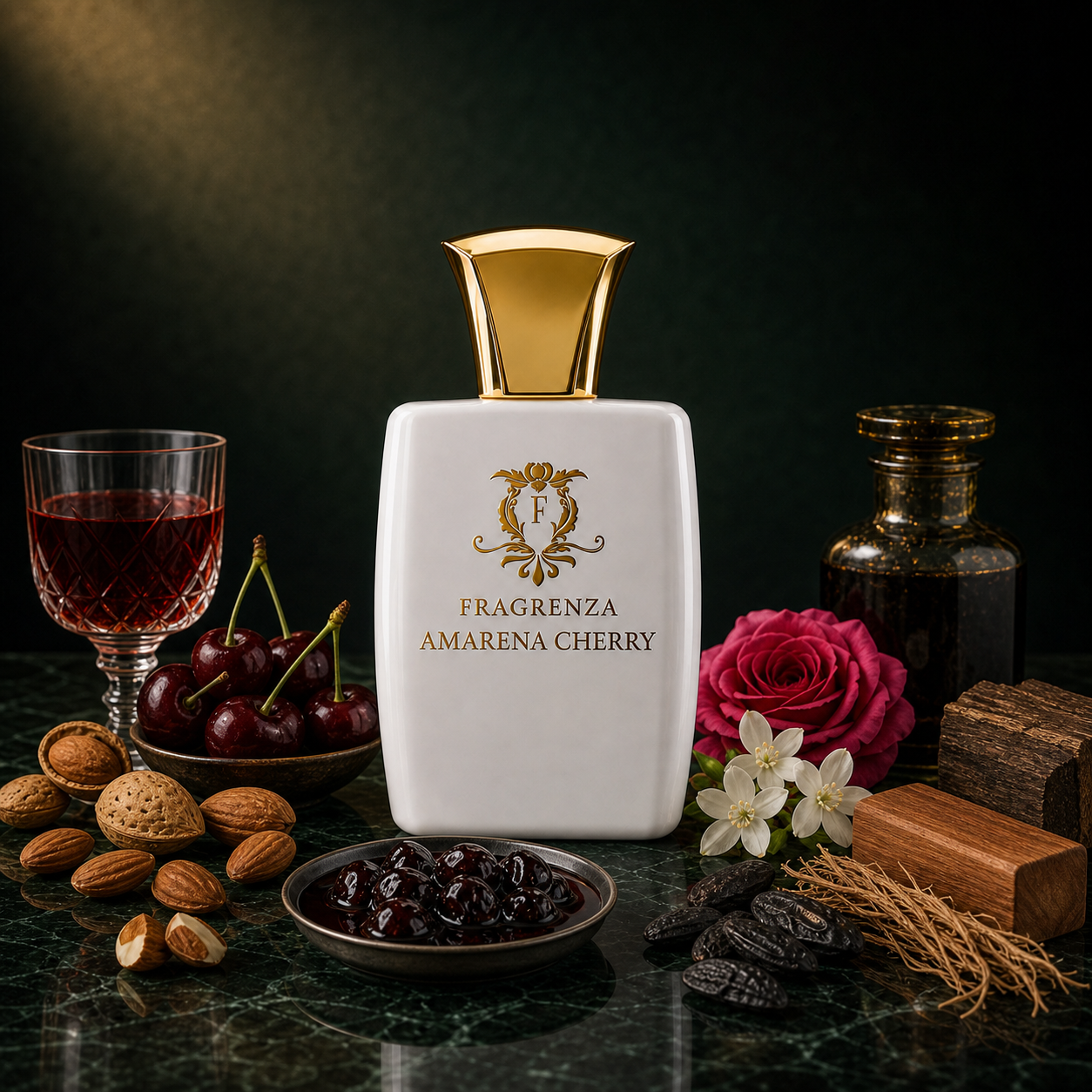
Perfumers most commonly place bitter almond in the base or heart of a composition, where its fixative qualities help anchor more volatile top notes while adding indulgent warmth. It pairs brilliantly with vanilla, tonka bean, and benzoin, which amplify its powdery sweetness. Combined with cherry, plum, or blackcurrant, it deepens into a darkly fruity accord. With rose or jasmine, it tempers floral brightness into something more feminine and fleshy. In masculine orientals, its nutty edge marries surprisingly well with tobacco, leather, and incense.
One of bitter almond's most remarkable partnerships is with patchouli — the two share an earthy sweetness that gives oriental compositions an almost edible warmth without tipping into pure confection. This quality has made bitter almond a cornerstone of the modern gourmand fragrance family.
Famous Fragrances Built on Bitter Almond
Bitter almond made its most significant mark on contemporary perfumery through Thierry Mugler's revolutionary Angel (1992). Angel was the fragrance that invented gourmand perfumery as a category — and bitter almond's marzipan warmth was central to its DNA, underpinning the famous accord of chocolate, caramel, patchouli, and vanilla. The fragrance's audacity shocked the industry and captivated millions.
Guerlain's L'Instant Magic (2007) brought bitter almond to the fore more explicitly, placing it as a structural base note alongside white musk, vanilla, and cedar. The result was a fragrance of powdery feminine depth. Guerlain's iconic L'Heure Bleue, one of perfumery's most celebrated compositions, uses bitter almond's predecessor compound (heliotropin) to create its famous powdery, melancholy heart.
Christian Dior's Hypnotic Poison — a dark, sensuous oriental — deploys bitter almond as a central pillar alongside carvi, jasmine, and vanilla, creating one of the most recognizable fragrance signatures of the 1990s. Lancôme's enduringly popular La Vie est Belle uses bitter almond to sweeten and warm its iris-and-praline structure, giving the fragrance its distinctly comforting, enveloping quality. If you're drawn to this kind of luminous, warm floral-gourmand character, our Belle di Verona — our interpretation featuring iris, praline, and patchouli — captures exactly that spirit.
Other notable appearances include Guerlain's La Petite Robe Noire, Bulgari's Mon Jasmin Noir L'Eau Exquise, and Roberto Cavalli's Essenza. Even in men's perfumery, Guerlain's L'Homme Idéal proved that bitter almond could work brilliantly in a masculine context, pairing it with coffee, leather, and vetiver for an unexpectedly elegant result.
Pairing Notes: What Works with Bitter Almond
- Vanilla and tonka bean: The natural companions — they reinforce each other's sweetness and create silky, powdery orientals.
- Cherry and plum: Benzaldehyde is essentially the molecule of cherry; this pairing creates rich, intoxicating fruity-oriental accords.
- Patchouli: Earthy, dark sweetness that grounds the almond note and prevents it from becoming cloying.
- Rose and jasmine: Softens the floral heart with a nutty warmth, creating vintage-style feminine florientals.
- Incense and benzoin: Adds a smoky, resinous depth that lends bitter almond an almost sacred quality.
- Coffee: A more contemporary pairing, creating intensely roasted, gourmand masculines.
A Note That Has Earned Its Place in Perfumery's Pantheon
Bitter almond arrived relatively late in fine perfumery — its industrial purification was not mastered until the 20th century — yet it has wasted no time becoming indispensable. It occupies a unique space: simultaneously ancient (linked to the oldest cultivated trees in the world) and thoroughly modern (a cornerstone of the gourmand revolution). Its powdery warmth speaks to something deeply primal in us — the comfort of sweetness, the nostalgia of pastry kitchens, the allure of dark, slightly dangerous beauty.
For the perfumer, it is an ingredient of extraordinary versatility. For the wearer, it is one of those rare notes that feels at once deeply personal and universally appealing. Bitter almond is proof that the most compelling ingredients in perfumery are often those that walk the edge between pleasure and peril. Explore our full range of ambery and oriental fragrances to discover just how many beloved classics carry bitter almond's signature warmth.