

Dried Fruits in Perfumery: The Opulent Notes of the Orient
Dried Fruits reads as a soft modern signature: clear, dry, evenly cool, threading a measured technical line through any composition.
By Julia Moretti 6 min read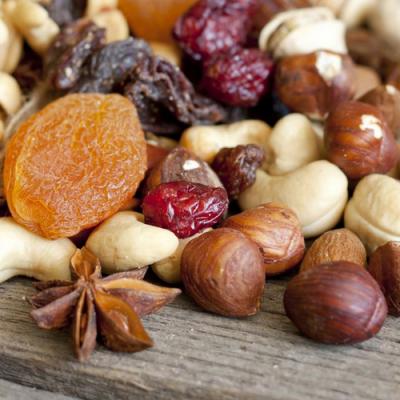
The Scent of a Souk: Richness, Warmth, and Mystery
There is a particular smell that seems to inhabit the great covered markets of North Africa and the Middle East — the souks of Marrakech, the bazaars of Cairo, the ancient spice markets of Muscat. It is a smell compounded of many things: cumin and rose water, leather and incense, the sweetness of dates and figs, the dark intensity of dried plums and raisins desiccated in the sun. It is warm and complex and slightly intoxicating, and it carries with it a sense of antiquity, of trade routes and caravans, of civilisations built on the exchange of precious things.
Dried fruit notes in perfumery are one of the most direct evocations of this olfactory world. They represent a fragment of that souk-smell bottled for Western consumption — the warm, dark, slightly jammy sweetness of fruits that have been concentrated by the sun into something far more intense and complex than the fresh fruit could ever be. In the context of fine fragrance, dried fruits occupy a specific and irreplaceable position within ambery and oriental fragrances: they bring richness without heaviness, sweetness without cloying, depth without obscurity.
The History of Dried Fruits in Human Culture
The practice of drying fruits to preserve them dates to antiquity and represents one of humanity's earliest and most successful food preservation technologies. Dried figs have been found in Egyptian archaeological sites dating to 3000 BC. Date palms were cultivated in the Tigris-Euphrates valley thousands of years before the Common Era, and dried dates were among the most traded commodities on ancient Middle Eastern trade routes. Raisins were produced in the eastern Mediterranean at least as early as the Bronze Age, and prunes — dried plums — have been a staple of Middle Eastern and Mediterranean diets for millennia.
The drying process transforms a fruit fundamentally, both chemically and aromatically. As water evaporates, the fruit's sugars concentrate dramatically, creating the characteristic intense sweetness. Simultaneously, Maillard reactions and oxidative processes generate hundreds of new aromatic compounds — the same chemical reactions responsible for the complex flavours of coffee, caramel, and toasted bread. The result is an ingredient that shares some characteristics with the fresh fruit but is far more complex, far more intense, and far more aromatic.
It is this intensification — this concentration of aromatic potential — that makes dried fruits so valuable to perfumers. Fresh fruits are delicate and volatile, difficult to capture and difficult to sustain in a fragrance composition. Dried fruits are bold, persistent, and structurally rich, capable of anchoring an entire composition rather than merely decorating its opening.
How Dried Fruits Smell in Perfumery
Dried fruit notes in perfumery encompass a range of distinct but related aromatic profiles:
- Dried fig — warm, jammy, with a distinctive milky-woody undertone; slightly resinous and honeyed
- Date — intensely sweet, caramellic, with a warm, slightly spiced quality that approaches toffee or butterscotch
- Dried plum and prune — dark, jammy, slightly smoky, with a richness that borders on the vinous — an almost wine-like depth
- Raisin — fermented sweetness, slightly alcoholic in character, with a sun-warmed dryness
- Dried apricot — warm, peachy, slightly lactonic, with the particular concentrated sweetness of stone fruit
What all these notes share is a warmth and intensity that fresh fruits cannot match. They feel like the olfactory equivalent of a fortified wine versus a light table wine — everything concentrated, amplified, deepened by the passage of time and the action of the sun.
Creating Dried Fruit Notes
Unlike many fresh fruit notes, which must be entirely reconstructed from synthetic molecules because no essential oil is obtainable, some dried fruit materials can be worked with directly in perfumery. Dried fig absolute, for example, is a real material — though expensive and difficult to source consistently. Dried plum and date extracts are used in niche perfumery, where their rich, complex natural aromatic profiles are valued for the complexity they bring to compositions.
More commonly, however, dried fruit notes in niche and mainstream perfumery are built from synthetic reconstructions: combinations of lactones (for the creamy, fruity richness), prune-related and plum-related materials, vanilla and benzoin (which share resonant aromatic territory with many dried fruits), and various warm-sweet aromachemicals. The darkness of a prune note, for example, is often enhanced by the careful addition of smoky or leathery materials — a small quantity of birch tar or labdanum can dramatically improve the authenticity of a dried plum accord.
Dried Fruits in Landmark Fragrances
The fragrance that first placed dried fruit notes within a recognisably fine fragrance context was Balenciaga's Talisman (1994) — an extraordinary and genuinely bold creation that combined dramatic floral top notes with the dark warmth of dried fruits, spices, and resins before settling into a base of sandalwood, patchouli, and beeswax. Talisman was commercial perfumery's first significant acknowledgement that dried fruit notes could serve not merely as exotic decoration but as central structural elements of a sophisticated composition.
Tom Ford's Tobacco Vanille (2007), part of the Private Blend collection, represents perhaps the most celebrated use of dried fruit notes in contemporary niche perfumery. Its extraordinary opening — aromatic tobacco with spice and dried fruit — gives way to a heart of pure tobacco leaf with the jammy, slightly wine-like sweetness of dried fruits alongside sap and raw cocoa. The dried fruit notes are what give Tobacco Vanille its particular character of Old World luxury — its sense of a library or a gentlemen's club, of fine tobacco and precious things.
Hermès' Vétiver Tonka (2004) explored similar territory with more restraint — the dried fruit dimension appearing within a broader woody-gourmand composition that positioned these notes as part of an intensely sophisticated, resolutely masculine creation. And the Yves Saint Laurent Noble Leather demonstrated that dried fruits could work even within a leather fragrance context, the dark sweetness of dried plum creating a fascinating dialogue with the tannin-and-birch of the leather accord.
How Perfumers Use Dried Fruit Notes
Dried fruit notes in perfumery typically appear as heart or base notes — their intensity and persistence make them better suited to anchoring a composition than opening it. They work particularly well as transitional elements, bridging the gap between a spiced or floral top note and a warm, resinous base of amber, sandalwood, and musk.
The most successful uses of dried fruit notes share a common quality: they are integrated rather than isolated. A dried fig note dropped into a conventional oriental without careful thought becomes simply sticky sweetness. But dried fig woven through a composition alongside spices, oud, rose, and leather creates something genuinely multidimensional — a complexity that unfolds over hours and reveals new facets as the fragrance develops on skin.
Pairing Notes for Dried Fruits
- Oud and agarwood — the natural partner; dried fruits and oud share a dark, resinous intensity that creates extraordinary depth when combined
- Amber and labdanum — amplifies the warm sweetness of dried fruits into something truly opulent and long-lasting
- Rose — the combination of dark dried fruit and rose is a classic of Middle Eastern perfumery, elegant and deeply satisfying
- Saffron and warm spices — the intersection of spice and dried fruit is the beating heart of traditional oriental perfumery
- Tobacco and leather — creates complex, masculine compositions of great sophistication and longevity
- Vanilla and benzoin — amplifies the sweet-warm quality of dried fruits into a soft, enveloping warmth
The Enduring Appeal of Dried Fruit Notes
In a fragrance landscape that has at times been obsessed with freshness and transparency, dried fruit notes represent an unapologetic counterargument: a defence of richness, of warmth, of the particular beauty of complexity that only time and concentration can produce. They are not for everyone. They demand a wearer willing to commit to something opulent, something that takes up space in a room and leaves a trace in memory.
But for those who appreciate them — and the continued commercial success of fragrances like Tobacco Vanille suggests that audience is substantial — find similarly rich options among our best sellers — dried fruit notes offer something rare in contemporary perfumery: a genuine sense of history, of tradition, of the ancient trade routes along which these precious ingredients once travelled. In every great dried fruit fragrance, you can catch, just for a moment, the smell of that Marrakech souk.