

Caramel in Perfumery: The Gourmand Note That Redefined Modern Fragrance
By The Fragrenza Team 8 min read
Few notes in contemporary perfumery have done more to reshape the industry than caramel. Rich, warm, and unmistakably edible, it sits at the very heart of the gourmand movement — a style of fragrance that dared to smell like something you might actually want to eat. Where earlier perfumery aspired to the abstract and the botanical, caramel brought desire down to earth, into the kitchen, onto the tongue. It is one of the most recognisable smells in the world, and its translation into fine fragrance has been nothing short of revolutionary.
What Does Caramel Smell Like in Perfumery?
Real caramel is the product of sugar under heat — a transformation process called pyrolysis that converts sucrose into a dazzling complexity of compounds. The smell is sweet but never simple. There is a butterscotch richness at the core, a slightly toasted, burnt-sugar edge that prevents it from being cloying, and underneath that a deeper, almost smoky roundness that lengthens in the finish. Depending on how far the caramelisation goes, the note can range from pale and milky-sweet to dark and bittersweet, almost treacly, with a faint hint of the slightly acrid.
In perfumery, caramel is reproduced using aroma chemicals rather than real caramel extract. This is partly practical — true caramel does not survive the alcohol suspension of a perfume without degrading — and partly creative, because synthetic reconstruction allows perfumers to isolate and amplify the most beautiful facets of the smell while discarding the less wearable ones. The result is a caramel that is smoother, more diffusive, and more persistent than anything you could pour from a saucepan.
The Key Aroma Chemicals in Caramel Accords
Ethyl maltol is the workhorse of caramel and cotton-candy accords. It has an intensely sweet, slightly fruity, burnt-sugar quality that immediately reads as confectionery. Used at even low concentrations it floods a composition with warm sweetness; used heavily it can become syrupy and dense, which is why skilled perfumers deploy it carefully. Its close relative maltol is slightly less sweet and more smoky, closer to the dry, toasted edge of real caramel.
Furaneol — also known as DMHF, or 2,5-dimethyl-4-hydroxy-3(2H)-furanone — is a naturally occurring compound in caramel, pineapple, strawberries, and tomatoes. In perfumery it contributes a rounded, jammy sweetness that gives caramel accords their depth and authenticity. Diacetyl brings butterness, the same compound responsible for the aroma of real butter and a key player in popcorn accords. Cyclotene, sometimes called maple lactone, contributes a warm, slightly smoky sweetness reminiscent of maple syrup and butterscotch. Together, these molecules form an interlocking palette that perfumers blend in varying ratios to achieve different characters of caramel — from pale crème brûlée to dark toffee.
Benzyl acetate and various lactones add the creamy, slightly peachy roundness found in milk caramels. Lactones as a class are enormously important in gourmand perfumery generally — they are responsible for the creamy, fruity richness of many beloved notes including coconut, peach, and apricot, and they integrate beautifully with caramel’s sweetness. For a closer look at how amber-family materials interact with these sweet accords, our article on amber in perfumery covers the resinous, balsamic base notes that so often anchor caramel compositions.
The History of Caramel in Perfumery
For most of the twentieth century, caramel had no meaningful role in fine fragrance. The industry’s orientation was toward flowers, woods, musks, and resins — materials with long traditions and established cultural prestige. Gourmand notes were for soaps and candles, perhaps, not for the serious business of Parisian perfumery. The occasional heliotrope — that powdery, almond-cherry note with its faint confectionery undertone — was as close as mainstream perfumery got to dessert.
The pivot came in 1992. Thierry Mugler’s Angel, created by Olivier Cresp and Yves de Chirin, launched a fragrance built explicitly around caramel, chocolate, honey, and patchouli — a composition that had no precedent and that the industry greeted with profound scepticism. Buyers reportedly recoiled. Focus groups were baffled. And then the public, presented with something genuinely new, bought it in staggering quantities.
Angel didn’t just become a bestseller; it became a category-defining moment. The term “gourmand” entered the fragrance vocabulary. Caramel, its most recognisable representative, became a legitimate and prestigious ingredient. What followed over the next three decades was an extraordinary proliferation of caramel-based releases across every segment of the market, from mass-market body sprays to the most exclusive niche houses.
By the 2000s, caramel had colonised the flanker market — every successful warm feminine fragrance seemed to spawn a sweeter, more caramelised version. The 2010s brought salted caramel to perfumery as the food trend translated into fragrance, adding a saline, mineral sharpness that transformed what had occasionally seemed cloying into something genuinely sophisticated. Today, caramel is one of the most versatile and commercially important notes in perfumery, present in everything from romantic evening scents to warm casual daywear.
Iconic Caramel Fragrances
The roll call of influential caramel-led fragrances is a history of the gourmand genre in miniature. Thierry Mugler Angel remains the founding text — its particular vision of caramel as dark and patchouli-deepened rather than soft and sweet still feels distinctive decades later. Lancôme La Vie Est Belle, with its iris-praline-patchouli accord, delivers caramel in a more accessible, luminous register; our La Vie Est Belle dupe is one of the most loved warm feminine releases in our collection.
Yves Saint Laurent Black Opium pairs caramel’s sweetness with coffee and white flowers for an electric, nocturnal gourmand that feels simultaneously cosy and vivid. The interplay between the bitter coffee and the sweet caramel is one of the great contrasts in contemporary perfumery. You can experience the same accord in our Black Opium dupe.
Tom Ford Tobacco Vanille takes caramel into darker, more opulent territory — pairing it with tobacco, vanilla, and dried fruit for a deeply indulgent composition that feels like a private library in winter. Our Tobacco Vanille dupe captures that same smoky, caramelised luxury at a fraction of the price.
In the niche world, Baccarat Rouge 540 by Maison Francis Kurkdjian takes a more abstract approach: its famous accord of saffron, ambers, and jasmine includes a caramelised facet that reads less like dessert and more like warm skin suffused with golden light. It has become one of the most imitated fragrances of its era. Our Baccarat Rouge 540 dupe translates that singular warmth beautifully.
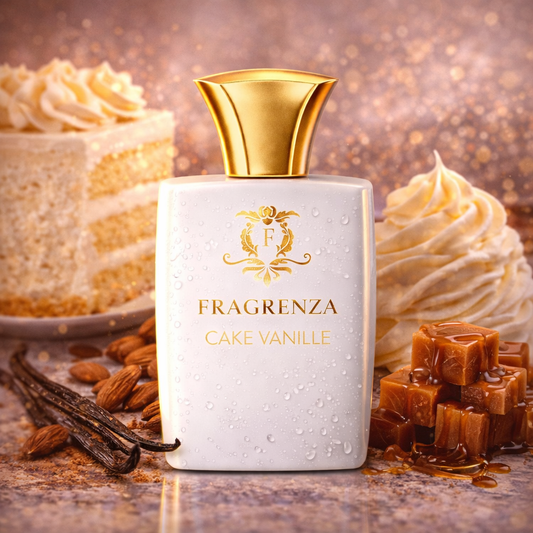
For those who prefer their caramel in a more playful, openly confectionery register, our own Cake Vanille leans into the note with unapologetic warmth and sweetness, pairing it with vanilla and soft musks for a composition that is comforting without being overwhelming.
How Caramel Interacts With Other Notes
Caramel is one of the most integrative notes in perfumery — it bonds with an enormous range of materials and rarely clashes. Its most natural allies are the other warm, resinous, and sweet notes: vanilla deepens it, amber extends it, benzoin adds a milky-smoky quality that feels both ancient and modern. Tonka bean — with its coumarin-rich, hay-like sweetness — is perhaps caramel’s most sympathetic companion; the two together create an accord of extraordinary softness and persistence. Our article on coumarin in perfumery explores this relationship in depth.
Coffee and tobacco are transformative pairings. Both are bitter, roasted materials that cut through caramel’s sweetness and give a composition the kind of adult complexity that prevents a gourmand fragrance from reading as juvenile. The contrast between the dark, slightly harsh character of coffee and the warm, smooth sweetness of caramel is the dynamic that makes Black Opium and its many descendants so compelling.
Patchouli, used at any concentration, changes the entire character of a caramel accord. At low levels it adds earthiness and longevity; at higher concentrations it begins to dominate, creating the dark, almost medicinal-sweet tension that is Angel’s distinctive signature. Patchouli prevents caramel from being merely sweet — it gives it weight, shadow, and a slightly transgressive edge.
Fruits, particularly dried fruits and stone fruits, integrate naturally with caramel’s sugar chemistry. The toffee apple accord — sharp fruit surrounded by warm caramel — is a classic of the genre. Our piece on dried fruits in perfumery examines how the sweeter, more concentrated forms of fruit notes interact with warm base materials like caramel and vanilla.
Florals can anchor caramel beautifully when chosen carefully. Rose adds a slightly spiced, honeyed depth. Jasmine introduces an indolic richness that plays interestingly against the sweetness. Iris brings a powdery, starchy quality that softens and refines the accord, preventing it from feeling heavy. The great commercial caramel fragrances have almost all used floral notes as counterweights — giving the sweetness somewhere graceful to rest.
Caramel for Every Wardrobe
One of caramel’s great virtues as a fragrance note is its versatility across concentration levels. In a light eau de toilette, it reads as a warm, slightly sweet finishing note — the kind of easy, comforting sillage that makes people lean in and ask what you’re wearing. In an eau de parfum concentration it becomes more substantial, capable of carrying a composition for eight hours or more. In an extrait or pure perfume it can become almost overwhelmingly rich — sticky and dark, a true presence rather than a suggestion.
The caramel-forward fragrances in our Women’s Fragrances collection span this range — from the quietly caramelised warmth of iris-praline compositions to the deeply indulgent warmth of vanilla-tobacco blends. There is a caramel fragrance for every mood, every season, and every degree of appetite for sweetness.
Seasonally, caramel is most at home in autumn and winter. The note has an interior quality — it belongs to warmth, to fireside evenings, to cold outside and comfort within. That said, some of the most successful caramel fragrances in our collection work beautifully year-round: when the caramel is lifted by citrus, tempered by florals, or brightened by a saline mineral note, it loses its heaviness and becomes perfectly wearable in milder temperatures.
Longevity is one of caramel’s genuine strengths. The ethyl maltol and lactone molecules that carry its character are relatively tenacious; they cling to fabric and skin with impressive persistence. A caramel fragrance worn in the evening will often still be detectable the following morning on a pillow or a scarf — which is either a pleasure or an inconvenience depending on your point of view, but is worth knowing.
Ultimately, caramel endures in perfumery for the same reason it endures in kitchens: it triggers something deep, pre-verbal, and profoundly pleasant. It is the smell of transformation — of something simple becoming something complex under the application of heat and time. In fragrance, as in cooking, that transformation is the whole point. Caramel tells a story of patience and warmth, of sugar becoming gold. It is, in the truest sense, alchemy — and it has never smelled better.