How to Choose Your Signature Scent: An Insider's Guide for 2026
The phrase signature scent gets used loosely, but it points at something specific and worth taking seriously
By Julia MorettiFragrenza makes several of the alternatives featured in our guides — here’s how we test.
8 min read
The phrase signature scent gets used loosely, but it points at something specific and worth taking seriously. A signature scent is the fragrance you wear often enough that people who know you associate it with your presence. It does not need to be the only fragrance you own. It does not even need to be the one you wear most. What makes a signature is repeated, deliberate use in contexts where you want to be remembered, and the consistency that lets the fragrance accumulate associations alongside your personality.
Choosing a signature scent is not the same as choosing your favourite fragrance. The favourite is the one you reach for when you want to delight yourself. The signature is the one you reach for when you want others to recognise you. Sometimes those overlap, but often they do not, and confusing the two leads to poor choices that frustrate the wearer and the people around them.
The most useful approach to choosing a signature is to think in terms of wardrobe slots. Just as you do not wear the same outfit to a board meeting and a beach picnic, you do not wear the same fragrance across every context. Building a fragrance wardrobe with intentionally chosen slots gives you a framework for selection that prevents impulse purchases and ensures every bottle you own earns its place.
The Five Core Wardrobe Slots
A complete fragrance wardrobe contains five slots, each tuned to a different context and emotional register. You do not need to fill every slot immediately, and some wearers will find that one or two slots dominate their actual life while others rarely come into play. But understanding all five gives you the diagnostic framework you need to identify gaps and avoid duplicating fragrances that occupy the same slot.
Slot One: The Daily Driver
The daily driver is the fragrance you wear most often, in the contexts where you spend most of your time: work, errands, casual meetings, ordinary social occasions. The defining qualities are wearability, low risk of olfactory clash with shared environments, and a structure that complements rather than dominates your presence. The daily driver should feel like an extension of your skin rather than a separate statement.
Genuine Touch
is a good example of a composition designed for the daily driver slot. The architecture is clean, aromatic, with enough complexity to remain interesting across a full day but enough restraint to remain professional in any setting. Compositions in this slot reward subtlety. A daily driver that demands attention is the wrong choice; the right choice is one that lets the wearer move through varied environments without ever having to think about how the fragrance will land.
Slot Two: The Evening Statement
The evening slot is where the daily driver's restraint gets replaced by deliberate presence. Evening fragrances are designed for contexts where the wearer wants to be noticed, where the scent is part of the intended impression. The materials tend to be heavier, the base notes more dominant, the longevity longer.
Sensual Flame
demonstrates the evening register. The composition uses a creamy floral heart against a spiced amber base that performs particularly well in the kinds of contexts where evening fragrances earn their keep: dinners, theatre, intimate gatherings, dates. The structure is deliberately rich without becoming overwhelming, which is the precise balance that distinguishes a great evening fragrance from a heavy one. Evening compositions should announce the wearer's presence and then sustain that announcement across several hours of close interaction.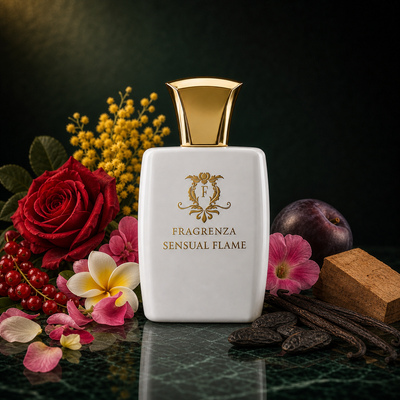
Slot Three: The Summer Companion
Summer wear is where many fragrance wardrobes fail. Heat amplifies fragrance projection while compressing wearability, and a composition that works beautifully in autumn can feel oppressive in July. The summer slot calls for fragrances built around materials that thrive in warmth: citrus, marine accords, light aromatic herbs, transparent woods.
Felce Marina
is designed precisely for this slot. The Mediterranean fougère architecture combines aromatic herbs, salty marine notes, and a soft mossy base in a way that reads as a coastal landscape and breathes naturally in heat. Summer fragrances should feel like a breath of air rather than a layer of insulation, and the architectural choices that produce this effect are quite different from those that make a great winter composition.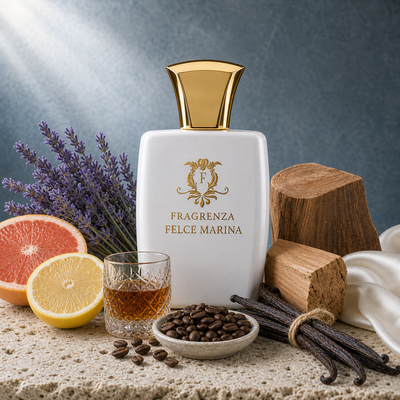
Slot Four: The Winter Companion
Cold weather is the opposite challenge. Low temperatures suppress fragrance projection and dampen volatile top notes, which means winter compositions need heavier, more substantial structures to register at all. Resinous bases, ambery hearts, dense gourmand profiles, and rich oriental architectures all perform well in winter where they would feel suffocating in summer.
Bontà
exemplifies the winter slot. The composition uses pistachio, creamy lactonic notes, and an amber base in a way that warms the wearer rather than competing with the environment. Winter fragrances should provide a sense of comfort and depth that the cold weather makes welcome rather than oppressive, and the gourmand-amber architecture is one of the most reliable structures for delivering this effect.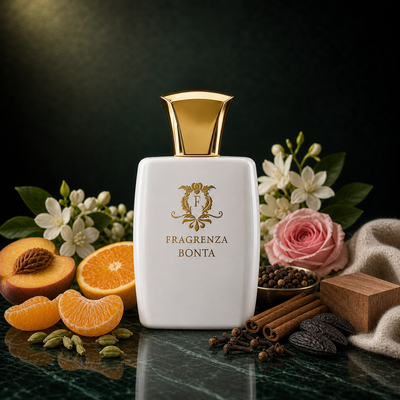
Slot Five: The Special Occasion
The special occasion slot is reserved for fragrances that you wear rarely enough that each wearing remains memorable, and rich enough that the wearing carries the weight of the occasion. These are often the most expensive compositions in a wardrobe, and the most architecturally ambitious. They are designed to be experienced fully rather than worn into the background.
Immortal Zeus
illustrates the special occasion register. The composition is dense, with a structure that demands attention and rewards extended wear, and the material complexity is high enough that it offers something new on each occasion it appears. Special occasion fragrances should feel like genuine events when you wear them, not part of the routine background of daily life.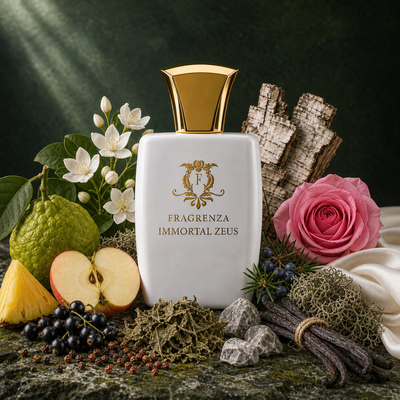
How to Audit Your Current Collection
Begin by listing every fragrance you currently own and assigning each to one of the five slots. The exercise often reveals significant gaps. Many wearers discover they have four daily drivers and no evening statement, or three winter compositions and nothing for summer. These gaps are the opportunities for thoughtful additions, and they are far more useful guides to future purchases than chasing the latest release or the buzziest brand.
How to Identify Your Signature Within the Wardrobe
Once you have a functioning wardrobe across the five slots, the signature scent typically emerges naturally from the slot you occupy most often. For wearers whose lives centre on professional contexts, the daily driver is likely the signature. For wearers with active evening social lives, the evening statement may take precedence. The signature is whichever fragrance you wear often enough that people associate it with you, which means it is determined as much by your lifestyle as by your taste.
Practical Rules for Building the Wardrobe
Add slots gradually. Buying five fragrances at once almost always produces regret. Wear each new addition for several weeks before adding another. Pay attention to how others respond, not just to how you feel about the fragrance yourself. Resist the temptation to fill every slot from the same house, as house style can create unintended consistency that defeats the purpose of having varied slots. Keep notes on what works and what does not. Over six to twelve months, your wardrobe will start to reflect a genuine olfactory personality, and your signature will become unmistakable.
Related Reads
- Exploring niche fragrances: building architectural understanding
- What is niche perfumery: the field your wardrobe explores
- How to choose a summer fragrance: deeper guidance for the warm-weather slot
- How to choose a winter fragrance: deeper guidance for the cold-weather slot
- Oud in Perfumery: a material for the special occasion slot
- Vanilla in Perfumery: an anchor for winter and evening compositions
Frequently Asked Questions
Should I really own five different fragrances?
You do not need to fill every slot immediately, but having access to compositions appropriate for different contexts produces a far better experience than wearing the same fragrance regardless of setting. Start with the two slots that match your most common contexts (often daily driver and evening statement), then add summer and winter as seasons demand, and reserve the special occasion slot for last.
How do I know which slot a fragrance belongs in?
The structure tells you. Light, transparent, aromatic compositions tend to be summer or daily-driver candidates. Heavy, resinous, ambery compositions tend to be winter or evening candidates. Special occasion compositions tend to have the highest material complexity and the most distinctive architectural identity. Wear a fragrance in several contexts before assigning it to a slot, as your own response will be more reliable than any classification on the box.
Can a daily driver become a signature scent?
Yes, and this is the most common pattern. Because the daily driver gets the most wearings, it accumulates the most associations with the wearer, which is precisely how a signature emerges. Wearers whose lives centre on professional contexts almost always have a daily driver as their signature, and there is nothing inferior about a signature that emerges from a daily-driver slot.
How long should I sample before committing to a slot purchase?
At least two weeks of varied wearings is the minimum, and a full month is better. Sampling in different weather, different social contexts, and different moods reveals how a fragrance actually behaves rather than how it presents during the initial honeymoon period. The wearings that matter most are the ones in the contexts you actually want the fragrance to serve.
Is it bad to own multiple fragrances in the same slot?
Not necessarily, but be intentional about it. If you have three winter compositions, make sure they offer genuinely different emotional registers rather than slight variations on the same structure. Most wearers find that one composition per slot is enough, and the desire to own duplicates often signals confusion about what each slot is supposed to deliver.
What if my lifestyle does not include some of these contexts?
Skip the slots that do not apply. A wearer who never attends formal events does not need a special occasion fragrance. A wearer who lives in a tropical climate may not need a winter composition. The wardrobe should reflect your actual life, not an aspirational version of it, and forcing slots you do not use is one of the easiest ways to waste money on fragrance.
The Bottom Line
A signature scent emerges from a well-built fragrance wardrobe organised around the contexts of your actual life. Think in slots, audit your collection, fill the gaps gradually, and let the signature reveal itself through use rather than trying to anoint it on day one. The wearer who treats fragrance as a wardrobe rather than a single decision ends up with a much richer olfactory life and a much more recognisable presence.