

Green Notes in Perfumery: The Cool, Leafy Register from Galbanum to Fig Leaf
Green Notes is a juicy, peel-bright fruit: sun-jam opening, ripe-bright midsection, with a soft sugared echo through the dry-down.
By Julia Moretti 10 min read
Green notes smell cool, fresh, and vegetal — like crushed leaves, freshly cut grass, snapped stems, and unripe sap, usually with a sharp, slightly bitter edge. They range from dewy and watery (violet leaf) to sharp and resinous (galbanum), adding a crisp leafy brightness that makes florals feel alive and gives chypres and fougeres their dry, aromatic bite.
The cool, leafy register of fine perfumery
Green notes are perfumery’s most distinctly aromatic family. Cool, sharp, slightly bitter, intensely vegetal, with a freshness that smells like crushed leaves, freshly cut grass, and stems broken at the garden, green notes contribute the bright vegetal counterweight that distinguishes a great floral from a powdery one and that gives chypre and fougere structures their characteristic dry-aromatic bite. The category is among the most technically demanding to use well — too much green and a composition reads as harsh and sap-like; too little and the structure loses the cool counterpoint that makes the warm materials sing.
This is the guide to green notes as a perfumery category. The major green materials and their distinct characters, the chemistry behind the leafy-aromatic register, the cultural moment that brought green perfumery into the mainstream, the famous fragrances that put greens to work, the Fragrenza compositions that use the green register, and how to think about the category in your own wardrobe.
The major green materials of perfumery
Several distinct materials make up the green-note category, each with a particular aromatic profile.
Galbanum (Ferula gummosa, an aromatic resin from Iran) is the foundational green material in fine perfumery. The resin yields an intensely green, sharp, slightly bitter aromatic oil that smells of stems and freshly broken twigs. Galbanum has anchored green-chypre and green-floral perfumery since the early twentieth century. Vent Vert (Balmain, 1947) used it heavily; Chanel No. 19 (1971) is built around it.
Violet leaf contributes a cool, slightly metallic, distinctly green character that smells of crushed cucumber leaves and freshly cut stems. The material is used in classical violet compositions and in many contemporary masculine perfumery structures (notably Fahrenheit and similar dry-aromatic men’s fragrances).
Petitgrain is steam-distilled from the leaves and twigs of the bitter orange tree. The material smells green, slightly woody, faintly floral, with a cool aromatic edge. Petitgrain anchors classical eau de cologne structures and contemporary fresh-masculine compositions.
Tomato leaf, fig leaf, basil, sage, hyacinth leaf, and other steam-distilled or solvent-extracted plant leaves contribute distinct green facets to compositions. Tomato leaf is fresh and slightly herbaceous; fig leaf is creamy-green and slightly milky; basil is sweet-aromatic; sage is dry-herbal; hyacinth leaf is dewy and floral-green.
Synthetic green captives include cis-3-hexenol (the foundational “cut grass” molecule used in nearly every green accord since the 1960s), Stemone, and various nitrile and aldehyde-derived materials that deliver leafy, sappy, or stem-broken character.
Galbanum-direction synthetics (Galbanum SB, Galbex) deliver the sharp green character of natural galbanum at lower cost and more controlled aromatic profiles. Most contemporary green compositions use a combination of natural galbanum and synthetic captives.
What green notes actually smell like
Green notes vary widely in aromatic character — the family is not a single profile but a constellation of distinct facets. Galbanum is sharp and stem-like; violet leaf is cool and metallic; petitgrain is woody-floral-green; cis-3-hexenol is grass-and-leaf-clipping; tomato leaf is herbaceous; fig leaf is milky-green. The choice of which green materials dominate shapes a composition’s entire character.
The wear on skin reads cool, fresh, slightly bitter, and aromatically sharp. Green compositions tend to project clearly in the opening and gradually settle into heart and base materials over the wear. The volatile green molecules dissipate relatively quickly — expect strong projection in the first thirty to ninety minutes, then a gradual settling into the heart and base. Most green compositions rely on woody, mossy, or musk bases to extend the wear past the volatile green molecules.
Green notes have natural compositional affinities with citrus, light florals, aromatic herbs, light woods, mossy chypre bases, and clean musks. The category sits at the cool-fresh end of the perfumery spectrum and rarely crosses into warm-oriental or gourmand registers without losing its identity.
Cultural and compositional history
Green perfumery has a relatively short history compared to floral or woody perfumery. The category emerged in the mid-twentieth century with two pivotal compositions. Vent Vert (Pierre Balmain, 1947, composed by Germaine Cellier) placed galbanum at the structural opening of a green-floral feminine and created the modern green register. The composition was massively influential and reshaped post-war French perfumery. Chanel No. 19 (1971, composed by Henri Robert) built an entire feminine fragrance around galbanum, iris, and rose — one of the most uncompromising green fragrances ever made.
The 1970s saw green perfumery extend into masculine territory through Aramis Devin (1977) and several Estee Lauder green compositions. Calvin Klein Eternity (1988) used green notes in the modern fresh-floral register that defined a generation of feminine perfumery. Christian Dior Fahrenheit (1988) used violet leaf at the structural heart of a daring green-floral-leather masculine that remains one of the most distinctive uses of green notes in fine fragrance.
The contemporary moment has seen green perfumery move from a dominant aesthetic register to a structural element used selectively in many compositions. Niche perfumers (Le Labo, Frederic Malle, Comme des Garcons, various independent perfumers) use galbanum, violet leaf, and synthetic green captives to deliver freshness without committing to full green-fragrance identity. Fig-leaf compositions (Diptyque Philosykos, Premier Figuier) have created a sub-register of milky-green perfumery that has become especially popular through the 2010s and 2020s.
Famous green fragrances
Several compositions deserve study because they show what green notes can do at the structural center. Balmain Vent Vert (1947) is the canonical galbanum-led feminine and one of the founding works of modern green perfumery. Chanel No. 19 (1971) is the most uncompromising mainstream green feminine ever made. Christian Dior Fahrenheit (1988) places violet leaf at the heart of a violet-leather-aromatic masculine. Diptyque Philosykos (1996) is the canonical fig-leaf milky-green composition.
In the contemporary niche space, Frederic Malle Geranium Pour Monsieur uses a green-aromatic structure built around geranium and mint. Comme des Garcons Series Garage Tar uses green-leather character in a niche register. Various Atelier Cologne compositions use petitgrain and green citrus materials in contemporary cologne structures. Tom Ford Vert Boheme and other Tom Ford private blends explore green-floral territory in contemporary luxury.
Green notes in the Fragrenza line
Several Fragrenza compositions place green character at the structural center of the wear.
is the most directly named — orange and petitgrain open into a heart of jasmine sambac and ylang ylang, supported by white lily, vanilla, and benzoin. The petitgrain-and-floral structure is the green-floral register at its most refined.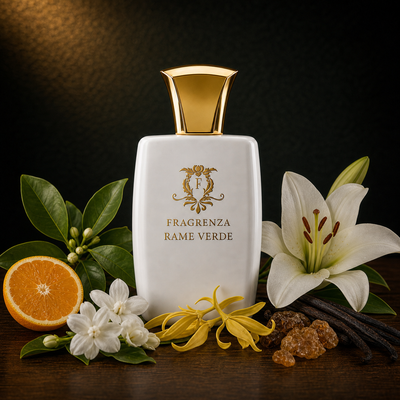

In the floral-green direction,
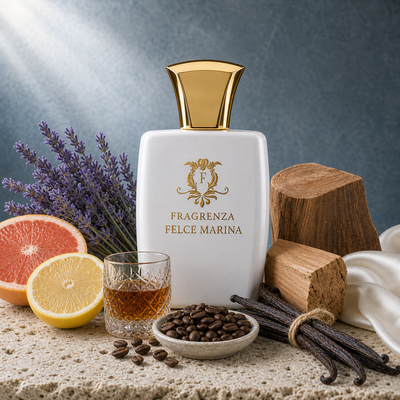
uses a delicate floral opening that gives way to fruity-and-resinous-woody character with olibanum, labdanum, and ambergris — the contemporary aromatic-floral register where green elements bridge between citrus and warm base materials. And uses grapefruit, lemon, and lavender in a fougere structure with a coffee-rum heart and sandalwood-vanilla base — the modern fougere register where aromatic-green character defines the opening.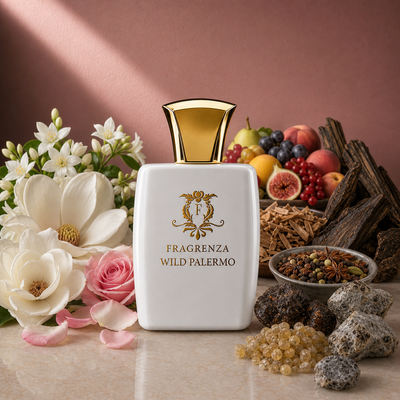
For more on related green and aromatic perfumery, see our entries on violet leaf, rosemary, and cedar leaf — each part of the broader green-aromatic vocabulary modern perfumery draws on.
How green notes interact with other materials
Green notes are compositionally selective. Their cool, fresh, slightly bitter character pairs well with some materials and resists others.
With florals (especially rose, iris, hyacinth, narcissus), greens create the green-floral register that defined Vent Vert and Chanel No. 19. The cool green character lifts the floral and prevents it from reading as too classical-powdery.
With citrus (especially bergamot, lemon, lime), greens extend the bright-fresh character into a fuller aromatic structure. The classical eau de cologne tradition uses petitgrain heavily for this purpose.
With aromatic herbs (lavender, rosemary, sage, basil), greens build the herbal-fougere structure that has anchored masculine perfumery for over a century. The combination is the structural backbone of countless aromatic compositions.
With mossy chypre bases (oakmoss, vetiver, patchouli), greens deepen into the classical chypre register. Coty Chypre and a generation of green-chypre fragrances have used this combination structurally.
With jasmine, fig, and milky materials, greens create the contemporary fig-leaf register that Diptyque Philosykos established. The combination reads as fresh-warm and has anchored a meaningful share of contemporary luxury perfumery.
With leather and dry woods, greens lift heavy bases into the green-aromatic-leather register that Fahrenheit refined. The combination is unusual but produces compositions of distinctive character.
Green notes resist heavy gourmand sweetness, dense oriental warmth, and most fruity-candied registers. The cool-fresh character of greens fights with the dense character of these other categories.
Green notes in the modern wardrobe
Green compositions wear especially well in spring and summer, where the cool-fresh character settles comfortably into warm air. The category extends into autumn for the classical green-chypre fragrances and the fig-leaf milky-green compositions but generally feels out of register in winter, where heavier perfumery has more presence.
Green notes carry no inherent gender coding. Galbanum-led feminine perfumery (Vent Vert, No. 19) and violet-leaf masculine perfumery (Fahrenheit) both use the same structural family. Modern niche perfumery treats greens as fully gender-neutral materials.
Application is conventional: pulse points, light spray. Green notes generally express most clearly in the opening and gradually integrate with heart and base materials through the wear. The volatile green molecules dissipate within the first hour or two, so most green compositions rely on the heart and base to carry the wear forward.
Related reading
If the cool, leafy character of green notes draws you in, these related materials each bring their own twist on that crisp, vegetal register.
Frequently asked questions
What does a green note smell like in perfume?
Cool, sharp, slightly bitter, distinctly vegetal. Green notes smell of crushed leaves, freshly cut grass, broken stems, and the cool aromatic character of the garden. The category includes galbanum (sharp and stemmy), violet leaf (cool and metallic), petitgrain (woody-green), and synthetic captives like cis-3-hexenol (grass-and-leaf-clipping).
What is galbanum and why is it important?
Galbanum is the foundational green material in fine perfumery — an aromatic resin from Ferula gummosa, an Iranian plant. Galbanum smells intensely green, slightly bitter, sharply stem-like. Vent Vert (1947) and Chanel No. 19 (1971) are built around it. Most contemporary green compositions use galbanum or galbanum-direction synthetics as a structural element.
Are green notes natural?
Mixed. Many traditional green materials are natural (galbanum resin, petitgrain steam-distilled from bitter orange leaves, violet leaf absolute, fig leaf), but most contemporary compositions also use synthetic captives like cis-3-hexenol and Galbanum SB to deliver specific green facets. The combination of natural and synthetic materials is normal practice in modern perfumery.
Are green fragrances feminine or masculine?
Both, depending on the composition. Vent Vert and Chanel No. 19 are canonical green-feminine works; Fahrenheit and various Aramis compositions are canonical green-masculine works; contemporary niche perfumery uses green notes freely across unisex compositions. The category has no inherent gender coding.
What season are green fragrances best for?
Spring and summer for lighter green-floral and green-citrus compositions; autumn for fig-leaf and green-chypre structures; winter is the most constrained season for the category because the cool-fresh character can feel out of register against cold air.
What perfumes use green notes well?
Balmain Vent Vert (1947), Chanel No. 19 (1971), Dior Fahrenheit (1988), Diptyque Philosykos (1996), and many contemporary niche compositions place green notes at the structural center. Many other compositions use green materials structurally without naming them on the front of the bottle.
Why do green fragrances smell distinctly different from other categories?
Because the molecular families that deliver green character (galbanum’s pyrazines, cis-3-hexenol’s leaf-aldehyde profile, violet leaf’s methyl octine carbonate) carry distinct aromatic signals that no other perfumery category replicates. Green is the most uniquely vegetal register in fine fragrance, and the molecules that build it have no analogues elsewhere in the perfumer’s palette.
The structural place of green notes
Green notes are perfumery’s cool counterweight. The category provides the bright vegetal contrast that prevents a floral from reading as cloying, that lifts a chypre’s mossy base into clear-aromatic register, that gives a fougere its dry-herbal character, and that distinguishes a fresh contemporary masculine from the warm orientals it shares the perfumery counter with. Whether you are wearing a classical galbanum-led feminine, a contemporary fig-leaf milky-green, a violet-leaf-leather masculine, or a green-floral-aromatic spring composition, the green materials are doing the structural work that gives the fragrance its cool clarity. Three-quarters of a century of fine perfumery has built around them.