

Honey in Perfumery: The Golden Note Between Animal and Sweet
Beeswax absolute, phenylacetic acid and the slight fermentation of honey absolute together produce a golden warmth that sits closer to animalic than to confectionery sweetness in fine fragrance.
By Julia Moretti 7 min read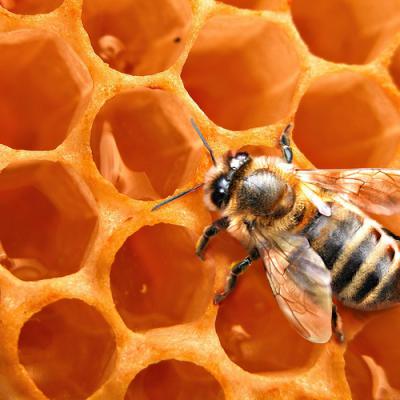
Honey: Perfumery's Most Complex Sweet Note
Honey is not merely sweet. This is the first and most important thing to understand about honey as a fragrance ingredient. Caramel is sweet. Vanilla is sweet. Honey is something else entirely — a substance of extraordinary olfactory complexity that combines sweetness with animal warmth, beeswax with floral echo, something golden and ancient with something primitively alive. To smell fine honey is to smell a living substance transformed by biological process, the concentrated aromatic essence of thousands of flowers filtered through the remarkable chemistry of the bee.
This complexity is precisely what makes honey such a valued and challenging ingredient in fine fragrance. It cannot be simplified without losing something essential. A honey note in a perfume that captures only the sweetness is a caricature; one that captures the full spectrum — the warmth, the wax, the flowers, the slight fermentation, the intimacy — is a genuine achievement. The history of perfumery's engagement with honey is a history of that ongoing challenge and those moments of achievement.
The Smell Profile of Honey
Breaking down honey's olfactory character reveals just how many registers it occupies simultaneously. The most obvious is its sweetness — a golden, warm sweetness quite distinct from the clean sweetness of sugar or the creamy sweetness of vanilla. Honey's sweetness has warmth, almost a temperature to it, and a slight complexity that prevents it from reading as purely confectionery.
Beneath and around the sweetness is the beeswax dimension — a warm, slightly fatty, soft quality that is one of honey's most distinctive and valuable characteristics. Beeswax on its own is used as a fragrance material and carries an almost animalic softness, somewhere between skin and pollen. In honey, this beeswax quality provides depth and body, giving the sweetness something substantial to rest on.
There is also a floral dimension to honey that echoes its origins. Depending on the flowers the bees have visited, the floral character varies — some honeys are distinctly rose-like, others carry lavender, acacia, or wildflower nuances. In perfumery, this floral-honey relationship is exploited extensively, using honey notes to amplify and deepen floral accords.
Finally, there is the faint fermentation note — a slight, almost imperceptible suggestion of alcohol and biological transformation that gives fine honey its particular aliveness. This is the quality that separates honey from mere sweetness and places it in the same category as other complex, living materials like labdanum and musk — materials that derive their power not just from their smell but from the sense that they are in some way living.
The Chemistry of Honey in Fragrance
Natural honey contains hundreds of volatile aromatic compounds, making it one of the most chemically complex fragrance materials in existence. Key among these are phenylacetic acid and its esters, which contribute the characteristic sweet-waxy warmth. Various terpene alcohols — including nerol, geraniol, and linalool — contribute floral nuances that reflect the flowers the bees have visited. Benzaldehyde provides a faint almond note. Certain aromatic aldehydes contribute the warm, slightly caramelised depth of honey's most characteristic register.
In synthetic fragrance construction, two materials stand out as particularly important for honey effects. The first is phenylacetic acid itself, which has a heavy, waxy-honey quality that, at appropriate concentrations, immediately evokes raw honey or beeswax. The second is ethyl phenylacetate, which provides a cleaner, lighter honey-like sweetness suitable for more transparent applications.
Beyond these key materials, perfumers building honey accords typically work with combinations of musks, wax-like molecules, and floral materials to capture honey's full complexity. The fermentation dimension can be suggested through the careful use of lactonic and aldehydic materials. The overall challenge is achieving honey's complexity without its heaviness — using enough of these rich materials to create a convincing impression without overwhelming the rest of the composition.
Honey in Perfumery History: From Ancient Egypt to Modern Niche
The use of honey in fragrance is ancient. Egyptian perfumers incorporated honey into sacred ritual preparations thousands of years ago. Kyphi, the sacred incense of ancient Egypt, frequently contained honey as a fixative and sweetener for harsher resinous ingredients. In ancient Greece and Rome, honey-scented preparations appeared in medical and cosmetic literature. Honey's association with the sacred, the feminine, and the luxurious is older than fine fragrance itself.
In the modern era of perfumery, honey has been used both as a literal ingredient — in the form of beeswax absolute, honey absolute, and related natural extracts — and as a synthetic accord constructed from the chemical components described above. Guerlain's relationship with honey has been particularly deep and long-lasting. The house has used honey materials in numerous compositions over more than a century, drawn by honey's ability to add a warm, golden depth to their characteristic style of fragrance.
In contemporary niche and artisan perfumery, honey has experienced a resurgence of interest as perfumers explore richer, more complex scent profiles and as consumers become more sophisticated in their appreciation of unusual and challenging materials. The combination of honey's sweetness with its animal, fermented, and waxy dimensions creates exactly the kind of multi-layered complexity that the contemporary niche market tends to reward.
Famous Fragrances That Feature Honey
Honey appears prominently in some of the most celebrated fragrances in perfumery history. Guerlain Mitsouko, the masterpiece created by Jacques Guerlain in 1919, uses a honey-inflected accord to give its peach-chypre heart an extraordinary warmth and depth. Guerlain Shalimar, another masterpiece from the same era, incorporates honey elements into its famous oriental base, contributing to the fragrance's legendary warmth and sensuality.
In the modern era, Kilian's Back to Black (an oud-honey-tobacco composition) and various offerings from Amouage, Bond No. 9, and Tom Ford have explored honey's animalic warmth in niche contexts. Black Opium by YSL uses a honey-inflected coffee-vanilla accord that gives the fragrance its characteristic addictive sweetness. Baccarat Rouge 540 by Maison Francis Kurkdjian draws on jasmine-honey accord elements to create its legendary amber-floral signature.
In the accessible market, honey notes appear frequently in oriental fragrances as an alternative to or alongside vanilla, providing warm sweetness with more complexity and depth. The oriental fragrance family is the natural home for honey's warm, golden richness.
How Honey Interacts With Other Notes
Honey is one of the most generous and accommodating materials in the fragrance palette — a note that rarely clashes and frequently amplifies the best qualities of whatever surrounds it. Its warmth and sweetness make it a natural companion for a wide range of ingredients.
With florals, honey creates one of perfumery's most classical and enduring combinations. The rose-honey accord is a staple of Middle Eastern and Indian perfumery traditions, exploiting the natural chemical relationship between these two materials. With jasmine, honey amplifies the flower's natural indolic richness and warmth, creating an accord of extraordinary sensuality. With ylang ylang, honey's beeswax quality finds a perfect partner in the flower's own creamy, banana-like richness.
With woody and resinous materials, honey provides warmth and sweetness that round off sharper edges. The combination of honey with oud is a fundamental pairing of Middle Eastern perfumery, using honey's sweetness to balance oud's intense animalic-woody depth. With labdanum, honey amplifies the resin's natural animalic warmth, creating a base of great richness and depth.
With tobacco, honey creates one of perfumery's most satisfying gourmand-oriental accords — sweet, warm, slightly animalic, and deeply comforting. Tom Ford Tobacco Vanille demonstrates how honey-inflected tobacco can anchor a fragrance of extraordinary richness and presence.
The Animal Dimension: Honey's Most Challenging Quality
Honey's animal dimension — that slight, fermented warmth that connects it to skin and biological process — is both its most distinctive quality and the one that requires the most skill to handle. Used with restraint, this animal quality gives a fragrance intimacy, warmth, and a sense of living presence. Used too heavily, it can tip into something almost unwearable — something closer to barnyard than boudoir.
The best honey fragrances calibrate this animal dimension carefully, using it as an accent rather than a foundation. They allow honey's sweeter, more floral facets to take precedence while allowing the animal warmth to hover beneath the surface — present but not dominant, enriching rather than dominating. This is the kind of skill that separates a great perfumer from a technically competent one.
Wearing Honey: Warmth and Presence
Honey fragrances are autumn and winter compositions at heart, though they work throughout the year in appropriate concentrations. Their warmth and richness feel most natural in cool weather, when the body's own warmth amplifies and projects the golden sweetness beautifully. In hot weather, honey-forward fragrances can become overwhelming, though lighter applications and diluted concentrations can work effectively in summer.
In fragrance wardrobe terms, honey belongs to the warm, rich end of the spectrum — alongside other deeply satisfying materials like vanilla, amber, and oud. These are evening fragrances, special occasion fragrances, the compositions you reach for when you want to feel genuinely luxurious and fully present. The experience of a great honey fragrance is one of the most satisfying in all of perfumery.