Mangosteen in Perfumery: The Exotic Thai Fruit That Brings the Tropics to Your Skin
Mangosteen is a juicy, peel-bright fruit: sun-jam opening, ripe-bright midsection, with a soft sugared echo through the dry-down.
By Julia Moretti 9 min read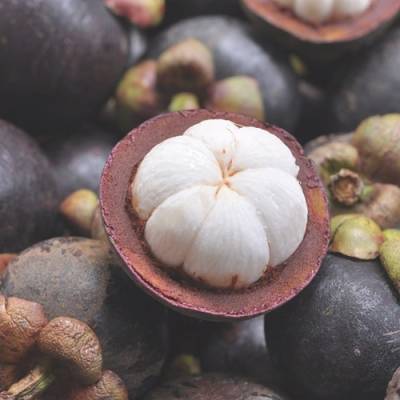
The Queen of Tropical Fruits
In Southeast Asia, they call the mangosteen the "queen of fruits" — a title that speaks to the fruit's extraordinary sensory appeal and its historical association with royalty. Queen Victoria, according to popular legend, supposedly offered a reward to anyone who could bring her a fresh mangosteen from the tropics — a testament to the fruit's reputation for extraordinary deliciousness and to the near impossibility of obtaining it in good condition far from its native environment. Whether the story is historically accurate matters less than what it reveals about the fruit's mystique: mangosteen has always inspired this kind of devoted, almost reverent enthusiasm.
Mangosteen (Garcinia mangostana) is a tropical evergreen tree native to the Malay Archipelago and surrounding regions of Southeast Asia — Malaysia, Indonesia, Thailand, Myanmar, and the Philippines. The tree itself is slow-growing, sometimes taking over a decade to produce its first fruit, and strikingly beautiful, with glossy dark leaves and a form that gives little outward indication of the treasures it bears. The fruit, which hangs in clusters, is unmistakable: deep purple-black in full ripeness, with a thick, resinous rind encasing a brilliant white interior divided into segments, like a miniature orange, each segment delicately flavored and immaculately formed.
It is this white interior flesh that houses the mangosteen's extraordinary flavor and fragrance — a combination so delicate and complex that food writers have struggled for centuries to describe it adequately. The best attempts invoke lychee, peach, strawberry, and citrus simultaneously, with a floral undertone and a slight tartness that prevents any of these comparisons from becoming definitive. The overall impression is of a fruit that exists somewhere between all other fruits — a summation of tropical fruity beauty in one improbable, gorgeous package that seems almost too perfect to be natural.
Thailand remains the world's largest producer of mangosteen for export, and the fruit plays an important role in Thai cuisine, cosmetics, and traditional medicine, where the rind (known as garcinol-rich) has been used for its anti-inflammatory and antioxidant properties for centuries. The distinctive purple dye from the rind has even been used in traditional Thai textiles. Mangosteen is not just a fruit in Southeast Asian culture — it is a symbol of natural perfection, an emblem of the region's extraordinary botanical richness.
The Scent of Mangosteen: Floral, Fruity, and Delicately Complex
What makes mangosteen so interesting from a perfumery perspective is not its taste — which, while extraordinary, is primarily a gustatory experience — but the specific aromatic character of its fresh fragrance, which manages to bridge the gap between fruit and flower in a way that few other tropical materials can achieve.
The scent of freshly cut mangosteen is a nuanced and multi-layered experience:
- Lychee-adjacent: Sharing the rosy, slightly geranium-like freshness of lychee, though softer and more diffusive, with a quality that reads as more feminine and more refined
- Floral: A white-floral quality — suggesting gardenia or tiare — that places it closer to flowers than most fruits and gives it unusual versatility in fine fragrance contexts
- Gently citrusy: A brightness in the opening that recalls bergamot or pink grapefruit without being explicitly citrus — more of a citrusy freshness than a citrus note per se
- Slightly musky: An underlying warmth and softness that makes mangosteen sit beautifully on skin and develops attractively over hours of wear
- Delicately sweet: A refined, elegant sweetness — not the assertive sweetness of mango or pineapple, but something gentler and more sophisticated that never feels overwhelming
This combination — floral-fruity, soft, slightly musky, gently sweet — places mangosteen in a category of tropical materials that lend themselves to sophisticated perfumery rather than simple fruity confections. It is a note that elevates rather than simplifies, adding complexity and a genuinely exotic character without demanding excessive sweetness or sacrificing the composition's elegance. For a broader context on how such tropical notes are deployed, our guide to exotic fruits in perfumery provides an essential overview of the entire tropical palette.
Synthesis and Extraction: Capturing an Elusive Character
Like most tropical fruits, mangosteen presents significant challenges for natural extraction in the perfumery context. The fruit's aromatic compounds are volatile and delicate, breaking down quickly under heat or prolonged solvent exposure. Natural mangosteen extract does exist in food flavoring contexts — CO2 extracts and related materials — but these have limited applicability in fine fragrance formulations due to stability and consistency concerns over time.
In fine fragrance, mangosteen is therefore primarily constructed synthetically, typically by building upon the same molecular toolkit used for lychee and rosy-fruity accords:
- Cis-rose oxide: The molecule at the heart of lychee's character is also central to mangosteen's rosy-floral quality, providing the elegant floral-fruity bridge that defines both notes. For more on this fascinating molecule, see our article on rose oxide in perfumery.
- Geraniol and geranyl acetate: Rose-like compounds that contribute to the floral-fruity bridge and add a naturalness to the construction
- Ethyl acetate and other fruity esters: For the fresh, slightly tropical brightness that reads immediately as "exotic fruit"
- Citronellol: Adding a softer, rose-adjacent freshness that supports the overall floral character
- Soft musks: Providing the warmth and skin-affinity that characterizes mangosteen's drydown quality and gives the note its intimate, skin-close character
- Lactones: Small amounts of peach or coconut lactones for the creamy, slightly tropical richness beneath the floral freshness
The result, when expertly constructed, is a note that reads as genuinely exotic — not a generic "tropical fruit" but something specific, elegant, and unmistakably Southeast Asian in its character and associations. The best mangosteen accords smell as though they carry the humidity of the tropics with them, a warmth that settles on skin and develops over time into something rich and complex.
How Perfumers Use Mangosteen
Mangosteen occupies an interesting position in the perfumer's palette: it is exotic enough to provide genuine novelty and escapism, yet its floral-rosy character gives it a sophistication that allows it to function in more elevated fragrance contexts than, say, pineapple or papaya. This dual nature — exotic fruit and quasi-floral — makes it one of the more versatile tropical materials available to contemporary perfumers.
As a top or upper-heart note, mangosteen creates an opening that is immediately arresting and unusual — the kind of first impression that makes a new wearer want to investigate further. Its brightness and floral-fruity character make it ideal for spring and summer fragrances, for compositions aimed at warm-weather wear, and for fragrances intended to evoke travel, escape, and the pleasures of distant places where the air itself smells of blossoms and fruit.
Paired against white florals — jasmine, tiare, gardenia — mangosteen amplifies the tropical register of the composition while adding freshness and brightness that prevents it from becoming heavy or cloying. The fruit's own floral character creates a seamless transition between the fruit note and the floral heart, making the composition feel unified and organic rather than assembled from disparate parts. Against woody or resinous bases, it creates an interesting contrast: bright tropical fruit against dark, grounded base notes, a combination that can feel both contemporary and classically luxurious.
In the growing market for "tropical luxury" fragrances — compositions that combine exotic fruit and flower notes with rich, high-quality bases — mangosteen has found an important role alongside lychee, guava, and passion fruit. Its more floral character gives it an edge in sophisticated contexts where simple fruitiness would seem too casual or too sweet, and it has become a go-to material for perfumers working in the luxury tropical space.
Fragrances That Feature or Evoke Mangosteen
Mangosteen is a relatively recent arrival in the perfumer's palette compared to classical materials, and its use has grown significantly as global fragrance tastes have expanded and tropical notes have become mainstream across all market segments. While it doesn't yet have the landmark fragrances associated with rose or jasmine, several notable compositions have showcased its character to great effect.
Various limited-edition and seasonal releases from major houses — particularly those targeting Asian markets where mangosteen is culturally familiar — have used mangosteen-adjacent accords to considerable commercial success. The note has appeared prominently in body sprays, summer editions, and the growing category of "wellness" fragrances that seek to evoke natural tropical environments as part of their broader sensory proposition.
In the niche world, explorations of Southeast Asian botanical materials have led several houses to incorporate mangosteen within broader tropical compositions. The note's floral dimension makes it particularly interesting in dialogue with oud — a pairing that feels authentically Southeast Asian and that creates a natural bridge between the region's remarkable fruit culture and its ancient perfumery traditions. Houses working with Thai, Malay, and Indonesian botanical traditions have found mangosteen a particularly evocative material for communicating the specific character of those places.
For a broader exploration of tropical fruit energy in fragrance, Fragrenza's Olympéa-inspired fragrance captures that same vibrant, sun-kissed spirit — a radiant, skin-warm composition that shares mangosteen's quality of effortless, warm-weather sensuality and wears beautifully across seasons and occasions.
Natural Pairings for Mangosteen
- Lychee: The most natural companion — two rosy-fruity notes that amplify each other's tropical elegance and create a combined effect greater than either alone.
- Jasmine and tiare: White tropical florals that give mangosteen's fruitiness a floral foundation, added depth, and the sense of a complete tropical landscape.
- Rose: The rose connection in mangosteen's chemistry makes this a natural pairing — rosy fruit against rosy flower, reinforcing the shared aromatic territory.
- Bergamot: A citrus brightness that lifts mangosteen's freshness and adds a European elegance to its tropical character, creating appealing East-West tension.
- White musks: Amplifying mangosteen's inherent skin-warmth quality and creating a fragrance that feels like warm, exotic skin — intimate and deeply personal.
- Sandalwood: The creamy warmth of sandalwood beneath mangosteen's fruity brightness creates a composition of tropical luxury with real staying power.
- Oud: A sophisticated contrast — exotic fruit against exotic wood — that positions mangosteen within a distinctly Asian perfumery tradition of great cultural richness.
Mangosteen: The Exotic Note Worth Seeking Out
As the global fragrance market continues to broaden its palette beyond European botanical traditions, ingredients like mangosteen represent the direction of the art form's future. They bring genuine geographical and cultural specificity to a fragrance world that can sometimes feel generic or repetitive, and they offer olfactory pleasures that are genuinely novel — not variations on familiar themes but entirely new experiences for noses trained primarily on classical Western materials.
The fact that mangosteen's most distinctive quality — its floral-fruity character, its rosy tropical grace — connects directly to established fragrance chemistry makes it accessible even within traditional contexts. It is not a note that exists outside familiar olfactory categories but one that enriches those categories from within, bringing new dimensions to floral, fruity, and oriental fragrance families that have been well-explored but never fully exhausted.
For the fragrance enthusiast, exploring mangosteen in perfumery is an invitation to travel — not just geographically to the orchards of Southeast Asia, but sensorially to a register of fragrant beauty that the Western tradition is only beginning to fully appreciate. The queen of fruits has arrived in the world of fine fragrance, and she is proving to be as remarkable and as captivating as her centuries-old reputation has always promised. Shop our floral fruity fragrances to explore compositions where the exotic beauty of tropical notes finds its finest expression.