


Pink Berries in Perfumery: The Peppery, Fruity Note With Hidden Depth
Pink berries is a warm spice that adds depth and dimension to perfume, a note every fragrance lover should learn to recognise on skin.
By Julia Moretti 5 min read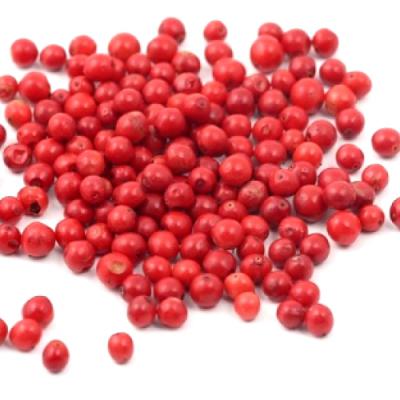
Pink Berries: Perfumery's Most Versatile Peppery Note
Pink berries — known variously as pink pepper, rose pepper or Brazilian pepper, and derived primarily from Schinus terebinthifolius and Schinus molle — have become one of the defining ingredients of contemporary fine fragrance. In the space of roughly two decades, this once-exotic spice has migrated from the restaurants of nouvelle cuisine to the top notes of some of the world's most successful fragrances, adding a peppery freshness, a subtle fruitiness and a hint of rosy warmth to compositions across every major fragrance family. Understanding pink berries means understanding both the chemistry and the cultural moment that made them so irresistible to modern perfumers.
The smell of pink berries is unlike black, white or green pepper despite sharing the "pepper" designation. Where black pepper (Piper nigrum) is sharp, woody and aggressively spicy, pink berries are softer, slightly sweet, with a distinct fruity quality — some describe hints of raspberry, strawberry or watermelon — and a subtle floral warmth that relates to their association with roses. This combination of pepper's brightness with fruit's sweetness and a floral underpinning makes pink berries extraordinarily versatile: they can lift a composition without overwhelming it, add character without declaring too loudly and provide olfactory interest in a register that many people instinctively find approachable and attractive.
Chemistry: Piperine, Limonene and the Signature Molecules
The essential oil of pink pepper (Schinus molle, specifically) has a complex composition that accounts for its distinctive character. Delta-3-carene, a bicyclic monoterpene, is typically the most abundant component, contributing a sharp, slightly resinous freshness. Limonene provides the citrus dimension. Alpha- and beta-pinene add a woody, piney freshness. The characteristic peppery-spicy warmth comes partly from smaller amounts of phellandrene and sabinene. Interestingly, pink berries contain very little of the piperine that gives true black pepper (Piper nigrum) its characteristic pungency, which is why the peppery effect is so much softer and more fruit-adjacent.
The fruity quality — the subtle raspberry or berry note that distinguishes pink berries from other peppers — comes from a range of minor esters and lactone compounds in the oil that are reminiscent of the materials used to create fruit accords in synthetic perfumery. This gives pink berries an interesting dual function: they smell simultaneously of spice and of fruit, bridging two normally distinct registers of fragrance. Perfumers exploit this dual character in a wide variety of compositional contexts, from fresh citrus-spice colognes where the berry sharpness reinforces the citrus top notes, to florals where it adds texture and dimension to the heart, to oriental bases where it provides contrast to the warmth beneath.
History: From Cuisine to Fragrance Staple
Pink berries have been used in South American indigenous traditions as a spice, medicine and ritual plant for centuries. Their arrival in European cuisine came relatively recently — by the 1980s and 1990s, pink peppercorns had become a symbol of nouvelle cuisine's adventurousness, lending their decorative appeal and distinctive mild spice to salad dressings, sauces and spice blends. The transition from kitchen to perfume laboratory followed naturally: perfumers working in the late 1990s and early 2000s were looking for new materials that could add freshness and individuality to compositions increasingly dominated by generic musks and synthetic florals, and pink berries offered exactly that — a recognisable, appealing spice note with a distinctly contemporary feel.
The technical adoption of pink berries in fine fragrance was briefly complicated by an IFRA restriction on Schinus molle oil following reports of skin sensitisation, but Schinus terebinthifolius (Brazilian pepper) has largely replaced it in fragrance formulations, and the pink berry note has continued to grow in prominence. Today it is one of the most commonly listed top notes in designer and niche fragrances, appearing in compositions from the most commercial to the most artisanal. Its ubiquity is a testament to its extraordinary versatility and its ability to add something genuinely attractive without demanding attention.
Famous Fragrances Featuring Pink Berries
Pink berries appear in a remarkable range of significant contemporary fragrances. Coco Mademoiselle features a prominent pink pepper top note that contributes to its characteristic freshness and contemporary accessibility, contrasting with the deeper chypre-oriental structure beneath to create a composition that feels simultaneously modern and classical. Lady Million by Paco Rabanne uses pink berries in a fruity-floral context where the peppery freshness adds sparkle to a composition otherwise built on white florals and honey. Layton by Parfums de Marly features pink pepper as a key component of its fresh-spicy opening, contributing to the composition's distinctive elegance and projection.
Among women's fragrances, pink berries have become particularly prominent because they offer a way to add freshness and character to floral compositions without resorting to the generic aquatic or clean-musk territory that dominated so many 1990s launches. Flowerbomb by Viktor&Rolf uses pink berries to open a composition of tremendous floral richness, the peppery freshness providing a crisp, clean entry into an otherwise dense and sweet floral-oriental structure. The effect is of flowers with an edge — beautiful but not passive.
Note Interactions: Pink Berries in Composition
Pink berries' dual nature — peppery-spicy and fruity-floral simultaneously — makes them unusual in their ability to interact productively with materials from several different families. With citrus, particularly bergamot and grapefruit, they create sparkling, fresh openings of great contemporary appeal. With white and light florals — rose, peony, magnolia — they add a subtle spice dimension that gives the florals texture and prevents them from reading as too soft or generic. With dark woods and patchouli, they create a fresh-spicy contrast that keeps compositions alive throughout their wear.
One of pink berries' most interesting compositional roles is as a bridging material between fresh, light top notes and deeper, richer heart and base accords. Their peppery brightness fades more slowly than typical citrus notes, ensuring that the transition from the opening to the heart is smooth and coherent rather than abrupt. This function makes them particularly valuable in complex, multi-phase compositions where the opening needs to maintain interest for thirty minutes or more before the heart reveals itself. For those exploring the floral fragrance category with a desire for something slightly more interesting than straightforward sweetness, pink berry-accented florals represent an excellent starting point.
Wardrobe Context and Seasonal Versatility
Pink berries are among the most seasonally versatile of fragrance ingredients. Their brightness and freshness make them suitable for spring and summer in the context of lighter, citrus-forward compositions; their warmth and spice make them equally at home in autumn and winter within heavier oriental and woody structures. This all-season versatility is one of the reasons they have become such a reliable component in commercial fragrance formulation: a well-placed pink berry note can make a composition feel appropriate for a wider range of occasions and seasons than it might otherwise cover.