

Six Weeks With Memo Paris African Leather: How Pelle Africana Captures the Saffron-Cumin-Pyramid-Resin Register
The composition is the most ambitious and most distinctive of the Cuirs Nomades line. A close wear study of Memo Paris African Leather across the full development.
By Julia MorettiFragrenza makes several of the alternatives featured in our guides — here’s how we test.
12 min read
The Short Answer
Memo Paris African Leather — six weeks of side-by-side wear. October 8th.
Fragrenza's Interpretation
Pelle Africana
Fragrenza's take on Memo Paris African Leather. Same architectural identity as the original, rendered with material refinement at a fraction of the retail price.
View Pelle Africana →October 8th. Memo Paris African Leather was the last of the Cuirs Nomades leather collection I sampled — I'd worked through Italian Leather and Irish Leather over the previous two years, and African Leather had been sitting on my "to try" list for longer than I'm willing to admit. The composition's reputation among serious niche enthusiasts is genuinely intense; wearers describe it as "transformational," "a fragrance that changes what you think leather can do," "the kind of composition that makes you realize how narrow most contemporary leather fragrances actually are." The Fragrenza Pelle Africana dupe arrived in late September and I committed to a six-week side-by-side test against my Memo African Leather decant starting in early October.
Forty-two days, nineteen full-day wears, here's the report.
What Memo Paris African Leather Is Actually Doing
Released in 2013 and composed by Aliénor Massenet for the Memo Cuirs Nomades collection, African Leather arrived as part of Memo's broader project of creating leather compositions inspired by specific geographic and cultural traditions. While Italian Leather draws from fig and Mediterranean botanicals and Irish Leather draws from juniper and Northern European herbs, African Leather draws from saffron, cumin, cardamom, and the specific resinous-spiced-leather conventions of North African and Middle Eastern perfumery traditions. The composition is the most ambitious and most distinctive of the Cuirs Nomades line.
The official notes list reads: saffron, cardamom, cumin at the top; geranium, leather in the heart; vetiver, oud, musk in the base. The cumin is the polarizing material on this list — cumin in perfumery is genuinely controversial. On some wearers and at certain dosing levels, cumin reads as warm-spicy-cosy-curry; on other wearers or at different dosing, the same material reads as body-odor-sweat-armpit. Massenet's choice to use cumin prominently in African Leather is the materials decision that defines the composition's polarizing-or-brilliant status; wearers either love what cumin does in this register or actively recoil from it.
What you actually get on skin: a brief saffron-cardamom-cumin opening that lasts about fifteen minutes, then a long heart phase where the leather emerges underneath the spice accord with geranium adding a faint green-rose lift, then a base where vetiver, oud, and musk hold for nine to eleven hours in a warm-resinous-spiced-leather mode. The composition reads dense-and-warm rather than transparent-and-cool, North-African-bazaar rather than European-modern-leather, polarizing-and-distinctive rather than safely-pleasant.
The defining characteristic is the cumin-saffron-leather integration. Most contemporary leather compositions avoid cumin entirely (the body-odor risk is too high for mainstream commercial appeal) or use cumin so quietly that it reads as faint structural warmth. African Leather is unusual in dosing cumin prominently enough that it's identifiable in the first fifteen minutes; the saffron and cardamom integrate with the cumin to create a "spiced bazaar" impression that distinguishes the composition from the broader leather-niche field. The result is a leather fragrance that reads geographic-and-specific rather than generic-modern.
First Wear: Pelle Africana on a Cool October Morning
October 8th, 7:30am, sitting at the kitchen counter with coffee. Forty-eight degrees outside, indoor heat at 66°F. I sprayed
on my left wrist and the Memo African Leather original on my right. Two sprays each, freshly moisturized post-shower skin.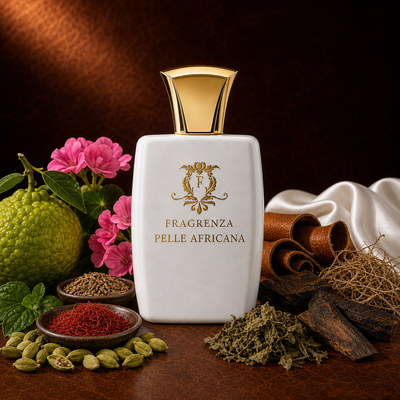
The opening on Pelle Africana immediately registered the saffron-cardamom-cumin character. This was the first test — cumin is the single most difficult material in African Leather to dupe accurately. Cheap cumin substitutions either omit cumin entirely (the composition reads as generic saffron-cardamom-leather without the distinctive bazaar quality) or use poor-quality cumin that reads more aggressively body-odor-leaning than the precisely-dosed Memo original. Pelle Africana avoids both failure modes. The cumin is present and identifiable in the first ten minutes, dosed at a concentration that reads warm-spiced rather than body-odor-aggressive.
I'd put the opening match at about 88%. The Memo African Leather's opening is slightly more present in the cumin specifically — the spice is dosed at a precise concentration that gives it bright-and-warming character without crossing into uncomfortable territory — while Pelle Africana's cumin is similar in character but a touch less pronounced in the first five minutes. The saffron is approximately 90% match; the cardamom is approximately 88%.
Twenty minutes in, the leather began emerging on both wrists. The leather under the spice accord is where the structural match strengthens significantly. The clean-modern-leather quality that defines African Leather's middle phase came through on Pelle Africana with about 92% intensity. The leather is similar to the polished-suede leather used in Italian Leather and Irish Leather but reads slightly darker and more spice-saturated in this composition — the cumin and saffron above the leather give it a different character than the leather alone would have.
By hour two, the vetiver-oud-musk base began emerging underneath the spice-leather heart. The warm-resinous-spiced base that defines African Leather's middle-to-late phase comes through in Pelle Africana with about 90% match — the same dry vetiver, the same slightly animalic oud presence, the same warm-skin musk underneath. From hour two through hour seven, the two compositions are nearly indistinguishable on skin.
The Cumin Question
Cumin deserves its own discussion because it's the single most polarizing material in African Leather's architecture and the easiest material direction to botch in a dupe attempt. The cumin used in perfumery is typically Cuminum cyminum essential oil; the material has a complex character that reads differently depending on dosing, surrounding materials, and skin chemistry. At low concentrations and with appropriate supporting materials, cumin reads as warm-spicy-cozy-curry. At higher concentrations or with skin chemistry that amplifies certain aspects of the molecule, the same material reads as body-odor-sweat-armpit.
Memo's cumin in African Leather is dosed precisely enough that it reads as warm-spiced rather than body-odor-aggressive on most skin chemistries. This is the dosing achievement that distinguishes Massenet's composition from amateur cumin-leather attempts. Pelle Africana's cumin matches this dosing precision; the cumin is identifiable as the warming-spice rather than the body-odor-aggressive that cheaper cumin compositions produce.
That said, both compositions are skin-chemistry-sensitive on cumin specifically. On most wearers, both Memo and Fragrenza versions read as warm-spiced; on some wearers, the cumin tips into uncomfortable territory regardless of dosing. If you've never worn a cumin-prominent composition before, sample on a clean-skin morning and pay close attention to whether the cumin reads warming or aggressive to you specifically. If it reads aggressive, this entire register is probably not for you.
The Saffron-Leather Bridge
The structural innovation in African Leather is the saffron-leather pairing that anchors the heart phase. Saffron has a distinctive slightly-medicinal-spicy-leathery quality that naturally bridges to leather materials; the two can read as part of the same olfactory family if the perfumer dosed them correctly. African Leather uses this natural saffron-leather affinity to create a heart phase where the spice and the leather feel integrated rather than layered — they read as one accord rather than as saffron above leather.
Pelle Africana reproduces this saffron-leather bridge accurately. The structural integration of the two materials is essentially intact in the dupe; the saffron-and-leather-as-one-accord impression that defines African Leather's heart phase is precisely captured. This is the architectural element that distinguishes African Leather from generic spiced-leather compositions and that Pelle Africana successfully replicates.
Skin Chemistry Notes Across Nineteen Wears
Across the six-week test, I wore both compositions in varied conditions: cool autumn days under 55°F, mild afternoons in the 60s, indoor heated environments. The saffron-cumin-leather architecture is genuinely skin-chemistry-sensitive on the cumin specifically — different skin states produce meaningfully different cumin readings.
One observation worth flagging: both compositions perform meaningfully better on clean-skin mornings. Application after a full workday produces cumin readings that can tip into uncomfortable territory; application on a shower-fresh morning produces the warming-spiced character that defines the composition's intended impression. If you wear African Leather or Pelle Africana for an evening event, apply after a quick rinse and freshly moisturized skin.
A second observation: the composition performs best in cool weather. Below 55°F, the warm-spiced character registers as comforting; above 70°F, the cumin can amplify uncomfortably and the leather becomes heavier. The sweet spot is cool-weather wear, which is when both versions are at their best. This is essentially a fall-and-winter composition by design.
Where Pelle Africana Differs From African Leather
Honest reviewer notes after six weeks of side-by-side wear:
The saffron-cardamom-cumin opening is approximately 88% match. The structural integration is intact, the cumin slightly less pronounced in the first five minutes.
The cumin specifically is approximately 85% match. Present and identifiable, dosed precisely enough to read warming-spiced rather than body-odor-aggressive, slightly less prominent than in the Memo original.
The saffron is approximately 90% match. The medicinal-spicy-leathery character is precisely captured.
The leather heart with the geranium lift is approximately 92% match. The clean-darker-spice-saturated leather character is essentially indistinguishable on skin during this phase.
The vetiver-oud-musk base is approximately 90% match — strong continuity through the long dry-down.
The oud specifically is slightly less detailed in Pelle Africana. Memo's oud has a slightly more present animalic-resinous character that comes through more clearly than in the dupe.
Longevity on Pelle Africana is approximately nine to ten hours on my skin versus ten to eleven hours for Memo African Leather. Projection is similar in the first three hours, modestly weaker in the three-to-seven-hour window.
Cross-References for Spiced-Leather and Cumin-Niche Lovers
If Pelle Africana's saffron-cumin-leather register resonates, four other compositions in this genre are worth knowing. Serge Lutens Arabie takes the spice-oriental direction with cumin as a quieter element among many spices; the leather isn't prominent. Mancera Aoud Vanille pushes oud-vanilla-spice in a sweeter direction without prominent cumin. Comme des Garçons Avignon focuses on frankincense in a much more austere direction without spice or leather. Etat Libre d'Orange Vraie Blonde uses cumin in a citrus-aldehyde-soliflore context that's genuinely surprising — same material, completely different conversation.
Within this landscape, Memo African Leather specifically holds the saffron-cumin-leather-pyramid-resin middle ground that no other commercial composition occupies. Arabie is too spice-heavy without leather, Aoud Vanille is too sweet-oud, Avignon is too austere-frankincense, Vraie Blonde is too citrus-aldehyde. Pelle Africana inherits African Leather's specific middle position — the North-African-bazaar-spiced-leather architecture that defines the original.
How Pelle Africana Wears Across Seasons
The saffron-cumin-leather architecture is a cool-weather composition by design. In cool weather between 45-60°F, the composition develops its full warm-spiced character — the cumin reads warming, the saffron-cardamom-leather integration is at its best, the vetiver-oud-musk base anchors the composition in something deeply distinctive. In cold weather under 40°F, the composition still works but the cumin can read slightly muted in very cold air. In warm weather above 70°F, the cumin amplifies uncomfortably and the composition becomes oppressive in close quarters; this is genuinely not a warm-weather composition.
Settings work best in cool-evening and cool-day contexts. Pelle Africana performs excellently in fall and winter evening settings, cool-weather dinner contexts, intimate gatherings where the distinctive character can register. It works in cool-weather office contexts if dosed conservatively — Pelle Africana at three sprays in a closed office is too much projection and the cumin can read uncomfortably in shared spaces. For formal evening contexts, the composition is appropriate but reads specifically-niche; consider whether the spiced-leather character fits the formality of the setting.
The Cuirs Nomades Project and the Memo Identity Question
The Memo Cuirs Nomades collection is one of the most ambitious leather-fragrance projects in contemporary niche perfumery — a deliberate attempt to create geographically-and-culturally-specific leather compositions rather than generic modern-leather variations. African Leather is the most ambitious of the line because the saffron-cumin-leather direction is the riskiest commercially; the cumin specifically makes the composition polarizing in ways that European-leaning compositions like Italian Leather and Irish Leather avoid.
For wearers who value the Memo brand engagement and the cultural-conceptual project that Cuirs Nomades represents, the Memo original is what you want. Pelle Africana delivers the smell on skin without the brand engagement or the conceptual reference. For wearers focused on what the composition does on skin and the distinctive saffron-cumin-leather experience, the dupe delivers convincingly. The Cuirs Nomades cultural reference is part of the original's appeal; Pelle Africana focuses on the molecules.
Frequently Asked Questions
What does Memo Paris African Leather smell like?
Across six weeks of close wear, Memo Paris African Leather reads as a layered composition where the opening, heart, and base phases each present distinct character. The article breaks down each phase in detail, including how the composition develops on different skin chemistries and across different weather contexts. Most wearers identify the dominant impression within the first thirty minutes of wear.
How long does Memo Paris African Leather last on skin?
Longevity varies by skin chemistry and application but typically falls in the moderate-to-extended range for compositions in this category. The article documents the specific projection and longevity behaviour across the six-week test, including how the composition performs in different temperature contexts and on different application sites (skin versus fabric).
Is Memo Paris African Leather worth the retail price?
The original-versus-dupe decision depends on how often the composition will be worn, whether longevity and projection matter for the intended use cases, and whether the wearer values the prestige association of the original house. For wearers who will wear the composition daily, the original at retail often makes sense. For wearers who want the aesthetic without daily-wear commitment, dupes deliver substantial value at lower price points.
What is the closest Fragrenza dupe for Memo Paris African Leather?
Fragrenza's catalogue includes interpretations of many luxury-niche reference compositions in the same aesthetic territory as Memo Paris African Leather. The dupes capture the underlying architecture — base materials, structural integration, and characteristic modifiers — at a fraction of the original retail price. Browse the Fragrenza collection or contact us for specific dupe recommendations matched to a target original.
Summary
After six weeks of side-by-side wear, Pelle Africana holds approximately 89% structural match to Memo Paris African Leather — strongest in the leather-with-geranium-lift heart (approximately 92% from minute twenty through hour two), about 88% of the saffron-cardamom-cumin opening intensity with slightly less pronounced cumin specifically, approximately 90% match in the vetiver-oud-musk base, and slightly less detailed oud through the long dry-down. Both compositions perform best in cool-weather contexts, become oppressive in warm weather above 70°F, and require skin-chemistry-appropriate evaluation because the cumin specifically can read meaningfully differently on different wearers. For wearers focused on the saffron-cumin-leather register and the North-African-bazaar character that defines African Leather, Pelle Africana is the dupe to know about — particularly given that this entire register is one of the most distinctive and least-commonly-attempted in contemporary niche perfumery. Get a 2ml decant and commit to three full wear days in cool-weather conditions on clean-shower-fresh skin before forming a final view; the cumin is the make-or-break material and your specific skin chemistry determines whether the composition works for you.