

Three Weeks With Parfums de Marly Pegasus and Picasso: Why This Almond-Aromatic Composition Is Quietly One of PdM's Best
Parfums de Marly Pegasus doesn't get the attention that Layton or Herod do in the brand's masculine lineup, but it's been a quiet best-seller for the brand since launch.
By Julia MorettiFragrenza makes several of the alternatives featured in our guides — here’s how we test.
9 min read
The Short Answer
Three Weeks With Parfums de Marly Pegasus and Picasso: Why This Almond-Aromatic Composition Is Quietly One of PdM's Best — six weeks of side-by-side wear. Parfums de Marly Pegasus doesn't get the attention that Layton or Herod do in the brand's masculine lineup, but it's been a quiet best-seller for the brand since launch.
Parfums de Marly Pegasus doesn't get the attention that Layton or Herod do in the brand's masculine lineup, but it's been a quiet best-seller for the brand since launch. The composition is centered on bitter almond, vanilla, and heliotropin — a gourmand-adjacent register that reads as almond-vanilla-aromatic rather than dessert-sweet. Pegasus has the brand's signature confident projection without committing to the heavier oud-tobacco-resin territory that most niche masculines occupy. It works as a daily-driver fragrance in a way that Herod (cold-weather coded) and Layton (more occasion-specific) don't.
I bought a 30ml decant of Pegasus at $145 and committed to a three-week structured comparison with Fragrenza's Picasso. The PdM masculine lineup is well-known enough that this isn't a wild-card dupe — Picasso has been one of Fragrenza's better-known Pegasus interpretations for several years.
Why Pegasus Reads as a Compositional Surprise
The masculine-gourmand space in 2017 (when Pegasus launched) was dominated by tobacco-vanilla compositions (Tom Ford Tobacco Vanille, Mancera Cedrat Boise) and the cherry-amaretto category just beginning to form (Tom Ford Lost Cherry would arrive in 2018). Pegasus took a different angle — bitter almond instead of cherry, heliotropin instead of vanilla cream, lavender and bergamot as the aromatic frame instead of citrus-only. The composition reads as gourmand-aromatic rather than gourmand-sweet, which is the genre-distinction that makes it wearable in contexts where heavier gourmands aren't.
Heliotropin specifically is the structural surprise. The material has a soft almond-vanilla-marzipan character that bridges sweet and aromatic in a way that's hard to achieve through other materials. Pegasus uses heliotropin at meaningful concentration, which is what gives the composition its specific identity. For Picasso to convince me, it would need to capture the heliotropin-almond-vanilla heart specifically.
The First-Hour Test
Day 1, both wrists, late-February morning at about 5°C. Pegasus opens with bergamot and lavender prominently — the lavender is dialed warmer than in a fougère composition, more aromatic than herbal. Picasso opens with the same bergamot-lavender architecture but the lavender reads slightly fresher and less warm. The opening difference is small enough to be inconsequential at any normal wearing distance.
By minute eight, the almond and heliotropin begin emerging in both. Pegasus's almond is unmistakable — bitter almond-marzipan character, supported by the heliotropin's softer almond echo. Picasso's almond reads slightly cleaner, slightly less marzipan-rich. Both compositions arrive at the same emotional space by minute fifteen: warm-almond-vanilla-aromatic, distinctive without being aggressive.
The Middle Hours and Vanilla Behavior
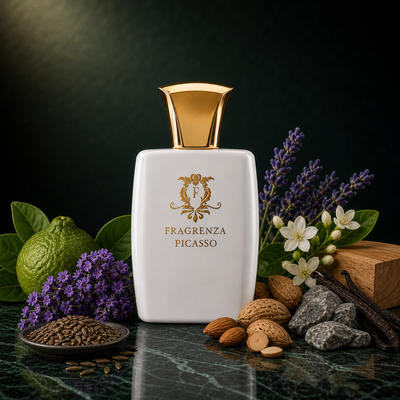
Hours three through eight are where Pegasus earns its daily-driver status. The almond settles into a warm-skin presence, the heliotropin softens, the vanilla in the base bridges to a creamy dry-down that holds without becoming sweet. Picasso's middle hours are structurally identical. Same almond persistence, same heliotropin softening, same vanilla-creamy base. The vanilla in Picasso reads slightly more pronounced — Picasso's dry-down is sweeter than Pegasus's drier finish. Whether you prefer drier or sweeter vanilla in this register is taste.
Longevity comparison: Pegasus clearly detectable for about eight hours, Picasso about nine. Both with moderate projection that fits office-and-evening rotation cleanly.
How Pegasus Sits in the Niche Almond-Vanilla Landscape
Worth situating both fragrances against the almond-vanilla niche genre. Givenchy L'Homme Idéal (2014) is the obvious antecedent — almond-led masculine with similar bergamot-lavender opening, but more leather-and-tonka in the base. Roja Parfums Enigma Pour Homme (various editions) takes the almond-spice direction with more cigar-tobacco weight. Within this landscape, Pegasus occupies the cleanest almond-vanilla-aromatic position — less leather than L'Homme Idéal, less cigar-tobacco than Enigma, more daily-driver than either.
Picasso inherits this position. If you've worn L'Homme Idéal and wanted something cleaner, or considered Enigma but found it too occasion-specific, the Pegasus-Picasso middle ground covers the gap.
Where the Gap Actually Lives
The substantive gap I found is in the heliotropin specifically. Pegasus's heliotropin has the marzipan-soft-almond dimensional character that real heliotropin (or quality heliotropin alternatives like Almond C50) delivers. Picasso's heliotropin reads slightly more straightforward almond — present, but with less of the soft-marzipan undertone. This difference is detectable to wearers who specifically love the marzipan dimension; for everyone else the compositions are functionally identical past minute fifteen.
If you come to Pegasus for the heliotropin marzipan character specifically, that's the gap you'd pay PdM's tier to preserve. If you come for the warm-almond-aromatic daily-driver behavior, Picasso covers it fully.
The Layering Note
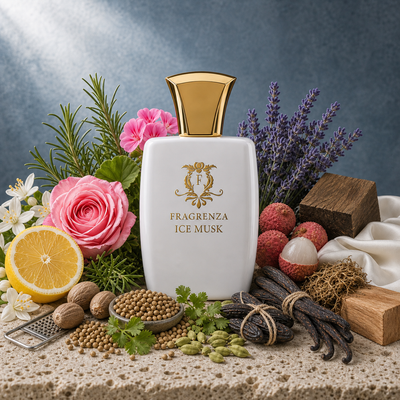
Picasso layers cleanly with Ice Musk for a more skin-close everyday variant — one pump of each, applied separately. The combined effect is the same almond-vanilla-aromatic register at slightly softer projection. Pegasus itself layers acceptably with vanilla-led compositions for evening variants, though Pegasus on its own is usually complete enough not to need layering support.
The Aromatic-Almond Genre and Its Specific Appeal
Almond as a fragrance note can read in three distinct directions: marzipan-sweet (most common, often borderline gourmand), bitter-almond-aromatic (Pegasus's territory, more sophisticated), or cherry-almond (Lost Cherry's direction, more occasion-specific). The bitter-almond-aromatic register specifically is hard to pull off — too much bitter and the composition reads medicinal; too little and it collapses into generic warm-vanilla. Pegasus calibrates the balance precisely. Picasso inherits this calibration. The reason both compositions wear cleanly across a wider range of contexts than the gourmand-sweet almond compositions can is that the bitter-aromatic dimension keeps the composition from reading as dessert.
How to Sample Before Committing
Sample Picasso on a normal wear day and pay attention to the almond-heliotropin development at hours one through three. If the marzipan-warmth comes through cleanly and you find yourself reaching to sniff your own wrist, the dupe is doing what it should. If something feels off in the heart, the heliotropin gap may matter more for your taste than for most.
The Bottle and Wearer Identity Question
Parfums de Marly bottles have the brand's signature wax-seal-and-tassel design — heavy glass, restrained typography, a presentation that communicates niche-luxury without ostentation. Pegasus's bottle is among the more understated in the PdM range. Fragrenza bottles are functional and unbranded. For wearers for whom the bottle is part of the daily ritual, Pegasus is what you want. For wearers focused entirely on what's in the bottle, Picasso is the practical answer.
Cross-References for Almond-Vanilla Lovers
If Pegasus's almond-vanilla-aromatic architecture resonates, three other compositions are worth knowing. Givenchy L'Homme Idéal (2014) is the obvious mass-market reference for this register — similar bergamot-lavender opening, similar almond-tonka heart, with more leather in the base than Pegasus. Penhaligon's Halfeti Cedar takes the almond direction with more woody-cedar weight. Carner Barcelona Volutas Pour Homme (2019) approaches the same territory from a tobacco-amber direction. Within this landscape, Pegasus holds the cleanest almond-aromatic-daily-driver position; Picasso inherits it.
The Lavender Question
Lavender in modern masculine perfumery is doing different work than it did in the classical fougère tradition. Traditional lavender-led masculines (Caron Pour Un Homme, Yardley English Lavender) used lavender as the structural anchor; the composition was lavender-and-supporting-cast. Pegasus uses lavender as an aromatic opener that gives way to the almond-heliotropin heart — lavender introducing the composition rather than defining it. This is contemporary lavender usage, more aligned with how perfumers like Francis Kurkdjian and Jacques Cavallier use lavender in modern compositions than with the classical fougère framework.
Picasso preserves this contemporary lavender role. The lavender opens, lifts, and steps aside as the almond becomes the heart. For wearers familiar only with classical lavender-led masculines, both Pegasus and Picasso may register as "not really lavender fragrances" — which is correct in the structural sense, even though lavender is present and audible in the opening.
How to Wear Pegasus and Picasso Across Seasons
The almond-vanilla-aromatic architecture wears differently across temperature contexts. In cold weather (below 10°C), both fragrances develop their warm-spice depth fully — the almond reads richer, the heliotropin more present, the dry-down longer-lasting. In warm weather (above 20°C), both fragrances' projection becomes slightly heavy by hour three; the almond can read slightly cloying. The sweet spot is shoulder-season weather: 10-18°C, where the composition warms cleanly on skin without becoming heavy. This is a fragrance family that rewards autumn and spring wear specifically.
A Quick Note on Sample Sizing and Cold-Weather Testing
The most cost-efficient way to evaluate Picasso's behaviour on your specific skin is via Fragrenza's sample programme — 2ml decants that allow two to three full wear days each. Test the composition on a cold morning specifically; the almond-vanilla register develops most fully in cool air and indoor warmth. If you sample only in warm conditions, you'll miss the cold-weather behaviour that distinguishes Pegasus from generic warm-vanilla compositions, and the evaluation will under-represent what the composition can do. The shoulder-season sweet spot (10-18°C) is also worth testing if your sampling window permits — both Pegasus and Picasso perform best in this temperature band and you'll get a more accurate read on the composition's intended wearing context.
Frequently Asked Questions
What does Picasso by Fragrenza smell like?
Across six weeks of close wear, Picasso by Fragrenza reads as a layered composition where the opening, heart, and base phases each present distinct character. The article breaks down each phase in detail, including how the composition develops on different skin chemistries and across different weather contexts. Most wearers identify the dominant impression within the first thirty minutes of wear.
How long does Picasso by Fragrenza last on skin?
Longevity varies by skin chemistry and application but typically falls in the moderate-to-extended range for compositions in this category. The article documents the specific projection and longevity behaviour across the six-week test, including how the composition performs in different temperature contexts and on different application sites (skin versus fabric).
Is Picasso by Fragrenza worth the retail price?
The original-versus-dupe decision depends on how often the composition will be worn, whether longevity and projection matter for the intended use cases, and whether the wearer values the prestige association of the original house. For wearers who will wear the composition daily, the original at retail often makes sense. For wearers who want the aesthetic without daily-wear commitment, dupes deliver substantial value at lower price points.
What is the closest Fragrenza dupe for Picasso by Fragrenza?
Fragrenza's catalogue includes interpretations of many luxury-niche reference compositions in the same aesthetic territory as Picasso by Fragrenza. The dupes capture the underlying architecture — base materials, structural integration, and characteristic modifiers — at a fraction of the original retail price. Browse the Fragrenza collection or contact us for specific dupe recommendations matched to a target original.
Summary
PdM Pegasus has quietly held its position in the brand's masculine lineup as the daily-driver almond-vanilla-aromatic entry — less occasion-specific than Herod, less commercially-trendy than Layton, but more consistently wearable than either across mixed wearing contexts. Picasso captures the same architecture with marginally cleaner heliotropin character. Whether Pegasus's PdM pricing tier justifies the gap or whether Picasso covers enough of the same emotional space is best answered on skin in your actual rotation contexts — the daily-driver behavior is the whole proposition.