Soli Fragrances: The Case for the Single-Note Perfume in a World Obsessed With Complexity
A true soli composition asks one material to carry application through dry-down without supporting context, which is why so few rose-named bottles actually qualify under the strict definition.
By Julia MorettiFragrenza makes several of the alternatives featured in our guides — here’s how we test.
5 min read
The contemporary fragrance market has developed an almost baroque appetite for complexity. Launch announcements arrive packed with sprawling note pyramids — twelve, fifteen, sometimes twenty distinct materials, layered across opening, heart, and base in ways that suggest narrative depth, olfactory richness, the carefully constructed arc of a perfume's life on skin. The language of fragrance criticism has followed suit, rewarding complexity with attention and treating simplicity with something close to suspicion.
Into this environment comes a quiet counter-movement. Soli fragrance — the art of the single-note perfume, taken seriously — is attracting a small but growing audience of wearers who have concluded that the most radical thing a perfume can do in 2026 is commit completely to one idea and develop it without compromise.
What Soli Fragrance Actually Is
The term requires careful definition, because the fragrance market is full of fragrances that name a single note without actually being defined by one. A perfume called Rose is not a soli rose unless that rose genuinely constitutes the entirety of the experience. Many so-called single-note fragrances are simply fragrances in which one material plays a leading role while others provide context, shadow, and support.
True soli fragrance is something more demanding. It asks one material — one note, one molecule, one aromatic concept — to carry the full weight of the wearing experience, from initial application through dry-down, without the support of supporting cast or structural scaffolding. The modern pioneer of this approach is Escentric Molecules, whose Molecule series stripped fragrance to isolated aroma chemicals and dared wearers to find them interesting on their own terms. What Geza Schoen understood was that simplicity and minimalism are not the same thing, and that a single carefully chosen molecule, experienced across hours on skin, could be as absorbing as any complex composition.
The Technical Demands of One Note
Making a single note sustain interest across the full wearing arc is genuinely difficult — arguably more difficult than composing a complex fragrance. In a traditional multi-note composition, the perfumer has tools to manage transition: lighter top notes give way to rounder heart materials, which eventually yield to heavy, persistent base components. The temporal structure of the fragrance is built into its architecture.
A soli fragrance has none of these tools. The single note must open well, evolve on skin, project appropriately in its middle hours, and arrive at a satisfying dry-down — all through the character of one material and its interaction with the wearer's skin chemistry. This places extraordinary demands on raw material quality. A rose absolute of mediocre grade, used as one element among many, may disappear into the composition without causing harm. As the sole voice of a soli rose, every quality of that absolute — its depth, its facets, its longevity — is fully exposed.
This is why ingredient purity paradoxically demands the highest budget in soli perfumery. The most expensive raw materials in perfumery — natural rose absolute, real oud, genuine jasmine absolute — command their prices partly because of the complexity and longevity they deliver even in isolation. A soli fragrance built on inferior materials will simply fail to hold interest. There is no complexity of composition to distract from the shortcomings of the ingredient.
The Best Soli Fragrances of 2026
The rose soliflore has perhaps the longest tradition of the form. The great rose soliflores — those built on genuine rose absolute rather than constructed rose accords — demonstrate exactly what soli philosophy can achieve: a single material that reveals different facets across hours, moving from bright and dewy on opening to rich and slightly honeyed in the heart to something dry and almost dusty at the base. The finest examples available in 2026 use Taif or Bulgarian rose at concentrations that would be impractical in most commercial fragrances.
Oud soliflores represent the form at its most challenging. High-grade oud is one of the most compositionally complex natural materials in perfumery — it already contains hundreds of distinct aroma compounds — which means that an oud soli is not truly single-note in any chemical sense, but operates as one in the philosophical sense of presenting one material as a complete world unto itself. The best oud soliflores trust their central material enough to leave it unadorned, allowing the animalic, woody, sweet, and medicinal facets to play against each other without compositional interference.
Jasmine soliflores occupy different territory — rounder, more immediately appealing, but demanding in their own way. The challenge with jasmine is managing the indolic quality that makes natural jasmine both compelling and, in certain concentrations, startling. The best examples calibrate this precisely, allowing the note's full character without pushing into territory that reads as overripe.
The Philosophical Case
There is something important happening in the soli movement beyond aesthetics. In a market that has become expert at manufacturing the appearance of complexity — long note lists that may describe a single accord in several ways, elaborate backstories attached to straightforward formulations — soli fragrance represents a refusal of obfuscation. It asks to be judged on exactly one thing and invites the wearer to develop the attention required to find that one thing interesting.
In an overcrowded market, this is both a design philosophy and a kind of integrity statement. The perfumers and houses working in this tradition are betting that a significant audience exists for experiences that do not overwhelm but instead invite sustained attention. The evidence of 2026 suggests they are not wrong.
Discover at Fragrenza
The soli philosophy — one material, fully committed — finds its perfect expression in fragrances that let a single aromatic idea speak without interference. At Fragrenza, our niche fragrance collection includes several compositions that honour this spirit of focused, uncompromising clarity.
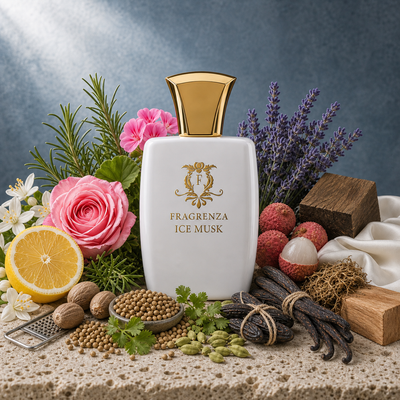
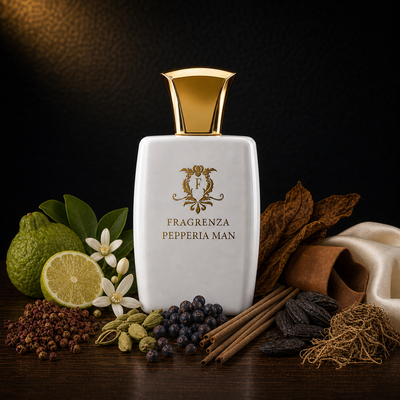
is perhaps the purest expression of the soli approach in the range: a clean, transparent skin musk that develops almost imperceptibly across hours, rewarding the close attention that the philosophy demands. For those drawn to the spice-forward end of the spectrum, leads with a bold, unambiguous pepper note that drives the entire composition with single-minded confidence. Both are equally at home in our unisex fragrance collection, designed for wearers who choose by character rather than by convention.