

The Complete History of Perfumery: From Ancient Egypt to Modern Niche
The word perfume comes from per fumum or through smoke; ancient Egyptians burned kyphi from resins and honey in temples, and Mesopotamian Tapputi distilled flowers by 1200 BCE.
By Julia MorettiFragrenza makes several of the alternatives featured in our guides — here’s how we test.
3 min read
Perfume is one of humanity's oldest pleasures. Long before synthetic chemistry, designer brands, or department store counters, human beings were burning aromatic resins, steeping flowers in oils, and anointing their bodies with scented unguents. The history of perfumery is really the history of human civilisation — a story of trade, religion, science, art, and desire that stretches back more than 4,000 years.
Ancient Origins: Egypt, Mesopotamia, and Beyond
The earliest known perfumes were not liquid — they were incense. The word "perfume" itself derives from the Latin per fumum, meaning "through smoke." Ancient Egyptians burned kyphi (a blend of resins, honey, wine, and spices) in temples as offerings to the gods and to purify sacred spaces.
Egyptian perfumery was deeply sophisticated. They macerated flowers, herbs, and resins in animal fat to create scented unguents, and they traded extensively for precious aromatic materials: frankincense and myrrh from Arabia, cedarwood from Lebanon, cinnamon from India. Perfume was a symbol of divine favour and high status — Queen Hatshepsut reportedly traded expeditions specifically to obtain frankincense trees.
In Mesopotamia, the world's first recorded perfumer was a woman named Tapputi, documented on a cuneiform tablet from around 1200 BCE. She distilled flowers, oils, and other aromatics — an early prototype of the process we still use today.
Greece, Rome, and the Arab Golden Age
The ancient Greeks elevated perfumery from religious ritual to personal adornment. They developed the concept of liquid perfume — oils infused with flowers, herbs, and spices — and traded them throughout the Mediterranean. The Romans took this further, using scent with extraordinary lavishness: perfumed baths, scented fabrics, and elaborate public buildings.
But it was Arab scholars during the Islamic Golden Age (8th–13th centuries) who made the most transformative technical contribution. The physician Ibn Sina (Avicenna) is credited with refining the process of steam distillation, which allowed for the extraction of true essential oils and aromatic waters. This technique unlocked a whole new world of raw materials and made modern perfumery possible.
Renaissance Europe and the Birth of Modern Perfume
The first recognisably modern alcohol-based perfume — Hungary Water — emerged in the 14th century. By the Renaissance, perfumery had become a prestigious craft across Europe, particularly in Italy and France. Catherine de' Medici famously brought her personal perfumer from Florence to Paris, helping to establish France's dominance in the industry.
The town of Grasse, in the south of France, became the perfume capital of the world. Its mild climate was perfect for growing jasmine, rose, and lavender; its tannery trade had created a ready market for scented gloves; and its craftsmen developed techniques — enfleurage, maceration, distillation — that defined the industry for centuries.
The late 19th century brought a revolution: synthetic chemistry. For the first time, perfumers could access materials that didn't exist in nature. Coumarin (hay-like, first synthesised in 1868), vanillin (vanilla, 1874), and ionones (violet and woody facets) opened entirely new creative possibilities. The first "modern" perfume, Fougère Royale by Houbigant (1882), used synthetic coumarin to create an accord — a blend that didn't exist in nature — and changed perfumery forever.
The 20th Century: Couture, Celebrity, and Mass Market
The 20th century saw perfumery merge with fashion and celebrity. Chanel No. 5 (1921) — the first fragrance to make heavy use of aldehydes, creating that distinctive "soapy" shimmer — became the world's most iconic scent and established the model of fashion houses launching fragrances as extensions of their brand.
The post-war era brought mass-market perfumery: affordable fragrances for everyone, sold in department stores and chemists. The 1970s and 80s were the era of bold, powerhouse fragrances — Opium, Poison, Obsession — designed to announce their wearer from across a room.
The 1990s swung towards clean, aquatic freshness (CK One, L'Eau d'Issey) as a reaction to the excesses of the previous decade. And then something new began to stir.
The Niche Movement: Artistry Over Commerce
The late 1990s and 2000s saw the rise of niche perfumery — small, independent houses creating fragrances outside the commercial mainstream. Freed from the constraints of mass-market appeal, niche perfumers could use expensive raw materials, unusual accords, and unconventional structures. Houses like Serge Lutens, Comme des Garcons Parfums, Creed, and later Amouage, Le Labo, and Byredo changed what perfume could be.
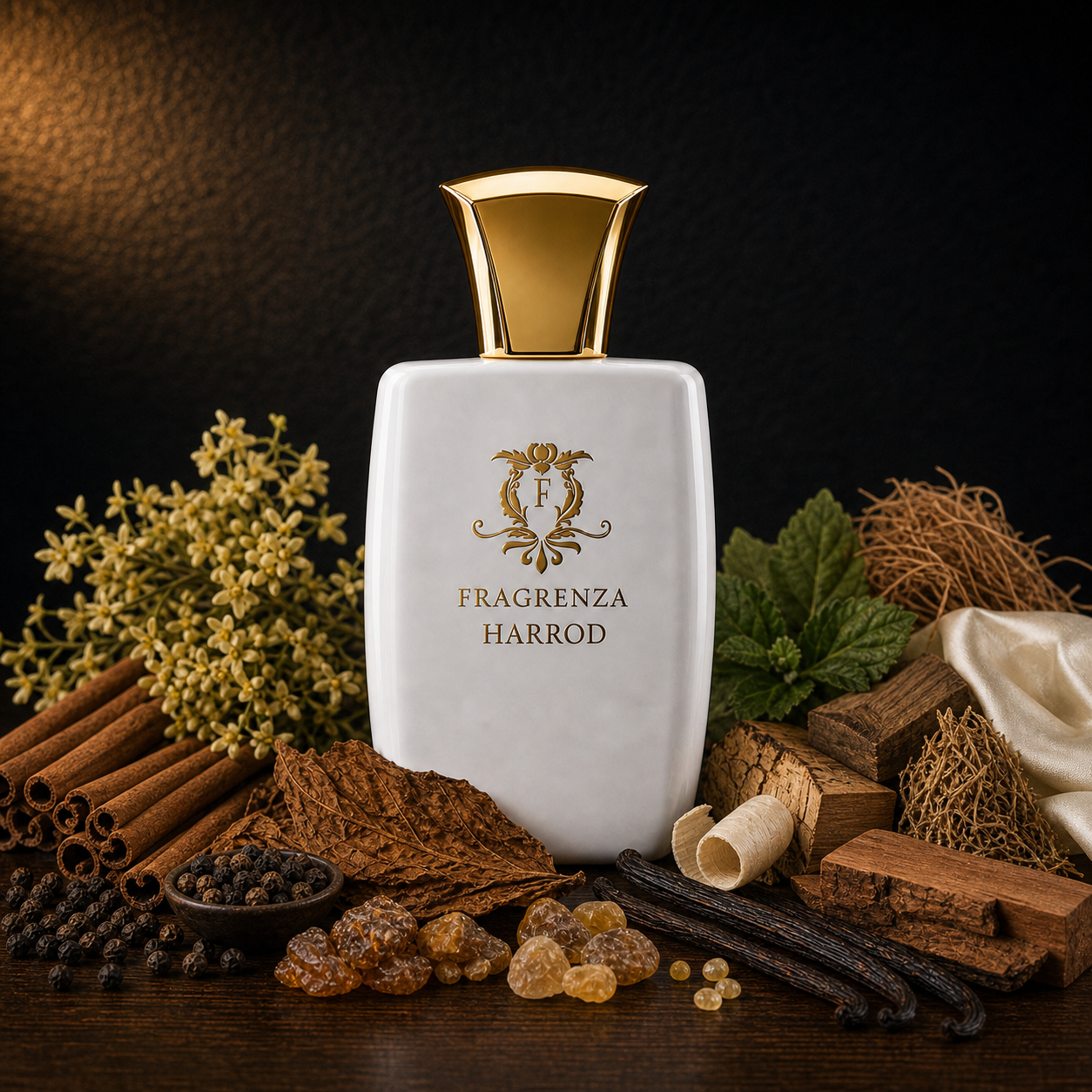
Niche fragrance is now a booming global market, and its influence has pushed even mainstream houses to experiment more boldly. The result is the most exciting era in perfumery history — a world where a small Italian-inspired brand like Fragrenza can create genuinely outstanding formulations inspired by the world's most celebrated scents and make them accessible to everyone.
Explore the cutting edge of niche-inspired perfumery in our Niche Fragrances collection — premium-quality scents, Italian-inspired names, and prices that won't make you wince.