
Oud in Perfumery: The World's Most Precious Aromatic and How It Shapes Modern Fragrance
Oud is a foundational raw material in the woody family. Learn how perfumers use it, what it smells like on skin, and the fragrances that wear it best.
By Julia Moretti 6 min read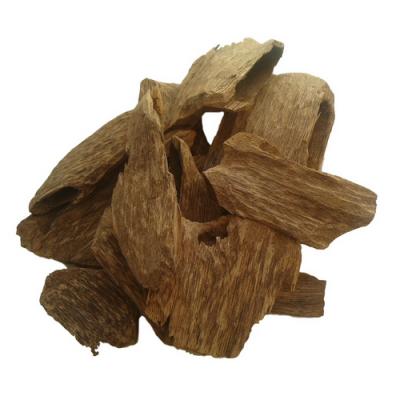
Oud: Liquid Gold from the Heart of Agarwood
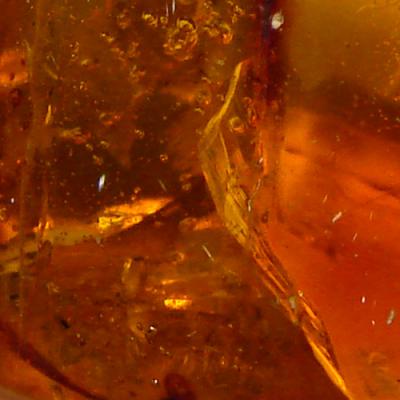
There is no ingredient in all of perfumery that commands as much reverence, desire, or cost as oud — the resinous heartwood that forms inside Aquilaria trees when they become infected by a specific mould, Phialophora parasitica. Known variously as agarwood, aloeswood, gharuwood, and jinko (in Japan), oud is the tree's response to this infection: a dense, dark, extraordinarily fragrant resin that has been treasured as incense, medicine, and perfume material for over three thousand years across the cultures of the Middle East, South Asia, Southeast Asia, and East Asia.
The smell of pure oud oil — distilled from infected agarwood chips through steam distillation or hydrodistillation — is unlike anything else in the natural world. It is simultaneously woody, animalic, earthy, smoky, and sweet, with facets that shift and evolve over hours of wear. High-grade Bangladeshi and Indian oud tends toward a barnyard, leather-adjacent animality that is challenging but magnetic. Japanese kyara — the rarest and most prized grade of agarwood — has a softer, more incense-like quality, almost fruity and crystalline, free of the rougher animal notes. Cambodian oud is famously sweet and approachable, often with an almost floral quality that makes it more accessible to those new to the ingredient. Saudi, Omani, and Emirati oud traditions prefer a more smoky, resinous profile that reads as powerful and deeply meditative.
The Historical Significance of Oud Across Cultures
The cultural roots of oud extend across a remarkable range of civilisations. In the Islamic world, agarwood has been burned as incense in mosques and homes for over a millennium, and the Hadith (the sayings of the Prophet Muhammad) explicitly recommend agarwood as incense. The Arab practice of applying oud oil directly to the skin and clothing — a tradition that continues in Gulf countries — represents one of the oldest forms of personal perfumery. In these traditions, oud is not merely a luxury but a spiritual and social statement: to smell of good oud is to be a person of substance and refinement.
In Japan, the practice of koh-do (the way of incense) elevated the appreciation of agarwood to a form of meditative art. Practitioners would warm agarwood over heated charcoal and allow its smoke to rise through perforated censers, developing an extraordinary sensitivity to the ingredient's subtleties. The highest grades of Japanese kyara could be and still are worth more per gram than gold. In India, agarwood has been central to Ayurvedic medicine, Hindu ritual, and the North Indian tradition of ittar — non-alcoholic perfumes made by distilling botanicals into sandalwood oil. The great attars of Kannauj, still produced by traditional craftsmen using century-old copper stills, frequently use agarwood as a keynote.
Western perfumery's encounter with oud as a mainstream ingredient is relatively recent. Before the 1990s, oud appeared in Western fragrance primarily as an exotic base note in luxury orientals. The real transformation came in the 2000s, when Yves Saint Laurent's M7 (2002) became one of the first mainstream Western fragrances to declare oud as a primary note, and when houses like Tom Ford, Dior, and Chanel began releasing oud-focused collections to meet an increasingly global luxury fragrance market.
Extraction, Rarity, and the Economics of Oud
Not all Aquilaria trees produce agarwood. The resin only forms when a tree is infected by the mould, and in wild forests the occurrence is relatively rare. Centuries of harvesting for the global oud trade have rendered many Aquilaria species critically endangered in their native ranges across India, Bangladesh, Assam, Vietnam, Cambodia, and Indonesia. Wild agarwood is now heavily regulated under CITES (the Convention on International Trade in Endangered Species), and the majority of commercial oud production relies on plantation-grown trees that are artificially inoculated with the mould.
Plantation oud is considerably less expensive than wild oud, but also generally less complex in its aromatic profile. The finest wild oud from mature trees can trade at tens of thousands of dollars per kilogram, making it genuinely comparable in value to precious metals. The distillation process is also inefficient by necessity: enormous quantities of agarwood chips must be processed over extended hydrodistillation cycles to yield small amounts of the finished oil, adding further to the cost.
In mainstream commercial perfumery, pure oud oil is often partially or entirely replaced with synthetic oud molecules. Several excellent oud synthetics exist: Iso E Super, while not specifically an oud molecule, contributes a woody-animalic quality; Oud Galore and Javanol can approximate certain facets of the natural. Most commercial "oud" fragrances combine a small percentage of natural oud with a careful blend of synthetic oud molecules, woody musks, and resins to achieve an affordable, consistent oud impression. The results vary enormously in quality.
Famous Oud Fragrances: From Opulent to Contemporary
Tom Ford Oud Wood is perhaps the most influential oud fragrance in the Western luxury market. Released in 2007 as part of Tom Ford's Private Blend collection, it took a radically different approach to oud than the dense, animalic traditions of the Gulf — presenting instead a clean, woody, almost European interpretation in which oud is one voice in a balanced chord alongside rosewood, cardamom, sandalwood, vetiver, and amber. The result is a fragrance that introduced oud to an enormous audience who might have found traditional Middle Eastern oud presentations too challenging.
Maison Francis Kurkdjian's Oud, released in 2012, took a more luxurious and opulent approach, using high-quality oud absolute alongside rose, saffron, and amber in a composition that references Middle Eastern traditions while remaining accessible to Western sensibilities. The niche fragrance space has seen an explosion of oud creativity in the past two decades, with houses like Amouage, Roja Parfums, and Thameen producing extraordinarily ambitious oud-centred compositions that push the ingredient to its limits.
For those exploring oud for the first time, our comprehensive guide to oud in perfumery provides a deeper exploration of the ingredient's many facets. The note also forms the backbone of several excellent oriental fragrances in our collection, where it appears both as a primary note and as a depth-giving base.
How Oud Interacts with Other Notes
Oud is one of perfumery's most transformative base notes — its presence fundamentally alters the character of everything it touches. Paired with rose, it creates the classic oud-rose accord that is the cornerstone of Middle Eastern perfumery: a combination of extraordinary intimacy and opulence, the rose's floral sweetness warming and illuminating the oud's complexity. With saffron, oud produces a fragrance world of intense richness and meditative depth — a pairing central to Persian and Levantine perfumery traditions.
Oud and sandalwood together are magnetically attractive — two woods of supreme quality, one animalic and dark, one creamy and gentle, creating a balance that is both complex and deeply harmonious. Against amber, oud takes on a resinous, glowing warmth that is supremely wearable and long-lasting. Incense notes, particularly frankincense and myrrh, are natural partners that amplify oud's spiritual, ceremonial dimension. Leather and oud can be an extraordinary pairing when handled with care — the animalic qualities of both notes creating a composition of primal sensuality.
Oud in the Modern Fragrance Wardrobe
The democratisation of oud in Western perfumery over the past two decades has been one of the most significant cultural developments in the fragrance world. Where once oud was the exclusive preserve of Gulf royalty and Japanese incense masters, today it appears across price points and markets, from mass-market celebrity fragrances to ultra-luxury niche compositions.
Understanding where oud fragrances fit in a contemporary wardrobe requires some thought. The lighter, Westernised oud interpretations — clean, woody, with oud as one voice among many — work beautifully as sophisticated everyday scents, particularly appropriate in autumn and winter when the depth and warmth of the note aligns with cooler weather. The more traditional, opulent oud-rose or pure oud compositions are evening and special occasion fragrances — powerful, long-lasting, and uncompromisingly luxurious.
Any serious fragrance collector should have at least one oud-centred piece. It is the ingredient that most clearly demonstrates the full range of what natural materials in perfumery can achieve: complexity, depth, history, and an almost uncanny ability to feel simultaneously ancient and perpetually contemporary. To wear fine oud is to participate in one of humanity's oldest and most beautiful rituals.