

Coffee in Perfumery
Coffee is a distinctive perfumery raw material with a personality all its own, a note every fragrance lover should learn to recognise on skin.
By Julia Moretti 4 min read
What Does Coffee Smell Like in Perfumery?
Coffee is one of the most universally beloved smells in the world — a deeply roasted, complex, slightly bitter aroma that triggers powerful associations with comfort, alertness, warmth, and pleasure in millions of people across every culture. In fine fragrance, coffee translates with remarkable fidelity: the roasted, dark, slightly smoky character of freshly ground arabica; the creamy sweetness of espresso foam; the bittersweet depth that distinguishes great coffee from mere caffeine delivery. It is a note that functions simultaneously as energising and comforting — a paradox that good perfumers exploit with considerable skill.
Coffee in perfumery is rarely sweet in isolation — that quality comes from the materials it is combined with. On its own, coffee absolute has a dark, roasted, almost woody bitterness with a characteristic aromatic smokiness that shares territory with tobacco and chocolate. It is this bittersweet duality that makes coffee such a valuable fragrance ingredient: capable of anchoring and darkening sweet compositions, or of providing warmth and complexity to oriental and amber accords that might otherwise read as too straightforward.
The History of Coffee in Perfumery
Coffee's aromatic properties have been recognised and appreciated for centuries — the Sufi mystics of Yemen who first cultivated coffee plants in the fifteenth century were as drawn to the smell of roasting beans as to the stimulating effects of the drink. Coffeehouses across the Islamic world and later in Europe were celebrated for the thick, enveloping aroma of roasted coffee that pervaded their atmosphere; the smell itself was considered pleasurable and stimulating, quite apart from the beverage.
In fine fragrance, however, coffee remained largely in the background until the late twentieth century. The rise of the gourmand fragrance genre — inaugurated by Thierry Mugler's Angel in 1992 — created space for edible-smelling ingredients in mainstream fine fragrance, and coffee benefited enormously from this cultural shift. The launch of YSL Black Opium in 2013 was perhaps the most commercially significant moment in coffee's fragrance history: pairing coffee and white florals in a composition that immediately became one of the best-selling fragrances in the world, bringing the coffee note to an audience of millions and cementing its place as a mainstream fragrance ingredient of the first rank.
Key Aromatic Molecules in Coffee
The aroma of roasted coffee is among the most complex in the natural world, generated by hundreds of volatile compounds created during the Maillard reaction and caramelisation that occurs during roasting. The most significant aroma-active compounds include furfuryl mercaptan (also known as 2-furfurylthiol) — a sulphur compound present at parts-per-billion concentrations that is considered the single most important contributor to roasted coffee character; pyrazines, which provide the characteristic roasted, slightly earthy quality; and furanones and lactones, which contribute caramellic and slightly fruity sweetness.
Natural coffee absolute — extracted from roasted coffee beans using solvent extraction — captures much of this complexity in a highly concentrated form. In perfumery, it is used alongside synthetic pyrazine-based materials, dihydromaltol (a sweet, caramellic compound), and various phenolic materials to create coffee accords of varying character — from bright, fruity Ethiopian-style profiles to dark, bitter Italian espresso accords. The relationship between coffee and vanilla is particularly important: vanilla provides the sweetness that completes the café au lait accord central to many commercial coffee fragrances.
Famous Coffee Fragrances
YSL Black Opium remains the defining mainstream coffee fragrance of the contemporary era — its combination of coffee, white florals, and vanilla set a template that spawned an entire generation of coffee-centric feminine fragrances. Serge Lutens' Arabie uses coffee and spices in a Middle Eastern-inspired composition of extraordinary richness and historical depth. Annick Goutal's Musc Nomade deploys coffee in a more transparent, woody-musky context. Montale's numerous coffee and oud compositions explore the intersection of coffee and the Middle Eastern fragrance tradition.
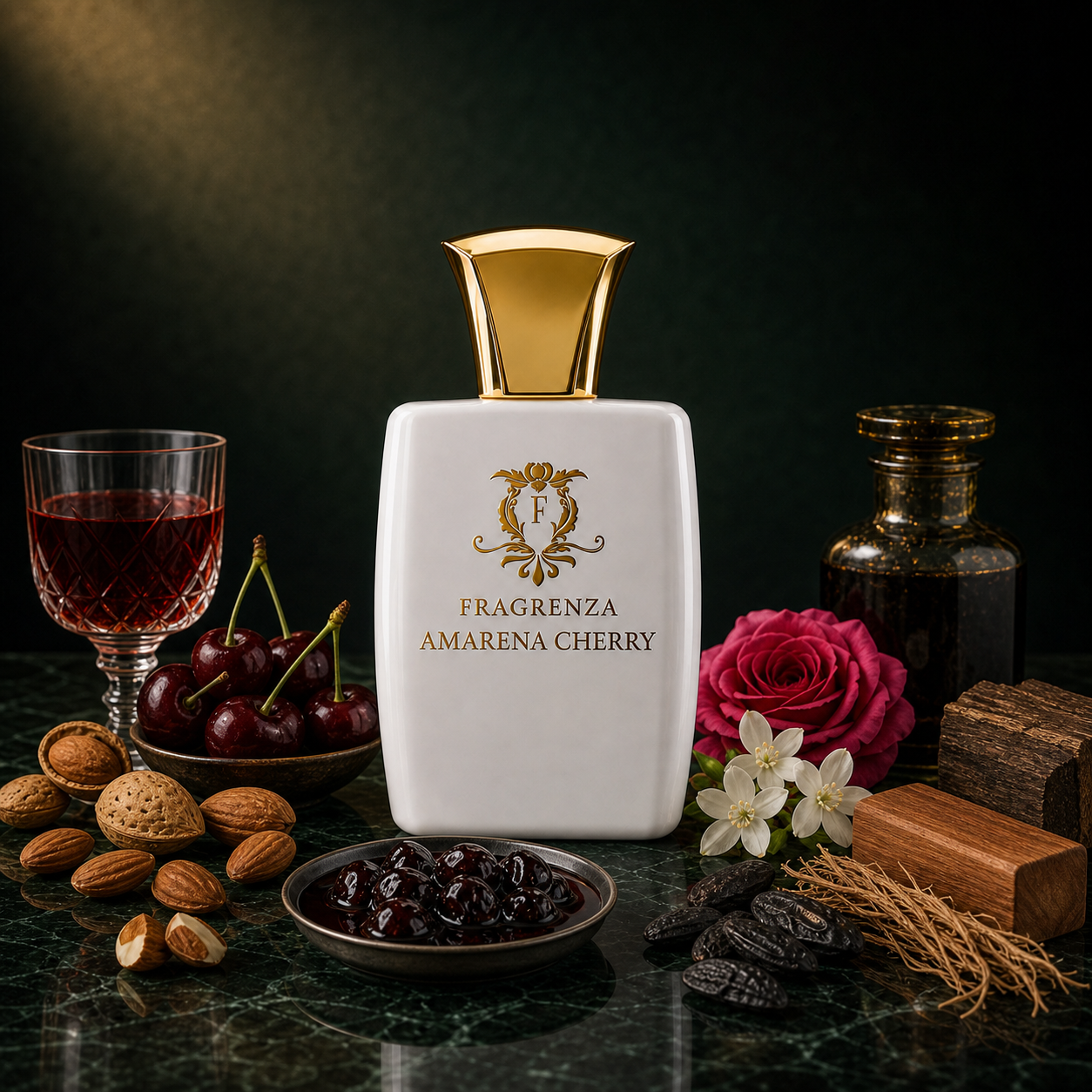
For those drawn to the gourmand coffee direction, Fragrenza's Gourmand de Chocolat ventures into adjacent dark-roasted territory, and the broader oriental fragrances collection at Fragrenza includes many compositions where coffee plays a central or supporting role in dark, warm, complex accords.
Coffee's Interactions with Other Notes
Coffee is one of the most sociable ingredients in the perfumer's kit — it harmonises with a remarkably wide range of other materials. With vanilla and tonka bean, coffee creates the classic café-patisserie accord that is the backbone of the best mainstream gourmand fragrances. With white florals — particularly jasmine — coffee creates a dark-floral tension of considerable sensuality, simultaneously sweet and bitter, floral and roasted.
With tobacco and leather, coffee creates a deeply masculine, moody accord perfect for dark oriental compositions. With cardamom and spices, it evokes the rich coffee tradition of the Middle East, where the combination is literally prepared and served as a culinary beverage. With citrus — particularly orange — coffee creates a surprisingly fresh, bittersweet accord that is lighter and more vibrant than coffee's reputation would suggest. Those building a fragrance wardrobe that includes comfort and sophistication in equal measure will find coffee an invaluable reference point across all the major fragrance families represented in Fragrenza's best-sellers collection.