

Incense in Perfumery: Sacred Smoke and the Art of Transcendence in 2026
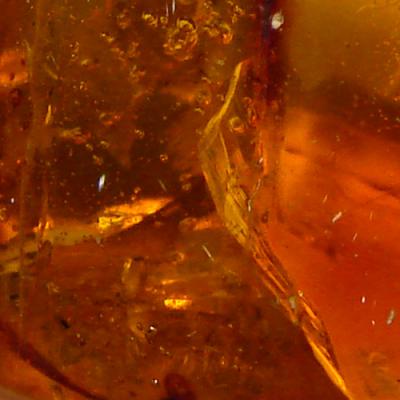
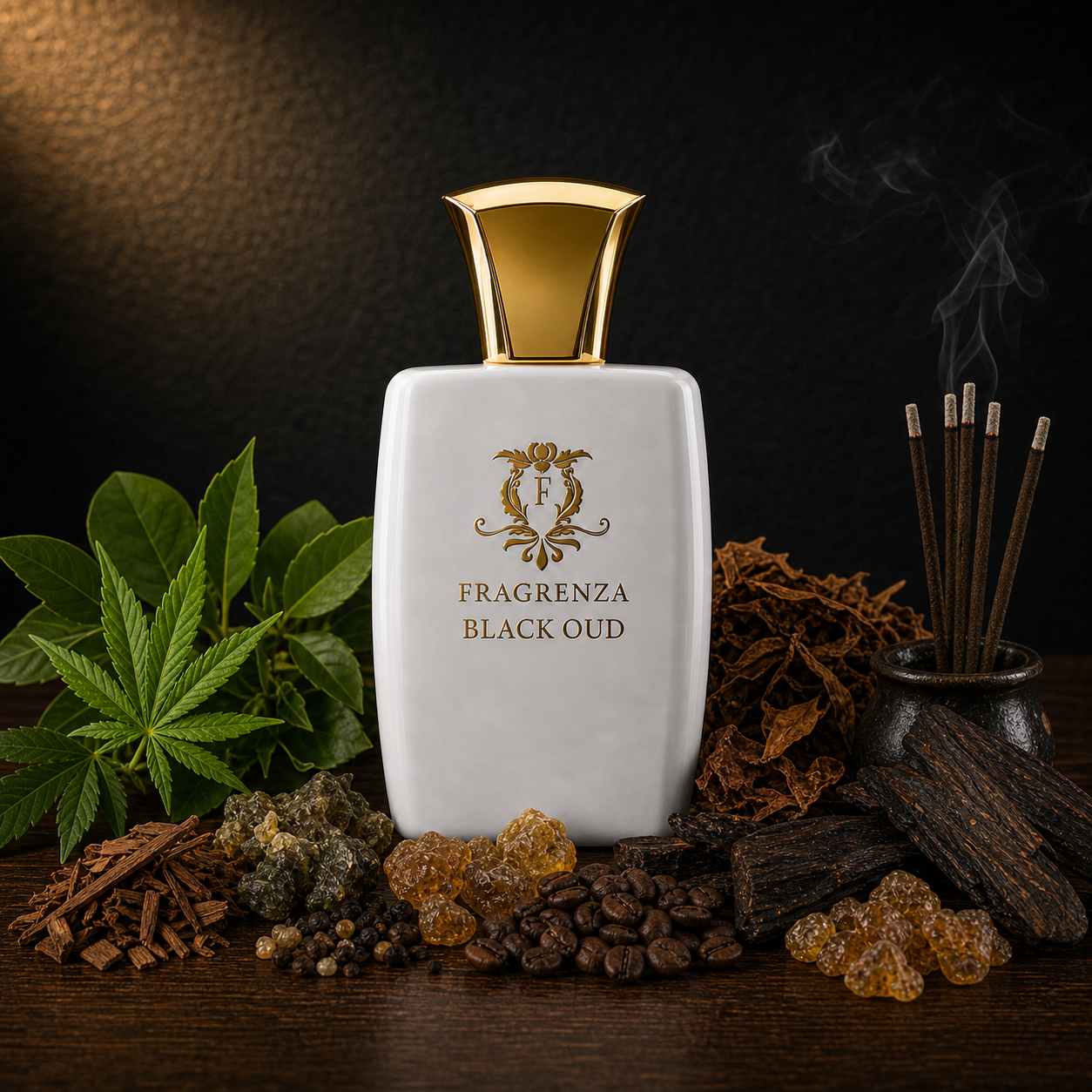
Olibanum resinoid, myrrh, styrax, benzoin, opoponax and synthetics like Cetalox and Ambroxan build the incense accord, with the etymology from Latin incendere pointing back to the censer.
By Julia Moretti 9 min read
Few materials carry as much weight in the human story of scent as incense. Long before perfumery existed as a discipline, before alcohol-based extraits or pyramidal compositions, people were already burning aromatic resins on coals to mark thresholds between the ordinary and the sacred. The word itself comes from the Latin incendere, meaning to set alight, and that etymology tells you everything about how this material reaches the nose. Incense is not a single ingredient but a category of behaviour, a way of releasing fragrance through heat that produces a smoke profile no other technique replicates.
In contemporary perfumery, incense functions as both literal accord and shorthand for a mood. A perfumer who lists incense on a brief is rarely asking for a faithful reproduction of frankincense smouldering on a censer. They are asking for resinous lift, smoky depth, a sense of vertical space, and the suggestion of ritual. The accord is built from raw materials including frankincense (olibanum) resinoid, myrrh, labdanum, styrax, benzoin, opoponax, and synthetics such as Cetalox, Ambroxan, and pyrazine derivatives that mimic the dry char of burned wood.
What makes incense compelling to study is its dual nature. On one hand it reads as cold and high, a thin clear smoke that lifts off the skin almost instantly. On the other hand it can read as warm, balsamic, resinous, almost edible in the way labdanum and benzoin pool in the drydown. The same material can feel like the nave of a cathedral or the floor of a souk, depending entirely on what surrounds it. This is why incense remains one of the most rewarding accords in niche perfumery: it is endlessly recombinable.
What Incense Actually Smells Like
Strip incense down to its core olfactory signature and you get three movements. First there is the volatile top, lemony and almost piney, driven by alpha-pinene and limonene present in olibanum resin. This is the bright crackle you smell when a stick of high-quality Indian sambrani first catches flame. It reads almost like citrus peel rubbed against pine sap, fleeting but unmistakable.
Second there is the dry smoke phase, which is what most people picture when they think of incense. This is the camphoraceous, slightly bitter, slightly medicinal middle that comes from the heated resins and the carbon byproducts of combustion. In synthetic terms this phase is often built with materials like Timbersilk, Iso E Super at higher concentrations, and trace amounts of guaiacol or creosol for the burnt edge.
Third there is the resinous warm base, which only becomes apparent after the smoke has settled. Labdanum contributes a leathery sweetness, benzoin adds vanillic warmth, and styrax gives a cinnamic balsamic quality. Together these create the sense of incense ash, the soft residue that lingers in a room hours after the burning stopped.
The Chemistry Behind the Smoke
Olibanum, the most common starting point for incense accords, is the dried sap of Boswellia trees, primarily Boswellia sacra, carterii, and serrata. Its principal aromatic molecules include alpha and beta boswellic acids, incensole, incensole acetate, and a range of monoterpenes. Incensole acetate is particularly interesting because it has documented psychoactive effects, activating TRPV3 ion channels in the brain and producing measurable anxiolytic responses. This is a rare case where the cultural belief that incense calms the mind has direct neurochemical support.
Myrrh, the close cousin to olibanum, comes from Commiphora species and contributes furanosesquiterpenes that read as mushroomy, bitter, slightly medicinal. Where olibanum lifts, myrrh anchors. Most well-constructed incense accords use both in dialogue. Styrax adds aromatic aldehydes and cinnamates that bridge the resinous and the smoky. Modern perfumery extends this palette with synthetic captives such as Norlimbanol for arid woody-incense effects and various phenolic molecules that recreate the smoke note without requiring the perfumer to actually burn anything.
A Brief History of Incense in Scent
The earliest evidence of incense use comes from Mesopotamian and Egyptian temple inventories dating to roughly 2500 BCE. Egyptian kyphi, a compound incense burned in temple rituals, contained sixteen ingredients including raisins, wine, honey, juniper, and various resins. The Greeks and Romans inherited and adapted these formulas, and Catholic liturgical use of frankincense and myrrh preserved the tradition through the medieval period in Europe.
Japan developed its own profoundly refined incense culture, with the practice of koh-do (literally the way of fragrance) becoming a formal aesthetic discipline alongside tea ceremony and ikebana. Japanese incense traditions privilege agarwood (jinko) and emphasise restraint, presenting a single ribbon of smoke rather than the heavy clouds favoured in Mediterranean ritual. This cultural distinction shapes modern incense perfumery: Western incense compositions tend toward density and balsamic richness, while Japanese-inspired incense readings are airier, drier, more meditative.
Incense in Modern Compositions
The contemporary perfumer has many ways to deploy incense, and the Fragrenza catalogue contains some of the most thoughtful examples of how the accord can be reframed for modern wear.
Consider Hawaii Wood
. The composition uses a smoky-resinous structure as the spine of a tropical-wood architecture, where the incense accord serves not as the dominant statement but as the connective tissue between woody and warm aromatic facets. The smoke here is dry rather than balsamic, closer to the Japanese aesthetic than the Mediterranean one, and it gives the wood notes a sense of altitude they would not have on their own.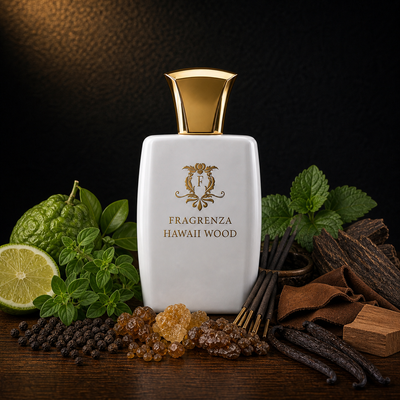
Hunters Smoke
takes the opposite approach. Here the smoke is foregrounded, treated as a textural protagonist rather than an architectural element. The composition leans into the campfire and birch-tar associations of smoke rather than the temple and resinous associations, which produces a reading that feels more leathery, more outdoors, more narrative. This is incense as adventure rather than incense as ritual, and it shows how versatile the accord can be when the perfumer commits to a single facet.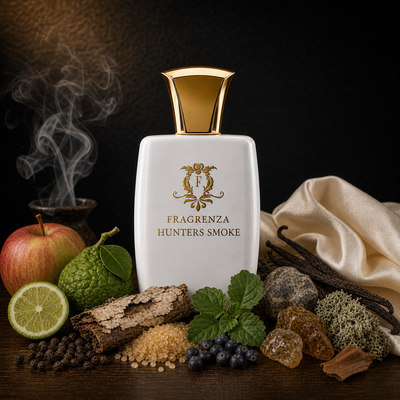
For those who want the deep, smouldering side of incense without the smoke being the main event, Oudensity
offers a different reading. The oud here is dense, resinous, and the incense facet emerges through the natural smoke compounds present in proper oud distillation. This is a composition where incense is not added as an accord but discovered as a consequence of the materials themselves. The result is more integrated, less theatrical, and rewards slow wearing.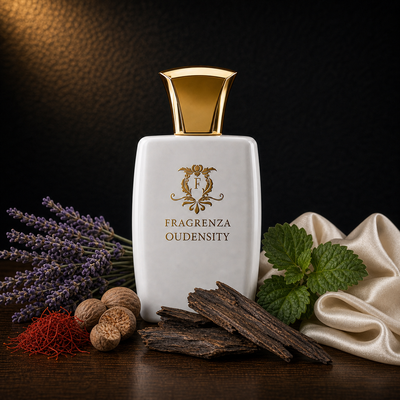
Oud Velluto
closes the loop by pairing oud with a velvety, almost powdered finish where incense functions as a textural softener. Where Oudensity is sharp and resinous, Oud Velluto is plush and almost suede-like, and the incense facet there reads as ash rather than smoke, the cooled residue rather than the active fire.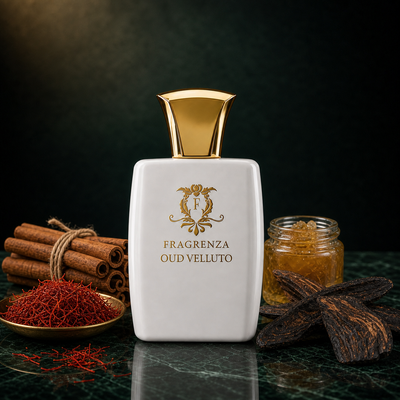
Adjacent Materials and Distinctions
Incense is often confused with related accords, but the distinctions matter. Resin compositions emphasise the sweet, balsamic side without the smoke. Smoke compositions emphasise the carbon and char without necessarily the resinous lift. Woody compositions may share base materials but lack the volatile resin top. Incense sits at the intersection of all three, and the perfumer's skill lies in deciding which side to emphasise.
Frankincense alone is not incense. The smoke that emerges when you burn frankincense is incense. This distinction is critical because cold-pressed or solvent-extracted olibanum lacks the pyrolysis products that define the burned material. Good incense accords use both the raw resin and synthetic recreations of the combustion byproducts to deliver the full effect.
How to Wear Incense Perfumes
Incense compositions reward intentional wearing. They tend to be most effective in cooler weather, when the slow evaporation lets the resinous base develop fully. They also tend to perform well in formal or contemplative settings, where the slight ecclesiastical association adds rather than detracts. Layering an incense fragrance over a clean skin moisturiser is generally better than layering it under or over another fragrance, as the smoke notes can easily collide with citrus or floral materials.
Related Reads
- Oud in Perfumery: the agarwood pillar that pairs naturally with incense
- Labdanum in Perfumery: the balsamic resin that grounds most incense accords
- Myrrh in Perfumery: olibanum's bitter, anchoring counterpart
- Benzoin in Perfumery: vanillic warmth in the incense base
- How to choose a winter fragrance: where incense fits the cold-weather wardrobe
- What is niche perfumery: the tradition that takes incense seriously
- Oud Velluto: a velvet-finish oud with ash-soft incense
Frequently Asked Questions
Is incense the same as frankincense in a fragrance?
Not quite. Frankincense is a specific resin from Boswellia trees, and on its own it smells lemony, piney, and slightly camphorous. Incense as a perfumery accord is what frankincense smells like when it is burned, which adds smoke, char, and dry carbon notes to the resinous base. Many incense fragrances combine both raw and pyrolysed effects to capture the full ritual association.
Why do incense fragrances feel calming?
There is documented neurochemistry behind this. Incensole acetate, a compound in burned olibanum, activates TRPV3 receptors in the brain and produces measurable anxiolytic effects in clinical studies. Cultural conditioning from religious and meditative contexts reinforces the response, but the calming sensation has a real biochemical basis rather than being purely psychological association.
Can incense be worn in warm weather?
Yes, though the composition matters. Dry, airy incense readings in the Japanese aesthetic tradition wear well in heat because they lift off the skin quickly and do not become cloying. Balsamic, resinous incense compositions with heavy labdanum and benzoin can feel oppressive in summer. Look for compositions that emphasise the volatile top and the dry smoke rather than the sweet base.
What is the difference between incense and oud in a fragrance?
Oud is a specific resinous wood material from infected Aquilaria trees, while incense is a smoke-and-resin accord built from multiple ingredients. The two share a smoky-resinous profile and often appear together, but oud carries a distinct animalic, fermented edge that incense lacks. Some compositions emphasise their overlap, others use them as contrasting elements within the same architecture.
Do incense fragrances last longer than other types?
Generally yes, because the resinous and balsamic base materials are heavy, low-volatility molecules that cling to skin and fabric. Olibanum, myrrh, labdanum, and benzoin all have long substantivity. The smoke notes themselves fade faster, but the resinous foundation can persist eight to twelve hours, and the scent often performs even better on clothing than on skin.
Is incense considered a unisex accord?
Historically incense has been one of the most universally unisex materials in perfumery, used across gendered traditions for ritual, meditation, and personal scent. Contemporary incense compositions are almost always presented without gender direction. The accord pairs equally well with traditionally masculine woody-leather structures and traditionally feminine floral-amber structures, which is part of why it has become a signature of niche perfumery.
The Bottom Line
Incense is one of the deepest and most rewarding categories in modern perfumery because it carries thousands of years of human meaning while remaining endlessly flexible as a creative material. Whether you want the cool altitude of a temple, the warm intimacy of a study, or the narrative drama of a campfire, the accord can deliver. Start with a composition that emphasises one facet clearly, learn what you respond to, and then explore the variations. Incense rewards the patient nose.