

Eucalyptus in Perfumery: The Cool, Medicinal Note That Sharpens a Fragrance
Eucalyptus globulus, the Tasmanian blue gum, yields an oil dominated 60 to 80% by 1,8-cineole, the molecule that delivers the mentholated camphor lift skilled perfumers use as punctuation.
By Julia Moretti 6 min read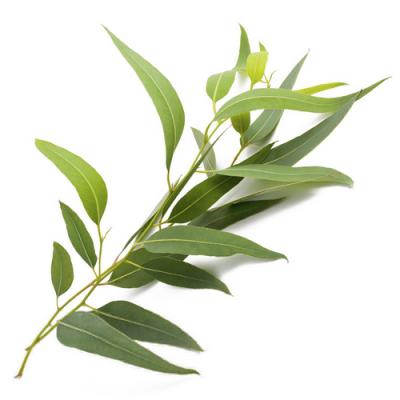
The Smell of Clarity: What Eucalyptus Brings to a Fragrance
There is a particular kind of freshness that eucalyptus delivers — not the airy brightness of a citrus, nor the green dampness of a fougère. It is something sharper, more medicinal, almost architectural in the way it cuts through a composition. A single breath of eucalyptus essential oil tells you exactly what it is: cool, slightly mentholated, camphoraceous, with a faint woody-herbal undertone that keeps it from feeling clinical. In perfumery, that directness is both its challenge and its appeal.
Eucalyptus belongs to a category perfumers sometimes call aromatic-medicinal notes — ingredients whose assertiveness demands careful handling but which reward a skilled hand with stunning clarity. Think of the way a well-placed eucalyptus accord can lift a dense woody base, or transform a flat aquatic opening into something bracing and alive. It is a note that performs a structural role as much as a purely aesthetic one, acting as a kind of olfactory punctuation within a composition.
Botanical Origins and the Birth of an Ingredient
The eucalyptus tree, native to Australia and a member of the Myrtaceae family, encompasses over seven hundred species, though Eucalyptus globulus — the Tasmanian blue gum — dominates commercial essential oil production. The leaves are steam-distilled to yield a pale, mobile oil whose defining compound, 1,8-cineole (commonly known as eucalyptol), typically accounts for sixty to eighty percent of the oil's composition. It is this molecule that gives eucalyptus its signature cooling, mentholated character.
Australian indigenous peoples have used eucalyptus medicinally for thousands of years, and European colonists rapidly adopted the oil's antiseptic and decongestant properties upon arriving in Australia in the late eighteenth century. By the Victorian era, eucalyptus oil was a fixture of the global pharmacopoeia, traded internationally as a remedy for respiratory complaints and as a disinfectant. Its entry into perfumery followed naturally from its presence in colognes and medicated preparations, where its bracing quality found an early audience.
Today, eucalyptus is cultivated extensively in Portugal, Spain, China, and South Africa as well as Australia. Different species produce oils with subtly distinct profiles: Eucalyptus radiata is softer and more floral; Eucalyptus citriodora carries a striking lemon-like character (primarily from citronellal); while Eucalyptus dives is dominated by piperitone and takes on an herbaceous, almost minty dimension. Perfumers select between these species depending on the character they wish to introduce.
1,8-Cineole and Its Fellow Molecules
Eucalyptol — 1,8-cineole — is one of the most recognisable molecules in all of perfumery, precisely because so much of the eucalyptus experience is concentrated within it. It is a cyclic ether with a camphoraceous, cooling, and slightly sweet odour that triggers cold-receptor proteins in the nose without actually lowering temperature, producing that familiar mentholated sensation. In isolation it can be somewhat harsh, but within a well-constructed accord it adds tremendous brightness and lift.
Beyond eucalyptol, eucalyptus oils contain alpha-pinene and beta-pinene, the same terpenes responsible for the resinous, woody facets of cedarwood and many coniferous materials. These pinenes connect eucalyptus organically to the aromatic-woody family, explaining why it blends so naturally with juniper, cypress, and pine. Limonene contributes a subtle citrusy roundness, and small quantities of aromadendrene and globulol add depth and a faint earthiness to the more complex eucalyptus oils.
Citronellal-rich Eucalyptus citriodora is worth special mention, because its lemon-clean character has found use in entirely different fragrance contexts — fresh citrus compositions, outdoor colognes, and even some florals where a green, luminous lift is required. The molecule citronellal is itself an important perfumery ingredient, not only for its own olfactory role but as a precursor in the synthesis of hydroxycitronellal, a classic muguet-adjacent material.
Eucalyptus in Historical and Contemporary Perfumery
Early appearances of eucalyptus in fine fragrance tended to be covert — blended into herbal colognes and fougères where it contributed to a general impression of freshness and green vitality without announcing itself. The classic fougère structure of lavender, coumarin, and oakmoss found eucalyptus a natural companion: the two share an aromatic-herbal kinship that makes the combination feel cohesive rather than jarring. Many of the great masculine colognes of the twentieth century owe part of their barbershop freshness to judicious eucalyptus dosing.
The aquatic revolution of the 1990s brought eucalyptus more firmly into the foreground. As perfumers reached for notes capable of conjuring sea air, cooling wind, and open-sky freshness, eucalyptus offered a convincing and more naturalistic alternative to some of the purely synthetic marine accords. Its cooling quality aligned perfectly with the aesthetic goals of the decade, lending fragrances an almost spa-like clarity.
In contemporary perfumery, eucalyptus has found a particularly interesting home in masculine and unisex compositions that marry woody-aromatic structures with medicinal or herbal clarity. Bleu de Chanel deploys aromatic freshness with a clean, slightly medicinal edge — eucalyptus-adjacent in spirit even where grapefruit and incense take centre stage. Similarly, the aromatic freshness of many modern men's fragrances relies on eucalyptus-type materials to deliver that sense of bracing, outdoor vitality.
Eucalyptus and Its Relationships with Other Notes
Understanding eucalyptus as a perfumery ingredient means understanding its exceptional blending versatility. Its relationship with lavender is among the most classical in the aromatic family — both share a cool, herbal quality, and together they produce an accord that is simultaneously medicinal and comforting, recalling old-fashioned remedies and barbershops in equal measure. The combination underpins an enormous range of men's grooming fragrances.
Eucalyptus and patchouli might seem an unlikely pairing, but the cool camphoraceous quality of eucalyptus does something remarkable when set against patchouli's dark, earthy sweetness: it lifts and aerates the heavier note, allowing patchouli's complexity to breathe while the eucalyptus contributes an almost metallic brightness. This partnership appears in several niche and contemporary compositions seeking an unconventional approach to the earthy-aromatic family.
With cedar and coniferous materials, eucalyptus feels naturally at home, the shared monoterpene chemistry creating a seamless aromatic bridge. Eucalyptus also pairs well with mint, rosemary, and basil — all fellow aromatic herbs — and with clean white musks, which allow its cool clarity to persist without the sharpness that might result from a heavier base. In more adventurous compositions, eucalyptus has been placed alongside oud, where the contrast between medicinal brightness and smoky-animalic depth creates an arresting tension.
Famous Fragrances Featuring Eucalyptus
Several notable fragrances have brought eucalyptus into the spotlight or made it central to their identity. Guerlain's Habit Rouge — particularly in its reformulated versions — uses aromatic herbal notes including eucalyptus-adjacent materials to punctuate its celebrated spicy-leathery warmth. Cool Water by Davidoff, one of the seminal aquatic fragrances, owes part of its bracing freshness to dihydromyrcenol and complementary aromatic materials with an eucalyptus-like quality. Issey Miyake's L'Eau d'Issey Pour Homme uses lotus-and-aquatic notes underscored by woody aromatic materials that evoke eucalyptus's clean precision.
In the niche world, eucalyptus has been used more boldly. Parfum d'Empire's Cuir Ottoman deploys medicinal aromatic notes against a leather and iris background, while various fragrance houses in the Australian niche market have explored eucalyptus as a way of capturing a genuinely local olfactory identity — a significant departure from European perfumery's traditional palette.
Wardrobe Context: When to Wear a Eucalyptus Fragrance
Eucalyptus-forward fragrances occupy a specific and useful wardrobe niche. Their cool, invigorating quality makes them excellent choices for morning wear, particularly in warmer months when heavier compositions can feel overwhelming before the day has properly begun. The note's bracing character has long associated it with active lifestyles — sports, outdoor pursuits, the post-gym moment when clarity and freshness are paramount.
Within a broader fragrance wardrobe, a eucalyptus-anchored scent serves as a counterpoint to richer, darker compositions. Where you might reach for something warm and resinous on a cold evening, the eucalyptus fragrance earns its keep on bright mornings, in professional settings where presence should not overwhelm, and in situations where a clean, alert impression is the goal. It is a note that signals activity and clarity — qualities with a universal appeal across men's and women's fragrances alike.
Eucalyptus also ages remarkably well in a composition: its high-volatility components ensure it delivers an immediate, attention-commanding opening, while its secondary woody-herbal facets provide a foundation that carries naturally into the drydown. It is, in short, a note that justifies its place in the perfumer's palette not through ostentation but through precision — a quiet workhorse that sharpens everything around it.