

What Does Peony Smell Like? A Deep Dive into Perfumery's Most Romantic Flower
By The Fragrenza Team 5 min read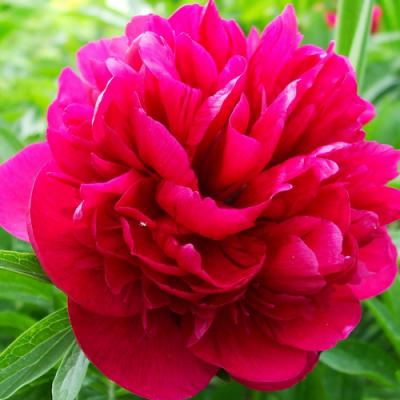
The Flower That Cannot Be Captured
There is an exquisite paradox at the heart of peony in perfumery. The flower is one of the most recognisable and beloved scents in the natural world — heady, romantic, full-bloomed — yet it stubbornly refuses to yield its fragrance through any conventional extraction method. Steam distillation destroys the delicate aromatic compounds. Solvent extraction produces only a faint shadow of the flower's true character. Even the headspace technique — the sophisticated method that captures a flower's scent in the air around it without physical contact — reveals a complex molecular fingerprint that is extraordinarily difficult to recreate convincingly at commercial scale.
What this means, practically, is that every peony note you have ever encountered in a fragrance has been an act of creative interpretation. Perfumers are not reproducing what they have distilled; they are reconstructing from memory, from imagination, and from a palette of aromatic materials that individually smelt nothing like a peony, but collectively — if the perfumer is skilled enough — evoke it with remarkable precision.
The History and Heritage of the Peony
The peony (Paeonia) has been cultivated in China for over two thousand years, where it carries the title of King of Flowers — a designation that reflects its importance in Chinese culture as a symbol of prosperity, love, honour, and female beauty. In Chinese imperial gardens, peonies were grown in such abundance and reverence that specific varieties became effectively priceless status symbols.
The flower reached Europe via the Silk Road, acquiring along the way a reputation for medicinal virtue — in ancient Greece, it was named after Paeon, physician to the gods, and was used to treat everything from liver complaints to nightmares. By the eighteenth century, peony cultivation was flourishing in France and England, and the flower had become a fixture of romantic painting and poetry, its blowsy, multi-petalled blooms synonymous with a certain kind of lush, slightly intoxicating femininity.
In perfumery, peonies were a relatively late arrival. The technical challenges of working with an unfixable flower limited their presence until the development of sophisticated synthetic reconstruction in the late twentieth century, when perfumers were finally able to create peony accords of genuine quality.
What Does Peony Smell Like?
Understanding peony's scent requires a nuanced comparison, because the flower does not smell like any single thing so much as it smells like several beautiful things layered together with remarkable elegance:
- Rose-adjacent — peony shares rose's warm, romantic floral core, but it is softer, less intense, less spicy
- Dewy and fresh — there is a green, wet quality reminiscent of lily of the valley and freshly cut stems that rose lacks
- Slightly powdery — a gentle iris-like softness sits beneath the petals, adding a refined, almost cosmetic quality
- Clean and luminous — unlike the heavier, more opulent white florals such as jasmine or tuberose, peony has an airy brightness that feels modern and unencumbered
- Subtly sweet — not candy-sweet, but a natural floral sweetness that feels perfectly calibrated
In short, peony smells the way that spring itself smells: hopeful, fresh, romantic, and utterly beautiful without making any excessive demands on the senses.
How Perfumers Reconstruct the Peony Note
The building blocks of a convincing peony accord typically include a thoughtful combination of the following materials:
- Rose oxide — adds the metallic, dewy freshness characteristic of peony petals in the early morning
- Geraniol and linalool — soft, floral terpene alcohols that contribute the warm floral body shared with rose
- Lily of the valley materials (hydroxycitronellal, lilial) — the green, fresh facet that distinguishes peony from heavier florals
- Cyclamen aldehyde — a watery, slightly ozonic material that adds the luminous, transparent quality of peony in fresh air
- Light musks — to create the soft, skin-like quality that makes peony accords feel natural and wearable
The art is in the proportioning. Too much rose oxide and the accord turns sharp and metallic; too much hydroxycitronellal and it reads as lily of the valley rather than peony. The great peony accords sit in a precise, elusive balance — instantly recognisable as the flower while remaining technically impossible to pin down exactly.
Famous Fragrances Featuring Peony
Peony became a defining note of the early 2000s feminine fragrance boom — a period when perfumers were increasingly drawn to fresh, dewy, romantic florals as an alternative to the heavy orientals and powerful aldehydic florals that had dominated the 1980s.
Alaïa Paris by Azzedine Alaïa built its entire identity around an extraordinary peony accord, delicate yet persistent, capturing the flower's fresh romanticism with unusual conviction. Amethyst by Lalique and Amor Amor Forbidden Kiss by Cacharel also use peony as a central structural element in their floral compositions.
In recent years, peony has become something of a staple in the fresh floral fragrance genre — appearing in innumerable department store and designer fragrances as the go-to note for a certain kind of approachable, pretty, and universally appealing femininity. Its freshness and approachability make it ideal for daytime and office wear — romantic without being overwhelming, distinctive without being challenging. Our Intimate Peony captures this luminous, skin-close peony character beautifully.
Niche houses have engaged more adventurously with peony, pairing it with unexpected notes like sea salt, black pepper, and ambroxan to push the flower's inherent luminosity into more complex, adult territory. The result is a generation of peony fragrances that still feel unambiguously romantic but carry considerably more depth than the high-street norm.
What Notes Pair Best with Peony
Peony's fresh, romantic character makes it a flexible partner for a range of aromatic families:
- Rose — a natural partnership; the two florals reinforce each other's romantic qualities while peony adds freshness and rose adds depth
- Bergamot — citrus brightens peony beautifully, adding a sparkling top note that enhances its luminosity
- White musk — clean musks extend peony's fresh quality and make it feel skin-close and intimate
- Sandalwood — the creamy wood base provides warmth and longevity without overwhelming peony's delicacy
- Lychee — the combination of peony and lychee is one of modern perfumery's signature fresh-floral pairings, conjuring something almost crystalline in its freshness
- Patchouli — a more challenging pairing, but effective in small doses: patchouli's earthiness anchors peony's ethereal quality
The Enduring Appeal of an Impossible Flower
The fact that peony cannot be extracted from its petals is, in a strange sense, what makes it so compelling in perfumery. Because no one has ever smelled a perfume made purely from peony essence — because that essence does not exist — every peony fragrance is simultaneously an interpretation and an aspiration. Perfumers are not reproducing nature; they are imagining it, guided by the memory of how the flower smells in a garden on a May morning.
That creative act of olfactory imagination, performed again and again by different perfumers with different palettes and different visions, is what keeps peony perpetually fresh in floral fragrance — always recognisable, never quite the same, and always, ultimately, the smell of romance made tangible.