


Pink Pepper in Perfumery: The Fruity, Rosy Spice Behind Modern Fragrance's Favourite Top Note
Pink pepper is a warm spice that adds depth and dimension to perfume, a note every fragrance lover should learn to recognise on skin.
By Julia Moretti 6 min read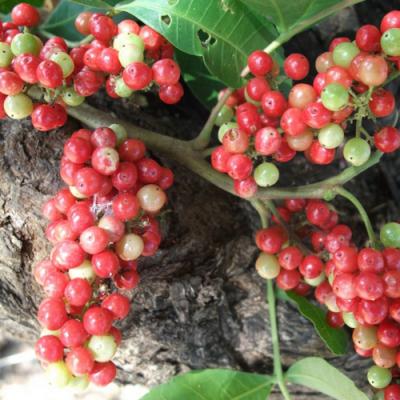
What Pink Pepper Smells Like: Spicy, Fruity, and Irresistibly Fresh
Pink pepper is one of the great success stories of twenty-first-century perfumery — an ingredient that was relatively obscure two decades ago but has since become one of the most widely deployed top notes in the entire fragrance industry. Its extraordinary popularity is no accident: pink pepper occupies a uniquely versatile position in the aromatic spectrum, simultaneously spicy enough to add energy and edge, fruity enough to contribute a soft, rounded sweetness, and rosy enough to connect it to the floral family. This cross-category character makes it suitable in virtually every fragrance type, which explains its ubiquity.
The berries most commonly used as pink pepper in perfumery are not true pepper at all — they come from Schinus molle (the Peruvian pepper tree) or more commonly Schinus terebinthifolius (the Brazilian pepper tree), both members of the cashew family Anacardiaceae rather than the pepper family Piperaceae. The aroma is distinctly different from true black pepper: lighter, more delicate, with a pronounced rosy-fruity quality alongside the spice, and a slight resinous-turpentine quality in the top notes that gives it its characteristic freshness. The overall impression is of a spice that invites rather than demands — bright, warm, slightly effervescent.
The Origins of Pink Pepper and Its Rise in Perfumery
Schinus molle originated in the Andean regions of South America and was spread throughout tropical and subtropical regions as an ornamental and shade tree by European colonisers from the sixteenth century onwards. By the nineteenth century it was widely naturalised in the Mediterranean, the Canary Islands, and large parts of Africa, Asia, and Australasia. The berries were used as a pepper substitute — hence the name — though the flavour is quite different from true pepper, being lighter and more resinous.
In perfumery, pink pepper began appearing as a significant ingredient from the 1990s onwards, initially as an accent in fresh-aromatic masculines and gradually becoming one of the defining notes of the 2000s and 2010s fragrance aesthetic. Its rise coincided with and contributed to the broader shift toward fresher, lighter, more approachable fragrance structures that characterised mainstream perfumery during this period. Pink pepper offered perfumers something they had been seeking: a spice note that was contemporary, versatile, and broadly appealing without the weight and seriousness of classical spice materials like clove, cinnamon, or even black pepper.
The note's appeal to female consumers as well as male was crucial to its commercial success. While black pepper remained firmly associated with masculine perfumery, pink pepper's fruitiness and rosy facets allowed it to appear equally naturally in feminine compositions, making it one of the few spice notes with genuine gender fluidity in commercial perfumery.
Aromatic Molecules and Extraction
Pink pepper essential oil is obtained by steam distillation of the dried berries of Schinus terebinthifolius or S. molle. The oil's composition is notably different from true black pepper: it contains high concentrations of alpha-phellandrene and para-cymene, which are responsible for the fresh, slightly citrusy top notes, alongside limonene (contributing additional citrus brightness) and various terpinene isomers. The characteristic rosy facet comes from a combination of geraniol-adjacent compounds and beta-myrcene, while the slight resinous quality is produced by sesquiterpenes including germacrene D and various copaene isomers.
The combination of phellandrene (fresh-citrus), limonene (clean-citrus), and the various sesquiterpenes produces an oil that is simultaneously brighter and lighter than true pepper oil, with greater initial projection and a somewhat softer, more diffuse drydown. This profile makes pink pepper an ideal top note: it opens with energy and presence, transitions gracefully, and does not dominate the subsequent heart notes in the way that heavier spice materials might.
Various synthetic molecules have been developed to extend and modify the pink pepper character in contemporary perfumery. Phellandrene-based synthetics, in particular, allow perfumers to calibrate the fresh-spicy quality of pink pepper with considerable precision, either amplifying the rosy-fruity aspects or emphasising the drier, more resinous facets depending on the compositional context.
Famous Pink Pepper Fragrances
Chanel Chance is perhaps the most celebrated fragrance to make pink pepper a defining characteristic. The opening accord of pink pepper, bergamot, and citrus gives Chance its distinctive dancing, effervescent quality — an energy that feels simultaneously playful and sophisticated. The pink pepper here is expertly calibrated to feel bright without being harsh, spicy without being overwhelming. Carolina Herrera Good Girl uses pink pepper in its opening to sharpen and modernise what would otherwise be a straightforwardly dark floral composition, the spicy freshness providing a contemporary entry point before the jasmine-tonka heart takes over.
Paco Rabanne Olympea deploys pink pepper in a goddess-like accord of salted vanilla and floral notes, the spice giving the composition its characteristic sense of confident, modern femininity. Delina by Parfums de Marly uses pink pepper to open a lychee-rose-peony composition with extraordinary freshness, the spice acting as a bright, slightly provocative introduction to one of the most beautiful floral hearts in contemporary fragrance.
In the masculine sector, pink pepper appears in countless fresh-spicy compositions. Parfums de Marly Layton uses it within a mint-lavender-apple accord to spectacular effect. Bleu de Chanel incorporates pink pepper in a citrus-mineral opening that establishes the fragrance's clean, confident masculine character. These examples demonstrate pink pepper's essential duality: equally at home in the most refined feminine florals and the most assertive masculine woodys.
How Pink Pepper Interacts with Other Notes
Pink pepper's greatest compositional gift is its ability to connect and animate other ingredients. Its rosy facets create a natural bridge to rose and other florals, amplifying their natural sweetness while adding a spicy edge that prevents them from feeling generic. With bergamot and other citrus notes, pink pepper creates one of contemporary perfumery's most reliable and consistently appealing opening accords — a combination of bright citrus and warm spice that reads as both energetic and inviting.
Against vanilla and sweet base notes, pink pepper provides the balancing edge that prevents sweetness from cloying. In floral-fruity compositions, it adds a spicy dimension that elevates the fruitiness from simple to sophisticated. With musk, pink pepper's rosy-spicy quality creates an intimate, skin-close composition of great charm. Against woody notes, it provides an aerial brightness that prevents heavy woods from reading as oppressive.
The note's one genuine limitation is in extremely heavy, dark oriental or resinous compositions, where its delicate character can be overwhelmed. Pink pepper needs at least some freshness in the surrounding accord to perform at its best. It is a note of light, air, and energy — it thrives in structures that allow it space to breathe.
Pink Pepper in the Fragrance Wardrobe
Pink pepper is one of the fragrance wardrobe's most genuinely versatile notes, appropriate in warm and cool weather, day and evening, and across virtually every social context. Its approachability and universal appeal make it an excellent choice for anyone seeking a spiced fragrance that will not overwhelm or polarise its audience. At the same time, its complexity — the rosy-fruity-spicy interplay — is genuinely interesting to those who know what to look for, preventing it from being merely crowd-pleasing.
Both within women's fragrances and men's fragrances, pink pepper-prominent compositions serve as excellent everyday pieces and reliable bridge fragrances that transition smoothly between seasons. Any well-considered fragrance collection benefits from at least one pink pepper-forward composition — its combination of energy, warmth, and broad appeal makes it an ingredient that rewards both the casual wearer seeking something pleasant and the connoisseur interested in the extraordinary compositional subtlety that can emerge from this remarkably versatile small berry.