

Rose in Perfumery: The Queen of Flowers and Her Thousand Faces
Rose is one of perfumery's most beloved floral notes. Learn how perfumers use it, what it smells like on skin, and the fragrances that wear it best.
By Julia Moretti 7 min read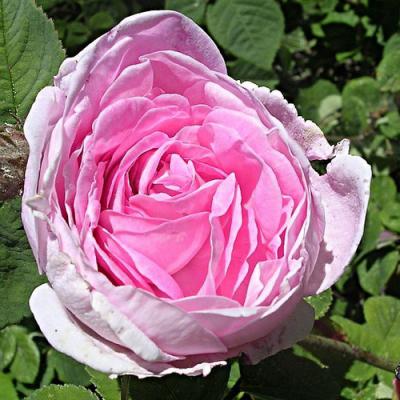
Rose: The Undisputed Queen of the Perfumer's Garden
No flower has shaped the history of perfumery more profoundly than the rose. From the ancient distillation laboratories of Persia to the research laboratories near Paris, from the gardens of Grasse to the fields of Bulgaria's Rose Valley, the rose has been at the centre of every era of fragrance. It is the most studied, most written about, most desired, and most versatile of all floral raw materials, and its position at the heart of perfumery is as secure today as it was five thousand years ago.
What makes rose so enduringly central is not merely sentiment. It is that no other flower offers quite the same combination of qualities: a scent that is simultaneously warm and fresh, rich and transparent, classically beautiful and astonishingly complex. There are hundreds of molecules in the scent of a fresh rose, and modern perfumers are still discovering new ways to interpret, isolate, and recombine them. The rose is not a single note but an entire vocabulary.
The Scent of Rose: Complexity in a Single Flower
To describe what rose smells like is to immediately confront the problem of rose's diversity. Rosa damascena, the Damask rose grown in Bulgaria, Turkey, and Morocco, has a scent that is rich, honeyed, and slightly spiced, with a warm, almost waxy quality that deepens on the skin. Rosa centifolia, the cabbage rose of Grasse, is more delicate, green, and powdery, with a transparency that the Damask rose never quite achieves. Rosa gallica, one of the oldest roses in cultivation, has a sharper, more intensely floral quality with a distinct herbal-medicinal undertone.
Beyond these primary cultivars, there are dozens of other rose varieties used or referenced in perfumery, each with its own character. The point is that ‘rose’ is not a monolithic smell but a family of related scents, and a perfumer choosing to work with rose must decide not just whether to use it, but which rose, in which form, at which stage of the composition's development.
In general terms, however, rose in fragrance tends to read as warm, voluptuous, and feminine, with a sweetness that is never cloying because it is balanced by a natural green, slightly watery quality, and a depth that comes from the flower's remarkable chemical complexity. Rose at its best is the smell of the flower itself, lifted from the garden and preserved in perpetuity — warm and natural and intensely alive.
A History of Rose in Perfumery
The use of rose in fragrance predates written history. Archaeological evidence from ancient Egypt suggests that rose was used in ritual unguents and incense, and the classical civilisations of Greece and Rome consumed rose in vast quantities for perfumery, garlands, and culinary purposes. Attar of roses — rose essential oil — was produced in Persia as early as the ninth century, and the development of steam distillation, widely credited to the Persian physician Ibn Sina in the early eleventh century, was almost certainly motivated in part by the desire to capture rose's scent more completely.
The Mughal empire of India was intoxicated by rose: according to tradition, when Nur Jahan, wife of the Emperor Jahangir, had rose water channels dug for her garden, she noticed a film of fragrant oil floating on the surface — among the first recorded attars. Whether or not this story is literally true, it reflects the centrality of rose to Mughal perfumery and the ongoing effort to capture its scent in concentrated form.
In Europe, the city of Grasse in southern France became the centre of the rose perfumery trade from the sixteenth century onward. The region's climate and soil conditions proved ideal for growing Rosa centifolia, and Grasse's perfumers developed increasingly refined techniques for extracting the flower's oils. By the nineteenth century, Grasse was supplying rose absolute and rose otto to perfumers across Europe, and the French floral tradition — of which rose was the undisputed centrepiece — was setting the aesthetic standard for the entire global industry.
Extraction Methods and Key Aroma Molecules
Rose oil is extracted by two primary methods. Steam distillation of rose petals produces rose otto (or rose essential oil), a waxy, solid material at room temperature that must be gently warmed before use. Rose absolute is produced by solvent extraction and then alcohol washing, yielding a product that captures more of the full complexity of the fresh flower, including heavier wax-like materials that distillation leaves behind. Rose absolute is richer and more rounded than rose otto, while otto has a cleaner, more precise quality favoured in certain traditional contexts.
The chemistry of rose is extraordinarily complex, with over 500 identified aroma compounds. The most important from a perfumery perspective are geraniol and citronellol, which provide the characteristic fresh, rosy-green quality; beta-damascenone and beta-damascone, which contribute the deep, jammy, almost fruity richness; and rose oxide, a molecule that in minute quantities is responsible for the dewy, watery freshness of the fresh-cut flower. Modern synthetic materials have dramatically expanded the perfumer's ability to work with rose, allowing emphasis on specific facets with a precision that natural materials alone cannot provide.
Rose in Famous Fragrances
The list of great rose fragrances is essentially the history of modern perfumery. Guerlain's Nahema (1979) is built around a voluptuous, almost over-ripe rose that pushes the note to its most sensuous extreme. Yves Saint Laurent's Paris (1983) offers a lighter, more transparent rose, surrounded by violet and supported by woods — a rose that is recognisably Parisian in its elegance and restraint.
Coco Mademoiselle uses rose as part of a bright, oriental-leaning composition in which it plays alongside orange, patchouli, and musk — a modern rose that is confident and contemporary rather than classical. Miss Dior Cherie places rose in a lighter, fruitier context, using a strawberry-patched, green-stemmed rose that feels youthful and playful — a rose for a new generation.
In niche perfumery, rose has been explored with extraordinary depth. Frederic Malle's Une Rose by Edouard Flechier is a rose fragrance of almost brutal intensity — a dark, rich, slightly animalic rose that is not about being pretty but about being true. Delina by Parfums de Marly presents rose in a more contemporary, radiant context, pairing it with lychee, rhubarb, and musk for a fragrance that is both classically rosy and distinctly of our time.
Rose's Relationships with Other Notes
Rose is the ultimate team player among fragrance notes — it seems to have a natural affinity with almost everything. Its most classical pairings are with other florals: jasmine and rose together form the backbone of countless great floral perfumes. Jasmine's slightly indolic, heady quality complements rose's cleaner, more voluptuous character, and the two flowers have been inseparable in perfumery since antiquity.
With patchouli, rose becomes darker and more modern — this is the combination at the heart of the rose chypre and rose oriental genres, producing fragrances of remarkable depth and staying power. With oud, rose becomes deeply opulent, evoking the great rose-oud combinations of Middle Eastern perfumery that have had such an influence on modern niche fragrance. And with musk, rose acquires a skin-like quality that is intimate and sensual — a rose that smells not like a garden but like a person who has been wearing rose all day.
Rose with iris produces one of perfumery's most elegant combinations — cool, powdery, and sophisticated. With amber, rose becomes warm and enveloping, a comfort-scent of considerable power. Even with citrus notes, rose performs beautifully — the citrus providing a bright, clean opening that allows the rose to unfurl slowly and reveal its full complexity over the course of the fragrance's development.
Rose in the Fragrance Wardrobe
Rose is, above all other notes, a fragrance for all occasions and all seasons. The diversity of rose compositions is so great that somewhere in the fragrance world there is a rose for every context: fresh, green roses for summer mornings; warm, spiced roses for winter evenings; transparent, watery roses for office wear; dark, dense rose orientals for formal occasions.
For those building a fragrance collection, a great rose fragrance is not merely desirable but arguably essential. It is the note that connects perfumery to its oldest traditions while remaining absolutely current, the ingredient that every generation of perfumers returns to and reinvents, and the smell that more people associate with beauty, romance, and the pleasures of wearing fragrance than any other. Whether you are drawn to the voluptuous excesses of a great rose oriental or the spare elegance of a modern rose-musk composition, the floral fragrance collection at Fragrenza offers rose in many of its finest contemporary expressions — a starting point for an exploration that, once begun, rarely ends.