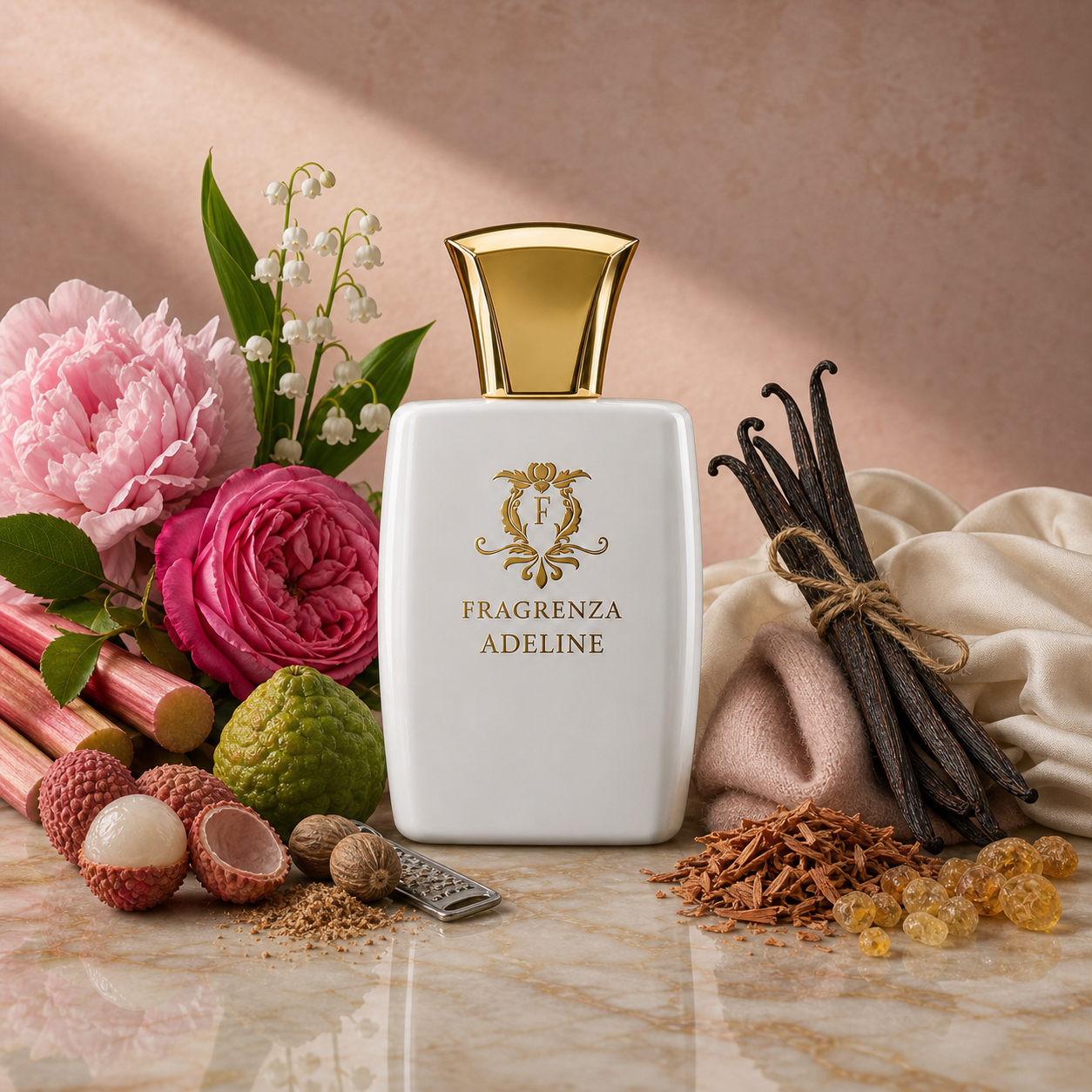

Champaca in Perfumery 2026: The Honeyed Asian Floral Behind Every Great Tropical Composition
Champaca is one of perfumery's most beloved floral notes, a note every fragrance lover should learn to recognise on skin.
By Julia Moretti 6 min read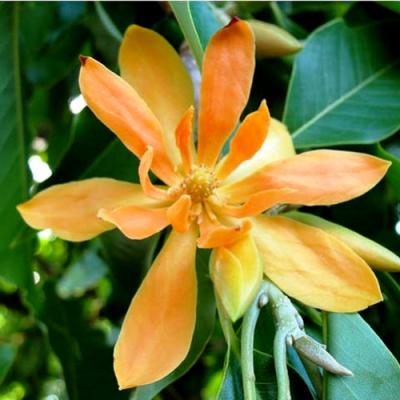
What Champaca Actually Is
Champaca (Magnolia champaca, formerly Michelia champaca) is a flowering tree native to India, Southeast Asia, and southern China. The flowers — small, yellow-orange, intensely fragrant — produce one of the most distinctive floral materials in perfumery. The tree is closely related to magnolia (both belong to Magnoliaceae), and the two materials share floral-honeyed character, but champaca is warmer, slightly more tropical, and has stronger tea-and-fruit facets than the temperate-climate magnolia commonly found in Western gardens.
The material is collected as champaca absolute through solvent extraction of the flowers. The yields are extremely low (around 0.1% by flower weight), which makes high-quality champaca absolute one of the more expensive natural perfumery materials. India and Indonesia are the major commercial source regions; Indian production is concentrated in Karnataka, Tamil Nadu, and Assam, while Indonesian production centres on Java.
What Champaca Smells Like
Champaca occupies a singular position in the white-floral family. The opening reads as honeyed-tropical with a distinctive tea-like quality and quiet fruity facets (banana, peach, pear support the floral heart). The middle develops into a heavy, almost narcotic floral character similar in density to tuberose or ylang-ylang, but with a brighter, more luminous emotional register. The dry-down settles into a warm-spicy-floral signature that can persist on skin for ten hours or more.
The character changes meaningfully between source regions. Indian champaca tends toward the warmer, more tea-like reading; Indonesian champaca is brighter and more tropical-fruity. Some niche perfumers blend material from both regions to produce a fuller olfactory profile.
The single best identifier of champaca quality is the tea facet. Cheap champaca substitutes (synthetic tropical-floral bases) miss the tea-like quality entirely. Quality champaca compositions develop a distinct tea-and-honey character in the first hour that reads as actual flowering-tree warmth rather than as generic tropical-floral cliche.
The Chemistry of Champaca
Champaca absolute is chemically distinctive. The dominant aromatic contributors include methyl benzoate, indole (in low concentrations — enough to give animalic depth without crossing into the heavy indolic character of jasmine sambac), beta-ionone (the violet-and-warm-floral molecule), various methyl esters, and a family of macrocyclic lactones that produce the honeyed-creamy facets.
The indole content is what gives champaca its grown-up quality. Pure tropical-floral compositions without indole content read as juvenile-tropical (think drugstore body spray); compositions with quality indolic depth read as adult-luxury. Champaca's specific indole profile is lower than jasmine sambac's but higher than most magnolia varieties, which places it at the sophisticated-but-not-overwhelming middle of the indolic spectrum.
The Cultural and Religious Background
Champaca has had ritual and luxury significance across South and Southeast Asia for at least three thousand years. The flowers are used in Hindu temple offerings (particularly in worship of Vishnu and Lakshmi), in Buddhist ceremonies (the Buddha is sometimes said to have meditated under a champaca tree), and in traditional Indian wedding ceremonies. The traditional Indian attar perfumery tradition has used champaca as a luxury material for over two millennia.
The cultural associations with sacred-and-luxurious permeate modern Western perfumery use of champaca. When a luxury house releases a champaca-led composition, the cultural reference to Asian temple tradition is part of the marketing and the wear experience. Tom Ford Champaca Absolute (2010) explicitly leans into the temple-luxury aesthetic; Ormonde Jayne Champaca (2002) presents a more refined Western-luxury reading of the same material.
Major Champaca Compositions
Tom Ford Champaca Absolute (2010) is the cultural anchor of luxury Western champaca perfumery. Composed by Yann Vasnier, the composition presents champaca alongside sun-warmed orange, bergamot, cassis, and a vanilla-amber-musk base. The composition has become the reference point for any champaca discussion in contemporary fragrance.
Other notable champaca-led compositions include Ormonde Jayne Champaca (2002, the earlier luxury champaca pioneer), Aerin Beauty's Tangier Vanille (uses champaca in the heart), Frederic Malle Outrageous (champaca with a clean musk base), Comme des Garçons Champaca (more abstract niche treatment), and various traditional Indian attar releases. The note also appears as supporting material in many luxury white-floral compositions where its tea-and-honey character adds depth.
Champaca has also become an increasingly common supporting material in modern feminine luxury. Christian Dior, Yves Saint Laurent, and Chanel all use champaca in select compositions where its specific character (tropical-luxury-warm without overwhelming indolic weight) suits the architectural family.
Champaca in the Fragrenza Catalog
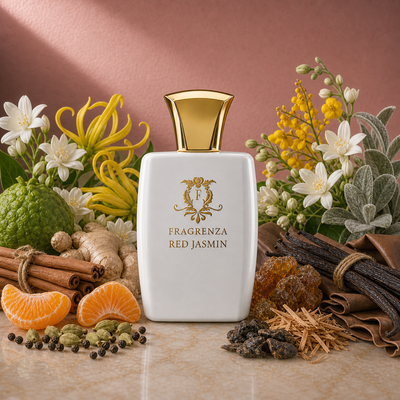
The Fragrenza catalog does not currently include a champaca-led primary composition. The closest architectural analogs for champaca character are
(Sensual Flame), which uses jasmine and tuberose to occupy adjacent white-floral-warm territory with similar honeyed-density character, and , which provides the jasmine-led tropical-floral register with red-fruit lift that partially mirrors champaca's fruity-floral facets.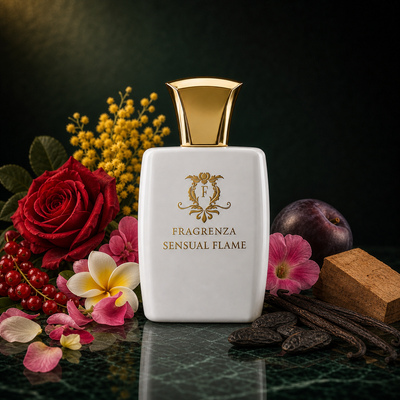
For wearers specifically attached to champaca character, the luxury and niche tier remains the primary path — Tom Ford Champaca Absolute and Ormonde Jayne Champaca are the canonical compositions. Quality alternatives in the wider white-floral category provide adjacent emotional territory at sustainable prices without exactly reproducing the champaca tea-honey signature.
How to Wear Champaca-Heavy Compositions
Champaca-led fragrances are evening-and-cool-weather coded. The honeyed-tropical character projects best in autumn and winter, particularly in occasions with cultural or ceremonial weight where the sacred-luxury associations amplify the wear experience.
Two sprays to pulse points for daily wear; three for evening. Apply to the chest and the base of the throat — the warm spots amplify the floral projection. Layer with a clean musk underneath (
is the standard Fragrenza underlayer) to soften the projection and stretch the dry-down.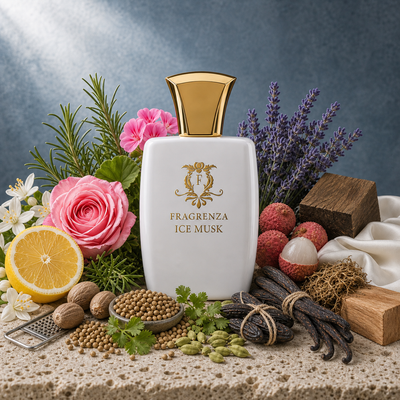
Avoid layering champaca compositions with citrus colognes (structural mismatch) or with marine fragrances (the tropical-luxury and aquatic-fresh registers read as confused once combined). Champaca pairs beautifully with sandalwood underlayers, vanilla bases, and quiet amber support.
How Champaca Differs from Other White Florals
Champaca distinguishes from related white-floral materials through specific character notes.
Jasmine sambac is more indolic and animalic; the heavy banana-rotten-floral character of jasmine sambac is significantly more present than champaca's quieter indolic depth.
Tuberose is denser and more carnal; tuberose carries more leathery-rubber-floral facets than champaca's lighter tea-honey reading.
Ylang-ylang is more banana-floral and lacks champaca's tea character; the two are sometimes used in combination to bridge the white-floral spectrum.
Magnolia is closely related but lighter and less tropical; champaca is the warmer, more grown-up cousin of magnolia.
Orange blossom (neroli) is brighter and more citrus-floral; champaca is warmer and more tea-fruity.
Related Reads
- Jasmine in Perfumery — the indolic white-floral family champaca belongs to
- Tuberose in Perfumery — the dense-white-floral adjacent
- Rose in Perfumery — the partner-floral that pairs with champaca in many compositions
- Best Jasmine Fragrances 2026 — the wider white-floral landscape
- Complete Guide to Tom Ford Fragrance Dupes — the Tom Ford Champaca Absolute architectural context
- Vanilla in Perfumery — the base-note partner
- Skin Scents 2.0 — the modern restraint movement that complements heavy floral compositions
Frequently Asked Questions
What does champaca smell like?
Honeyed, tropical, slightly fruity floral with deep tea-and-magnolia character. The defining "luxury tropical-floral" emotional register in modern perfumery.
Is champaca the same as magnolia?
Closely related (both Magnoliaceae) but distinct species. Champaca is warmer, more tropical, more honeyed, and has stronger tea-fruit facets than the temperate-climate magnolia commonly found in Western gardens.
Where does champaca grow?
India (Karnataka, Tamil Nadu, Assam), Indonesia (Java), other South and Southeast Asian regions. Indian and Indonesian champaca have slightly different olfactory profiles.
Why is champaca expensive?
The flowers produce extremely low yields of absolute (around 0.1% by flower weight), and the collection is labour-intensive. Quality champaca absolute is one of the more expensive natural perfumery materials.
What's the most famous champaca composition?
Tom Ford Champaca Absolute (2010) is the cultural anchor of Western luxury champaca perfumery. Ormonde Jayne Champaca (2002) is the earlier luxury pioneer.
Does Fragrenza make a champaca composition?
Not directly. Sensual Flame (cassili) is the closest white-floral analog with similar honeyed-density character; Red Jasmin provides the jasmine-led tropical-floral register with red-fruit lift.
Is champaca unisex?
Yes — the floral architecture and the cultural associations are gender-neutral.
How does champaca differ from jasmine sambac?
Jasmine sambac is more indolic and carries heavier animalic facets; champaca has lighter, more tea-and-honey character. Champaca is the sophisticated-but-not-overwhelming cousin of jasmine sambac.
The Bottom Line
Champaca is one of the most distinctive Asian floral materials in modern luxury perfumery. The honeyed-tropical-tea character has three-thousand-year cultural significance across South and Southeast Asia, and Tom Ford Champaca Absolute remains the canonical Western luxury treatment. The Fragrenza Sensual Flame and Red Jasmin cover adjacent white-floral territory at sustainable prices, though no current composition reproduces the champaca tea-honey signature directly.