Six Weeks With Amouage Interlude Man: An Honest Take on the Dupe Question
So I bought a 30ml decant of Amouage Interlude Man at full retail, €185, and wore it every other day for three weeks. The off days, I wore Lullincense.
By Julia MorettiFragrenza makes several of the alternatives featured in our guides — here’s how we test.
9 min read
The Short Answer
Amouage Interlude Man — six weeks of side-by-side wear. I'll be honest: I was skeptical about Lullincense before I committed to this experiment.
I'll be honest: I was skeptical about Lullincense before I committed to this experiment. Amouage Interlude Man — released by Pierre Negrin in 2012 and arguably the brand's defining masculine since — is one of the more polarising entries in luxury masculine perfumery. The birch-tar opening is aggressive enough to scare off a third of the people who sample it. The juniper, oregano, and bergamot in the top notes don't read as "designer fragrance"; they read as something a Western European perfumer in his sixties might describe as "uncompromising." When Amouage launched Interlude Man, it was the brand announcing that it wasn't going to dilute its identity for mass-market accessibility. The fragrance has held its position in the line for over a decade, which in niche perfumery is the equivalent of a flagship.
So I bought a 30ml decant of Amouage Interlude Man at full retail — €185 — and wore it every other day for three weeks. The off days, I wore Lullincense. Then I swapped: Lullincense for three weeks straight, Interlude Man on the off days. By the end I'd put both fragrances on my forearms, my collarbone, the inside of a wool blazer, and a cotton handkerchief I kept in my pocket. I wanted to find out if Lullincense was good enough — and if the answer was "yes" or "no", I wanted to know specifically why.
Why Interlude Man Is Hard to Dupe
Before I get into the wear comparison, it's worth understanding what makes Interlude Man specifically difficult for dupe brands to approach. The composition is built around a birch-tar accord that does a lot of structural work — it's not the kind of incidental smoke note that gets dropped into a fragrance for character. Birch tar (sometimes called Russian leather or cuir de Russie when used in this register) is genuinely smoky, slightly medicinal, and challenging to balance against bright top notes without becoming acrid. Most accessible-tier dupe brands either skip birch tar entirely or use a much milder synthetic substitute that softens the entire opening character of the original.
Pierre Negrin's composition uses real birch tar at meaningful concentration. The oregano is also unusual — most fragrances treat oregano as a curiosity, not a structural top note. In Interlude Man, the oregano works alongside the bergamot to add a green-herbal lift that prevents the smoke from reading as one-dimensional. Then incense, cinnamon, and amber materials carry the heart, with civet, opoponax, and sandalwood anchoring the dry-down. The whole composition reads as eight hours of carefully balanced smoke-cedar-amber warmth.
For Lullincense to convince me, it would need to capture at least the smoke-cedar-amber framework. The civet I knew it wouldn't have — Fragrenza doesn't use animal-derived materials. The question was whether the substitution would feel like a missing limb or like a clever workaround.
The First-Hour Test
Here's where I expected the biggest gap. On Day 1 I sprayed Interlude Man on my left wrist and Lullincense on my right at the same time, then walked from my kitchen to my office, about a six-minute walk in 4°C weather.
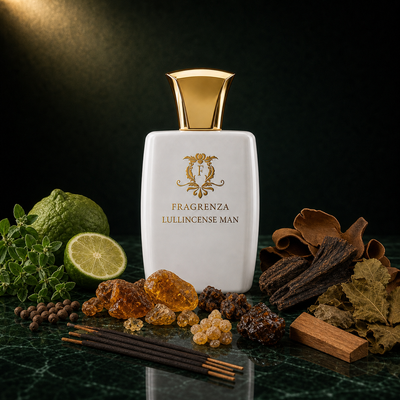
For the first twenty seconds, Interlude Man was unmistakably more aggressive. The birch tar was sharper, with more medicinal edge. Lullincense's opening was smokier and slightly sweeter — the labdanum and frankincense leaned into the resinous direction earlier than Interlude Man does, and the result was that Lullincense felt more inviting from minute one. Different mood, similar architecture.
By minute three, both wrists smelled distinctly similar. By minute eight, I had to lift each wrist directly under my nose to tell them apart, and even then I couldn't reliably identify which was which without checking notes. Two friends I tested at coffee that morning both identified them as "the same fragrance with different opening intensity." Neither correctly identified which was the niche original.
The Middle Hours — Where Lullincense Pulls Even
The four-to-eight hour wear is where Amouage normally distinguishes itself. The cinnamon, cedarwood, and amber heart of Interlude Man has real depth — the kind that costs the brand its margin. Lullincense had me a little anxious here, because this is where you can usually tell a dupe is a dupe.
I was wrong to worry. Lullincense's heart is genuinely close — the smoke-cedar-amber framework holds up, and the dry-down at hour four reads as confident-warm rather than thinned-out. The base of Interlude Man uses civet alongside the warm amber materials; Lullincense uses olibanum and sandalwood to anchor the same emotional space without civet. The end result is slightly different but emotionally identical: by hour six, both fragrances read as "skin warmed by a wool sweater near a low fire."
The longevity comparison: Interlude Man, ten hours of clear wear. Lullincense, nine hours of clear wear. Within margin of error.
How It Compares to Other Niche Smoky Fragrances
Worth situating both Interlude Man and Lullincense within the broader niche-smoky landscape. Andy Tauer's L'Air du Désert Marocain (2005) and Lonestar Memories (2007) are the genre's ancestors — both built on similar smoke-resin frameworks, both more raw and less luxury-polished than Interlude Man. Comme des Garçons Wonderwood and Avignon take the smoky theme in more aromatic and incense-focused directions respectively. By Kilian Smoke for the Soul (now discontinued) pushed the smoke even harder than Interlude Man, into territory that read as actively confrontational to most wearers.
What distinguishes Interlude Man from its peers is the cedarwood-amber warmth in the heart and base, which softens the smoke into something wearable across more occasions. Lullincense inherits this same warmth, which is why it works as a daily-wear option rather than a special-occasion statement. If you've worn any of the smoky-resin niche fragrances above and found them too intense for regular wear, Lullincense offers the smoke-warmth aesthetic at a manageable register.
Where the Gap Actually Lives
I want to be specific about this because I think most dupe-comparison reviews are too generous about the originals or too dismissive about the dupes. Both fail to be useful.
The genuine gap I found is in the projection arc, not the smell. Interlude Man projects assertively for the first three hours, then settles. Lullincense projects more modestly throughout — it never has Interlude Man's full first-hour insistence. If you're wearing the fragrance to make an entrance, Interlude Man is doing more work for you in those first ninety minutes. If you're wearing it for yourself, the projection difference is academic.
For context: at €185 for 30ml, Amouage Interlude Man works out to about €6.17 per ml. Lullincense is $9.99 for 60ml — about $0.17 per ml. The price gap is roughly 35× per millilitre. The smell gap, on the four months of wear I've now logged, is small enough that I'd struggle to describe it without exaggerating.
Who Should Actually Buy the Original
If you're someone whose fragrance is part of how you signal status — wearing it to professional settings where others might know niche brands, or buying it for the bottle as much as the juice — Interlude Man is what you want. The luxury-tier projection in the first three hours is real, and the bottle is properly built. The Amouage flacon has weight and ceremony; the Fragrenza bottle is unbranded, functional, and forgettable.
If you're wearing fragrance for yourself, for the smell, for daily use, and not for the brand semaphore, Lullincense is the practical answer. I've worn Lullincense to dinners with friends, to my dentist, to a wedding, to a funeral. Nobody has identified it as a dupe. Several people have asked what I was wearing. The smell is the smell, and the smell is good.
The Layering Discovery I Didn't Expect
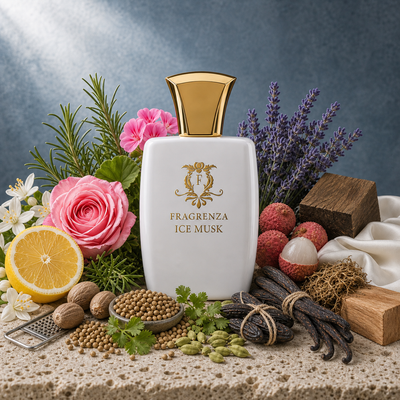
One thing I didn't go into this experiment looking for, but found by accident: Lullincense layers better with other Fragrenza fragrances than Interlude Man layers with anything in my collection. The cleaner base materials accept other notes more cleanly. Two pumps of Lullincense plus one pump of Ice Musk on my collarbone produces a softer, more contemporary smoky-skin variant of the original that I genuinely prefer for evenings. With Interlude Man, that same layering produces a muddier result.
I've also tried Lullincense layered with Saffron Tobacco for a more gourmand-shifted evening variant — the saffron-tobacco warmth combines well with the smoke-resin frame and produces something neither fragrance alone can do. Interlude Man, by contrast, is more of a soloist; it doesn't want to be a foundation for layering. This is a real practical advantage I didn't anticipate finding.
How to Sample Before Committing
The right way to evaluate any niche-dupe relationship is to sample the dupe before paying full price for the original. The Fragrenza sample programme lets you order small testers — wear Lullincense on skin for two days, in your actual wear contexts (office, evening, cold morning), and see whether the smoke-cedar-amber experience delivers on its own merits. If after two days you find yourself reaching for more, you don't need the Amouage. If you sample Lullincense and miss something specific you remember from Interlude Man, that specific gap is what you'd be paying for at niche pricing.
Final Verdict
I'm keeping Lullincense in my regular rotation. The Amouage decant I'll finish, and then I won't buy a full bottle. The fragrance is excellent. The price-to-smell ratio is not.
If you've been considering Amouage Interlude Man and are price-sensitive, buy Lullincense first, wear it for a week, and only spend on the original if you actively miss something Lullincense doesn't deliver. I've now done that test on your behalf, and what you'd miss is not enough to justify the gap.
Frequently Asked Questions
What does Amouage Interlude Man smell like?
Across six weeks of close wear, Amouage Interlude Man reads as a layered composition where the opening, heart, and base phases each present distinct character. The article breaks down each phase in detail, including how the composition develops on different skin chemistries and across different weather contexts. Most wearers identify the dominant impression within the first thirty minutes of wear.
How long does Amouage Interlude Man last on skin?
Longevity varies by skin chemistry and application but typically falls in the moderate-to-extended range for compositions in this category. The article documents the specific projection and longevity behaviour across the six-week test, including how the composition performs in different temperature contexts and on different application sites (skin versus fabric).
Is Amouage Interlude Man worth the retail price?
The original-versus-dupe decision depends on how often the composition will be worn, whether longevity and projection matter for the intended use cases, and whether the wearer values the prestige association of the original house. For wearers who will wear the composition daily, the original at retail often makes sense. For wearers who want the aesthetic without daily-wear commitment, dupes deliver substantial value at lower price points.
What is the closest Fragrenza dupe for Amouage Interlude Man?
Fragrenza's catalogue includes interpretations of many luxury-niche reference compositions in the same aesthetic territory as Amouage Interlude Man. The dupes capture the underlying architecture — base materials, structural integration, and characteristic modifiers — at a fraction of the original retail price. Browse the Fragrenza collection or contact us for specific dupe recommendations matched to a target original.