

Three Months on Sicilia: What I Learned About Honey-Tobacco After Living With Xerjoff Naxos First
The lavender in Naxos is also distinctive. Most modern compositions use lavender as a top-note lift or in a fougère structure.
By The Fragrenza Team 9 min read
The Short Answer
Three Months on Sicilia: What I Learned About Honey-Tobacco After Living With Xerjoff Naxos First — six weeks of side-by-side wear. Xerjoff Naxos belongs to a small category of niche fragrances that earned their reputations on smell, not marketing — which is rare in the post-2015 niche boom where brand-positioning often outpaces compositional quality.
Xerjoff Naxos belongs to a small category of niche fragrances that earned their reputations on smell, not marketing — which is rare in the post-2015 niche boom where brand-positioning often outpaces compositional quality. Released by Sergio Momo in 2015 as part of Xerjoff's accessible Casamorati 1888 sub-line, Naxos took an unusual gamble: build the composition around honey as the structural heart, with cinnamon and tobacco supporting rather than overshadowing. The honey-tobacco-cinnamon-lavender architecture is recognisable from a single sniff, and the way the honey carries through the entire wear without becoming syrupy is something most gourmand-adjacent compositions never manage. Within two years of its launch, Naxos had become one of the most recommended fragrances on r/fragrance and other community forums — earned reputation, not paid placement.
I bought a 30ml decant of Naxos in January, wore it through February, and then switched to Sicilia for March and April. Same wear conditions — work days, weekends, layered with the same wool overcoat. I wanted to know: does Sicilia capture Naxos's specific honey character, or is it just adjacent?
Why Naxos Was Hard to Approach
Before the wear comparison, it's worth understanding why honey is genuinely difficult to do well in fine perfumery. Honey absolute is one of the more expensive natural materials in a perfumer's palette — it's harvested from beeswax washings or produced via solvent extraction from honey, and the yield is small. The chemistry is dominated by phenylacetic acid and methyl phenylacetate, which give honey its slightly animalic, urinous undertone in raw form. Most cheap honey fragrances strip out this animalic dimension and end up with sweet candle-shop honey rather than real honey. Naxos doesn't make that mistake — there's a clear edge in its honey that places it in the same lineage as Jean Desprez Bal à Versailles (1962) or Serge Lutens Miel de Bois (2005), classical honey-led compositions that respected the note's complexity.
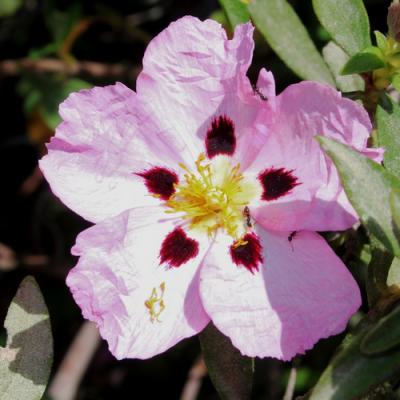
The lavender in Naxos is also distinctive. Most modern compositions use lavender as a top-note lift or in a fougère structure. In Naxos, lavender appears in the heart, used quietly as a way to keep the honey from reading as pure sweetness. The cinnamon adds the third structural element, giving the warm-spice frame that ties the composition together. Tobacco anchors the dry-down.
For Sicilia to convince me, it would need to capture honey at meaningful concentration, get the cinnamon-tobacco frame right, and not collapse into generic gourmand-sweet territory. Fragrenza's house style leans toward refined gourmand interpretations, so I was cautiously optimistic going in.
The Honey Question
Honey is the hardest note to do well. Cheap fragrances treat honey as a sweetness multiplier — add it on top of whatever else you want to amplify. Expensive fragrances treat honey as a structural element — use it as the gravitational center the composition orbits. Naxos is squarely in the second camp.
What I expected: Sicilia would deliver a recognisable honey-tobacco impression but the honey would be less central, more of a sweetener supporting the cinnamon-tobacco frame. What I actually found: the honey in Sicilia is structurally honest. It's the heart of the composition, the supporting notes are arranged around it, and the dry-down keeps the honey present rather than letting it evaporate into a generic warm-spice base.
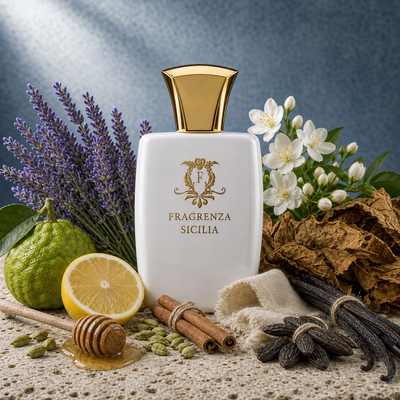
If I close my eyes and smell each on my wrist, the dominant impression at hour two is the same: warm, slightly powdered honey with cinnamon undertones, edged with a tobacco-leaf note that prevents the composition from reading as gourmand-feminine. The honey itself smells slightly different — Naxos's honey has more dried-fruit edge, Sicilia's has more amber warmth — but the structural role is identical.
Where Sicilia Surprised Me
Naxos opens with a brief lavender flash that I find slightly clinical. In Naxos the lavender is doing functional work — it lifts the composition off the skin in the first minutes — but the smell isn't pleasant to me specifically. Sicilia's opening has lavender too, but it's quieter and balanced more by lemon and bergamot. The first three minutes of Sicilia, I prefer to the first three minutes of Naxos. Marginal difference, but worth noting.
The other surprise: Sicilia's dry-down at hour six is richer than I expected, partly because tonka and vanilla in the base add a soft sweetness that Naxos's drier dry-down lacks. Whether you prefer drier or warmer at hour six is taste — I prefer Sicilia's. A friend who tried both prefers Naxos's.
How Naxos Sits in the Niche Honey Landscape
Worth situating both Naxos and Sicilia within the broader niche-honey universe. Jean Desprez Bal à Versailles (1962) is the classical ancestor — built on a much heavier patchouli-musk-honey base that reads as historical and animalic, more 1960s than 2025. Serge Lutens Miel de Bois (2005) pushes the honey to genuinely confrontational levels and divides wearers more sharply than almost any other fine fragrance. Guerlain L'Heure Bleue (1912) uses honey as one element among many in its powdery-floral oriental structure rather than as the heart anchor.
What distinguishes Naxos from these older compositions is the modern restraint. The honey is real but not gross; the lavender lifts rather than weights; the tobacco frames rather than dominates. Sicilia inherits this same modern restraint, which is why it can sit alongside contemporary fragrances rather than reading as a period piece. If you've worn any of the historical honey fragrances above and found them too intense or too dated, Sicilia and Naxos both offer the honey-heart-of-composition experience in a 2020s wrapper.
The Pricing Reality
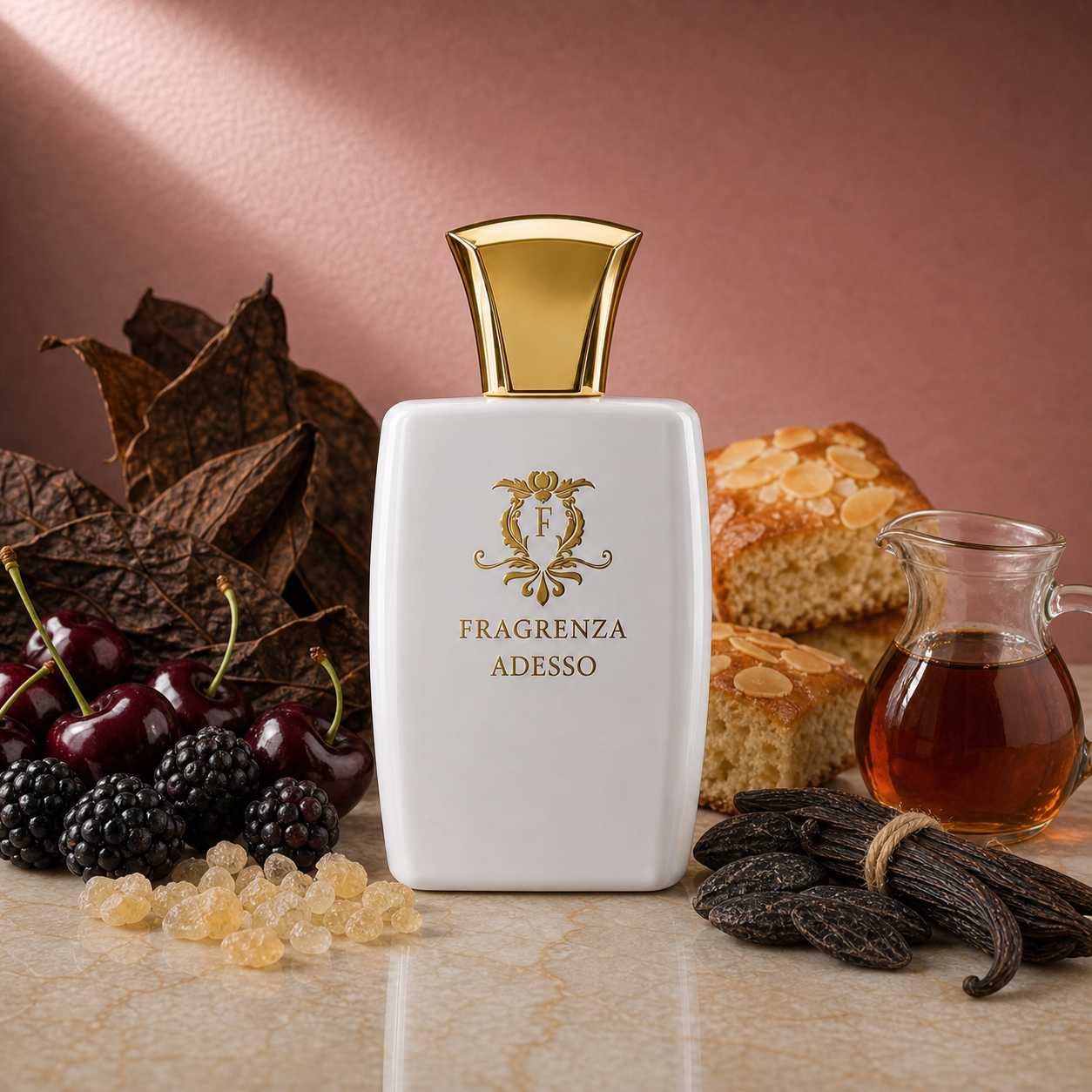
Xerjoff Naxos: about $290 for 50ml. Sicilia: $9.99 for 60ml. Per-ml gap: roughly 35×. The pricing-to-quality math on Naxos is justifiable if you specifically need Xerjoff's exact honey character, the brand affiliation, or the bottle. The pricing math is not justifiable if what you actually want is honey-tobacco wear on skin.
One thing I want to be fair about: Xerjoff's material sourcing is, in my opinion, genuinely good. The honey absolute, the tobacco absolute, the cinnamon — these are real ingredients at quality concentrations. Sicilia gets to a similar smell using a mix of natural and high-quality synthetic materials that aren't quite the same materials. For trained noses, the synthetic-versus-natural difference is detectable on close sniff. For ninety-five percent of wearers, it isn't.
What I Learned About Honey-Tobacco
This is the part I didn't expect to learn from this experiment. The honey-tobacco architecture is structurally narrow — there's a small space within which the composition reads as "honey-tobacco" rather than "gourmand" or "warm oriental" or "tobacco-vanilla." Naxos sits in the middle of this small space. So does Sicilia. The two are closer to each other than either is to most adjacent compositions.
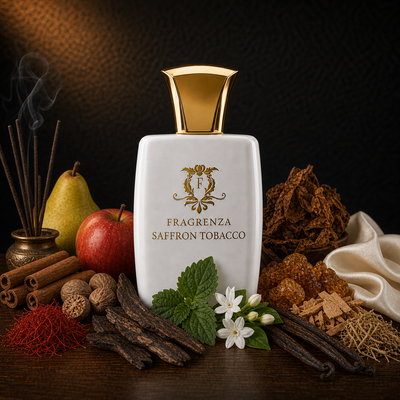
Saffron Tobacco (another Fragrenza pick I keep in rotation) sits adjacent to but outside this space — it pivots toward saffron-leather rather than honey-cinnamon. Dolce Tobacco also pivots — toward tobacco-vanilla-suede rather than honey. The Naxos-Sicilia overlap is genuinely specific.
How I Wear It
Two pumps from eight inches in the morning. Sicilia's projection is moderate — it announces itself in the first thirty minutes, then settles to a skin-close warmth that other people detect when they're within about three feet. It works well in cool weather, less well in summer heat where the honey becomes cloying.
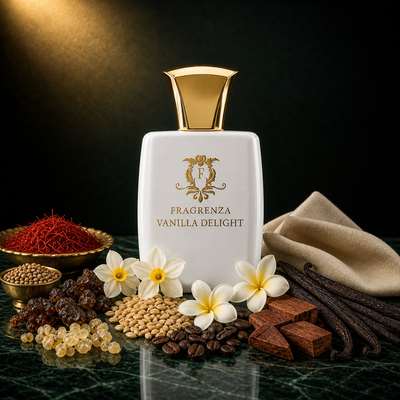
For evening wear, I sometimes layer with Vanilla Delight — one pump on the wrist after the Sicilia has settled — to push the gourmand register without losing the tobacco architecture. The result is more vanilla-forward than Sicilia alone, but the honey-tobacco frame holds.
I've also worn Sicilia in three distinctly different contexts to test its range: a late-October dinner where the warm-spice register matched the season perfectly; a March commute where the honey was more pronounced and read slightly out-of-place against spring weather; and a January weekend at home where the fragrance softened into something almost candle-like by hour four. The composition rewards cooler weather and indoor contexts; outdoors in warm weather, the honey tilts toward cloying.
How to Sample Before Committing
The right way to evaluate any niche-dupe relationship is to sample the dupe before paying full price for the original. The Fragrenza sample programme lets you order small testers — wear Sicilia on skin for two days in your actual wear contexts (office, evening, cold weekend morning), and see whether the honey-tobacco-cinnamon experience delivers on its own merits. If after two days you find yourself reaching for more, you don't need the Xerjoff. If you sample Sicilia and miss something specific you remember from Naxos, that specific gap is what you'd be paying for at niche pricing.
Final Verdict
I've finished the Naxos decant. I won't replace it. Sicilia covers the same emotional space at roughly three percent of the per-millilitre price, and the small specific differences (Naxos slightly more lavender-bright in the opening, Sicilia slightly warmer at hour six) cut both ways. There's no scenario where I'd pay 17× for what feels — at the level of daily wear — like the same fragrance.
If you specifically need Xerjoff Naxos for the brand association or the bottle, buy it. If you want the honey-tobacco-cinnamon experience on skin, Sicilia delivers it.
Frequently Asked Questions
What does Three Months on Sicilia smell like?
Across six weeks of close wear, Three Months on Sicilia reads as a layered composition where the opening, heart, and base phases each present distinct character. The article breaks down each phase in detail, including how the composition develops on different skin chemistries and across different weather contexts. Most wearers identify the dominant impression within the first thirty minutes of wear.
How long does Three Months on Sicilia last on skin?
Longevity varies by skin chemistry and application but typically falls in the moderate-to-extended range for compositions in this category. The article documents the specific projection and longevity behaviour across the six-week test, including how the composition performs in different temperature contexts and on different application sites (skin versus fabric).
Is Three Months on Sicilia worth the retail price?
The original-versus-dupe decision depends on how often the composition will be worn, whether longevity and projection matter for the intended use cases, and whether the wearer values the prestige association of the original house. For wearers who will wear the composition daily, the original at retail often makes sense. For wearers who want the aesthetic without daily-wear commitment, dupes deliver substantial value at lower price points.
What is the closest Fragrenza dupe for Three Months on Sicilia?
Fragrenza's catalogue includes interpretations of many luxury-niche reference compositions in the same aesthetic territory as Three Months on Sicilia. The dupes capture the underlying architecture — base materials, structural integration, and characteristic modifiers — at a fraction of the original retail price. Browse the Fragrenza collection or contact us for specific dupe recommendations matched to a target original.