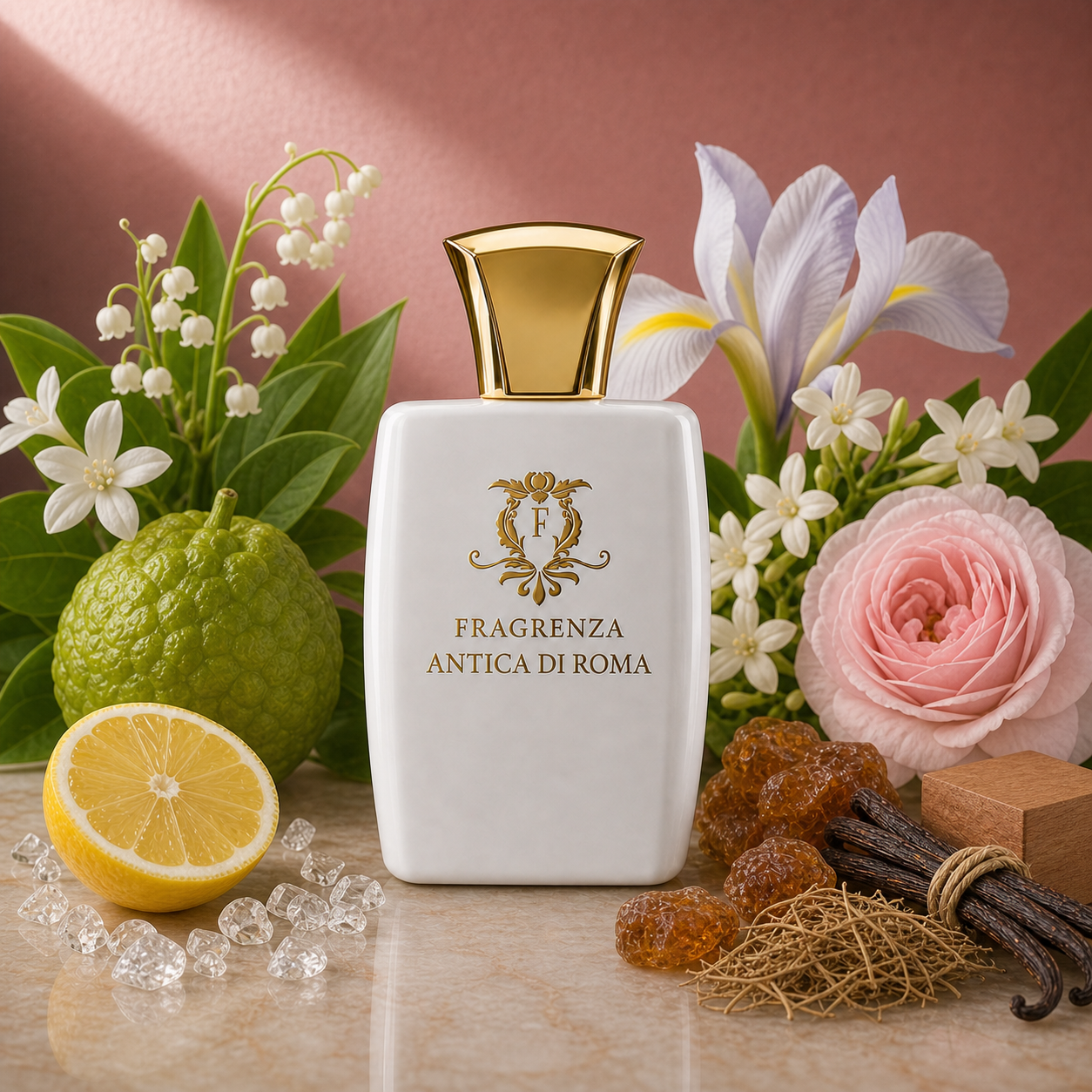
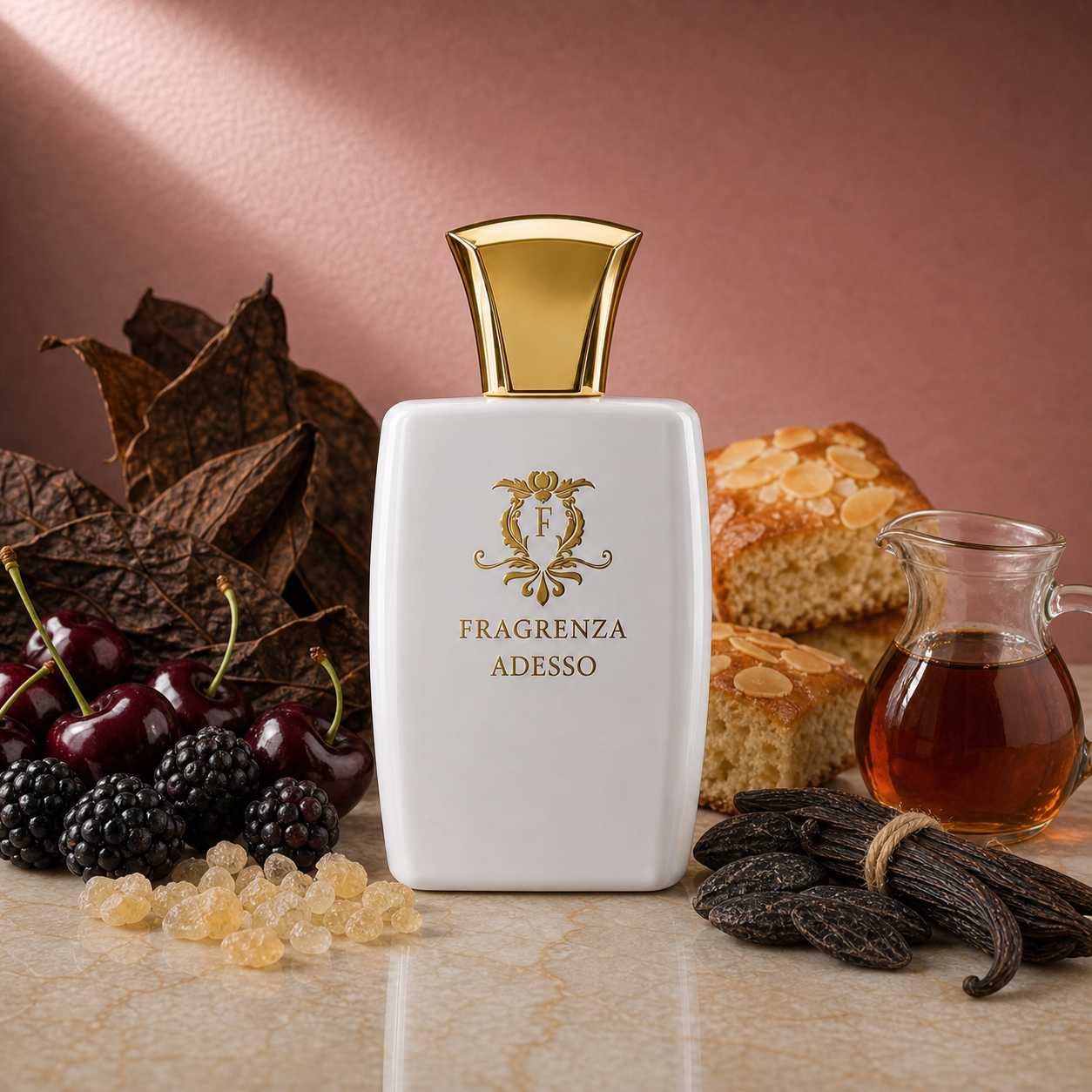
Extrait de Parfum vs EDP: What Is the Real Difference and When Does It Matter?
Extrait carries 20-40% aromatic compounds against the EDP's 15-20%, which adds two to four hours of wear and reshapes the entire dry-down rather than simply amplifying it.
By Julia MorettiFragrenza makes several of the alternatives featured in our guides — here’s how we test.
7 min read
Extrait de parfum and eau de parfum (EDP) are the two strongest standard concentrations in modern perfumery — and they get conflated constantly. Most people assume "extrait is just a stronger EDP." That's about a third of the answer. The other two-thirds — what changes in projection, in dry-down, in how the fragrance actually wears across a day — is what this guide is about.
Read this if you're standing at a counter trying to decide whether the extrait is worth the price premium, or if you've been buying EDP your whole life and want to know what you've been missing.
The short answer
An extrait carries roughly 20–40% aromatic compounds; an EDP carries 15–20%. The extrait wears longer (2–4 additional hours on average), projects less aggressively in the first hour, and develops a richer, denser dry-down. The price premium is typically 30–80% over the EDP version of the same fragrance.
Whether to buy the extrait or the EDP depends less on which is "better" — both are good — and more on how you actually wear fragrance. The rest of this piece breaks that down.
Concentration: what the percentages actually mean
Modern perfumery uses four standard concentration tiers, each defined by the percentage of aromatic compounds suspended in alcohol (and sometimes a small amount of water and fixative oil).
- Eau de Cologne (EdC): 2–5% aromatic compounds. Wear time 1–2 hours.
- Eau de Toilette (EdT): 5–15%. Wear time 2–4 hours.
- Eau de Parfum (EdP): 15–20%. Wear time 4–6+ hours.
- Parfum / Extrait de Parfum: 20–40%. Wear time 8 hours to all day.
The percentages aren't strictly regulated — different houses interpret them slightly differently — but the ranges above are the industry-standard expectation. A reputable extrait at 30% will measurably outperform a reputable EDP at 18% in longevity, and the perceptible character will differ.
What changes when you go from EDP to extrait
1. Longevity
An extrait typically wears 2 to 4 hours longer than the same composition in EDP form, sometimes more for heavy oriental compositions. The gain is real but not transformative — extrait isn't doubling your wear time, it's extending it meaningfully.
The longer wear lives mostly in the dry-down. An EDP that fades to a faint memory by hour six will, as an extrait, still smell distinctly like itself at hour ten. (For more on getting the most longevity from any concentration, our longevity guide covers the levers.)
2. Projection
This is the counter-intuitive one. EDPs typically project more aggressively in the first hour because the higher alcohol content carries the top notes outward more dramatically. Extraits, with less alcohol relative to aromatic material, sit closer to the skin in the opening — the fragrance is denser but radiates less.
By hour three or four, the relationship reverses. Extraits continue to project at a steady, gentle level for hours after the EDP has receded to a skin scent.
3. Character
The same composition smells different at different concentrations. An EDP shows you the perfume's structure as a sequence — top notes, then heart, then base. An extrait compresses the development; you smell more of the heart and base earlier, and the top notes feel less prominent. The fragrance reads as more "complete" sooner, but with less of the dramatic opening arc.
For some perfumes, the extrait is the better expression of the composition. For others, the EDP is — particularly compositions built around a striking opening accord that the extrait flattens.
4. The dry-down
The biggest difference and the main reason most extrait buyers say it's worth the premium. Extraits develop a dry-down that's denser, warmer, and more persistent than the EDP version. If you love the way a fragrance smells at hour four on your skin, the extrait will give you that experience for a much longer window.
5. Sillage (the trail you leave)
EDPs generally produce more dramatic sillage in the first two hours; extraits produce subtler but longer-lasting sillage throughout the day. If you want people to comment on your perfume from across a room, EDP is often the better tool. If you want people to comment on it when they get close, extrait is.
When does it actually matter which one you buy
Buy the EDP if…
- You wear the perfume daily and would rather have a larger bottle for the price.
- You want first-hour projection — the perfume needs to make an impression quickly.
- You wear in hot climates, where extrait can feel overpowering.
- The composition is built around a brilliant opening accord (citrus, fresh florals, sharp greens) that benefits from EDP's more sequential development.
- Your skin chemistry already amplifies fragrance — extrait may be too much.
Buy the extrait if…
- You wear the perfume consciously — for evening, for occasions, for a signature wardrobe slot. (See our wardrobe guide on building a wardrobe that includes statement pieces.)
- The composition is built on heavy base materials (oud, amber, vanilla, musk) that reward longer development.
- You prefer fragrance close to the skin rather than projecting outward.
- Your EDP fades faster than you'd like even with proper application.
- You want a smaller, denser bottle that will still last you a year of careful use.
How application changes between EDP and extrait
The same number of sprays produces different results. A reasonable rule of thumb:
- EDP: 3–4 sprays for most occasions, distributed across two or three pulse points.
- Extrait: 1–2 sprays for most occasions, on warm zones (chest, inner elbows). More than 3 sprays of an extrait is often overwhelming.
Extraits also reward application to warm zones (chest, inner elbows, behind the ears) more than wrist-only application. The slower-projecting character means you want the fragrance somewhere it can develop close to body heat for hours rather than radiating quickly off cooler skin surfaces.
Fragrenza picks: bottles that wear in the EDP and extrait register
Fragrenza's compositions are formulated at concentrations closer to EDP/extrait than designer EDT — you'll generally get longer wear and richer dry-down than the equivalent designer-EDT pricing point. These are the bottles that wear most like a niche extrait.
— rose-oud with dark glamour. The slow-unfolding evening-luxurious register that defines great extrait wear.
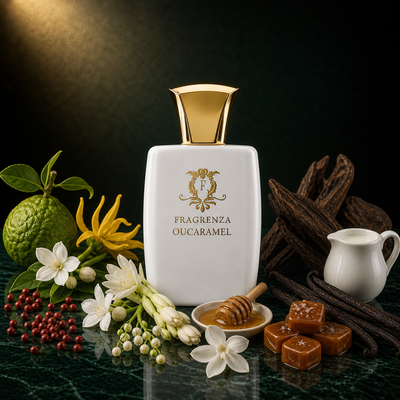
— caramel, oud, vanilla, milky undercurrent. Heavy throughout — exactly the kind of formula where extrait-tier wear behaviour shines.
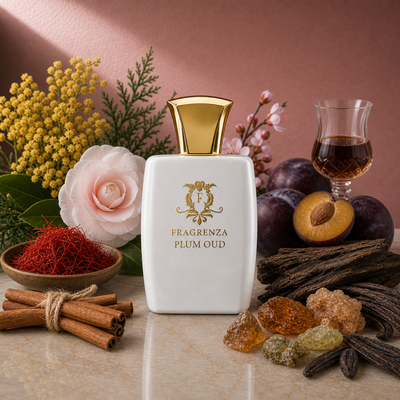
— dark fruit and oud. Built on two of the slowest-evaporating note families in perfumery.
The Fragrenza sample pack lets you wear each on skin for a full day before committing — essential for evaluating any extrait-style fragrance, since the character lives in hours four through ten.
Frequently asked questions
What is the difference between extrait de parfum and eau de parfum?
Concentration. Eau de parfum carries 15–20% aromatic compounds; extrait de parfum carries 20–40%. The higher concentration produces longer wear, denser dry-down, and a closer-to-skin projection profile. The same composition in extrait form also reads as more "complete" earlier — top notes are less prominent, heart and base notes appear sooner.
Does extrait de parfum project less than EDP?
In the first hour, yes — counter-intuitively. EDPs have more alcohol relative to aromatic material, which carries the top notes outward more dramatically in the opening. By hour three, the relationship reverses: extraits continue to project at a gentle, steady level for hours after the EDP has receded.
How much longer does extrait last than EDP?
Typically 2 to 4 hours of additional wear, sometimes more for heavy oriental compositions. The gain is real but not dramatic — extrait isn't doubling wear time, it's meaningfully extending it. The longer wear lives mostly in the dry-down.
Is extrait worth the price difference?
Depends entirely on how you wear fragrance. For daily wear where projection in the first hour matters most, EDP is often the better value. For evening, occasions, or signature pieces where you want richer dry-down and longer skin-close wear, extrait is worth the premium. The premium itself is typically 30–80% over the EDP version of the same fragrance.
Should I use the same number of sprays for extrait as for EDP?
No. Extraits are denser and project differently. Two sprays of extrait is roughly equivalent to four of EDP in terms of total deposit. Start with one or two sprays and add only if needed; more than three sprays of extrait is often overwhelming.
Which fragrances benefit most from being in extrait form?
Compositions built on heavy base materials — oud, amber, vanilla, musk, sandalwood, resins. These notes reward the longer dry-down extrait provides. Lighter compositions (citrus, fresh florals, aquatic) often work better in EDP, where the more sequential development showcases their structure.
A final note
The extrait vs EDP question has a clean answer for most people: try the EDP first because it's cheaper to sample and easier to find, and only step up to extrait if you specifically want what extrait offers — denser, slower, longer, closer to skin. They're not better and worse versions of the same thing. They're two different ways of wearing the same perfume.