How to Build a Fragrance Wardrobe: The Complete Guide for 2026
A workable wardrobe fills five functional roles across daily, formal, cold-weather, intimate and signature wear, which is why five well-chosen bottles outperform fifty impulse buys.
By Julia MorettiFragrenza makes several of the alternatives featured in our guides — here’s how we test.
13 min read
A fragrance wardrobe is a curated system. It's not a shelf full of bottles you bought because they were on sale, and it's not a checklist of every fragrance family you ever read about. It is a small, deliberate set of perfumes that together cover the way you actually live — the work weeks, the dinners, the cold months, the nights you want to feel like a different version of yourself.
Done well, a wardrobe of five or six bottles can carry a person through a year more elegantly than a collection of fifty. Done badly — and most are done badly — it ends up as a graveyard of impulse buys, with three near-identical fresh musks, one untouched oud, and a vanilla you bought because of TikTok. This guide is about the difference.
What follows is the architecture of a real wardrobe: the four fragrance families to think about, the five roles to fill, three starter wardrobe shapes you can build right now, the order to acquire bottles in, and an honest answer to the budget question.
The case against accumulation
The fragrance industry has a prestige problem. It conflates price with quality so effectively that many people assume a perfume under a certain price point can't possibly be worth wearing — and that more bottles automatically equals a more sophisticated nose.
Both assumptions are wrong. A wardrobe is not a trophy case. It's a functional tool for self-expression. Three to five well-chosen pieces will serve you better than a cluttered shelf of impulse purchases.
The first mental shift in building a wardrobe is from collecting to curating. You stop buying reactively and start choosing deliberately. That shift, more than any individual purchase, is what turns a pile of bottles into something that actually works.
The four fragrance pillars
Every wearable fragrance lives broadly in one of four families. A complete wardrobe doesn't need a bottle from every family — but it does need you to know which families you actually want represented, and which you can skip without missing them.
1. Fresh and clean
Citrus, aquatic, green, light musk. Daytime, warm weather, office, gym. The fresh family is where most wardrobes start because it's the lowest-risk category — fresh fragrances rarely offend anyone and they layer easily underneath other things. Modern skin scents and clean musks live here too.
2. Floral or fruity
The romantic, day-to-evening category. Florals can be soft (peony, iris, peach blossom) or assertive (jasmine, tuberose, rose). Modern fruity perfumes lean toward dark fruit (plum, fig, raspberry) rather than the candy fruits of the early 2000s. A good floral or fruity bottle can carry you from a brunch to a date night without changing.
3. Oriental and gourmand
Warm, spiced, sweet, often edible. Vanilla, amber, caramel, tobacco, honey, pistachio. This is where the wardrobe gains its evening and cold-weather depth. Oriental and gourmand bottles tend to project further and last longer than fresh fragrances, so a little goes far.
4. Woody and earthy
Sandalwood, cedar, vetiver, oud, leather, smoke. Sophisticated, year-round, and the most genuinely unisex of the four families. Woody fragrances anchor combinations beautifully — they sit close to skin and give other notes structure to bloom against.
Pick the families that match your life. A person who works from home, walks their dog at 5pm, and goes out twice a month does not need the same wardrobe as someone in a corporate office five days a week with weekly social events. Map the families to your calendar before you map them to bottles.
The five roles in a complete wardrobe
Inside the four families, a fully built wardrobe fills five functional roles. You don't need all five from day one — but a wardrobe missing more than one of these will leave you feeling like something is wrong without being able to name it.
1. The daily / work scent
The piece you wear five days a week without thinking. Quietly excellent, confident without being assertive, and crucially — it doesn't fatigue. The daily scent is the most chronically underpurchased slot in most wardrobes because it lacks the glamour of the statement acquisition. It is also the scent your colleagues, your barista, and your gym staff will associate with you. Buy it last only if you already have one that works.
2. The evening scent
Where the great orientals, the darkly ambered ouds, and the most architecturally complex compositions earn their place. The evening scent is the piece de resistance of the wardrobe — the one guests comment on, that lingers in memory. It should feel like a different register from the daily, not just a louder version.
3. The weekend scent
Bridges the two registers — less constrained than a work fragrance, less formal than an evening choice. Often a fruity floral, a soft gourmand, or a creamy woody. The weekend scent is what you reach for when you don't have to perform but you still want to feel put together.
4. The seasonal rotation
At least one cold-weather fragrance and one warm-weather fragrance distinct from your year-round choices. Seasonal rotation is compulsory, not optional — a wardrobe without it forces a vanilla amber into July or a coconut milk into November, and neither works. Two extra bottles, one for each side of the calendar, solves it.
5. The statement piece
The wardrobe's wildcard. The bottle that doesn't have to be conventionally wearable, that exists to be explored on leisurely days and offered to guests who ask "what is that?" The statement piece is allowed to be weird — it might be a smoky incense, a leather, an experimental gourmand, an oud that turns heads. Most wardrobes get this slot wrong by making it the second daily scent. Resist that.
Three starter wardrobes by size
Theory only goes so far. Here are three wardrobe shapes you can build right now, with specific Fragrenza picks for each role. All three assume you sample before committing to full bottles — pick up the Fragrenza sample pack first.
The 3-bottle starter
The minimum viable wardrobe. Covers daily wear, evening, and a wildcard. No seasonal rotation yet — you'll feel the gap in summer or winter, and that's the signal to expand.
- Daily: — clean, soft, second-skin. Wears five days a week without ever fatiguing.
-
Evening:
— warm vanilla with coffee, suede, and saffron. The piece guests notice.
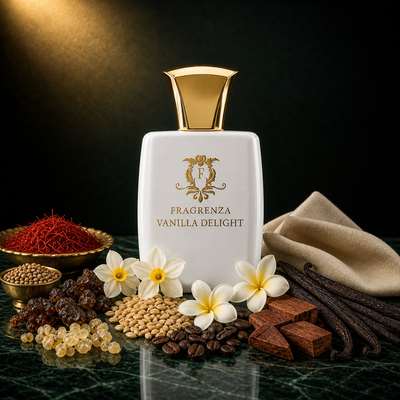 Vanilla Delight inspired by Vanille Fatale by Tom FordSave 96% vs $270 retailShop Vanilla Delight →
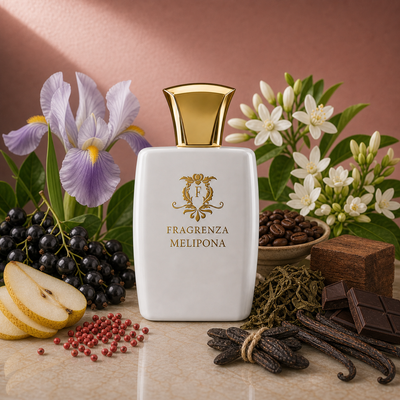
 - Wildcard: — soft iris, pear, and pink pepper. Different enough from the daily that it shifts your whole register when you wear it.
The 5-bottle wardrobe
The complete starter — every functional role filled. Most people stop here.
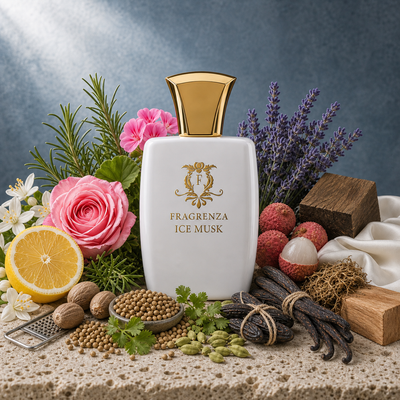
- Daily: — clean musk anchor.
- Weekend: — soft, romantic, day-to-evening floral.
-
Evening:
— warm gourmand depth.
Vanilla Delight inspired by Vanille Fatale by Tom FordSave 96% vs $270 retailShop Vanilla Delight →
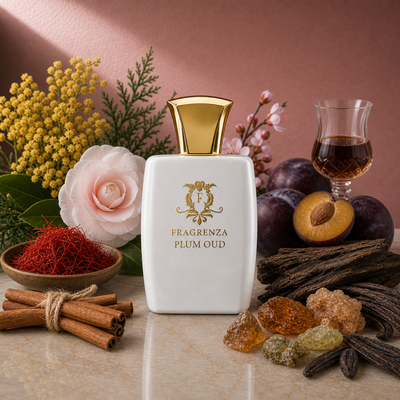
- Cold-weather seasonal: — dark fruit and oud, built for autumn and winter.
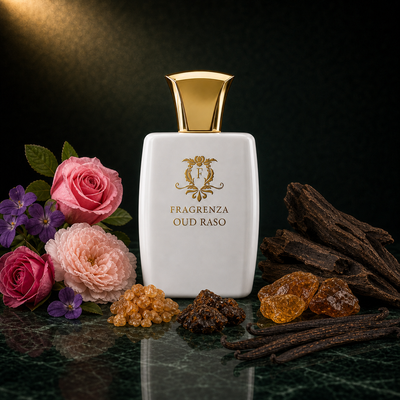
- Statement piece: — rose-oud with dark glamour. The bottle that earns "what is that?"
The 7-bottle full wardrobe
Adds depth in the families you wear most. Now you have options inside the categories rather than one bottle per slot.
- Daily:
- Weekend:
-
Evening:
Vanilla Delight inspired by Vanille Fatale by Tom FordSave 96% vs $270 retailShop Vanilla Delight →
- Cold-weather:
- Warm-weather: — bright floral that breathes in heat.
-
Woody alternate:
or — depending on whether you want refined or smoky.
 Joyful Oud inspired by Oud for Happiness by Initio ParfumsSave 97% vs $385 retailShop Joyful Oud →
 - Statement: — the wardrobe's wildcard.
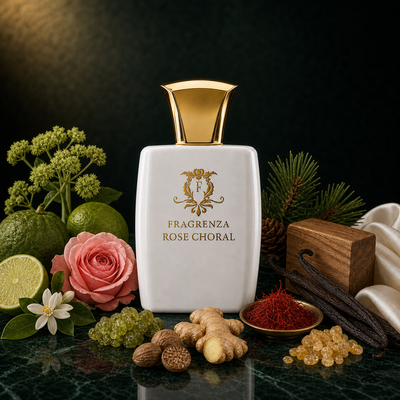
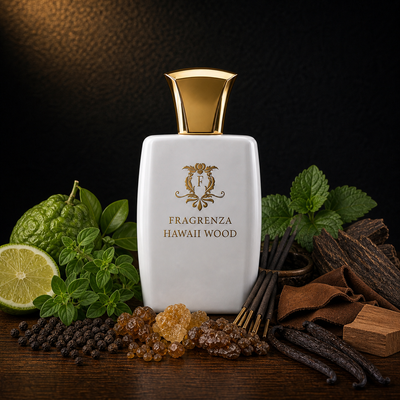
The order to acquire bottles in
Even if you intend to build a five-bottle wardrobe, you don't buy them in one weekend. The right sequence is anchor first, then contrasts, then specialty pieces. Each step builds on what's already there.
1. Identify your anchor. Your everyday signature — the most-worn slot in the wardrobe. Sample widely before choosing. Live with three or four candidates for a few days each. The anchor should feel like an honest extension of you, not aspirational.
2. Add a seasonal contrast. Whatever your anchor is, the second bottle should be its opposite weight. If the anchor is fresh and clean, the contrast is warm and gourmand. If the anchor is cozy, the contrast is bright and crisp. The contrast is what makes the anchor feel like a choice rather than a default.
3. Add a special-occasion scent. Now you can afford to go bolder, more luxurious-feeling, more memorable. This is where you buy the perfume you would never pick as a daily because it would tire too quickly — but as the third bottle, it's allowed to be that.
4. Add a versatile wildcard. The fourth bottle is unexpected by design. An oud, an unusual green, a bold spicy oriental. Something the first three wouldn't have predicted.
5. Fill in seasonal rotation. If you've followed the first four steps, you'll likely already feel the gap in summer or winter. Bottles five and six are the bottles that close that gap.
The budget question, answered honestly
The honest answer is that a wardrobe of three to five bottles can be built at almost any budget — but the strategy changes depending on what you're working with.
The high-budget strategy: Splurge on the statement piece. Luxury niche houses earn their price tags on complexity and rare materials, and the statement piece is where you'll appreciate that the most because it's the bottle you wear most consciously. The daily and weekend scents are where heavy luxury spending pays the worst returns — you'll wear them so often you'll stop noticing them, expensive or not.
The smart-spend strategy: Most of the wardrobe lives in the middle. The daily and the weekend bottles, in particular, are the scents you consume the most of. Buying them at niche-luxury prices is rational only if you can replace them without flinching. For most wardrobes, this is where Fragrenza fits — niche-style compositions at a price point that makes daily use rational rather than extravagant.
The all-budget strategy: A wardrobe under £100 total is achievable, and not embarrassing. Some categories — fresh citrus, clean musks, straightforward florals — don't require expensive raw materials, and a well-made budget version can outperform a designer bottle three times the price. The category where premium pricing is genuinely justified is complex orientals and ouds, where the materials themselves are expensive. Spend there if you spend anywhere.
The hybrid wardrobe — affordable workhorses for daily and weekend wear, one carefully chosen splurge for the statement — is how most people end up building, and it's the strategy with the best signal-to-cost ratio. (For a deeper look at how to spot expensive-smelling fragrance at any price, our piece on budget fragrances that smell expensive covers the rules.)
The sample-first rule
Never buy a full bottle without wearing it for at least three days. Skin chemistry transforms perfumes in ways no in-store spray test can predict. A fragrance that smells like roses on the bottle card may dry down to baby powder on you. A fragrance you sniff and dismiss might be the one that, three hours into a workday, becomes the scent you can't stop subtly smelling on your wrist.
Three days minimum. One day to feel the opening, one day to feel the heart, one day to feel the dry-down on your skin under different conditions — coffee, lunch, the walk home. Only then do you know.
The most expensive mistake in building a wardrobe is the £80 bottle bought on a 30-second spray that turns out wrong. The cheapest insurance against it is a sample.
Common wardrobe mistakes
Buying three of the same thing. The most common pattern. A person tries a clean musk, loves it, and within a year owns three near-identical clean musks. The wardrobe principle is contrast — every new bottle should add something the existing bottles don't.
Buying for the person you want to be. A heavy oud you bought because a stranger smelled great in one is not a wardrobe addition. It's an aspiration. If you don't actually wear it within the first month, return it or sell the decant. Fragrances don't grow into you.
Skipping the daily slot. Daily wear is unglamorous to shop for, so most wardrobes ignore it. The result is a wardrobe of beautiful evening and statement pieces and nothing to wear to work — so the wearer reaches for whatever's closest, often a body spray or nothing at all. The daily slot is the slot the wardrobe is most often missing.
Treating layering bottles as wardrobe slots. A perfume that you only ever wear layered with another perfume is a layering tool, not a wardrobe piece. Each slot in the wardrobe should work alone. (For the full layering system, read our guide on how to layer fragrances.)
Buying without a refresh schedule. Fragrances oxidize. A bottle opened three years ago is not the same fragrance it was on day one. Plan to refresh the daily and weekend slots every 18-24 months; statement and seasonal bottles can last longer because they're worn less.
Fragrenza picks by role
The complete reference for what to put where. Mix and match to suit how you actually wear fragrance.
Daily wear:
(clean musk) · (soft floral)Weekend:
(romantic floral) · (brighter floral)Evening:
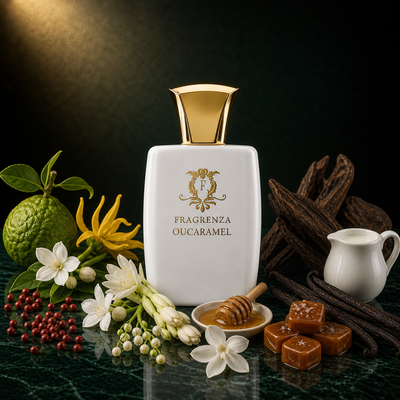
Cold-weather seasonal:
(dark fruit and oud) ·
Warm-weather seasonal:
(bright floral) · (clean and breathable)Woody and earthy:

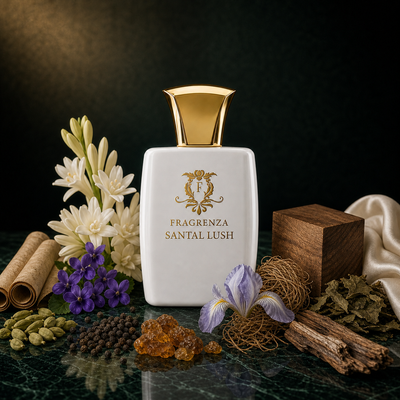
Statement / wildcard:
· ·Frequently asked questions
How many bottles should be in a fragrance wardrobe?
Three to five for most people, seven for someone who wears fragrance daily and across many social registers. More than seven and you stop knowing what you have. Fewer than three and you start wearing the wrong thing for the wrong moment.
What is the most important slot to fill first?
Your daily / work scent — the one you wear five days a week. It's the slot that gets used the most and the one most wardrobes neglect because it's the least glamorous to shop for. Build the wardrobe outward from there.
Can I build a fragrance wardrobe on a low budget?
Yes. A wardrobe of three to five well-chosen pieces is achievable under £100. Categories like fresh citrus, clean musks, and straightforward florals deliver outsized value at lower price points; the category where premium spending is genuinely justified is complex orientals and ouds.
How is a fragrance wardrobe different from a fragrance collection?
A wardrobe is curated to match how you live. A collection is what happens when you stop curating. The wardrobe-builder asks "what role does this fill?" before each purchase. The collector asks "do I want it?" — which is usually a yes, and that's why collections sprawl.
Should every wardrobe include an oud?
Not every wardrobe — but most that lean toward evening and cold-weather wear benefit from one. Oud anchors combinations, gives weight to florals, and rewards repeat wearing in a way that brighter notes don't. (For more on why oud matters, see our piece on why oud is one of perfumery's most important notes.)
How often should I refresh my wardrobe?
Daily and weekend bottles every 18-24 months — they get the most use and oxidation. Statement and seasonal bottles can stretch to three or four years if stored properly (away from heat and light). Once a year, audit what you actually reached for and what stayed on the shelf.
Should I buy unique bottles for travel?
Travel-size formats of your wardrobe pieces solve this better than buying separate "travel scents." Decant a small amount from your daily and your evening, take both, and your wardrobe travels with you.
A final thought
Fragrance choices, over time, become a private language. The bottles in your wardrobe are your vocabulary — the words you have available to express how you want to feel and how you want to be perceived. A small, considered vocabulary is more powerful than a sprawling, half-remembered one. Build your wardrobe with that in mind.
If you're starting from zero, start with the Fragrenza sample pack and one of the three starter wardrobes above. Live with the pieces. Listen for what's missing. Build from there.