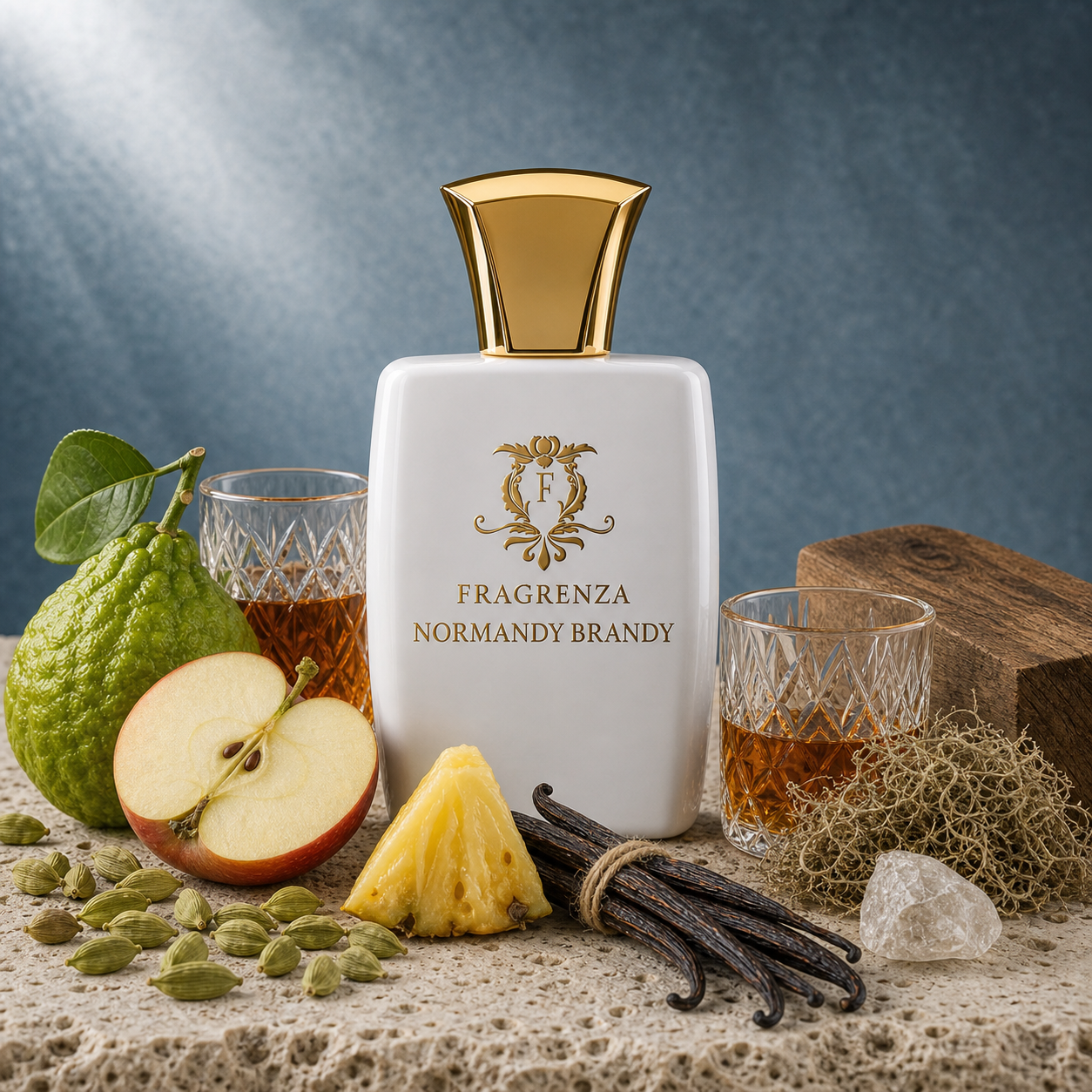
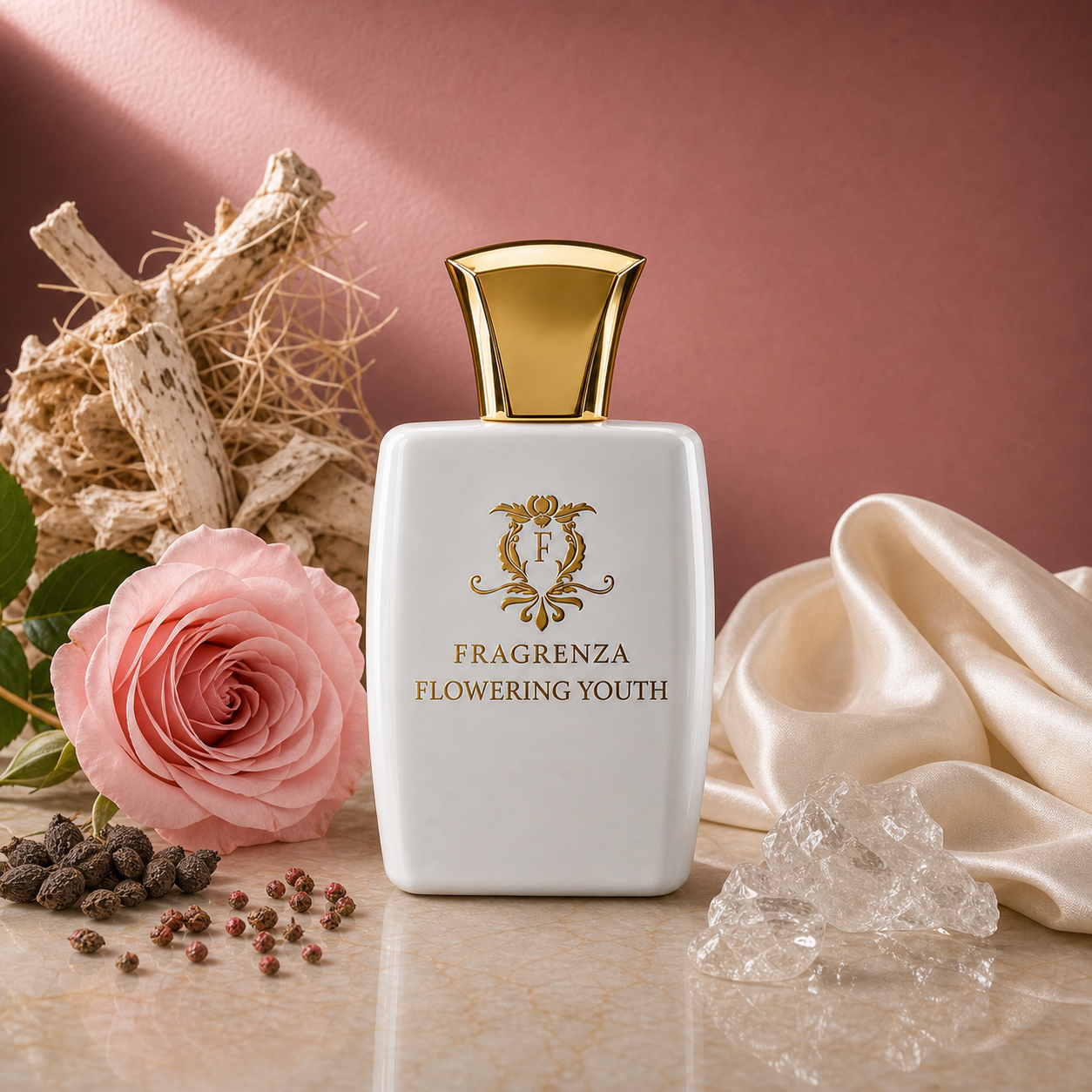
Ambroxan Perfumes Explained: The Molecule Behind Every Modern Skin Scent
Firmenich isolated ambroxide in the 1950s as a substitute for whale-derived ambergris, then watched the molecule become the foundation of the entire skin-scent category over the following decades.
By Julia MorettiFragrenza makes several of the alternatives featured in our guides — here’s how we test.
10 min read
If you wear modern fragrance, you have smelled ambroxan. You have smelled it whether or not you knew the name — in the “clean girl” perfumes that dominated 2024 and 2025, in the niche skin scents that defined the late-2010s quiet luxury wave, in the masculine fougeres your friends keep getting compliments on, in almost every modern fragrance built around the idea of “just-showered” cleanliness. Ambroxan is the most quietly ubiquitous material in 21st-century perfumery, and the molecule responsible for the entire skin scent category being a category at all.
This is the explainer. What ambroxan actually is, what it smells like, why it took over modern perfumery, the four registers it plays in, and how to wear ambroxan-led fragrances without losing the wear in the air. By the end you will recognize it on yourself and on other people, which is the start of understanding why the skin scent moment is the moment it is.
What ambroxan actually is
Ambroxan (full name: ambroxide, also marketed as Ambrox, Cetalox, and a handful of related synthetics) is a synthetic molecule developed in the 1950s as a substitute for ambergris — the rare, expensive, and ethically complicated whale-derived substance that had been a fixture of fine perfumery for centuries. The molecule was first isolated by Firmenich, one of the major fragrance houses, and quickly became one of the most important raw materials in modern perfumery for two simultaneous reasons: it was a very good ambergris substitute, and it had its own distinctive olfactory character that perfumers found they could use independently.
The chemistry matters less than the practical effect. Ambroxan is built around a sclareolide structure derived from clary sage, which means the molecule has a botanical origin even though it’s produced synthetically. It is highly diffusive (a small amount goes a long way), it has remarkable longevity on skin (often outlasting most of the composition it sits in), and it has the rare quality of amplifying other materials around it — making the rest of the fragrance smell richer, more dimensional, and more skin-integrated than it otherwise would.
That last quality is why ambroxan ended up everywhere. A perfumer who adds a small percentage of ambroxan to a composition is not just adding a note — they are deepening every other note in the formula. It is what perfumery calls a “booster” or an “extender,” though those terms undersell how much character ambroxan brings on its own.
What ambroxan actually smells like
Describing ambroxan is one of the harder exercises in the perfume vocabulary, partly because the molecule is so embedded in modern fragrance that most people have no clean reference point for what they’re smelling when they smell it. The cleanest description: ambroxan is dry, woody, slightly salty-mineral, faintly amber, and quietly musky — all at once, all at low volume.
The dry quality is the first thing the nose registers. Where most amber materials read as warm and slightly sweet, ambroxan reads as warm and slightly arid — closer to sun-warmed driftwood than to honey-and-amber. Underneath the dryness sits a thread of mineral salinity that is almost ozonic, almost ambergris-adjacent. Around that sits a soft woodiness that is not cedar, not sandalwood, but something more abstract — the wood as concept rather than the wood as material. And underneath all of it sits a quiet musk that is closer to clean skin than to anything animalic.
The defining quality, though, is what ambroxan does to the skin it sits on. Most fragrance materials project from the body outward; ambroxan integrates. The wear feels like the skin is producing the fragrance rather than wearing it. This is why ambroxan-led compositions are described as skin scents in the first place — the molecule reads as skin-adjacent, as if it had always been part of you. There is a reason the “you, but better” trope took off in the 2010s. Ambroxan is what made it possible.
Why ambroxan took over modern perfumery
Ambroxan’s rise to dominance happened in two waves. The first wave was technical. As natural ambergris became increasingly impossible to source ethically and at scale, fragrance houses needed a synthetic alternative that delivered the same olfactory character without the supply chain. Ambroxan was the answer, and by the 1980s it had been adopted across mainstream and niche perfumery as the standard ambergris stand-in.
The second wave was cultural. In 2006, Geza Schoen released Escentric Molecules 02 — a fragrance built almost entirely around ambroxan as the central material. The composition was a deliberate provocation: a perfume that emphasized rather than hid its synthetic foundations, and that read as quiet, modern, and distinctly contemporary. It was a hit, and it triggered a cascade of niche releases through the late 2000s and 2010s that put ambroxan in the foreground rather than buried in a base. The skin scent category as we now know it was effectively born from that cascade.
By 2026, ambroxan has gone fully mainstream. The clean-musk wave that defined the early 2020s — the wave that produced the “clean girl” aesthetic and the broader Skin Scents 2.0 movement — runs almost entirely on ambroxan as its structural backbone. The material is now in nearly every category of fine fragrance, and what changed in 2026 is that consumers know what to ask for. The molecule has graduated from technical ingredient to recognized signature.
The four registers ambroxan plays in
The same molecule shows up in radically different compositions, and learning to recognize the four directions ambroxan can take is most of what you need to choose ambroxan-led fragrance well.
1. The skin scent register
The most familiar use. Ambroxan paired with clean musks, soft florals, and a touch of warm cream produces the “just-showered, scent-of-self” wear that defined the last decade of fine fragrance. The composition is close to the body, low projection, and reads as personal rather than performative. Skin-scent-style Fragrenza picks like
sit in this exact register — clean, soft, second-skin, the kind of wear that registers as the wearer’s own skin rather than as a fragrance applied. For a deeper read on the category, our guide to skin scents covers the broader landscape.
2. The dry aromatic register
The second register pairs ambroxan with herbal, citrus, or aromatic notes to produce dry, slightly bitter, slightly woody compositions that read as masculine or unisex. The classic example is the modern fougere — lavender or sage on top, geranium or vetiver in the middle, ambroxan and musks in the base. These are the polished, professional fragrances that have replaced the heavier aquatic-marine masculines of the 2000s. Quiet, considered, recognizably contemporary.
3. The amber-woody register
The third register pairs ambroxan with deeper, warmer materials — oud, cedar, vetiver, dry amber — to produce compositions that have ambroxan’s signature lift but more body and warmth. Modern unisex oud compositions often use this structure: the oud provides the depth, the ambroxan provides the dimensionality and the skin-integrated wear.

4. The sensual-floral register
The fourth and most recent register puts ambroxan in conversation with soft florals and lactonic creaminess to produce compositions that read as both clean and sensual. The result is a quieter, more subtle eroticism than the heavy floral-orientals of the 2000s — closer to skin and warmer than older clean-musks. Compositions like
sit in this adjacent territory: iris, pear, pink pepper, soft elegant, with a base that feels close to the body and modern in the same skin-scent way.
How to wear ambroxan-led fragrances
The defining quality of ambroxan-led compositions is that they reward proximity. They are not built to project; they are built to be discovered. Two things change when you understand this.
First, the application discipline. Apply to warm pulse points — wrists, neck, behind ears, chest. Avoid spraying onto fabric for everyday wear; the alcohol absorbs into cloth, the molecule loses its skin integration, and the wear becomes flatter than it should be. The exception is when you want a faint trail in evening contexts: a thin spritz on a collar carries the wear into a room where it would otherwise be too quiet to register.
Second, the volume discipline. Ambroxan compositions are diffusive; you do not need volume to create presence. Two sprays is the right default. Three is the maximum. Over-application turns a quiet, refined wear into a heavy mineral haze that announces “synthetic.” Restraint is what the genre rewards.
The third, less obvious point: ambroxan-led fragrances are mood fragrances. They wear best in the contexts our guide to choosing perfume by mood calls polished or fresh — office, work travel, daytime professional, post-workout reset. They are not evening-glamour fragrances. Use them where their character lands.
Layering with ambroxan-led fragrances
Ambroxan layers beautifully because the molecule is a booster — whatever you put with it gets a little richer and a little more skin-integrated by association. Two directions worth knowing.
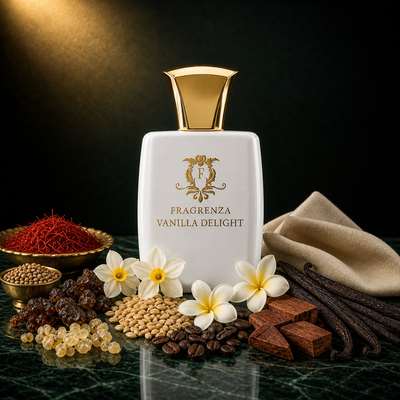
The first is sweet-on-skin. A vanilla-forward composition like
The second is dark-on-light. A heavier oud composition over an ambroxan skin scent creates a multi-stage wear: the ambroxan in the morning, the oud asserting itself by mid-day, both compositions integrating into a single composite by evening. The deeper framework lives in our layering pillar.
Related reads
For the broader cluster: our Skin Scents 2.0 pillar covers ambroxan alongside musk and Iso E Super in the wider trend context; what are skin scents defines the category; Iso E Super in perfumery covers ambroxan’s closest co-traveler; and our 2026 trends hub places the skin scent moment in the broader landscape.
Frequently asked questions
What does ambroxan smell like?
Dry, woody, slightly salty-mineral, faintly amber, and quietly musky — all at once, all at low volume. The defining quality is how it integrates with skin: most fragrance materials project from the body, ambroxan reads as skin-adjacent, almost as if the wearer were producing the fragrance rather than wearing it. It is the closest thing modern perfumery has to a “clean amber,” and it sits at the structural center of the skin scent category.
Is ambroxan natural or synthetic?
Synthetic. Ambroxan was developed in the 1950s as a substitute for natural ambergris, which had become difficult to source ethically and at scale. The molecule is built around a sclareolide structure derived from clary sage, so it has a botanical origin, but the form used in fragrance is produced synthetically. This is a practical advantage as well as a chemical one: the synthetic version is consistent batch to batch, where the natural ambergris had significant variability.
Why is ambroxan in so many modern perfumes?
Two reasons. First, it is the leading replacement for natural ambergris — a long-time fixture of fine perfumery that became commercially impractical. Second, ambroxan is a remarkable booster: a small percentage in a formula amplifies and dimensionalizes every other material around it, making the composition smell richer and more skin-integrated than it would without the molecule. Most modern fragrances use it for one or both of these reasons.
Are ambroxan perfumes long-lasting?
Yes — ambroxan has remarkable persistence on skin, often lasting longer than most other materials in the composition. This is one of the reasons the skin scent category has the longevity reputation it does. A clean musk paired with ambroxan can outlast a heavier oud composition without an ambroxan base, simply because the molecule keeps anchoring the wear to skin even as the upper notes evaporate.
Is ambroxan unisex?
Yes — arguably the most genuinely unisex molecule in modern perfumery. Ambroxan’s character is structural rather than gendered: it provides skin integration, dryness, and a quiet woodiness that fits equally into masculine, feminine, and unisex compositions. The molecule itself does not lean one way or another; what surrounds it does the gender coding, and ambroxan plays well with all of it.
How is ambroxan different from Iso E Super?
Both are synthetic boosters with skin-integrated character, but they have different signatures. Ambroxan is dryer, slightly saltier, and more amber-leaning; Iso E Super is softer, more woody-velvety, and more diffusive in a transparent way. Most modern compositions use both at low percentages, layered for complementary effect. Our Iso E Super explainer covers the closest co-traveler in detail.
The bigger picture
Ambroxan is the molecule that taught modern perfumery how to do quiet. Before it, the assumption was that a fragrance had to project to be noticed; ambroxan demonstrated that a fragrance could be discovered instead, found rather than announced, and that the discovered version was often the more compelling one. The skin scent category, the quiet luxury aesthetic, the broader 2026 wave of close-skin perfumery — all of it sits on ambroxan as foundation. Knowing what you’re smelling is the first step in choosing it well.