

The Best Cherry Fragrances to Know: From Tom Ford to Affordable Alternatives
Cherry occupies a unique and underappreciated position in the fragrance note vocabulary
By Julia MorettiFragrenza makes several of the alternatives featured in our guides — here’s how we test.
13 min read
Why Cherry Is One of Perfumery's Most Compelling Notes
Cherry occupies a unique and underappreciated position in the fragrance note vocabulary. Used carelessly, it produces compositions that smell childish — all artificial sweetness and synthetic fruitiness, without the depth or complexity that makes a fragrance worth returning to. Used with skill, cherry can anchor fragrances of genuine sophistication: boozy, dark, resinous orientals; sparkling, transparent fruity florals; and everything in between. The range of what cherry can do, when a perfumer truly understands it, is remarkable.
What follows is a guide to some of the most interesting cherry fragrance expressions available — from Tom Ford's iconic Lost Cherry through to original Fragrenza creations that explore the note from completely different angles. Whether you are drawn to the dark, luxurious end of the cherry spectrum or prefer something brighter and more contemporary, there is a cherry fragrance built precisely for you.
Understanding Cherry in Perfumery
Cherry aroma in perfumery is typically created through a combination of materials: benzaldehyde for the almond-cherry note, heliotropin for the sweet powdery dimension, various fruity esters for the fresh fruit quality, and in more complex compositions, natural materials like davana (which has a cherry-fruit character on certain skins) and rose oxide. The character of a cherry accord changes significantly depending on which of these materials the perfumer emphasises.
Emphasise the benzaldehyde and you get a darker, more almond-adjacent cherry — the maraschino, bitter-sweet quality of Tom Ford's Lost Cherry. Emphasise the fruity esters and you get a brighter, more transparent fresh cherry. Add leather or tobacco and cherry becomes dark and seductive. Add aldehydes and it becomes powdery and retro. This versatility is what makes cherry such an interesting note for both perfumers and collectors to explore.
Four Cherry Fragrance Expressions Worth Knowing
Sparkling Cherry: Inspired by Tom Ford Electric Cherry
For those who want cherry as energy — bright, vivid, almost electric — this is the corner of the category to explore. Electric Cherry-inspired fragrances lead with the juicy, sparkling quality of the fruit rather than its depth, using ginger, pink pepper, and black currant to charge the opening with a vibrancy that is immediately lifting and joyful. The heart in these compositions typically features jasmine sambac, tuberose, and lily-of-the-valley — a floral trio that keeps the composition luminous rather than heavy.
The dry down in sparkling cherry fragrances tends toward ambrettolide and musk, maintaining a clean, airy character all the way to the end. These are summer and spring fragrances first, excellent for daywear and casual occasions where the full weight of a Lost Cherry would feel like too much of a statement. Unisex in character, they appeal to anyone who loves the energy of cherry without its brooding depth.
Notes to look for: Cherry, Ginger, Pink Pepper, Black Currant / Jasmine Sambac, Tuberose, Lily-of-the-Valley / Ambrettolide, Musk
Best for: Spring and summer, daywear, casual occasions
Cherry Inferno: Inspired by Tom Ford Cherry Smoke
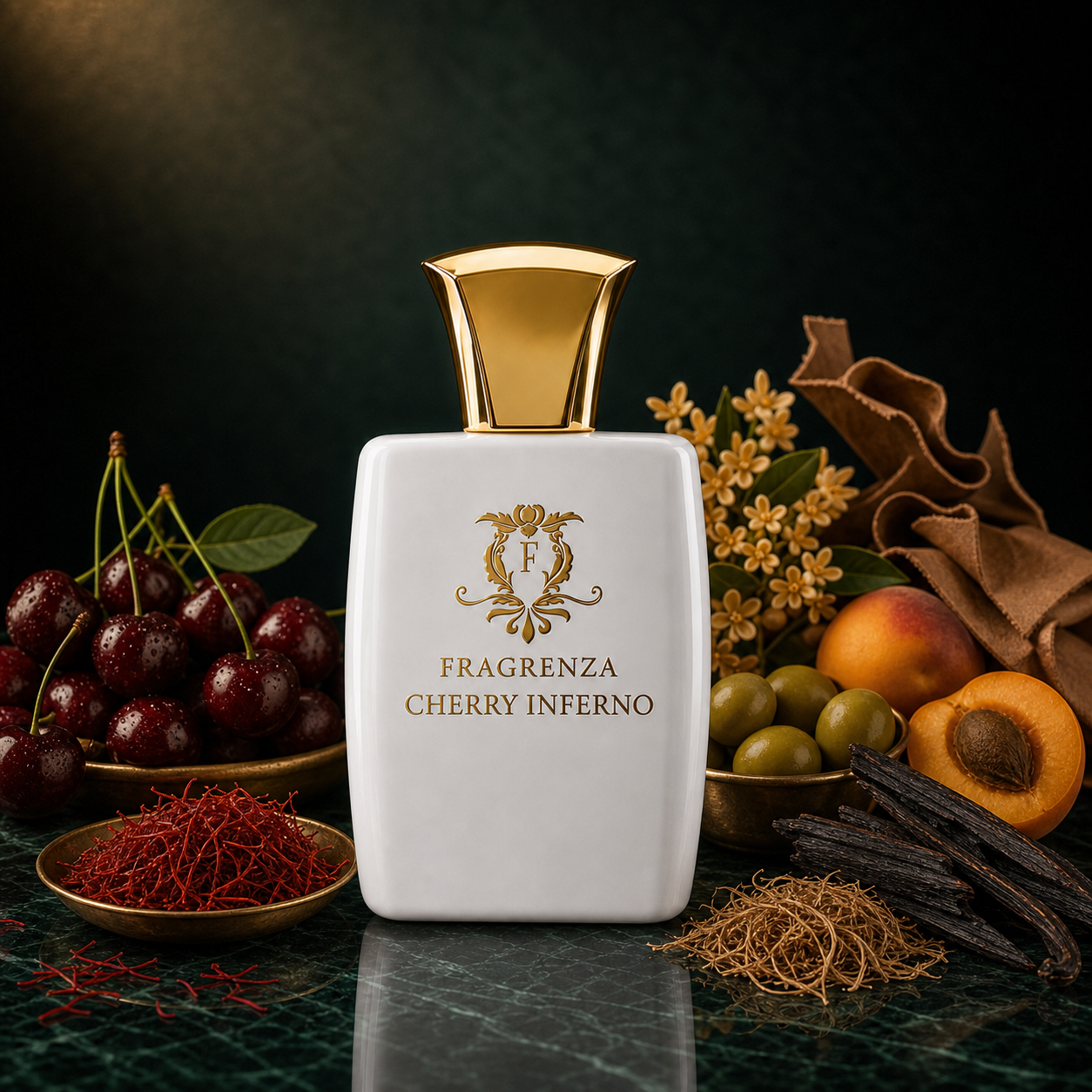
This is the darkest expression of cherry in contemporary perfumery — a composition that pairs the tartness of sour cherry with smoke, leather, and the mineral depth of nagarmotha (a smoky, earthy Indian wood). Cherry Smoke-inspired fragrances are not for the faint-hearted: the opening of sour cherry and saffron creates a bright but immediately complex impression, and as the leather and olive heart develops, the cherry recedes into supporting role while the darker materials take charge.
These are fragrances for lovers of challenging, artistic perfumery — compositions that prioritise character and distinctiveness over immediate approachability. The smoke and nagarmotha base is deeply tenacious, lasting through an entire day and into the next morning on fabric. Worn with confidence, this category of cherry fragrance is genuinely arresting; worn tentatively, it can feel heavy. Apply sparingly, to pulse points, and let the fragrance develop at its own pace.
Notes to look for: Sour Cherry, Saffron / Leather, Olive, Osmanthus, Apricot / Smoke, Nagarmotha
Best for: Evening wear, autumn and winter, adventurous fragrance wearers
Amarena Cherry: The Dark Gourmand Classic
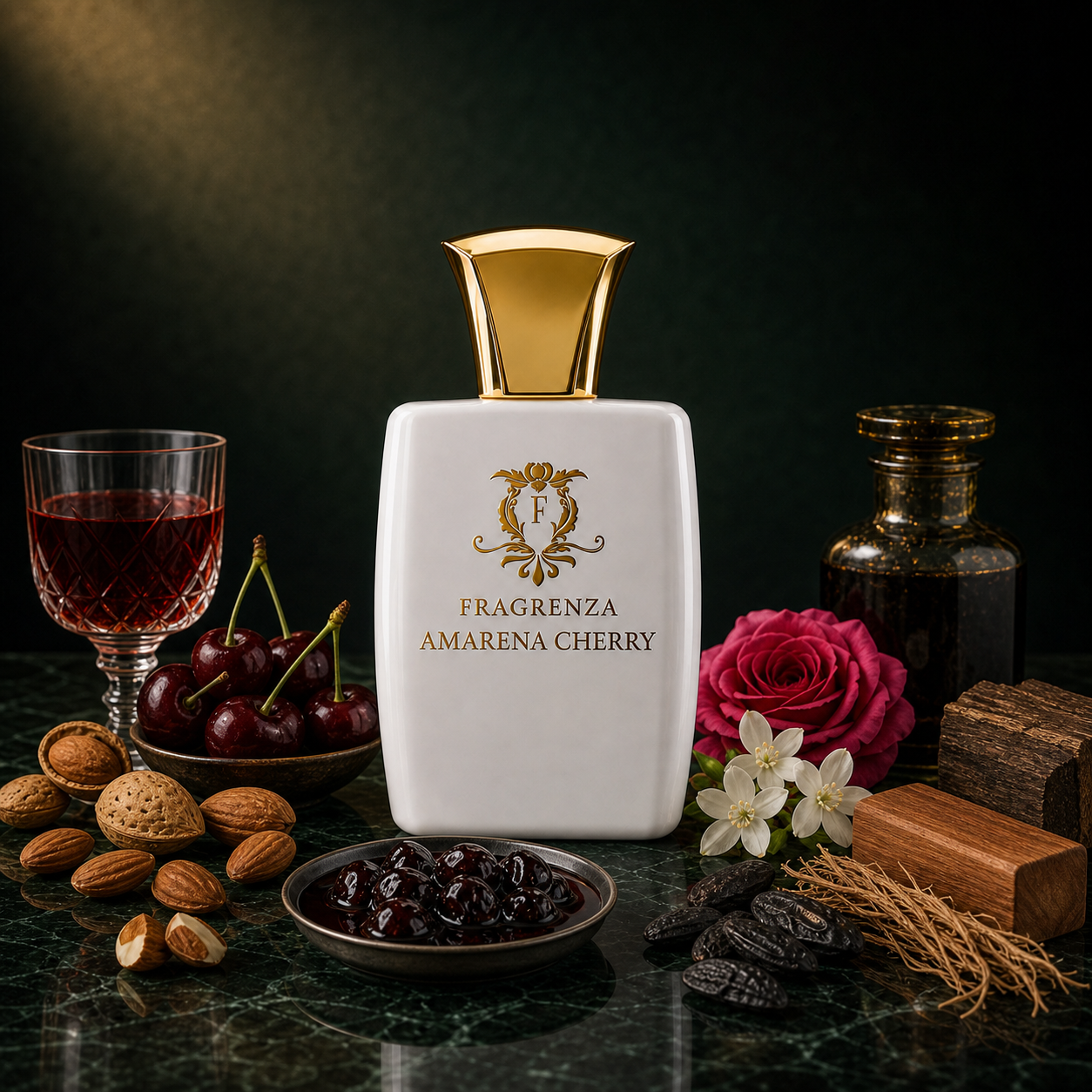
Inspired by Tom Ford Lost Cherry, Amarena Cherry represents the best of what quality fragrance alternatives can achieve. The opening is built on black cherry, cherry liqueur, and bitter almond — the same essential note complex as the Tom Ford original — and the resemblance on first spray is immediately compelling. The jasmine sambac and Turkish rose heart add genuine floral sophistication, preventing the composition from becoming purely gourmand. The Peru balsam and roasted tonka bean base delivers the same warm, resinous dry down that makes Lost Cherry so addictive.
The Amarena cherry itself — a small, dark Italian cherry known for its complex bitter-sweet character — is an inspired reference point for this composition. It captures exactly the quality that distinguishes Lost Cherry from simpler fruit fragrances: cherry as a dark, complex ingredient with depth and history, not merely a sweet decoration. This is a year-round fragrance, equally at home at evening events and in cooler-month daywear, with longevity that competes directly with the original.
Notes: Black Cherry, Cherry Liqueur, Almond / Griotte Syrup, Turkish Rose, Jasmine Sambac / Peru Balsam, Roasted Tonka Bean, Sandalwood, Vetiver, Cedar
Best for: Year-round, evenings, those who love Lost Cherry's DNA without Lost Cherry's price
Cherryum: An Original Cherry Creation
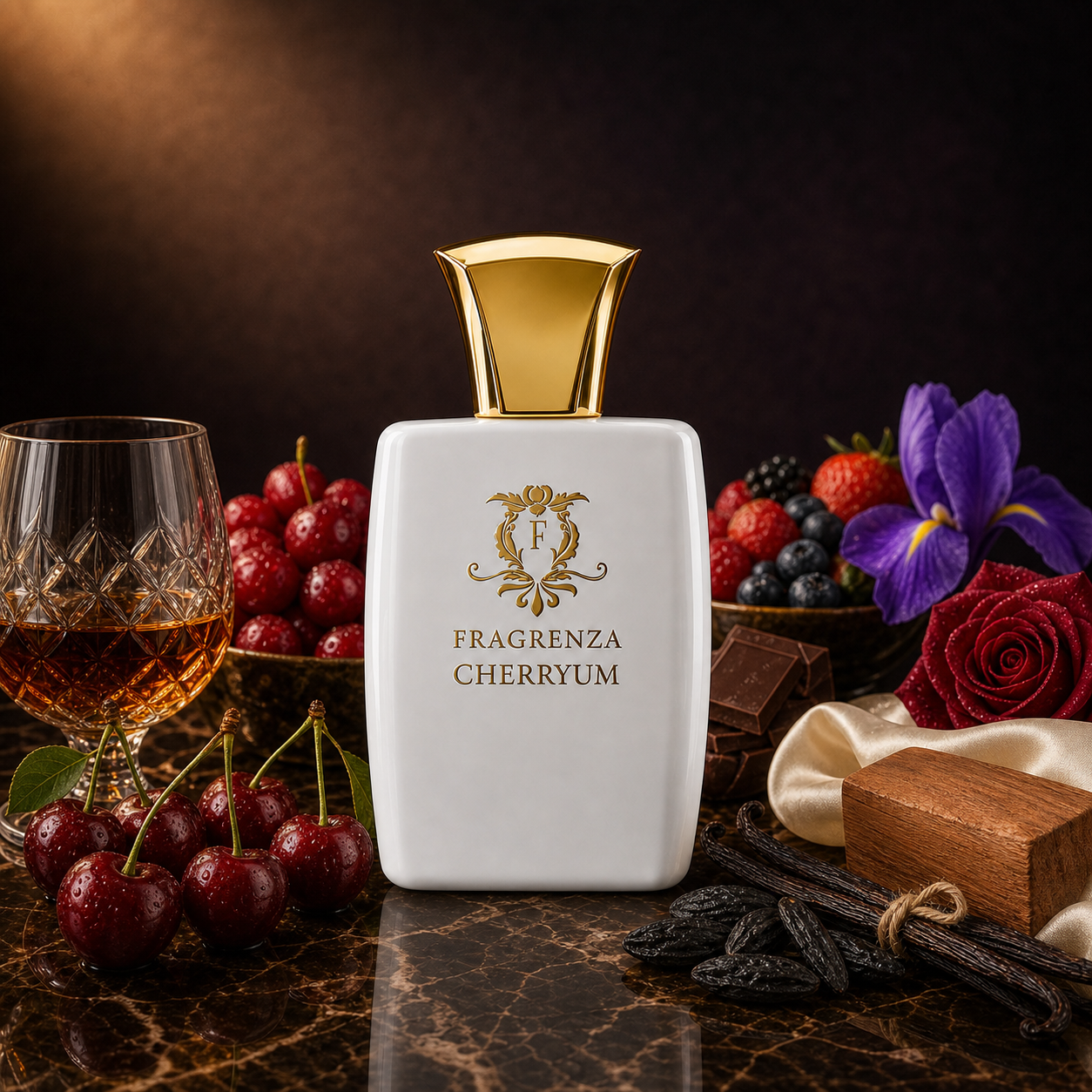
While most cherry fragrances draw their inspiration from the Tom Ford lineage, Cherryum represents something different: an original creation that explores what cherry can do when paired with rum, chocolate, rose, and iris in an unabashedly indulgent composition. The opening of cherry and rum is intoxicating — sweet, boozy, and richly fruity — before the heart reveals its complexity through sour cherry, chocolate, and floral materials that add genuine depth to what could easily have been a one-dimensional gourmand.
The base of white musk, sandalwood, tonka bean, and vanilla creates a creamy, enveloping dry down that is deeply satisfying for fans of warm, skin-close fragrances. Unlike the Tom Ford-inspired options, Cherryum makes no attempt to be sophisticated in a traditional sense — it is luxurious, indulgent, and openly delicious. Wear it when that is exactly what you want from your fragrance, and it delivers completely.
Notes: Cherry, Rum / Sour Cherry, Chocolate, Rose, Iris / White Musk, Sandalwood, Tonka Bean, Vanilla
Best for: Autumn and winter, evenings, fans of warm gourmand fragrances
How to Choose Your Cherry Fragrance
The cherry fragrance category rewards self-knowledge above almost any other consideration. Because cherry can go so many different directions — from sparkling and fresh to dark and resinous — choosing based on brand or price alone is a poor strategy. The better approach is to understand which dimension of cherry appeals to you most.
If you love freshness and energy, sparkling cherry expressions are your territory. If you love depth, warmth, and the confluence of cherry with oriental notes, the Lost Cherry-inspired gourmands are the right direction. If you want something genuinely challenging and artistic, the smoky-leather end of the spectrum offers extraordinary experiences. And if you simply want something warm, sweet, and unashamedly pleasurable, an original cherry-rum creation delivers without apology.
Test everything on skin rather than paper strips — cherry notes in particular perform differently across different skin chemistries, amplifying on warm, moisturised skin and sitting flat on dry or cool skin. Apply to inner wrists, wait twenty minutes, and assess across a full hour before making any decisions. The cherry fragrance that is right for you is out there; finding it is half the pleasure.
The Cherry-Anchored Category Beyond Tom Ford
The cherry-anchored fragrance category has expanded substantially over the past several years, with both luxury and accessible-price markets producing multiple compositions that target the broader aesthetic territory. The category has been discussed extensively in adjacent articles in this series (the Amarena Cherry vs Lost Cherry comparison article, the Bitter Peach article that addresses adjacent fruity-gourmand territory, the Mancera Cherry article that addresses the niche-accessible cherry-floral position, and the YSL Babycat article that addresses the cherry-tobacco-honey adjacent territory). The broader cherry category collectively represents one of the more architecturally diverse contemporary aesthetic territories, with different specific cherry treatments producing substantially different wear experiences.
What this guide adds beyond the more focused individual cherry-composition articles is the broader category-level perspective on how cherry functions as a perfumery material across multiple aesthetic registers. The cherry note can anchor dark-boozy-luxurious compositions (Lost Cherry), bright-electric contemporary compositions (Electric Cherry and adjacent territory), smooth-floral-cherry compositions (Mancera Cherry Cherry), warm-cherry-tobacco compositions (Babycat-adjacent territory), and sparkling-fruity-floral cherry compositions (lighter contemporary alternatives). The architectural diversity within the broader category means that no single cherry composition can cover all the wear-context and aesthetic-preference niches that wearers exploring cherry perfumery might want to address.
The Four-Direction Architecture of Contemporary Cherry Perfumery
Contemporary cherry perfumery can be usefully organised into four broad architectural directions that each produce distinctive wear-experience characteristics. The dark-boozy-luxurious direction (exemplified by Tom Ford Lost Cherry, the Bitter Peach adjacent territory, and the various luxury-niche cherry-anchored compositions) emphasises the maraschino-cherry-liqueur character supported by resinous-warm base accords. This direction targets evening wear contexts and cooler weather, with substantial projection and long longevity.
The bright-electric contemporary direction (exemplified by various Tom Ford Electric Cherry adjacent compositions and several niche-accessible alternatives) emphasises the fresh-juicy-vibrant cherry character with cleaner supporting elements that produce more daytime-versatile wear. This direction provides cherry-aesthetic accessibility for wear contexts that the heavier dark-boozy compositions would not handle optimally.
The smooth-floral-cherry direction (exemplified by Mancera Cherry Cherry and various adjacent compositions) emphasises rose-and-floral supporting elements that produce cherry compositions reading as more elegant-feminine than gourmand-indulgent. This direction provides cherry-aesthetic access for wearers who prefer floral-architectural character over conventional gourmand sweetness.
The warm-cherry-tobacco direction (exemplified by YSL Babycat and adjacent compositions) emphasises tobacco-honey supporting elements that produce cherry compositions reading as smoky-intimate-sensual rather than purely-sweet. This direction provides cherry-aesthetic access for wearers who specifically value the warmth and complexity that tobacco-cherry combinations deliver.
The Material Chemistry Behind Cherry Accords
Cherry accords in commercial perfumery are constructed from specific combinations of synthetic materials and natural extracts that together produce the recognisable cherry aromatic character. Benzaldehyde provides the bitter-almond-cherry character that anchors most cherry accords (the same compound naturally present in bitter almond, which is why cherry and almond often appear together in compositions). Gamma-undecalactone and related lactone materials provide the soft-fruity-sweet character that bridges the benzaldehyde to the broader fruity supporting elements. Heliotropin (piperonal) provides the powdery-sweet character that gives some cherry compositions their distinctive vanilla-almond-cherry combination.
Natural materials contribute additional complexity in higher-end compositions. Davana absolute, discussed extensively in the Bitter Peach article in this series, provides specific cherry-fruit character on certain skin chemistries that synthetic alternatives cannot perfectly reproduce. Real cherry essential oil exists but is expensive and lacks the projection profile that commercial perfumery requires. Various rose oxide compounds add fresh-floral facets that integrate cherry with the floral architectural elements that some compositions emphasise. The specific material combination determines whether a cherry composition reads as candy-sweet (heavy on lactones and synthetic esters), maraschino-boozy (heavy on benzaldehyde with alcohol-resin supporting elements), or fresh-fruity (heavy on rose oxide and clean supporting florals).
Wear Context Considerations Across the Cherry Category
Cherry compositions across the broader category share certain wear-context characteristics that affect how wearers should think about adding cherry compositions to their wardrobes. The category as a whole tends to perform best in cooler-to-temperate weather, with the various supporting materials (tobacco, vanilla, amber, leather, depending on the specific direction) typically amplifying uncomfortably in hot weather. Most cherry compositions work better in evening and intimate-social contexts than in daytime professional settings, though the bright-electric direction provides exceptions for daytime wear.
Skin chemistry interaction is particularly important for cherry compositions. Cherry accords can read substantially differently across different skin types — some skin chemistries amplify the maraschino-boozy character, others amplify the cleaner fruity character, others produce more powdery-almond character. Sampling is essential before committing to full bottles in this category because community recommendations often fail to predict how specific cherry compositions will wear on individual skin. Side-by-side comparison across multiple cherry compositions on opposite wrists provides more useful information than sequential single-composition evaluation.
The Fragrenza Cherry Catalogue and How It Sits Within the Broader Category
The Fragrenza catalogue includes several cherry-anchored compositions that target different positions within the broader category. Amarena Cherry (discussed extensively in the Lost Cherry comparison article) targets the dark-boozy-luxurious direction with the specific Lost Cherry architectural reference. Better Peach (discussed in the Bitter Peach article) addresses the adjacent fruity-gourmand territory that bridges cherry and peach categories. Adesso (discussed in the Babycat article) targets the warm-cherry-tobacco direction. The aggregate catalogue provides useful coverage across multiple cherry-category positions at accessible price points.
For wearers building a wardrobe around the broader cherry-anchored aesthetic, the practical approach is typically to identify which of the four architectural directions most appeals to your preferences and invest in compositions targeting that specific direction. A wearer who specifically values the dark-boozy-luxurious direction should prioritise Amarena Cherry or its Lost Cherry original. A wearer who specifically values the warm-cherry-tobacco direction should prioritise Adesso or its Babycat reference. A wearer who values the bright-electric direction should pursue Tom Ford Electric Cherry or similar contemporary alternatives. Acquiring compositions across multiple directions typically produces wardrobe coverage rather than redundancy, while acquiring multiple compositions within a single direction usually produces redundancy without proportionate wear-context coverage.
How to Choose Between Cherry Compositions
The practical decision-making framework for choosing between cherry compositions involves three primary considerations. First, identify which of the four architectural directions discussed above matches your aesthetic preferences and wear-context needs. Second, evaluate the specific compositions within your chosen direction through proper sampling on your skin across multiple wear sessions. Third, consider the economic and brand-positioning factors that inform your specific purchase decision (luxury-niche original versus accessible-price alternative, established commercial composition versus newer launches, etc.).
The most common mistakes in cherry-composition purchasing involve buying based on community recommendations without personal sampling, buying multiple compositions within the same architectural direction (producing wardrobe redundancy), and buying based on the immediate appeal of opening notes without evaluating the heart-and-base development that defines the actual wear experience. The reliable purchasing framework requires patient sampling, honest self-evaluation of wear-context needs, and willingness to leave compositions on the table that received strong community recommendations but do not wear well on your specific skin or in your specific wear contexts.
The Future of Cherry Perfumery
The cherry-anchored fragrance category is likely to continue expanding through the remainder of the decade as both luxury and accessible-price markets continue to release additional entries. Several trends point toward continued development. Material technology improvements are producing cherry accords with more nuanced aromatic character than earlier-generation cherry materials delivered. The broader fruity-gourmand category that cherry participates in continues to grow as consumer preferences shift away from purely fresh-aquatic dominant categories. The crossover between cherry and adjacent categories (vanilla, tobacco, leather, rose, peach) continues to produce hybrid compositions that extend the broader category in new directions.
For wearers building intentional cherry wardrobes, this trajectory means that the available options will continue to expand and that sampling strategies that work well today will continue to provide useful guidance as new compositions enter the market. The four-direction architectural framework discussed above provides a stable categorisation that should remain useful even as specific new entries emerge, because the underlying material logic that produces the different cherry directions is unlikely to change substantially across the next several years.
Final Notes on Cherry Perfumery and Building a Cherry Wardrobe
Cherry perfumery has matured into one of the more architecturally interesting contemporary fragrance categories, with substantial diversity across the four architectural directions discussed above and capable options available at multiple price tiers within each direction. The category rewards careful sampling and patient evaluation across multiple wear sessions, with the wear-experience differences across specific compositions often more important than the brand-positioning differences that marketing communication typically emphasises.
For wearers building intentional cherry wardrobes, the practical approach combines careful identification of which architectural directions match your aesthetic preferences with patient sampling across specific compositions within those directions. The Fragrenza catalogue and the broader accessible-price market collectively provide useful options across multiple cherry-category positions, which makes intentional wardrobe construction economically practical without committing to luxury-niche pricing for every wardrobe addition. The cherry category has become substantially more accessible than it was five years ago, and the contemporary market provides genuinely capable options at every price tier for wearers willing to sample carefully and select strategically. Cherry as a perfumery material rewards the careful exploration that the contemporary market makes possible, and the wearers who engage thoughtfully with the broader category build more interesting and more lived-in wardrobes than wearers who chase either prestige-luxury or savings-driven approaches as ends in themselves.