

What Does Amber Smell Like? The Warm, Sensual Note at the Heart of Perfumery
By The Fragrenza Team 5 min read
The Mystery Begins in the Sea
Few perfume ingredients have a stranger and more romantic origin story than amber. True ambergris — the form that has been used in perfumery for centuries — is not a mineral or a plant extract. It is a waxy, fatty substance produced in the digestive system of the sperm whale (Physeter macrocephalus). When a whale consumes large quantities of squid, the hard, indigestible beaks can irritate the intestinal lining. In response, the whale's body encases these irritants in a protective secretion that slowly transforms, over years and decades, into ambergris.
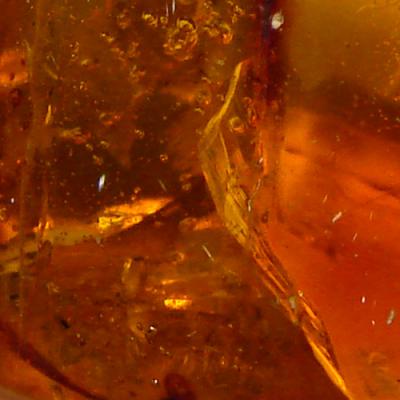
The whale eventually expels this material, which then floats for months or years on ocean currents, baking in the sun and salt water. Fresh ambergris is dark, soft, and deeply unpleasant to smell — fecal, marine, almost medicinal. But as it weathers and oxidizes, something remarkable happens. The offensive notes gradually vanish, replaced by a warm, complex, radiant sweetness. Lumps of aged ambergris — sometimes weighing several kilograms — wash ashore on the beaches of New Zealand, Madagascar, the Maldives, and Brazil, where they have been treasured finds for centuries.
What Ambergris Smells Like
The scent of mature, high-quality ambergris is one of the most difficult to describe in all of perfumery — and also one of the most universally appealing. It is warm and radiant, almost solar, with an extraordinary animalic depth that reads as clean rather than dirty. There are notes of dry woods, a musky sweetness, and a subtle tobacco-like smokiness. Most strikingly, ambergris seems to amplify the warmth and sensuality of whatever surrounds it — it is not so much a scent as a quality, a luminosity it lends to other notes.
Perfumer descriptions cluster around words like warm, radiant, sensual, balsamic, woody, mossy, and velvety. Its most distinctive property is its extraordinary tenacity and its ability to bind other fragrance compounds together, making it one of the most prized fixatives ever known. A cloth lightly touched with ambergris tincture can retain its scent for decades.
From Whale to Laboratory: Extraction and Synthesis
Genuine ambergris is now extraordinarily rare and expensive — and its trade is restricted in many countries due to protections for sperm whales under CITES and domestic endangered species legislation. As a result, perfumery has relied almost entirely on synthetic substitutes since the latter half of the 20th century. These synthetics have proven not just adequate but genuinely transformative for modern fragrance.
The most significant breakthrough came with the discovery of ambroxan (also sold as Ambroxide or Cetalox), a molecule derived from the natural compound ambrein found in ambergris. Ambroxan captures the radiant, woody-marine warmth of ambergris with exceptional accuracy and remarkable tenacity. It is a molecule with a fascinating skin-enhancing quality — it tends to amplify the wearer's own natural warmth, creating an almost personalized scent experience. Other important synthetic ambers include iso E super, ambrette seed, and various labdanum-based accords that contribute to amber's complex facets.
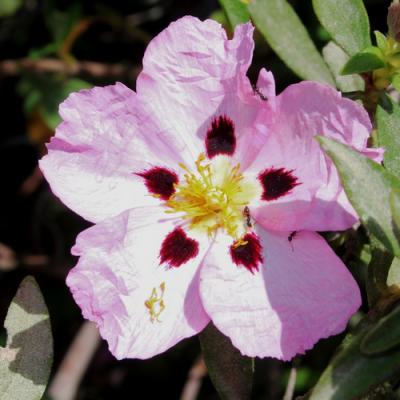
In the wider fragrance world, the word "amber" often refers not strictly to ambergris but to an entire family of warm, sweet, balsamic base notes. The classical amber accord is typically built from labdanum (a sticky resin from the rockrose plant, with a warm, animalic, leathery sweetness), benzoin (a vanilla-inflected tree resin), and vanilla — often with additional notes of musk, tonka bean, and various woods.
How Perfumers Use Amber
Amber almost universally appears in the base notes of fragrances, where it performs multiple functions simultaneously. As a fixative, it slows the evaporation of more volatile top and heart notes, extending the life of the fragrance on skin. As an accord, it contributes warmth, depth, and sensuality to compositions that might otherwise feel flat or cold. And as a skin enhancer, it creates an impression of warmth radiating from within — a quality that makes amber fragrances feel profoundly intimate.
The range of amber's applications in perfumery is vast. In oriental fragrances, it is often the dominant note — the central pillar around which spices, resins, and florals are arranged. In woody fragrances, it softens and warms cedar, sandalwood, and vetiver. In floral compositions, it adds a sensuous, skin-like quality to rose or jasmine. Even in fresh, marine, and citrus fragrances, tiny amounts of ambroxan are often used as a structural element, providing diffusion and tenacity without obviously announcing its presence.
Iconic Fragrances Built on Amber
Amber is arguably the note most responsible for the enduring power of the great oriental fragrances. Guerlain's Shalimar (1925) — perhaps the most famous oriental ever created — places amber at the very heart of its composition, blending it with bergamot, iris, rose, jasmine, tonka, and vanilla to create a fragrance of timeless, smouldering opulence. The amber-vanilla base of Shalimar became the template for an entire fragrance tradition.
Dior's Ambre Nuit represents a more contemporary amber expression — darker, woodier, more nocturnal. Its structure of rose, amber, cedarwood, and patchouli creates a beautifully balanced portrait of amber's romantic possibilities. Serge Lutens' Ambre Sultan is a bolder, more resinous interpretation from the world of niche fragrances, built on labdanum and a forest of Mediterranean herbs and woods.
For modern amber lovers, our Caramelle Rosse — inspired by the iconic saffron and amberwood creation that took the fragrance world by storm — captures the glowing, crystalline quality of amberwood alongside saffron and jasmine. It is amber at its most contemporary and luminous.
Pairing Notes: The Natural Partners of Amber
- Vanilla and tonka bean: The classic oriental pairing — amplifies amber's sweetness into something profoundly warm and enveloping.
- Sandalwood and cedarwood: Grounding, creamy woods that give amber additional structure and longevity.
- Rose and jasmine: Great florals become more sensuous and animalic when grounded in amber.
- Patchouli: A darker, earthier counterpart that creates rich, complex oriental-woody accords.
- Musk: The most intimate of pairings — amber and musk together create a warmth that seems to emanate from skin itself.
- Labdanum and benzoin: The classical amber trifecta — resinous, balsamic, and quietly extraordinary.
The Enduring Warmth of Amber
Amber has been at the heart of perfumery for thousands of years — referenced in ancient Egyptian ritual, treasured by Arab traders who mixed it with oud and rose, codified by Guerlain into the oriental tradition that defined luxury fragrance for the 20th century. Its appeal is not difficult to explain. In a world that is often cold and impersonal, amber smells like warmth itself — like sunlit skin, like a fire in a stone room, like the deepest possible comfort. That quality, so hard to manufacture and so immediately felt, is why amber remains irreplaceable in the perfumer's palette.