
Cade Oil in Perfumery
Juniperus oxycedrus from the Mediterranean garrigue is dry-distilled into the smoky, antiseptic huile de cade that French pharmacies still sell, and it sits next to birch tar in leather accords.
By Julia Moretti 4 min read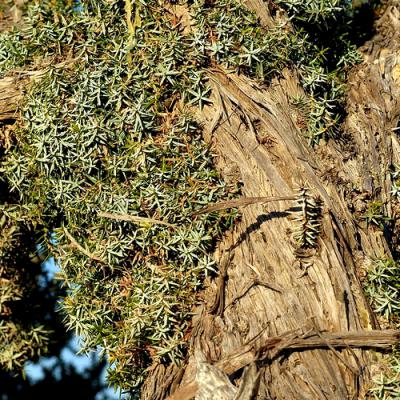
What Does Cade Smell Like?
Cade oil — produced by dry distillation of the heartwood of Juniperus oxycedrus, the prickly juniper of the Mediterranean basin — is one of the most intensely smoky and emphatically phenolic materials in the perfumer's palette. Its smell is dark, tarry, and assertively smoky, with a distinctive medical-antiseptic edge that immediately recalls tar-based skin preparations, old-fashioned veterinary medicines, or the sharper registers of Scotch whisky. Beneath the dominant smokiness there is a warm woody character — this is, after all, a distillate of juniper wood — and a faint sweetness that prevents the composition from tipping into pure tar and renders it more nuanced than its reputation suggests.
Cade is closely related to birch tar in olfactory character but tends to be warmer, slightly less medicinal, and with a more distinctly woody backbone — the difference between peat reek on an Islay whisky and the sharper tar of birch bark. Both materials belong to the smoky-phenolic family that underlies leather accords in fine fragrance, and both are used primarily for the intensity of their character rather than their approachability.
Traditional Uses and History of Cade in Perfumery
Juniperus oxycedrus grows wild across the garrigue and maquis of southern France, Spain, and the broader Mediterranean region, and cade oil has been produced in Provence and Languedoc for centuries. Its traditional uses were primarily medicinal: as a treatment for skin conditions including psoriasis, eczema, and scabies, as a veterinary preparation for mange and fungal infections, and as a constituent of various hair and skin preparations still sold in pharmacies across France under the name "huile de cade." The antiseptic properties of the phenolic compounds in cade oil made it genuinely useful in a pre-antibiotic era, and the oil remained in official pharmacopoeias well into the twentieth century.
In fine perfumery, cade entered the palette as part of the broader exploration of leathery and smoky accords that characterised the development of the leather fragrance family. Like birch tar, cade contributes the phenolic smokiness that signals leather to the nose, but perfumers appreciated its distinctly Mediterranean character — its connection to the herbs and scrublands of the South of France gave cade an olfactory provenance that more generic phenolic materials lacked. Today, cade oil is used in both fine fragrance and cosmetics, though its use is carefully regulated due to polycyclic aromatic hydrocarbon content; properly refined cade oil for cosmetic and fragrance use is processed to reduce these compounds to safe levels.
Key Aromatic Molecules in Cade Oil
Like birch tar, cade oil's characteristic aroma is dominated by phenolic compounds produced during the pyrolytic distillation process. Guaiacol (smoky, slightly sweet-phenolic) and creosol provide the characteristic medicinal-smoky quality. Cresols contribute the tarry, leathery-phenolic aspects. The juniper identity of the source wood is reflected in the presence of alpha-cedrol and other cedrane sesquiterpenes, which provide a warm, woody background character distinguishing cade from purely resinous or coal-derived phenolic materials.
The regulatory environment surrounding cade oil — particularly restrictions on polycyclic aromatic hydrocarbons — has driven the development of refined "rectified" cade oils and synthetic cade accord materials that capture the characteristic phenolic-smoky profile without the associated toxicological concerns. These purified versions are the primary form in which cade appears in contemporary fine fragrance, ensuring both safety and consistency alongside the authentic character of the natural material.
Cade in Famous Fragrances
Cade's most celebrated territory is the leather fragrance family, where its dark, smoky-phenolic character contributes essential authenticity to leather accords. The great leather fragrances of the twentieth century — Knize Ten, Cuir de Russie, Bandit by Robert Piguet — drew on materials in the cade and birch tar family for their definitive leathery character. In the contemporary world, Viktor & Rolf Spicebomb uses smoky and leathery notes that echo the cade tradition within a spice-driven framework accessible to modern tastes.
In niche perfumery, cade features prominently in the growing category of "smoke" and "fire" fragrances — compositions that celebrate the primordial, slightly dangerous quality of smoke and flame. Serge Lutens' compositions in the smoky-orientals territory, Comme des Garçons' explorations of incense and tar, and various artisanal compositions exploring campfire, wood-smoke, and industrial dark accords all draw on the phenolic family represented by cade. Those interested in these more challenging territories should explore niche fragrances and woody fragrances at Fragrenza for the most ambitious contemporary compositions.
Cade's Interactions with Other Notes and Wardrobe Context
Cade works best in combination with other dark, complex materials that can hold their own against its intensity. With leather and tobacco, cade creates layered dark accords of tremendous richness and staying power. With oud and labdanum, it builds the kind of shadowy, primordial compositions beloved by connoisseurs of challenging fragrance. With rose, the contrast between floral sweetness and dark phenolic smokiness creates an intensely sophisticated leathery rose accord that occupies the frontier between elegant and transgressive.
Fragrances featuring prominent cade are emphatically not for everyday office wear or casual social settings — they make a statement and demand a context. They are evening fragrances, cold-weather companions, and signature scents for those who want their fragrance to be as individual and as uncompromising as their aesthetic sensibility. Used with restraint and understanding, cade is one of the most distinctive tools a perfumer possesses — and one of the most memorable notes a fragrance collector can encounter.