

Civet in Perfumery: The Animal Note That Changed Everything in 2026
Civet is a deeply animalic note that gives fragrance its skin-feel, a note every fragrance lover should learn to recognise on skin.
By Julia Moretti 9 min read
In concentration, civet smells intensely animalic, sharp, and even fecal — genuinely unpleasant up close. Heavily diluted, as it is always used in perfume, it does the opposite: it adds warmth, sensual depth, radiance, and a lifelike “skin” quality that makes florals glow. Modern perfumery uses synthetic civet, which delivers that warmth without the natural material’s harshness or ethical problems.
Civet occupies a peculiar place in perfumery. It is one of the four classical animalic materials, alongside musk, ambergris, and castoreum, that defined the deep base notes of European perfumery for centuries. It is also among the most misunderstood ingredients in the modern palette, partly because the natural material is no longer used in mainstream perfumery for ethical reasons, and partly because the synthetic replacements operate so differently from the natural extract that the word civet now refers to a family of effects rather than a single substance.
Understanding civet is essential to understanding why classical perfumery developed the way it did. The animalic family was central to fragrance for a reason: small amounts of these materials added a sense of warmth, longevity, and human presence that no botanical material could deliver. Modern fragrance has worked hard to recreate these effects through ethical and sustainable means, and the result is a contemporary civet category that retains the olfactory character of the classical material while abandoning its problematic sourcing entirely.
What Civet Actually Is
Natural civet is a glandular secretion from the perineal glands of civet cats, primarily the African civet (Civettictis civetta) and the small Indian civet (Viverricula indica). The substance is a thick, yellowish-brown paste produced by the animal as a territorial marker. In raw form it smells overwhelmingly faecal, with a sharp ammonia edge that most people find genuinely repulsive when undiluted.
The transformation from this raw material to a perfumery ingredient happens through extreme dilution. At one or two percent in alcohol, civet still reads as deeply animalic and challenging. At one tenth of a percent or less, the same material adds warmth, depth, and a sense of skin-like intimacy without any recognisable indication of its origin. This is the paradox of civet and the broader animalic family: the materials that smell worst at high concentration are often the materials that elevate compositions most effectively at trace levels.
What Civet Smells Like in Perfumery Use
At the dilutions used in finished perfumery, civet contributes several effects simultaneously. There is a warmth that reads as body temperature, not artificial. There is a slight musky underpinning that bridges the gap between heavier base notes and human skin chemistry. There is a faint feral edge that registers as character rather than discomfort, the olfactory equivalent of a slightly raspy voice that adds presence to a speaker. And there is a remarkable longevity-enhancing effect, where small amounts of civet seem to anchor and extend every other material in the composition.
The natural extract also has a slight floral facet, attributed to the molecule civetone (a macrocyclic ketone), which connects civet to certain jasmine and tuberose compositions in unexpected ways. This floral-animalic dialogue is part of why classical jasmine fragrances often included civet: the two materials amplified each other through shared molecular vocabulary.
The Chemistry of Civet
The principal aromatic molecule in natural civet is civetone, a fifteen-carbon macrocyclic ketone with a structure similar to muscone, the principal molecule of natural musk. The structural similarity explains why civet and musk have always been used together in perfumery: they occupy adjacent positions on the animalic spectrum and reinforce each other when combined.
Modern synthetic civet is produced through several pathways. Civetone itself can be synthesised from oleic acid through ring-closing reactions, and the synthetic material is identical to the natural molecule. Other animalic effects are recreated using indolic compounds, skatole at trace levels, and various paracresyl esters that produce the warm-faecal-floral overlap that civet contributes. Most contemporary civet accords are built from blends of these synthetic captives, designed to recreate the natural effect without the ethical concerns of glandular sourcing.
A Brief History
Civet appears in European perfumery records from at least the medieval period, often imported through Mediterranean trade routes from Ethiopia, where civet farming was a recognised industry. The material was used in glove perfuming, pomanders, and the early alcoholic perfumes that emerged in Renaissance Italy and France. By the seventeenth century, civet had become a standard component of fine fragrance, often featured prominently in the leather and amber compositions favoured at the French court.
The classical use of civet peaked in the nineteenth and early twentieth centuries, when great perfumers like Francois Coty and Ernest Beaux relied on the material to add depth and presence to their compositions. Jicky (Guerlain, 1889), Shalimar (Guerlain, 1925), and Joy (Patou, 1930) all contained natural civet at the time of their original release. The animalic foundation of these compositions was what gave them the legendary longevity and skin-warmth that wearers still associate with vintage fragrance.
The transition away from natural civet began in the late twentieth century as ethical concerns about civet farming gained mainstream attention. Most major houses had eliminated natural civet from their formulas by the early 2000s, replacing it with the synthetic alternatives now standard across the industry. The transition has been remarkably successful: most wearers cannot distinguish modern reformulations from original versions when civet is properly recreated through synthetics.
Civet in Modern Compositions
Contemporary perfumery uses civet effects to add warmth, depth, and the suggestion of human intimacy to compositions that would otherwise feel cleaner and more impersonal. The accord is particularly effective in oud, leather, and oriental architectures, where the animalic facet complements the resinous and woody base materials.
Oudensity
illustrates how civet effects integrate with oud architecture. The composition uses an animalic-warm structure where the civet facet emerges as a textural quality rather than a foregrounded note, adding human-skin warmth to the resinous oud base. This is civet used the way classical perfumers used it: not as a feature to be announced but as a structural element that gives the composition its sense of presence.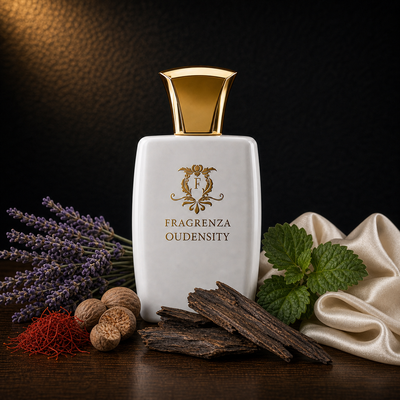
Oud Velluto
takes a different approach. Here the oud is paired with a velvety, plush finish where animalic facets emerge in the drydown rather than the heart. The civet effect in Oud Velluto reads as softer and more diffuse, integrated into the suede-like texture of the base rather than appearing as a distinct accord. This is the modern preference: animalic warmth as part of the composition's architecture rather than as a separate statement.
Adjacent Materials and Distinctions
Civet, musk, ambergris, and castoreum are sometimes grouped together as the animalic family, but the distinctions matter. Musk has a powdery, warm, slightly sweet character that reads as clean despite the animal origins of the natural material. Ambergris is salty, marine, and has an almost transparent presence that lifts other materials. Castoreum is leathery, smoky, slightly birch-tar-like, with the most pronounced animalic edge of the four. Civet sits between musk and castoreum, sharing musk's warmth and castoreum's depth without going fully to either.
Indolic florals such as jasmine and tuberose contain natural indole, which produces a faecal-floral character similar to civet but originating in plant rather than animal sources. Classical perfumery often combined indolic florals with civet because the two materials share molecular vocabulary and amplify each other. Modern compositions sometimes use indolic floral overdoses to produce civet-like effects without requiring any explicit animalic material.
How to Wear Civet Compositions
Civet works best in compositions designed to be worn close to the skin rather than projected at distance. The animalic warmth becomes more apparent as the fragrance settles, which means civet compositions reward extended wear and intimate contexts where the slow development can be experienced fully. They tend to perform less well as broadcast scents in large rooms or outdoor settings, where the volatility differential means the volatile top notes dissipate before the animalic base has fully emerged.
Cooler weather generally suits civet-driven compositions because the slow evaporation lets the base materials develop without being overwhelmed by heat. Skin chemistry also matters more with animalic materials than with most fragrance families, and wearers with warmer skin chemistry will often find civet compositions performing more intensely than expected.
Related Reads
- Musk in Perfumery: civet's structural cousin in the animalic family
- Ambergris in Perfumery: the marine animalic counterpart
- Castoreum in Perfumery: the leathery animalic base material
- Oud in Perfumery: the resinous wood that pairs with civet
- Jasmine in Perfumery: the indolic floral connected to civet
- What is niche perfumery: the tradition that preserved animalic depth
- Oudensity: civet-warm oud architecture in practice
Related reading
If civet fascinates you, keep exploring perfumery's other animalic notes:
Frequently asked questions
Is civet made from a cat?
Not from a true cat. Natural civet is a musky paste taken from the perineal glands of the civet, a small cat-like mammal native to Africa and Asia. Because harvesting it raised serious animal-welfare concerns, modern perfumery almost always uses synthetic civet accords that recreate the effect cruelty-free.
Is civet still used in perfumery today?
Natural civet is largely absent from contemporary mainstream and niche perfumery due to ethical concerns about civet farming. Synthetic civetone and animalic accords built from indolic and paracresyl materials have replaced it in virtually all modern compositions. The synthetic alternatives are remarkably faithful to the olfactory character of the natural material at the dilutions used in finished fragrance.
Does civet smell bad?
At high concentration, natural civet smells genuinely repulsive, with strong faecal and ammonia character. At the trace dilutions used in finished perfumery (typically one tenth of a percent or less), the material produces warmth, depth, and skin-like intimacy that wearers experience as attractive rather than challenging. The transformation through dilution is one of the most striking phenomena in perfumery.
What is the difference between civet and musk?
Both materials sit in the animalic family and share structural similarity at the molecular level (civetone and muscone are both fifteen-carbon macrocyclic ketones). Musk has a cleaner, more powdery, slightly sweet character. Civet adds more depth, more warmth, and a faint feral edge. Classical perfumery often used the two together because their effects are complementary.
Why was civet used in classical perfumery?
Civet added warmth, longevity, and a sense of human presence that no botanical material could replicate. Classical perfumers relied on it to bridge the gap between heavier base notes and skin chemistry, producing the legendary longevity of vintage fragrance. Civet also amplified other materials, particularly indolic florals like jasmine, through shared molecular vocabulary.
Is synthetic civet identical to natural civet?
The principal molecule, civetone, can be synthesised exactly. The synthetic version is chemically identical to the natural extract. However, natural civet contains trace components beyond civetone that give the natural material slightly more complexity. Modern animalic accords compensate by blending synthetic civetone with other captives, and the resulting compositions are functionally equivalent to natural civet for most wearers.
How can I tell if a fragrance contains civet effects?
Look for warmth in the base that reads as skin-like rather than artificial, longevity that exceeds what the listed notes would suggest, and a slight feral or animal edge that adds character without becoming uncomfortable. Civet is rarely listed explicitly on note pyramids, but its presence is often suggested by descriptions referencing animalic, leather, or sensual base profiles.
The Bottom Line
Civet has moved from being a controversial natural material to being one of the most elegantly recreated synthetic effects in modern perfumery. The accord remains essential to compositions that want to evoke warmth, intimacy, and human presence, and the best modern uses integrate civet as a structural element rather than a featured note. Understanding civet helps you understand why classical perfumery developed the way it did, and why so much of the contemporary animalic palette traces back to a single Ethiopian glandular secretion.