

Jasmine in Perfumery: The Queen of Flowers and Her Indolic Throne
Jasmine is one of perfumery's most beloved floral notes, a note every fragrance lover should learn to recognise on skin.
By Julia Moretti 7 min read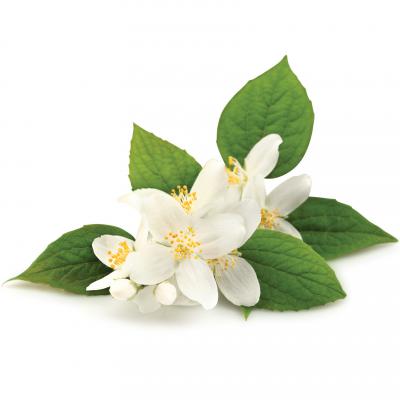
Ask any perfumer to name the single most important natural ingredient in their art form, and the answer will most often be jasmine. Not rose, not sandalwood, not vetiver — jasmine. The flower's extraordinary aromatic complexity, its near-universal presence in the most celebrated fragrances of the past century, and its ability to provide a warmth and humanity to compositions that no synthetic material fully replicates have earned it a position of absolute centrality in the perfumer's palette.
Yet jasmine's dominance comes with a caveat that surprises many people: the note that appears in finished fragrances rarely smells exactly like the living flower. Jasmine absolute — the concentrated extracted material from the flower — has an intensity and an indolic, animalic richness that most people would describe as overwhelming if encountered neat. In the context of a finished composition, this richness is what gives jasmine fragrances their depth and sensuality. Understanding the gap between the flower and the note is part of understanding why jasmine is so important.
The Scent of Jasmine: Beautiful and Slightly Feral
Fresh jasmine flowers have a sweet, intensely floral scent with a green freshness that comes from the volatile aromatic compounds released as the petals open at night. This sweetness is underpinned by a warm, almost milky quality, and there is a faint fruitiness — something peach-adjacent — that appears as the fragrance deepens.
But the most important and most discussed characteristic of jasmine in its concentrated forms is the indolic dimension. Indole is a molecule present naturally in jasmine absolute that is also a component of fecal matter — in small concentrations, it adds depth, animalic warmth, and a slightly fleshy quality; in larger concentrations, it tips toward something distinctly biological. This is the quality that gives jasmine absolute its extraordinary richness and its slightly feral beauty. It is not a clean or innocent scent. It is seductive in the original, somewhat dangerous sense of the word.
Beyond indole, jasmine contains benzyl acetate — responsible for the fresh, fruity-floral brightness — benzyl alcohol, linalool, and cis-jasmone, a compound that contributes the warm, honeyed floral character most closely associated with the flower's classic smell. The interplay of all these materials is what makes jasmine so complex and so difficult to replicate synthetically in its full glory.
Two Species: Grandiflorum and Sambac
The two jasmine species most important in perfumery are Jasminum grandiflorum, the Spanish or Grasse jasmine, and Jasminum sambac, the Arabian or Indian jasmine. Their scent profiles are related but distinct, and they tend to be used for different olfactory purposes.
Grandiflorum is the classic European perfumery jasmine. Its absolute is produced primarily in Grasse in the French Riviera — the historic center of the French perfumery industry — and in India and Egypt. It has a complex, classical floral character: sweet and warm, with a green freshness and a moderate indolic depth. This is the jasmine of Chanel No.5, of Diorissimo, of the great French floral classics.
Sambac, the species venerated in Hindu and Buddhist religious contexts and widely used across South and Southeast Asia, has a distinctly different character. It is more intense, more honeyed, and more exotic — its indolic quality is more pronounced, and there is a tropical richness that grandiflorum does not possess. In modern perfumery, sambac appears frequently in exotic floral compositions and in fragrances drawing on South Asian aromatic traditions.
Extraction: Why Jasmine Requires Special Treatment
Jasmine flowers cannot be steam-distilled. The heat required for distillation destroys the delicate aromatic compounds that give the flower its character, producing something that smells nothing like the original material. Instead, jasmine must be processed through either enfleurage — the ancient, labor-intensive process of pressing flowers into cold fat to absorb their volatile compounds — or solvent extraction, which produces a concrete and then an absolute.
The enfleurage process, which was historically the primary method for extracting jasmine's essence in Grasse, is now largely extinct commercially due to its extraordinary labor requirements. Solvent extraction is the dominant method today. The process begins by placing freshly harvested flowers — harvested at night or very early morning, when the aromatic compounds are at maximum concentration — into hexane or other solvents. The solvent extracts both the aromatic compounds and the waxy materials from the flower, producing the jasmine concrete. This concrete is then washed with alcohol to dissolve the aromatic compounds away from the wax, and the alcohol is evaporated to leave the absolute.
The economics of this process explain why genuine jasmine absolute remains among the most expensive natural materials in perfumery. Thousands of hand-picked flowers are required to produce a single kilogram of absolute, and the quality varies significantly with soil, climate, and the skill of the harvest.
Key Molecules: From Indole to Jasmone
Beyond indole and benzyl acetate, several other molecules in jasmine's aromatic profile deserve specific attention. Methyl jasmonate — technically a plant hormone rather than a strictly aromatic compound in the traditional sense — has a deep, floral, slightly fruity jasmine character and is one of the most widely referenced molecules in plant biology. In perfumery, methyl jasmonate and its derivatives are used to reinforce jasmine accords and to add soft floral depth to compositions across many note families.
Hedione (methyl dihydrojasmonate) is arguably the most important synthetic molecule in modern perfumery. Developed by Firmenich in the 1960s and used to spectacular effect by Edmond Roudnitska in Eau Sauvage (1966), hedione has a transparent, radiant quality that is floral without being heavy — it seems to add diffusion and luminosity to everything around it. It interacts with specific olfactory receptors in ways that standard jasmine molecules do not, and its use has shaped the character of modern fragrance arguably more than any other single synthetic material.
Jasmine in Landmark Fragrances
To list the famous fragrances that feature jasmine as a central note would be to list much of the twentieth century's fragrance canon. Jasmine is a structural element of Chanel No.5, the world's most famous fragrance. It is the heart of Joy by Jean Patou, once called the world's most expensive perfume. It appears in Coco Mademoiselle, where its warm floral depth provides sensual gravity beneath the bright citrus opening.
J'adore by Dior uses jasmine as one of the primary florals in its golden floral bouquet, alongside ylang ylang and rose — an iconic combination that demonstrates jasmine's ability to anchor and deepen a floral composition. Chance by Chanel features jasmine alongside iris and vetiver in an accord that is simultaneously fresh and deeply sensual.
In the niche world, jasmine has inspired some of the most adventurous and demanding fragrances in the contemporary canon. Houses that specialize in pushing the indolic dimension of jasmine to its most challenging extreme have created compositions that polarize wearers — loved deeply by those who respond to their radical honesty, and rejected by those who find the animalic depth too confronting.
How Jasmine Interacts With Other Notes
Jasmine is perhaps the most versatile of all floral materials because it contains within itself such a range of aromatic dimensions — from fresh-green to warm-indolic — that it can be oriented toward almost any compositional direction depending on what it is paired with.
With rose, jasmine creates the classic floral duo that underlies much of the twentieth century's feminine fragrance tradition. The two flowers are complementary in their differences: rose is more obviously beautiful and more structured; jasmine is warmer, more sensual, and more complex. Together they create a floral accord of extraordinary richness.
With sandalwood and other creamy woods, jasmine moves toward an enveloping, skin-warm warmth. With patchouli, it takes on an earthy, slightly dark quality that is the backbone of many classic oriental-florals. With citrus and fresh top notes, jasmine grounds and enriches what would otherwise be a too-ephemeral composition.
Jasmine in Your Fragrance Wardrobe
Jasmine fragrances are among the most rewarding to collect and wear precisely because the note covers such an enormous range. A sheer hedione-driven jasmine soliflore and a dark, indolic sambac oriental both use jasmine as their central material, but they are as different from each other as any two fragrances could be.
For those building a floral fragrance wardrobe, jasmine in some form is indispensable. Start with a classic floral jasmine — something in the Dior or Chanel tradition — and then explore progressively more challenging and unusual jasmine interpretations as your palate develops. The queen of flowers has enough facets to keep even the most experienced fragrance enthusiast exploring for a lifetime.