

Daffodil in Perfumery: The Cool, Green Poetry of Spring's First Bloom
Daffodil is one of perfumery's most beloved floral notes, a note every fragrance lover should learn to recognise on skin.
By Julia Moretti 6 min read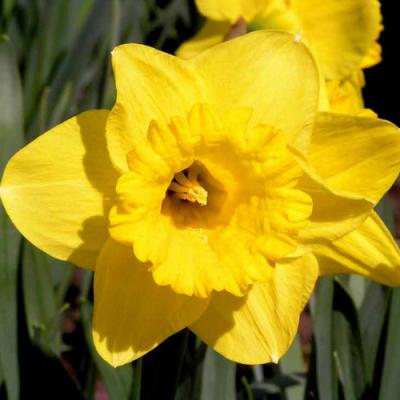
There is a particular quality of light in early spring — cool, clear, and somehow more vivid than summer's heat — that seems inseparable from the smell of daffodils. The flower opens in this light, on cold mornings, and its scent is as much cold air as flower: a green, watery, slightly narcotic fragrance that holds within it the entire mood of a season emerging from winter. In perfumery, daffodil is one of the most evocative — and most technically challenging — florals available.
Narcissus poeticus, the species most closely associated with the daffodil used in perfumery (technically, perfumers often use materials from the broader narcissus genus, to which daffodils belong), produces a scent that is distinctly different from most other florals. It is not sweet in the way rose is sweet, not warm and honeyed like jasmine. Daffodil's sweetness is cool and slightly green, underlaid with a earthy, almost narcotic depth and a faint floral creaminess. It is the smell of spring melancholy: beautiful and slightly melancholic, the kind of beauty that arrives with the knowledge that it cannot last.
The Scent Profile of Daffodil
Raw narcissus absolute — the material extracted from Narcissus poeticus or related species — is one of the most complex natural materials in perfumery. Its aromatic profile encompasses a remarkable range: a cool, green floral top that evokes the smell of crushed green leaves and watery stems; a heart of sweet, honeyed floral warmth with a slightly metallic sharpness; and a base that is earthy, mossy, and faintly animalic.
The earthy, animalic dimension of narcissus is partly due to indole, shared with jasmine, which contributes a warm biological depth beneath the flower's apparent freshness. But narcissus also contains compounds unique to the narcissus family that produce its characteristic slightly narcotic quality — that edge of something almost intoxicating that has given the daffodil family its mythological associations with sleep, death, and the underworld. (The name narcissus, in one etymological theory, connects to the Greek word narke, meaning numbness or sleep — the same root as narcotic.)
The green-watery top character of daffodil connects it to the aquatic and green floral families. Materials like violet leaf, green galbanum, and watery floralcy can all echo aspects of daffodil's profile, and they are frequently used in combination with narcissus absolute to reinforce its green freshness while the absolute provides the earthy floral depth.
The Mythology and Cultural Weight of Narcissus
The narcissus flower carries more mythological freight than almost any other floral material in perfumery. In Greek mythology, Narcissus was the beautiful youth who fell in love with his own reflection and wasted away into a flower. The flower that bears his name grows at the water's edge, looking down — a detail that seems almost too poetically appropriate for a material whose scent is both captivating and somehow self-absorbed, exquisitely beautiful and slightly remote.
The narcissus appears in Homer's Hymn to Demeter as the flower that entraps Persephone when she reaches to pick it, allowing Hades to emerge from the earth and carry her to the underworld. This mythological association of narcissus with seduction, transition, and the boundary between the living world and the realm of the dead has given the flower a symbolic weight that no amount of commercial normalization has fully erased. A narcissus fragrance carries this weight, however lightly.
In European courtly and artistic traditions, daffodils and narcissus flowers were painted, poeticized, and worn with a frequency that speaks to their perennial aesthetic appeal. Wordsworth's famous poem about a field of daffodils captures something of the flower's distinctive visual and sensory impact — the sense of collective, golden presence that a field of daffodils produces, and the particular quality of memory that the encounter creates.
Extraction Challenges and Key Molecules
Narcissus absolute is produced through solvent extraction of the fresh flowers of Narcissus poeticus and related species, primarily in France and India. The material is expensive and relatively rare, partly because the flowers must be processed very quickly after harvest — they deteriorate rapidly and the aromatic compounds are volatile — and partly because the yield of absolute from flowers is modest.
The primary aromatic compounds in narcissus absolute include benzyl acetate and methyl anthranilate — the latter a molecule with a distinctive grape-orange blossom character that contributes to the floral warmth. Indole is present and contributes the animalic depth already discussed. Geraniol, linalool, and various terpene alcohols contribute to the fresh, floral brightness of the top notes.
The distinctly green, watery character of daffodil in fragrance is partly captured through the use of violet leaf absolute — which has a intensely green, cucumber-watery character — and through materials like dihydromyrcenol or other watery-green aroma chemicals. These materials allow perfumers to push daffodil's green freshness to the foreground while the narcissus absolute provides the floral warmth and earthy depth.
Daffodil in Famous Fragrances
Narcissus absolute and daffodil accords appear most prominently in the French floral tradition, particularly in fragrances aimed at capturing the spirit of spring. Because the note's character is genuinely challenging — the earthy, animalic depth of raw narcissus absolute is not immediately accessible — most commercial daffodil fragrances use a reconstructed accord that foregrounds the green, fresh, and floral dimensions while moderating the more demanding aspects of the natural material.
In the niche fragrance world, several houses have built notable compositions around authentic narcissus. These fragrances do not shy away from the material's full complexity — the indolic warmth, the earthy depth, the faint narcotic quality — and they have attracted devoted followings among those who find the conventional floral palette too simple. Pairing narcissus with iris is a particularly successful combination in this vein; both notes share a cool, slightly austere quality that creates a fragrance of unusual elegance.
In mainstream floral fragrance, daffodil appears most often as a supporting note in spring-themed compositions, contributing its distinctive cool-green quality without demanding center stage. Fragrances positioned as fresh, luminous, and spring-appropriate often contain narcissus elements as part of a broader green-floral accord.
Note Interactions
Daffodil's green, watery freshness makes it a natural partner for other spring florals and for fresh, transparent materials. With lily of the valley — the quintessential spring floral, dewy and green — daffodil creates a composition that captures the full mood of early spring with remarkable fidelity. The green freshness of both materials reinforces each other, while lily of the valley's sweet floral clarity provides a counterpoint to daffodil's earthier depth.
With iris, daffodil moves into more sophisticated territory. Both notes share a cool, mineral quality that resists easy classification, and together they create an accord of quiet, complex elegance. The iris's powdery dimension moderates daffodil's watery freshness; daffodil's green aliveness prevents iris from becoming too still or too remote.
With vetiver and other earthy, rooty materials, daffodil reveals its own earthy dimension, and the combination moves toward something darker and more complex: the smell of spring in a garden where the earth has just been turned, where fresh growth and decay are simultaneously present.
Daffodil in the Fragrance Wardrobe
Daffodil fragrances occupy a specific seasonal and emotional niche. They are quintessentially spring fragrances — appropriate from the first cold days when bulbs begin to push through frost-hardened ground through the full flowering of April. They are also morning fragrances, more suited to the cool clarity of early day than to the warm intimacy of evening.
For those who find most mainstream floral fragrances too sweet or too obvious, daffodil fragrances offer a genuinely different experience — something with the delicacy of a floral but the complexity and depth of a much more challenging composition. They are fragrances that require the wearer to engage with them, to notice the development from cool green opening to earthy floral heart, to appreciate the slight strangeness at the center of their beauty.
These are not fragrances for every occasion. But worn in the right context — a spring morning, a peaceful walk, a moment that calls for beauty without declaration — they are among the most quietly extraordinary things perfumery has to offer.