Lavender in Perfumery: The Humble Herb That Rules the Fragrance World
Lavender is a fresh, herbaceous note prized by perfumers, a note every fragrance lover should learn to recognise on skin.
By Julia Moretti 7 min read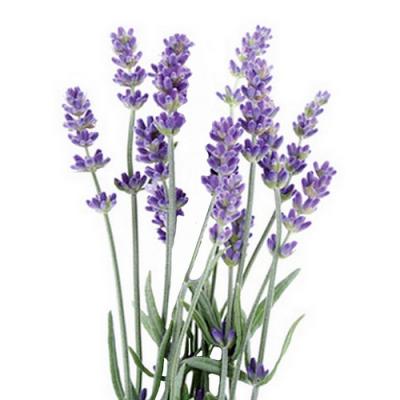
No ingredient in all of perfumery appears in more fragrances than lavender. This may surprise those who think of it as a modest, domestic herb — the thing that goes in drawer sachets and pillow sprays. But lavender's ubiquity in serious perfumery is not an accident or a lowest-common-denominator concession to popular taste. It reflects the note's genuine and extraordinary versatility: lavender can be fresh or warm, simple or complex, unmistakably itself or almost invisible as a structural support. It is the workhorse of the perfumer's palette, the note that does more different jobs better than anything else available.
Yet lavender's omnipresence has also made it one of the most underappreciated notes among fragrance enthusiasts. Because it appears everywhere, it is easy to take for granted. Because it has been deployed in everything from luxury niche compositions to supermarket household cleaners, its associations are mixed. To truly appreciate lavender in perfumery requires setting aside these associations and encountering the material itself — the essential oil of Lavandula angustifolia from the high-altitude fields of Provence or the mountains of Bulgaria, with all its complexity and beauty intact.
The Scent of Lavender: More Than You Remember
Most people think they know what lavender smells like. They have encountered it in soaps, detergents, and relaxation products, and they carry a mental imprint of clean, slightly floral, slightly medicinal herbal sweetness. This is lavender, but it is lavender impoverished — a simplified version of a material of genuine complexity.
True lavender essential oil from high-altitude Lavandula angustifolia — the finest quality, harvested from plants growing at 1,000 meters or above in the southern French Alps — is something else entirely. It has a brightness and a sweetness that are genuinely floral, not merely herbal. There is a slight fruitiness, almost reminiscent of very ripe plums or blue fruit. The herbal dimension is present but not dominant; it is one layer in a more complex picture that also includes warmth, a slight balsamic depth, and an almost powdery quality in the drydown. This is why lavender can function as both a fresh top note and a warm base modifier, why it belongs comfortably in both cologne-family freshness and in orientals and woodies.
The quality gradient within lavender is steep. Fine Lavandula angustifolia essential oil from specific Provencal production is among the most valued naturals in niche perfumery. Lavandin — a hybrid of Lavandula angustifolia and Lavandula latifolia — is the workhorse of commercial perfumery, cheaper, more abundant, and with a sharper, more camphoraceous character that suits functional contexts but lacks the refinement of true lavender.
The Provence Heritage
Lavender cultivation in Provence is both an agricultural tradition and a visual spectacle of global reputation. The fields of Valensole and the Luberon, flowering in July, produce images that have become iconic worldwide — rows of deep purple against golden stone and blue sky, the air heavy with scent. But behind this aesthetic appeal lies a serious agricultural and economic tradition that has shaped both the region and the global fragrance industry.
The high-altitude fields of the Alpes-de-Haute-Provence produce the finest essential oil, classified as fine lavender or true lavender to distinguish it from lavandin. This oil has been collected and traded since at least the sixteenth century, and the development of the Grasse perfumery industry in the seventeenth and eighteenth centuries was intimately connected to the lavender fields of the surrounding region. For centuries, Provence was both a center of fine ingredient production and a center of perfumery manufacturing, and lavender was the thread that connected the two.
The twentieth century brought significant pressure on traditional Provencal lavender cultivation. Lavandin — easier to grow, higher-yielding, less frost-sensitive — displaced much traditional lavender cultivation. In recent decades, a recovery has been underway, driven by the premium pricing commanded by authentic fine lavender essential oil in the niche and natural perfumery markets. The survival of traditional Provencal lavender farming is now bound up with the growth of demand for high-quality natural materials in fragrance.
Key Molecules: Linalool, Linalyl Acetate, and Beyond
The primary aromatic compounds in fine lavender essential oil are linalool and linalyl acetate, which together typically comprise 50 to 80 percent of the oil by volume. Linalool is a terpene alcohol with a fresh, floral, slightly spicy character found in over 200 plants; its presence in lavender contributes the note's smooth, slightly floral warmth. Linalyl acetate is an ester with a bright, fruity-floral character that is primarily responsible for lavender's distinctive sweetness and freshness.
Beta-ocimene contributes a fresh, slightly green character; camphene and terpinene add the herbal, slightly medicinal dimension that gives lavender its depth; lavandulyl acetate is a compound specific to Lavandula angustifolia that contributes to its distinctive quality and is used as a chemical marker for authenticity. The full aromatic picture is a dynamic interplay of these materials, and the quality of a lavender essential oil can be assessed by the balance and harmony of these components.
In synthetic perfumery, linalool and linalyl acetate are available as isolated aroma chemicals and are used extensively across the industry. Their presence at elevated levels in a fragrance formula is a reliable way to create lavender-adjacent effects, and they appear in countless fresh, clean, and aromatic compositions as structural elements even when lavender is not explicitly featured.
Lavender's Central Role in the Fougere
The fougère accord — one of perfumery's most important and enduring structure types — is built on a foundation of lavender. The classical fougère formula, established by Houbigant's Fougere Royale in 1882, combines lavender with oakmoss and coumarin to create an accord that is simultaneously fresh, herbal, earthy, and sweet. This structure became the template for over a century of men's fragrance, and lavender's role within it is foundational.
The fougère family includes some of the most recognizable fragrances ever created — from classic powerhouses of the 1970s and 1980s to the clean, fresh masculines of the 1990s and the aromatic-woody masculines of today. In each of these, lavender provides the essential herbal-fresh character that defines the genre. Fragrances like Bleu de Chanel and Dior Sauvage both carry lavender's DNA, even as they extend and modernize the fougère template with contemporary materials and structures.
Lavender in Famous Fragrances Across Genders
While lavender is most strongly associated with the men's fougère tradition, it appears throughout the fragrance landscape regardless of gender positioning. In feminine compositions, lavender contributes a clean, slightly herbal freshness that can lighten florals and provide a naturalistic quality distinct from the more overtly synthetic freshness of some clean musks.
Parfums de Marly Layton features lavender prominently as part of a sophisticated aromatic-woody structure, demonstrating how the note can contribute to genuinely luxurious and complex compositions when deployed with skill. The lavender provides freshness and aromatic complexity in the heart before the vanilla-sandalwood base asserts its warmth.
In the niche fragrance world, lavender has been subjected to every imaginable reinterpretation: as a cool, slightly astringent almost unisex note; as a rich, warm, almost oriental material; as a green and naturalistic botanical element; and as the central material in minimalist soliflores that explore the full complexity of the essential oil in concentrated form.
Note Interactions
Lavender's versatility in combination is probably the most important thing about it. It is one of the few materials in perfumery that integrates smoothly with almost every other note family.
With citrus — particularly bergamot — lavender creates the classic fresh aromatic opening of a thousand men's colognes. The combination is so natural that the two notes seem made for each other, sharing a quality of bright, clean freshness that is instantly appealing.
With vanilla and tonka bean, lavender moves into a warm, comforting oriental register. This combination — fresh lavender over sweet vanilla base — is one of the most commercially successful templates in feminine fragrance, capturing lavender's warmth while anchoring it in something deeply comforting.
With vetiver and other earthy, rooty materials, lavender creates a dry, slightly earthy aromatic accord of real sophistication. The two materials share a quality of restrained elegance that makes their combination particularly suited to serious, contemplative fragrance contexts.
Lavender in the Fragrance Wardrobe
Every serious fragrance wardrobe benefits from at least one lavender-centered composition that showcases the material in something close to its full complexity. This does not have to be a traditional fougère — contemporary lavender fragrances come in every imaginable style. But the experience of wearing lavender as a primary note, rather than as an invisible structural element, reveals why perfumers continue to return to this humble purple flower as a source of inspiration after more than a century of intensive use.
Lavender fragrances are appropriate for every context: daytime or evening, professional or personal, warm weather or cold. This universality is, in the end, lavender's greatest gift to perfumery — not just that it smells beautiful, but that it smells beautiful everywhere, always, in every combination, without ever exhausting its possibilities.