

Galbanum in Perfumery: The Original Green Note
Galbanum is a leafy green note prized for its cool freshness, a note every fragrance lover should learn to recognise on skin.
By Julia Moretti 5 min read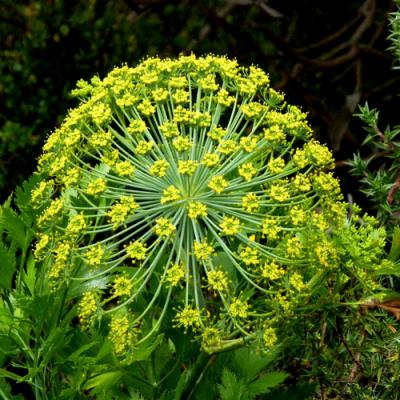
The Fiercest Green in the Perfumer's Palette
If you want to understand the concept of a green note in perfumery, start with galbanum. Nothing in the perfumer's palette is quite so assertively, almost aggressively green as this ancient resin. Where violet leaf is cold and watery, where cut grass is innocent and pastoral, galbanum is something fiercer: intensely, piercingly green, slightly bitter, with a woody-resinous depth that anchors the sharpness and prevents it from being merely one-dimensional. It is an ingredient that demands attention, rewards courage, and appears at the foundation of some of the most admired fragrances in history.
The smell of galbanum essential oil is distinctive and immediately striking: sharp, green, bitter-resinous, with a slightly turpentine-like edge and a musky-woody undertone that emerges as the initial sharpness subsides. At high concentrations it can be almost overwhelming — piercingly herbal, like crushing vast quantities of green stems between your palms. At the levels used in fine fragrance, it transforms into something clean, alive, and profoundly evocative of wild, untamed greenery.
Botanical Origins and Historical Use
Galbanum is the oleoresin obtained from the stems and roots of Ferula galbaniflua and related Ferula species, large umbelliferous plants native to Iran and Central Asia. The resin exudes naturally from cuts in the plant's stem and has been collected and used since antiquity. It appears in the Hebrew Bible as one of the ingredients of the holy incense described in Exodus — a history of sacred use spanning more than three thousand years. The ancient Egyptians and Greeks both valued it for medicinal and aromatic purposes, and it was traded along the spice routes that connected the ancient world.
In classical medicine, galbanum was used as an antispasmodic, an expectorant, and a wound-healing agent. Its inclusion in ancient incense compositions was deliberate: its sharp green note would have provided a striking contrast to the sweeter, warmer resins like frankincense and myrrh, adding complexity and lifting the blend in a way that modern perfumers would recognise as exactly what a top-note green material is supposed to do.
Today, galbanum essential oil and resin absolute are primarily produced in Iran, with additional production in Afghanistan and the surrounding region. The essential oil is obtained by steam-distillation of the resin; the absolute by solvent extraction, yielding a darker, more complex material with greater depth and fixation than the oil.
Key Molecules: The Chemistry of Fierce Green
The defining aromatic character of galbanum essential oil is primarily determined by two monoterpene hydrocarbons: beta-pinene and delta-3-carene. Beta-pinene contributes a fresh, turpentine-like, slightly piney quality; delta-3-carene adds a citrusy-sweet dimension that provides relief from the oil's sharper facets. Together, these terpenes create the characteristic knife-edge green quality that perfumers prize.
Pyrazines — particularly alkyl-substituted pyrazines — are also important contributors to galbanum's character. These nitrogen-containing heterocyclic compounds appear in trace quantities in the oil but contribute disproportionately to its intensely green, almost vegetal character. Similar pyrazines are responsible for the green, slightly earthy notes in raw coffee, green peppers, and freshly cut grass, suggesting a common molecular language for green and fresh in olfactory experience.
The heavier components of galbanum resin — sesquiterpenes, diterpenes, and resinous acids — provide depth, fixation, and the slightly musky-woody drydown that gives the ingredient its structural backbone. Without these heavier components, galbanum would be merely sharp and brief; with them, it achieves the complexity and persistence that makes it so valuable in fine fragrance construction.
Galbanum and the Green Fragrance Revolution
Galbanum's role in the history of modern perfumery is pivotal, centred on a single magnificent composition: Vent Vert (Green Wind) by Balmain, created by Germaine Cellier in 1945 and reformulated in 1947. This fragrance placed galbanum front and centre, using its fierce green intensity to create an opening of extraordinary freshness and clarity that had never been heard in perfumery before. Vent Vert effectively invented the modern green fragrance category and demonstrated to the industry that galbanum's challenging character could be genuinely beautiful.
Chanel No. 19 — created by Henri Robert in 1970 — builds its magnificent opening on galbanum, supported by violet leaf and iris. The combination creates a cold, green, slightly metallic quality of such precision and self-possession that it remains without true peer in the green floral category. Galbanum is what gives No. 19 its severe, aristocratic character.
In contemporary perfumery, galbanum has suffered somewhat from the dominance of sweet, accessible fragrance profiles, but it remains a vital ingredient for perfumers working in the green-chypre tradition. Various reformulations driven by IFRA restrictions on oakmoss have affected many classic green compositions, but galbanum itself has lost none of its power or relevance.
Famous Fragrances Featuring Galbanum
Beyond Vent Vert and No. 19, galbanum appears in numerous significant fragrances. Givenchy's Ysatis, Chloe's original 1975 formulation, various of Guerlain's classic feminines, and many of the great green chypres of the twentieth century all owe part of their character to galbanum's fierce green note. In the current niche landscape, Chanel, Dior, and various artisanal perfumers continue to use galbanum as a foundational ingredient in green and aromatic compositions.
Coco Mademoiselle by Chanel achieves a fresh, modern quality in its opening that reflects the house's long relationship with green materials including galbanum. Among niche fragrances from houses working in the classical tradition, galbanum appears regularly as the ingredient of choice for perfumers seeking to connect their work to the great green compositions of the past.
Note Interactions and Wardrobe Context
Galbanum's most celebrated relationships are with iris, violet leaf, and oakmoss — the classic green chypre triumvirate. Iris softens galbanum's ferocity with powdery, earthy depth; violet leaf amplifies its cold-green quality with its own watery sharpness; and oakmoss (or its permitted replacements) provides the dark, earthy foundation that gives the green composition its structural weight. Together these four ingredients have produced some of the most admired fragrances in the canon.
With rose, galbanum creates a green rose accord that is simultaneously romantic and stern — the flower's warmth set against the resin's cold sharpness in a combination that avoids sweetness while remaining genuinely beautiful. With bergamot, galbanum achieves a classic green-fresh opening that anchors many of the finest contemporary aromatic compositions.
Galbanum fragrances are most at home in cool weather and professional or formal contexts where their sharp, self-possessed character is an asset. They are not crowd-pleasers in the simple sense, but among fragrance cognoscenti they command enormous respect. A well-chosen galbanum composition occupies the role of the quietly confident classic in the wardrobe — the scent that does not need to announce itself because its quality is self-evident to anyone who pays attention.