

Lime in Perfumery: The Sharper Citrus
Lime is one of perfumery's brightest top notes. Learn how perfumers use it, what it smells like on skin, and the fragrances that wear it best.
By Julia Moretti 6 min read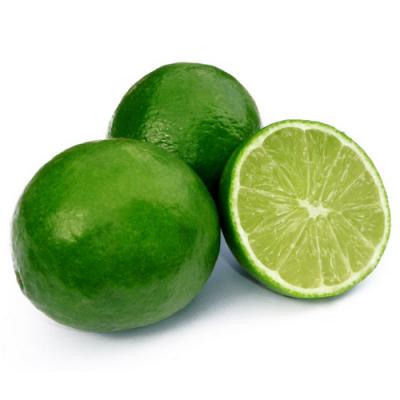
The Distinctive Bite of Lime
Among the citrus family that forms the lifeblood of perfumery's top notes, lime stands apart through sheer aromatic boldness. Where lemon offers bright, clean acidity and bergamot brings a refined bitter-floral elegance, lime asserts itself with a sharper, more aromatic character — a green, almost resinous tartness that fizzes on the nose and leaves a distinctly zingy impression. It is the most angular of the familiar citrus notes, less accommodating than its relatives but correspondingly more expressive and individual. A perfume with lime at its heart announces itself with a particular kind of self-confidence.
The smell of fresh lime peel is complex even at the level of casual perception. There is the expected citric acidity, certainly, but also a distinctly herbal, almost pine-like facet that distinguishes lime from lemon. This green, resinous quality comes from the molecule alpha-terpineol and related terpenic compounds present in the peel. Further, lime carries an almost spicy warmth beneath its brightness — a quality that becomes particularly apparent when the peel is heated or macerated, and which explains why lime integrates so naturally with ginger, pepper, and other spice notes. The overall impression is of vivid, precise aliveness — lime smells energetic in a way that few other ingredients can match.
Lime in Perfumery History
Citrus notes have been central to Western perfumery since at least the seventeenth century, when Eau de Cologne — the foundational template for the fresh, citrus-forward fragrance — first appeared in Cologne, Germany. The original Eau de Cologne formulations relied heavily on bergamot, lemon, and neroli, with lime playing a minor supporting role. It was in the fougere and chypre traditions of the nineteenth and early twentieth centuries that lime began to establish itself as a note of individual character rather than merely a component of the generic citrus accord.
The development of the so-called tropical or Caribbean style of fragrance in the late twentieth century gave lime new prominence. As Western perfumery sought to capture the smells of heat, beaches, and exotic locales, lime — associated with Caribbean cuisine and rum culture, with sunscreen and salt spray — became an essential element of the vocabulary. The contemporary aquatic and marine fragrance category, which emerged in the early 1990s, frequently deploys lime to add a tartly realistic coastal brightness. Simultaneously, lime found new territory in the growing market for complex aromatic colognes aimed at men, where its assertive character proved particularly well suited to the genre's demand for clarity and presence.
Extraction and Key Molecules
Lime essential oil is extracted from the fruit of Citrus aurantifolia, the common or Persian lime, by cold-pressing the peel. This cold-pressed oil is intensely aromatic, rich in limonene — the key molecule responsible for the shared citrus character of all citrus fruits — but distinctive for its elevated content of citral, a compound that gives lime its particularly sharp, almost aldehydic brightness. The cold-pressed oil also contains gamma-terpinene, which contributes the herbal and slightly piney facets that separate lime from lemon.
A second form of lime oil, steam-distilled lime oil, has a markedly different character. The distillation process removes the photosensitizing furanocoumarins present in cold-pressed peel oil (these compounds can cause skin reactions in sunlight), but in doing so also drives off the freshest, most volatile aromatic compounds, leaving behind a cooked, slightly jammy lime character that lacks the vivid sharpness of the cold-pressed version. Most perfumers working with fine fragrance prefer cold-pressed lime oil for its superior freshness, while steam-distilled lime is more common in products that will be worn in sunlight.
Synthetic lime aromatic chemicals are also widely used in perfumery, both to augment the performance of natural lime oil — which is notoriously volatile and short-lived on skin — and to create lime impressions independently. Citral, limonene, and linalool are all available as isolated or synthesized materials and are frequently used in this way. The challenge of lime's poor tenacity on skin is one that perfumers have wrestled with throughout the modern era, and various encapsulation technologies and fixative strategies have been developed to extend its presence.
Famous Fragrances Featuring Lime
Lime appears in an enormous range of fragrances across all categories, but certain compositions have made it particularly central to their identity. Acqua di Gio by Giorgio Armani, one of the best-selling fragrances of the past thirty years, deploys lime as a key element of its iconic marine-citrus opening. Issey Miyake's L'Eau d'Issey uses a lime-inflected opening to introduce its famous watery violet and clean musk structure. Davidoff's Cool Water, another foundational aquatic, relies on lime and lavender to create its sense of fresh masculinity.
In the niche world, Jo Malone London has built an entire identity around the simplicity and directness of citrus notes, and lime appears prominently in several of their compositions, most famously in Lime Basil & Mandarin, which pairs lime's tartness with the anisic sweetness of basil and the approachable warmth of mandarin. For those interested in exploring the broader citrus family and how different citrus notes relate to one another in perfumery, our guide to bergamot and guide to lemon in perfumery offer valuable complementary perspectives.
Several contemporary masculine fragrances have used lime to striking effect in combination with woody bases. The combination of lime's tartness with the smooth, sensual depth of Bleu de Chanel's cedar and vetiver architecture demonstrates how citrus sharpness can animate and elevate an otherwise potentially heavy composition. Similarly, Dior Sauvage's fresh-spicy opening owes a structural debt to lime-adjacent citrus materials that establish its characteristic sun-baked freshness before the ambroxan base takes hold.
Note Interactions: Lime's Aromatic Partnerships
Lime's aromatic profile makes it one of the more versatile top notes in a perfumer's toolkit, provided its specific character is understood and respected. Its most natural affinities are with other citrus notes, where it adds a sharp edge and green brightness to what might otherwise be soft citrus blends. With bergamot it creates a more complex, slightly bitter-tart accord that works beautifully in sophisticated colognes. With mandarin it provides tartness to balance the red fruit sweetness of that note. With grapefruit it intensifies the overall impression of fresh, clean bitterness.
Beyond the citrus family, lime finds particularly successful partnerships with aromatic herbs. Basil, as the Jo Malone reference demonstrates, complements lime's green-herbal facet while adding an anisic warmth that prevents the combination from becoming too austere. Ginger pairs brilliantly with lime, their shared sharpness and slight spicy warmth creating a particularly vivid and energizing accord. Cardamom adds an aromatic complexity that elevates lime from simple brightness to genuine sophistication.
In base note territory, lime integrates surprisingly well with vetiver and sandalwood, which provide the earthy depth and creaminess respectively that anchor lime's fleeting brightness and allow the overall composition to evolve gracefully over time. Amber and musks give lime compositions staying power, preventing them from feeling too simple or short-lived. The most sophisticated lime fragrances are those that use the note as a departure point rather than a destination — beginning with lime's sharp energy and then revealing increasing warmth and complexity as the fragrance develops.
Lime in the Fragrance Wardrobe
Fragrances built around lime tend to occupy the warmer months and active occasions most naturally. Their freshness and energy make them ideal for warm-weather daytime wear — at the beach, in the office on a hot day, or in any context where you want to smell alert, clean, and vivid without making a heavy statement. Lime-led colognes are particularly valuable for situations where fragrance presence is welcome but projection must remain considerate: the note's relative brevity means it rarely becomes overwhelming.
Within the broader men's fragrance world, lime-accented compositions have historically been dominant in the fresh and aquatic categories, functioning as the olfactory equivalent of casual summer dress. But the note's range is wider than this casual association implies. The most compelling lime fragrances demonstrate how citrus sharpness, properly supported by interesting base materials, can carry genuine sophistication and longevity. For adventurous wearers, lime-forward fragrances also layer beautifully with warmer wood or resin-based scents: apply a lime cologne first, then layer a light mist of something richer to create a fresh-yet-complex composite that performs excellently through the evening.