

Lotus in Perfumery: The Sacred Flower's Cool, Aquatic Beauty
Lotus sits as a mineral-bright open: cool, salt-cleaned, weightless, fading evenly across a clear technical base. A reference for aquatic compositions.
By Julia Moretti 7 min read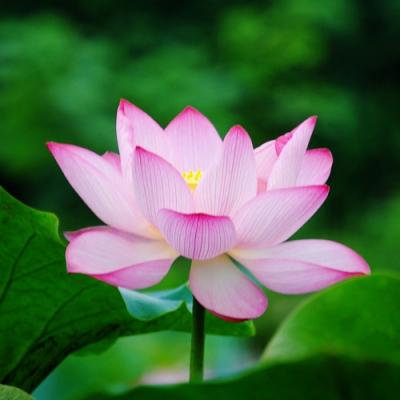
The Lotus: A Flower Between Two Worlds
The lotus occupies a singular position in both cultural history and the fragrance palette. Rising from muddy water to bloom in perfect purity above the surface, it has been a symbol of spiritual transcendence across Asian, Egyptian, and Buddhist traditions for thousands of years. In perfumery, this symbolism translates remarkably well into something olfactory: the lotus note is clean and serene, emerging from complexity and murkiness into something crystalline and beautiful, possessed of a quality of quiet elevation that distinguishes it from almost every other floral note in the perfumer's organ.
Lotus is not a simple ingredient. The flower family encompasses hundreds of species, from the sacred pink and white Nelumbo lotuses of Asia to the blue lotus of ancient Egypt. Each species has its own aromatic character, and the lotus note in perfumery tends to draw selectively from this family to create an impression that is simultaneously specific and evocative. What emerges from a well-made lotus accord is one of the most distinctive and quietly compelling floral notes in contemporary fragrance.
What Does Lotus Smell Like?
The lotus note in fragrance is defined above all by its quality of cool, watery freshness. Unlike the warm, rich florals — jasmine, tuberose, gardenia — lotus is cool and transparent, with a quality of aquatic cleanness that feels closer to a clear pond on a summer morning than to a hothouse flower. This freshness is its most immediately recognisable characteristic and its most useful quality in fragrance construction.
Beneath the coolness and aquatic freshness there is a genuinely floral dimension — delicate, slightly powdery, with a green undertone that recalls the lotus's broad leaves and stems as much as its petals. The flower's natural fragrance has been described as a combination of clean water, light florals, and a faint, slightly sweet greenness — an impression of a serene, still body of water in full bloom on a warm day.
Some lotus accords lean more toward their aquatic qualities, emphasising the cool, watery freshness and minimising the floral dimension. Others emphasise the flower's powdery, slightly sweet character, creating something closer to a traditional white floral. The finest lotus notes balance both dimensions, capturing the flower's fundamental quality of serene, cool beauty.
Extracting the Lotus: Natural and Synthetic
Lotus absolute is available, though it is one of the more expensive and rare natural fragrance materials. The fragrance of the lotus flower is delicate and highly volatile, making extraction challenging and yields relatively low. Both Nelumbo nucifera (the sacred pink lotus of Asia) and Nymphaea caerulea (the blue lotus of Egypt) have been used as sources of natural extract, with significantly different olfactory profiles — the pink lotus tending toward a rosy, clean sweetness, the blue lotus toward a more narcotic, slightly wine-like depth.
In practice, most fragrance applications use either highly diluted natural absolute or, more commonly, synthetic lotus accords constructed from aquatic materials, clean white floral molecules, and green notes. The key synthetic materials in lotus accords typically include some of the same ozonic compounds used in marine fragrances, combined with clean white floral materials and perhaps a touch of the cucumber-watery molecules that evoke the flower's aquatic habitat.
The result can be extraordinarily faithful to the actual flower while being significantly more practical and affordable than natural extraction. In a category where consistency, stability, and cost efficiency matter, synthetic lotus accords have largely displaced the natural absolute in mainstream fine fragrance.
Lotus in the History of Aquatic Fragrance
Lotus's natural association with water made it a natural ingredient of choice when the aquatic fragrance movement emerged in the early 1990s. Davidoff Cool Water (1988) and its successors established an aesthetic of clean, ozonic freshness that became one of the dominant fragrance families of the decade, and lotus was a perfect companion to the synthetic marine materials — Calone, Ambroxide, and related molecules — that defined the aquatic style.
Where purely ozonic aquatics could sometimes feel cold, synthetic, or lacking in character, lotus brought warmth, natural beauty, and a sense of something living and organic to the marine freshness. The combination of aquatic materials and lotus created a new sub-style within the broader aquatic family — something sometimes called the aquatic floral, defined by clean freshness combined with genuine floral beauty.
This aquatic floral aesthetic has proven remarkably durable. It remains a staple of the mainstream fragrance market in both men's and women's categories, offering the kind of clean, approachable freshness that never entirely goes out of style. Explore the broader floral fragrance collection to appreciate how lotus has shaped this enduring aesthetic.
Famous Fragrances That Feature Lotus
Lotus appears prominently in a wide range of fragrances across market levels and style categories. Shiseido Zen, Gucci Rush 2, and Prada Infusion d'Iris have all made effective use of lotus notes at various points in their development. In mainstream designer fragrance, lotus appears most often in fresh, clean compositions where its aquatic floral quality adds a note of elegance and specificity.
The note has also been explored effectively in the niche fragrance world, where its spiritual and cultural associations give it particular resonance in compositions inspired by meditation, Eastern philosophy, or the aesthetics of stillness and serenity. Several niche houses have built entire fragrance concepts around the lotus, using its coolness and purity as a starting point for more extended olfactory meditations.
In accessible designer fragrance, the lotus note contributes to the clean, watery florals of fragrances like Viktor&Rolf Flowerbomb, where a lotus facet within the complex floral heart adds a cool, transparent quality that prevents the composition from becoming too heavy. Similarly, in Lady Million by Paco Rabanne, white floral accords with aquatic dimensions draw on lotus's characteristic freshness.
How Lotus Interacts With Other Notes
Lotus's most effective fragrance pairings tend to emphasise its core qualities of coolness, freshness, and serene transparency. With aquatic notes and marine materials, lotus adds a natural, living dimension to what can otherwise be a purely synthetic impression — grounding the ozonic freshness in something recognisably botanical.
With white florals such as lily and jasmine, lotus provides a cooling, transparent element that prevents the composition from becoming too warm or heavy. Its presence in a white floral accord acts like a breath of fresh air — keeping the flowers feeling alive and natural rather than extracted and concentrated. With rose, lotus's coolness creates a beautiful counterpoint to rose's warm, honeyed depth, producing a fresh, dewy rose impression of great modernity.
Lotus interacts particularly well with clean, skin-close musks. The combination of lotus's cool florality and a white musk base creates a fragrance impression that is clean, fresh, and intimately skin-like — the smell of a person who is both serene and beautiful. This combination has become a template for a certain kind of sophisticated, understated feminine fragrance.
In contrast to warmer, resinous ingredients, lotus's cooling effect is especially pronounced and useful. Placed above a warm amber or sandalwood base, lotus creates a beautiful contrast between warmth and coolness that gives a fragrance exceptional depth and movement. The warm base radiates upward while the cool lotus floats above it, creating a sense of constant interplay between the two registers.
Lotus and Spirituality: The Note That Transcends
It would be impossible to discuss lotus in perfumery without acknowledging the depth of its cultural and spiritual associations. In Hinduism and Buddhism, the lotus is the flower of enlightenment — rising from muddy water without stain, blooming in perfect purity, a symbol of the soul's capacity to transcend its circumstances. In ancient Egypt, the lotus was associated with the sun god Ra and with creation itself, emerging from the primordial waters at the beginning of time.
These associations are not lost on perfumers or on fragrance consumers. A lotus note in a fragrance carries an implicit suggestion of purity, serenity, and elevation — qualities that resonate deeply in an era when mindfulness and spiritual wellbeing are central cultural concerns. Fragrances built around lotus often have a meditative quality, a sense of stillness and calm that distinguishes them from the more assertive, hedonistic registers of many mainstream compositions.
This spiritual dimension makes lotus particularly effective in fragrance collections marketed around themes of wellness, yoga, meditation, or simply the desire for quiet beauty in a noisy world. It is a note that carries meaning beyond its olfactory character, enriching the wearing experience with layers of cultural resonance that add to its appeal.
Wearing Lotus: Serenity in Fragrance Form
Lotus fragrances suit contexts where calm and clarity are desired — they are natural choices for yoga practice, meditation, professional environments, and any situation where an understated, fresh presence is more appropriate than assertive projection. Their cool, transparent quality makes them excellent warm-weather fragrances, feeling effortlessly comfortable in heat and humidity where richer fragrances can become overwhelming.
For fragrance enthusiasts who value refinement over spectacle, lotus-centred compositions offer something genuinely distinctive. They do not shout; they whisper. They do not demand attention; they reward it. In a fragrance landscape full of loudness and excess, the quiet beauty of lotus represents a particularly considered form of olfactory expression — one that becomes more compelling the more attention you bring to it.