
Opopanax in Perfumery: The Honeyed Resin at the Heart of Classical Orientals
Commiphora erythraea (sweet myrrh) and the Mediterranean Opopanax chironium supply furanoid sesquiterpenes whose warm-honeyed depth distinguishes great orientals from merely heavy ones.
By The Fragrenza Team 7 min read
The honeyed resin at the heart of classical orientals
Opopanax is one of perfumery’s oldest and most enduring resinous materials. Sweet, slightly balsamic, faintly honeyed, with a warm-resinous depth that smells like ancient temple incense and golden Mediterranean afternoons, opopanax has anchored classical oriental compositions for thousands of years. The material bridges between sweet-amber and dry-resin character, contributing the warm-honeyed depth that distinguishes a great oriental from merely a heavy one.
This is the guide to opopanax as a perfumery material. What opopanax actually is in fine fragrance, the chemistry of the warm-resinous-honeyed character, the cultural history of the note across millennia, the famous fragrances that put opopanax to work, the Fragrenza compositions that use the resinous register, and how to think about the material in your own wardrobe.
What opopanax is in perfumery
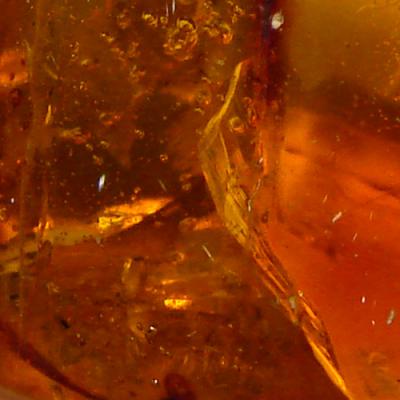
Opopanax in fine perfumery comes from the dried resin of Commiphora erythraea (sweet myrrh, related to but distinct from common myrrh) and occasionally from Opopanax chironium, a Mediterranean herbaceous plant. The resins yield essential oil through steam distillation and absolute through solvent extraction, both of which carry the warm, slightly sweet, balsamic-honeyed character that defines the material.
The aromatic profile is built around several molecular families. Sesquiterpenes contribute the warm-resinous body. Furanoid sesquiterpenes deliver the slightly sweet, slightly balsamic-honeyed character. Trace aldehydes and esters add the bright honeyed-floral facet that distinguishes opopanax from purer myrrh or labdanum. The combination produces the distinctive opopanax character that classical perfumery has used for centuries.
Opopanax sits between the deeper, more medicinal myrrh and the sweeter, more honeyed labdanum. The material is sometimes called “sweet myrrh” because of this position, and many compositions use opopanax and myrrh together to deliver a fuller resinous structure.
What opopanax actually smells like
Opopanax in fine fragrance reads as a warm, slightly sweet, balsamic-honeyed resin with a faintly powdery undertone and a quiet aromatic depth. Compared to other resins: less medicinal than myrrh, less honeyed than labdanum, less smoky than frankincense, more golden-warm than benzoin. The character carries the smell of ancient incense, golden honey, and warm-resinous Mediterranean perfumery.
The wear on skin reads warm, golden, slightly powdery, with a quiet sweetness that distinguishes opopanax from purer resin or amber materials. Opopanax compositions tend to project moderately and develop slowly through the wear. The full opopanax character usually arrives one to two hours into the wear and persists through the dry-down. The material is among perfumery’s great fixatives — the heavy resinous molecules slow the evaporation of lighter materials and extend the wear of an entire composition.
Cultural and compositional history
Opopanax has one of perfumery’s longest histories. The resin was prized in ancient Egyptian temple incense, used in Greek and Roman aromatic preparations, and traded along the spice routes from the Horn of Africa to the Mediterranean. Medieval Arabic perfumery refined the material into compositions of remarkable complexity. The opopanax tradition extended through European Renaissance perfumery and into the great oriental compositions of the early twentieth century.
Modern fine fragrance uses opopanax structurally in countless oriental compositions. Coty L’Origan (1905) placed opopanax at the structural heart of one of the founding oriental feminine compositions. Guerlain Shalimar (1925) used opopanax alongside vanilla, civet, and amber in the canonical oriental structure. Caron N’Aimez Que Moi (1916) used opopanax in a violet-rose oriental.
The contemporary moment treats opopanax as a structural element used across niche and luxury perfumery. The material is less commonly named on contemporary fragrance bottles than in classical perfumery, but it appears extensively in modern oriental and amber compositions.
Famous opopanax fragrances
Several compositions deserve study because they show what opopanax can do at the structural center. Coty L’Origan (1905) is one of the founding modern oriental compositions and uses opopanax extensively. Guerlain Shalimar (1925) places opopanax in the structural base alongside vanilla, civet, and amber. Caron N’Aimez Que Moi (1916) uses opopanax in a violet-rose oriental structure.
In the contemporary niche space, various Caron heritage compositions, Lutens orientals, and Le Labo and Diptyque compositions use opopanax structurally. The material continues to anchor warm-oriental and amber-direction perfumery in modern niche and luxury fragrance.
Opopanax in the Fragrenza line
Several Fragrenza compositions use opopanax explicitly.
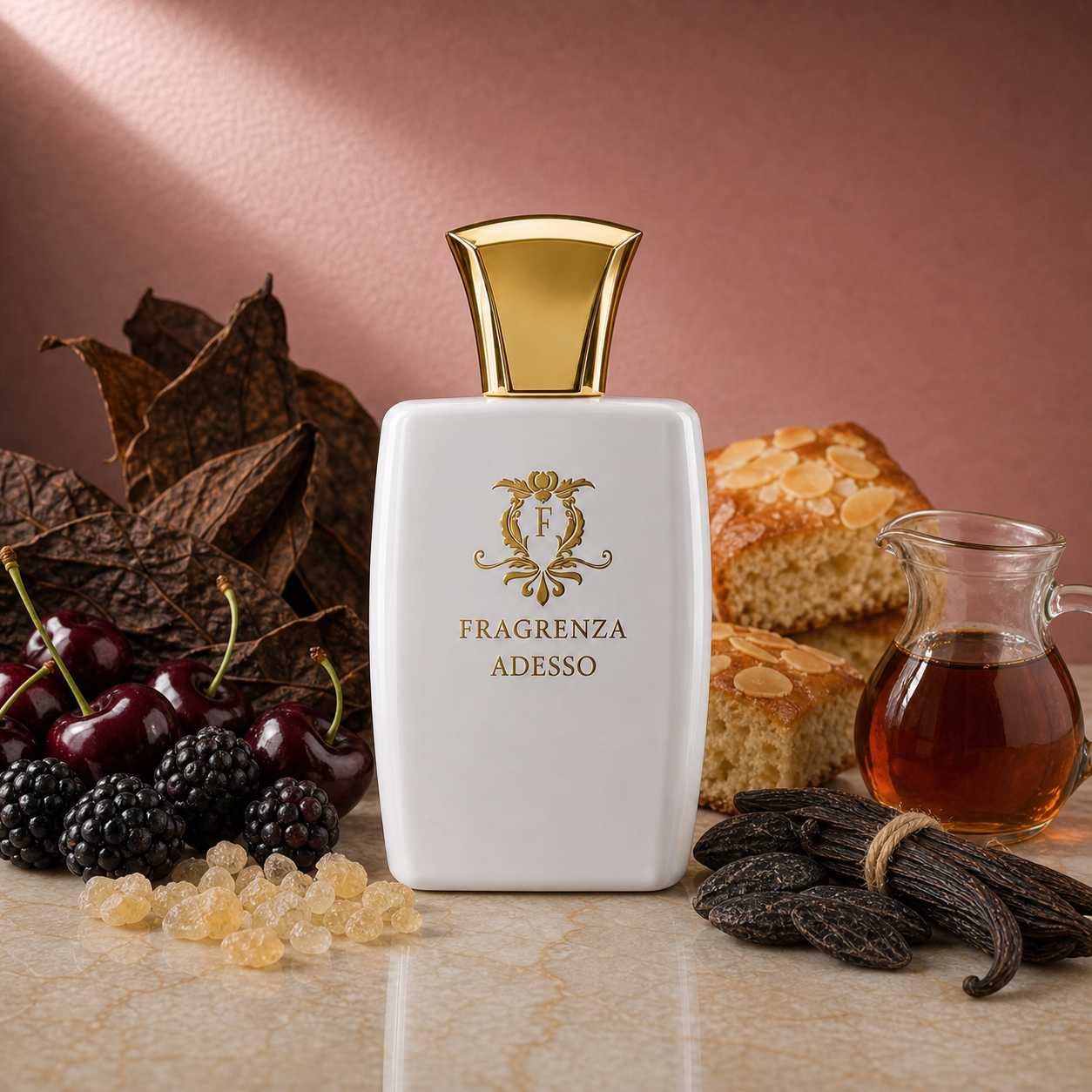
places opopanax explicitly in the heart alongside crystallized sugar, labdanum, and incense, supported by a base of patchouli, sandalwood, vanilla, oud, and leather — the warm-resinous-oriental register at full development. uses opopanax in the base alongside leather, tolu balsam, myrrh, benzoin, vanilla, and sandalwood, with a heart of galbanum, clary sage, tomato leaf, and iris and an opening of pink pepper, petitgrain, blackcurrant, and cistus.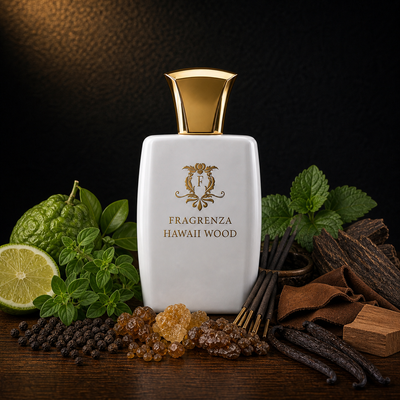
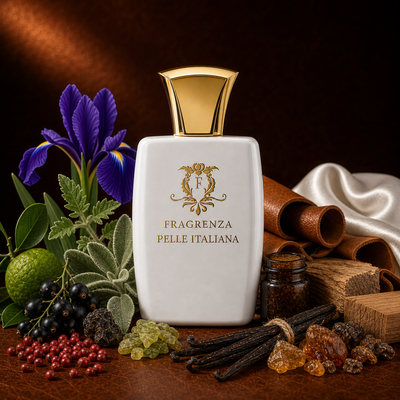
In the warm-oriental direction,
places benzoin Siam in the heart alongside Bulgarian rose, Turkish damask rose, and violet, with Laotian oud, amber, and vanilla at the base — the rose-resinous register adjacent to opopanax perfumery. And uses olibanum and labdanum in the base alongside ambergris, with a fruity-resinous-woody heart and a delicate floral opening — the resinous-oriental register that opopanax-direction compositions inhabit.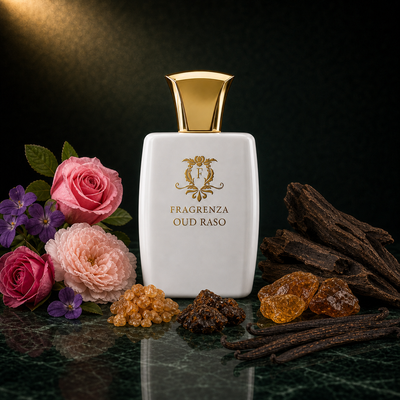
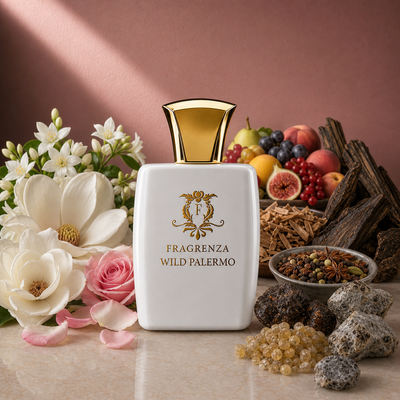
For more on related resinous and balsamic perfumery, see our entries on benzoin, tonka bean, and vanilla.
How opopanax interacts with other notes
Opopanax is compositionally generous. Its warm-honeyed-resinous character bridges across many other aromatic families.
With vanilla and gourmand bases, opopanax extends the warm-sweet-resinous register that classical orientals defined. Shalimar demonstrates the pattern at its most refined.
With myrrh and frankincense, opopanax deepens classical incense compositions into a fuller honeyed-resinous structure.
With labdanum and amber materials, opopanax extends the warm-resinous register into the contemporary amber-and-resin niche compositions.
With rose and classical florals, opopanax warms and deepens the floral structure into a full oriental-floral register.
With leather and tobacco, opopanax contributes warm-honeyed depth to classical leathery-oriental compositions.
Opopanax in the modern wardrobe
Opopanax compositions wear especially well in autumn and winter, where the warm-resinous character settles into cooler air. The category is closely associated with evening wear, formal occasions, and cool-weather environments where heavier perfumery has space to breathe.
Opopanax carries no inherent gender coding. Classical compositions used opopanax across feminine and masculine registers; contemporary niche perfumery treats the material as fully gender-neutral.
Application is conventional: pulse points, light spray. Opopanax-direction notes generally express most clearly in the heart and base of compositions and persist for many hours through the dry-down.
Frequently asked questions
What does opopanax smell like in perfume?
Warm, slightly sweet, balsamic-honeyed, with a faintly powdery undertone and quiet aromatic depth. Less medicinal than myrrh, less honeyed than labdanum, less smoky than frankincense, more golden-warm than benzoin. The character carries the smell of ancient incense and golden honey.
What is the difference between opopanax and myrrh?
Different botanical species and different aromatic profiles. Opopanax (sweet myrrh) is sweeter, more honeyed, more balsamic-warm. True myrrh (Commiphora myrrha) is drier, more medicinal, more bitter. The two materials are sometimes used together to build complex resinous structures.
Is opopanax a natural perfumery material?
Yes — opopanax essential oil and absolute are produced through steam distillation and solvent extraction of the natural resin. The materials are commercially available and have been used in fine perfumery for thousands of years. Some contemporary compositions use synthetic captives alongside natural opopanax to deliver specific facets.
Is opopanax a feminine note?
No more than any other classical resinous material. Opopanax has anchored both feminine and masculine compositions across millennia of perfumery. Modern niche perfumery treats the material as fully gender-neutral.
What season is opopanax best for?
Autumn and winter for the warm-resinous register. Spring works well for lighter opopanax-and-floral compositions. Summer is the most constrained season for the note.
What perfumes use opopanax well?
Coty L’Origan (1905) is one of the founding opopanax-led orientals. Guerlain Shalimar (1925) places opopanax in the structural base. Caron N’Aimez Que Moi (1916) and many contemporary niche compositions place opopanax at the heart of warm-resinous structures.
Why has opopanax persisted as a perfumery material for thousands of years?
Because the warm-honeyed-resinous character of opopanax delivers something that is hard to replicate with other materials. The resin’s combination of sweetness, depth, and fixative properties makes it useful across many compositional patterns, and its warmth has emotional resonance that transcends any specific historical aesthetic.
The structural place of opopanax
Opopanax is one of perfumery’s great enduring materials. The resin has anchored fine fragrance from ancient Egyptian temple incense through Renaissance European apothecaries through twentieth-century French oriental masterpieces and into contemporary niche perfumery. Whether you are wearing a classical Shalimar-direction oriental, a contemporary niche resinous composition, or a warm-amber feminine that uses opopanax structurally, the material is doing the warm-honeyed-resinous work that has defined oriental perfumery for thousands of years.