

Best Smoky Fragrances 2026: The Four Archetypes from Campfire to Oud Ember
Russian 18th-century leather perfumery laid the groundwork - now guaiac, papier brule accords, and oud smoke cover four contemporary archetypes.
By Julia MorettiFragrenza makes several of the alternatives featured in our guides — here’s how we test.
11 min read
Not every great fragrance smells like a bouquet of flowers or a sunny citrus grove. Some of the most compelling, memorable, and genuinely original fragrances in fine perfumery smell of smoke, ash, tar, burning wood, or incense ember. These are notes that require a more adventurous nose, but they reward that adventurousness with a depth and character that safer fragrances simply cannot match. Smoke in modern fragrance is no longer a supporting note in orientals; it has become a foregrounded register with its own architecture, its own archetypes, and its own commercial momentum.
Smoky and ashy notes have been part of perfumery for centuries, from the incense-burning traditions of ancient civilizations to the birch tar of traditional Russian leather perfumery to the oud wood burned in Middle Eastern homes. What is relatively new is the contemporary willingness to push these notes to the foreground, making smoke and ash the main event rather than the supporting cast. This is the complete commercial guide to the best smoky fragrances in the Fragrenza line, organized by the four smoky archetypes that define the contemporary landscape.
For the broader savory gourmand register that smoke now often anchors, see the savory gourmand and burnt sweet 2026 pillar. For the closely-related incense register, see the incense fragrances 2026 spoke.
The materials that build smoky fragrance
Smoky character in fine perfumery comes from a specific palette of materials, each contributing a different facet of the broader smoke-and-ash register.
Birch tar is the foundation of smoky perfumery. Distilled from the bark of the silver birch through dry distillation (a process that essentially carbonizes the wood), birch tar contributes a tarry, petroleum-like, leather-adjacent darkness. The material has been used in Russian leather perfumery since the 18th century and remains the single most identifiable smoky note in fine fragrance.
Vetiver contributes a clean, rooty smokiness very different from birch tar's tarry character. Vetiver-derived smoke reads as earthy, slightly mineral, and structurally elegant; it appears in compositions that want smoke without the confrontational edge of birch tar.
Oud wood smoke is the burning-agar-wood character that bridges smoke and incense. Real oud is itself the result of natural infection in agarwood trees; the smoke of burning oud carries the resinous, animalic, slightly medicinal complexity that defines Middle Eastern luxury perfumery.
Guaiac wood is a naturally smoky South American wood with a slightly medicinal, slightly sweet character that bridges smoke and balsamic depth. It appears in many of the most successful contemporary smoky compositions.
Cashmeran is a synthetic captive material developed by IFF that contributes a smoky-woody warmth with a slightly powdery edge. The molecule has become essential to contemporary smoky perfumery because it integrates the smoke character across the heart and base in ways that natural smoky materials alone do not.
Papyrus and papier brulé accords (synthetic blends evoking burning paper) contribute a clean, almost dry-ash character that sits at the lightest end of the smoky spectrum. These materials appear in contemporary minimalist smoky compositions.
The four smoky archetypes
1. Campfire-outdoor smoke (the wild register)
The most dramatic and atmospheric of the smoky archetypes. Wood smoke wrapped in birch, vetiver, dark woods, and mossy or resinous accords that evoke open fires, woodland air, and evenings spent at the edge of wilderness. The wear is rugged without being rough, dramatic without being unwearable, and carries a strong narrative quality. The natural choice for wearers who want their fragrance to convey a clear sense of place.
The Fragrenza pick:
opens with the curl of smoke entwined with crisp apple, bergamot zest, and pepper; the heart develops birch, sugar, patchouli, and juniper berry; the base settles on ambergris, dark labdanum, oakmoss, clean musk, and vanilla. The composition demonstrates how outdoor-campfire smoke can be handled with enough refinement to remain wearable in urban evening settings while preserving the wild-landscape character that defines the archetype.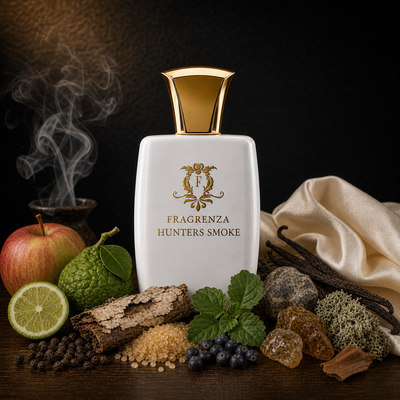
2. Incense-meditative smoke (the contemplative register)
An archetype that bridges smoke into the broader incense register. Resinous incense materials (frankincense, myrrh, opoponax) paired with smoky woods and spice, often anchored on a base of leather or oud. The wear reads as meditative, slightly Eastern, and structurally restrained; the natural choice for wearers who want smoke without the confrontational edge of the campfire register.
The Fragrenza pick:
opens with intoxicating spice in an entrance both bold and unapologetic; the heart unfolds earthy patchouli swirled with port wine's velvety warmth; the base resolves on golden amber, luminous jasmine, supple leather, and smoky vetiver. The composition demonstrates how smoke can be handled with Japanese-influenced restraint: the wear is unmistakably smoky but never declarative, settling into a refined enigmatic sensuality.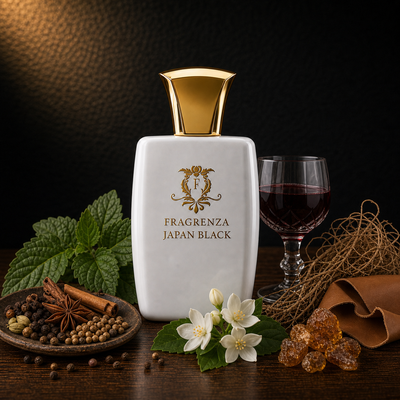
3. Whiskey-spice-fire warmth (the indulgent register)
An archetype that pairs smoky materials with whiskey accords, dark spice, and gourmand anchors. The composition reads as warm and emotionally indulgent at the surface, smoky and characterful at the base; the wear sits between savory gourmand and pure smoky territory. The archetype is the natural choice for wearers who want smoke as an integrated character within a richer composition rather than as the dominant register.
The Fragrenza pick:
opens with the amber warmth of whiskey, an entrance as bold and inviting as flame in cut crystal; the heart ignites with cinnamon and coriander weaving warmth and aromatic depth; the base resolves on dark tobacco, precious oud, creamy sandalwood, earthy patchouli, sacred incense, benzoin, vanilla, and cedar. The wear demonstrates how smoke can anchor an indulgent composition without dominating it; the whiskey, tobacco, and vanilla read first, the smoke emerges through the heart, and the dry-down integrates the full palette into a single smoldering character.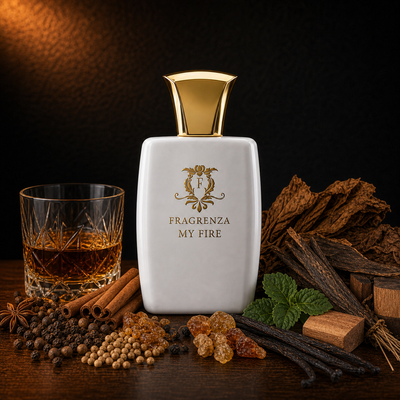
4. Oud-smoke (the prestige niche register)
The archetype that bridges smoke into oud territory. Burning agarwood character paired with rosewood, spice, sandalwood, and vetiver to produce a composition that reads as ancient and ceremonial. The wear is among the most distinctive directions in contemporary luxe perfumery and remains a cultural reference point for prestige niche; the natural choice for wearers who want a fragrance that conveys serious occasion.
The Fragrenza pick:
opens with the warm honeyed glow of rosewood, cardamom, and Sichuan pepper; the heart unfolds rare oud, creamy sandalwood, and cool earthy vetiver; the base lingers on tonka bean, vanilla, and golden amber. The wear is the canonical oud-smoke register handled with prestige polish. Among the most culturally recognized contemporary smoky compositions.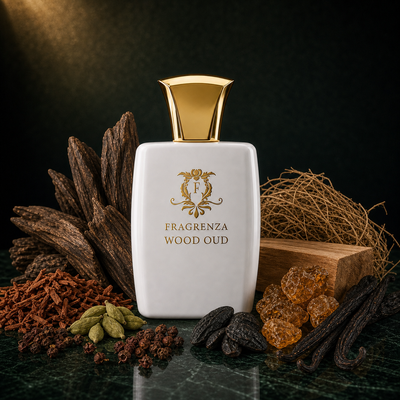
How smoky fragrances wear on skin
The wear pattern of the smoky family rewards patience. Most smoky compositions open more aromatically than smokily; the smoke character emerges through the heart and dominates the dry-down. The first thirty to forty minutes can be misleading. Give any smoky fragrance at least two hours before deciding whether the register suits your chemistry; the smoke that you will actually carry through the day is the one that has settled by the four-hour mark.
Smoky compositions interact strongly with skin chemistry. Warmer or oilier skin amplifies the resinous-balsamic facets of the smoke; cooler or drier skin amplifies the bitter-tar facets. The same composition can read as warm-incense on one wearer and harsh-campfire on another. See the skin chemistry deep-dive for the full account.
Projection is moderate-strong for the first two to three hours and settles into a close-skin wear pattern thereafter. The dense base materials are tenacious; eight to twelve hours is typical on most skin. Apply with restraint; one to two sprays is enough for any composition in the family.
When to wear smoky fragrances
The register is emphatically evening-coded and cool-weather-aligned. The campfire-outdoor and oud-smoke archetypes work best in fall and winter evenings; the incense-meditative register works year-round in contemplative contexts; the whiskey-spice-fire archetype is at its best in late-autumn and winter evening settings where the warmth is welcome.
Hot weather is the harder context for smoky fragrances generally. The dense materials project more aggressively in heat, and the smoke can read as oppressive when warm air does not let the supporting materials develop. Save smoky fragrances for cooler weather; the register's emotional character pairs naturally with seasons where physical warmth is welcome.
Professional contexts are also generally inappropriate for smoky fragrances. The wear reads as evening-coded in most workplaces, and the projection profile can register as intrusive in shared spaces. Save smoke for evening, weekend, and post-work contexts.
How to layer smoky fragrances
Smoky fragrances layer well with a small number of partners. Three patterns work consistently. Smoke over a clean musk skin scent softens the projection without breaking the smoky character. Smoke paired with vanilla on a contrasting pulse point produces a warm-smoky-gourmand layered effect particularly successful with whiskey-spice and oud-smoke archetypes. Smoke layered with leather reinforces the existing leather facets present in most smoky compositions and produces one of the most distinctive layered wears available in contemporary perfumery. For the full layering theory, see the layering pillar.
Building tolerance for smoky fragrances
Like an appreciation for bitter coffee or peaty whisky, a love of smoky fragrance often develops gradually. Start with the softer end of the family (the incense-meditative or whiskey-spice-fire archetypes) and work toward the more confrontational ends (campfire-outdoor, oud-smoke). The wear-test discipline matters more here than for most other categories; give any smoky composition at least two to four hours of skin contact before deciding whether the register suits you.
Many wearers discover that smoky fragrances become their most rewarding picks once the initial unfamiliarity passes. The register's emotional complexity, narrative quality, and structural depth deliver wear experiences that no other family fully matches. The savory gourmand wave has made smoke unusually accessible across 2025 and 2026; wearers who would not have considered smoky fragrance five years ago now find themselves drawn to the register's modern handling.
Smoky fragrances in a fragrance wardrobe
A minimum viable smoky presence in a broader fragrance wardrobe is one well-chosen pick from the archetype most aligned with your wearing patterns. Most serious smoky wearers stop at two pieces; the register is distinctive enough that the wearer's signature becomes recognizable past that point. Pair a soft incense-meditative or whiskey-spice piece for everyday cool-weather wear with a more confrontational campfire-outdoor or oud-smoke piece for occasions where the wear should declare a clear point of view.
Related reads
- Savory Gourmand and Burnt Sweet: The 2026 Pillar
- Incense Fragrances 2026
- Best Tobacco Fragrances 2026
- Tobacco and Leather
- The Layering Pillar
- Why Skin Scents Smell Different on Everyone
- How to Build a Fragrance Wardrobe
FAQ
Do smoky fragrances smell like cigarette smoke?
No. Cigarette smoke is the combustion product of low-grade tobacco mixed with paper and additives; perfumery smoke materials come from very different sources (birch tar, oud wood, vetiver smoke, guaiac, synthetic captives like Cashmeran). The result smells of wood smoke, incense ember, or aromatic resin, not of burning paper. Well-built smoky fragrances are aromatic and atmospheric, not acrid.
Are smoky fragrances unisex?
Most contemporary smoky compositions function as unisex even when marketed by gender. The campfire-outdoor archetype skews slightly masculine in cultural associations but works on any wearer; incense-meditative and oud-smoke are essentially unisex; whiskey-spice-fire leans slightly masculine but is widely worn by women. Treat gender marketing on smoky compositions as a starting point rather than a constraint.
How long do smoky fragrances last on skin?
Eight to twelve hours is typical for well-built smoky compositions on most skin. The dense base materials (birch tar, oud wood, certain musks, resinous balsams) are tenacious. Smoke applied to fabric continues to release scent for days; a small amount on a wool scarf produces a beautifully extended wear that lives in the fabric long after the original application.
Can I wear smoky fragrances in summer?
Generally not, or at least not comfortably. The dense materials project more aggressively in heat, and the smoke can read as oppressive when warm air does not let the supporting materials develop. The incense-meditative archetype is the most warm-weather-tolerant of the four (its restrained projection profile keeps the wear contained); even there, the composition is happier in cooler weather. Save smoky fragrances for fall, winter, and cool spring evenings.
What is the easiest smoky fragrance to start with?
For most wearers, the incense-meditative or whiskey-spice-fire archetype is the most accessible entry point. Both registers handle smoke as an integrated character rather than as the foregrounded subject; the wear is rich and complex without being confrontational. Wear one through a season, learn how your skin amplifies the smoke materials, and decide whether to explore deeper into the campfire-outdoor or oud-smoke registers from there.
Why does my smoky fragrance smell different at hour four than at hour one?
Because the volatility curves of the materials are doing exactly what they were designed to do. The bright top materials evaporate in the first hour; the smoke and supporting heart materials emerge progressively through hours one to three; the base materials hold the wear from hour four onward. The dry-down is what you will carry for the bulk of the day, and it is almost always smokier and more integrated than the opening.
Is smoke an acquired taste in fragrance?
For most wearers, yes. The first encounter with a strongly smoky fragrance can feel confrontational because the materials read as more aromatic than the materials many wearers are accustomed to. Like an appreciation for bitter coffee, peaty whisky, or aged wine, a love of smoky fragrance often develops gradually through repeated wear. Start with the softer end of the family and give the register time. Many wearers who initially dismissed smoke find it becomes one of their most rewarding directions once familiarity builds.
The bottom line
Smoke is one of the most rewarding directions in contemporary fine fragrance and one of the defining anchors of the savory gourmand register. The four archetypes give you the full landscape; the Fragrenza picks within each give you concrete starting points; the wearing patterns and layering techniques give you the technical vocabulary to wear the register well.
Whether you want a campfire-outdoor statement (Hunters Smoke), an incense-meditative contemplation (Japan Black), a whiskey-spice-fire indulgence (My Fire), or the prestige-niche oud-smoke benchmark (Wood Oud), the contemporary smoky family has the depth to reward years of exploration. Smoke rewards patience; the four-hour wear test on your own skin tells you which archetype your chemistry amplifies and which to make a long-term part of your rotation.