

Best Incense Fragrances 2026: The Four Archetypes from Sacred Resin to Whiskey Warmth
Frankincense and labdanum span from cool cathedral stone to honeyed bukhoor, and the right archetype depends on which side your skin amplifies.
By Julia MorettiFragrenza makes several of the alternatives featured in our guides — here’s how we test.
11 min read
Incense is older than civilization. Humans have been burning aromatic resins and woods to scent their spaces, mark sacred occasions, and connect with the divine for thousands of years. Ancient Egyptians burned kyphi, a complex blend of resins and herbs, in temple rituals. The Silk Road carried frankincense and myrrh from the Arabian peninsula across continents at prices that rivaled gold. Japanese Buddhism developed kōdō, the ceremonial art of incense, with its own grammar and codified appreciation practices. Today, incense notes in fine perfumery carry all of this history with them, which is part of why incense fragrances feel so weightily atmospheric.
This is the complete commercial guide to the best incense fragrances in the Fragrenza line, organized by the four incense archetypes that define the contemporary landscape. For the broader smoky register that incense partially overlaps with, see the smoky fragrances 2026 spoke. For the savory gourmand pillar that anchors the broader cluster, see the savory gourmand 2026 pillar.
What incense actually is in fine perfumery
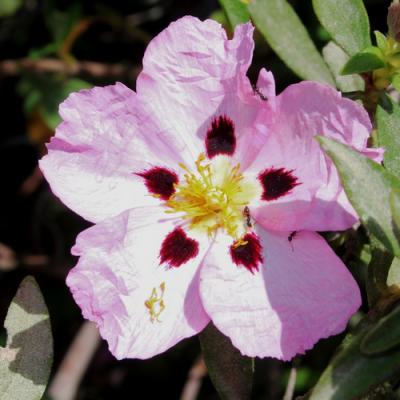
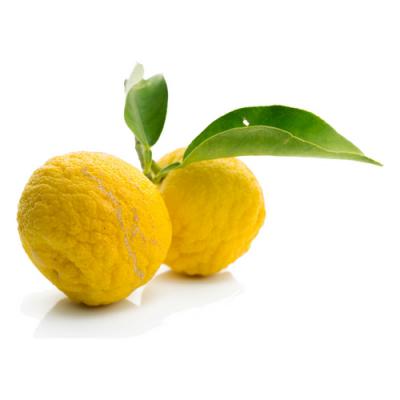
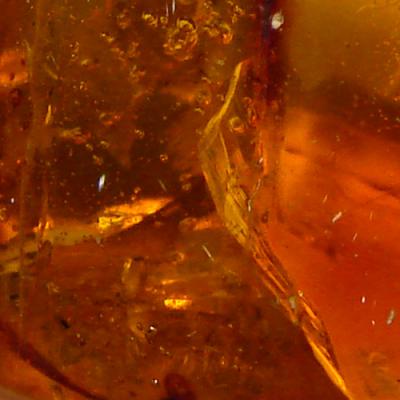
Incense in fragrance is built from a specific palette of resinous and woody materials, each contributing a different facet of the broader incense register. The materials that matter most are frankincense (olibanum), a tree resin from the Boswellia tree that contributes a slightly lemony, deeply spiritual character; myrrh, a darker, balmier resin with slight medicinal facets; opoponax (sweet myrrh), a more honeyed, balsamic resin used to bridge incense into warmer compositions; benzoin, a sweet resinous balsam that supports incense compositions with caramel-like depth; and labdanum, the leather-skin resin from rockrose that anchors many incense compositions in something carnal and ancient.
Burning agarwood (oud) contributes its own incense-adjacent character, particularly in Middle Eastern and Asian compositions where oud and incense have coexisted for centuries. Cedar, sandalwood, and guaiac wood frequently appear as supporting woody anchors. Aldehydes are sometimes added to give incense compositions a cold, stone-cool quality that evokes the smoke rising through cathedral interiors. Cashmeran and synthetic woody-amber captives extend incense across the contemporary niche register and produce some of the most distinctive recent work in the category.
The combined effect of an incense composition reads as ancient, slightly mystical, structurally restrained, and emotionally serious. Where smoke at its most direct (campfire, birch tar) reads as wild and outdoor, incense reads as ceremonial and interior. The two registers overlap but occupy different emotional territories.
Incense across cultures
Incense interpretations vary significantly by cultural tradition.
Japanese-inspired incense fragrances tend to be cool, meditative, and restrained. The kōdō tradition values clarity over richness, simplicity over abundance, and emotional precision over projection. Contemporary Japanese-influenced compositions (Comme des Garcons Incense Kyoto being the canonical reference) lean stone-cool, sometimes with aldehydic facets that emphasize the cathedral-air aesthetic.
Middle Eastern incense compositions are typically richer, warmer, and more resinous. The bukhoor tradition burns oud chips, agarwood, sandalwood, and rose petals on hot coals, producing dense smoky-resinous clouds that have shaped luxury perfumery in the region for centuries. Contemporary Middle Eastern-influenced incense fragrances follow this template: warm, sweet, oud-anchored, deeply textured.
Western church-inspired incense fragrances often combine frankincense with aldehydes, soft woods, and labdanum for the characteristic cool stone-and-smoke quality that evokes cathedral interiors. The tradition draws on the millennia of Christian liturgical use of incense; the perfumery interpretation emphasizes the sacred-architectural emotional register.
The Fragrenza line covers four contemporary incense archetypes that draw on these traditions while remaining wearable in modern Western urban contexts.
The four incense archetypes
1. Leather-incense (the rugged-mystical register)
An archetype that pairs incense with leather, oud, and resinous anchors to produce a wear that reads as both sacred and carnal. The leather grounds the resin in something animal and earthy; the incense lifts the leather into something contemplative. Among the most distinctive directions in contemporary masculine perfumery and one of the most rewarding incense registers for wearers who want characterful depth.
The Fragrenza pick:
opens with bergamot's golden citrus light, oregano's wild herbaceousness, and allspice's clove-warm richness; the heart unfolds amber's honeyed warmth, opoponax and incense releasing ancient smoky mysticism, with cistus adding its labdanum-like depth; the base resolves on leather, oud, patchouli, and sandalwood. The composition demonstrates how incense and leather can produce a wear that holds genuine emotional ambition while remaining wearable in contemporary evening contexts.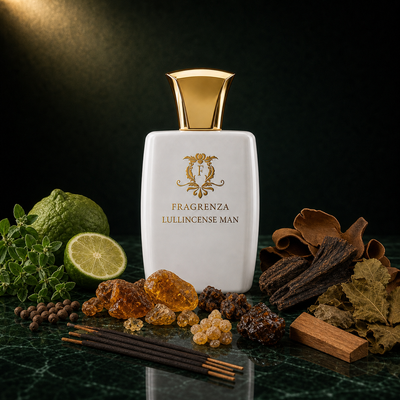
2. Sacred resin warmth (the honeyed-balsamic register)
An archetype that emphasizes the warm-balsamic side of the incense palette. Frankincense, myrrh, opoponax, and labdanum paired with vanilla, sweet woods, and a hint of caramelized sugar. The wear reads as enveloping rather than declarative, ceremonial rather than confrontational; the natural choice for wearers who want incense's history without the colder austerity of the church-inspired register.
The Fragrenza pick:
opens with bergamot, oregano, and pepper; the heart unfolds crystallized sugar dissolving into labdanum, opoponax, and incense; the base resolves on patchouli, sandalwood, vanilla, oud, and leather. The composition demonstrates the warm-balsamic incense direction: the wear is unmistakably resinous and incense-driven, but the sweet anchors keep the composition emotionally welcoming rather than austere.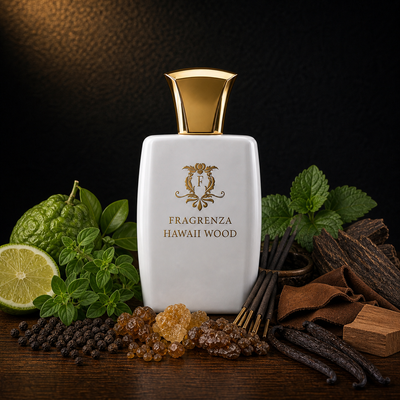
3. Spice-incense meditative (the Japanese-influenced register)
An archetype that draws on the kōdō tradition's restraint and emotional precision. Incense materials paired with spice, soft florals, and a base of leather or smoky vetiver in compositions that read as contemplative rather than dramatic. The wear is restrained, intentional, and emotionally serious; the natural choice for wearers who want incense without the projection commitment of the more declarative archetypes.
The Fragrenza pick:
opens with intoxicating spice in an entrance that is both bold and unapologetic; the heart unfolds earthy patchouli swirled with port wine's velvety warmth; the base resolves on golden amber, luminous jasmine, supple leather, and smoky vetiver. The composition reads as Japanese-influenced restraint applied to a contemporary incense palette; the wear stays close to the body and rewards close attention.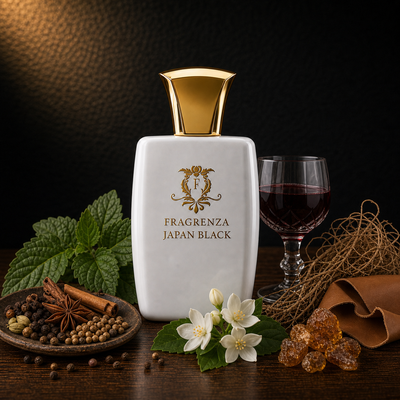
4. Whiskey-incense warmth (the indulgent-resin register)
An archetype that bridges incense into the savory gourmand register. Incense paired with whiskey accords, dark spice, tobacco, vanilla, and oud to produce a wear that reads as indulgent at the surface and ceremonial at the base. The composition style sits between pure incense and savory gourmand; the wear holds both registers simultaneously.
The Fragrenza pick:
opens with the amber warmth of whiskey; the heart ignites with cinnamon and coriander weaving warmth and aromatic depth; the base resolves on dark tobacco, precious oud, creamy sandalwood, earthy patchouli, sacred incense, benzoin, vanilla, and cedar. The wear demonstrates how incense can sit as an integrated character within a richer gourmand-leaning composition; the incense emerges progressively through the heart and dry-down rather than declaring itself at the opening.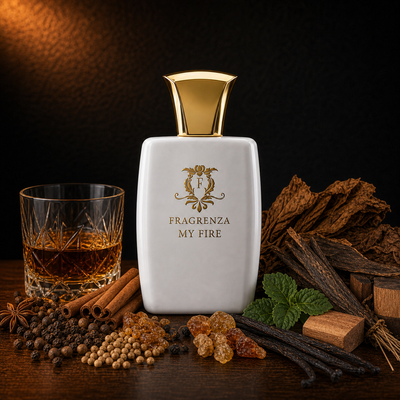
How incense fragrances wear on skin
Incense rewards patience. The opening of most incense compositions reads more aromatically than resinously; the incense character builds through the heart, around the one-to-two-hour mark, and dominates the dry-down. Give any incense fragrance at least two hours before deciding whether the register suits your chemistry.
Incense interacts strongly with skin chemistry. Warmer skin amplifies the honeyed-balsamic resinous facets; cooler skin amplifies the bitter-medicinal myrrh-and-frankincense facets. The same composition can read warm-temple on one wearer and cool-cathedral on another. See the skin chemistry deep-dive.
Projection is moderate; the wear settles into a close-skin pattern by the two-hour mark and develops as a textural anchor through the rest of the day. Eight to twelve hours of total wear is typical; the dense resinous materials are tenacious. Apply with restraint; one to two sprays is enough for any incense composition.
When to wear incense fragrances
Incense fragrances are evening and cool-weather companions. They project an aura of depth and contemplation: ideal for occasions when you want to leave an impression without making noise about it, and for personal-comfort wear in quiet domestic settings. Cool weather is the natural seasonal home; the dense materials project less aggressively in cold air and develop more slowly.
The leather-incense and whiskey-incense archetypes are emphatically evening-coded and read as out of place in most daytime contexts. The sacred-resin and spice-incense-meditative archetypes are more occasion-flexible; they can work in late-afternoon or early-evening contexts, in quiet professional environments where deeper fragrance is welcome, and in contemplative or solitary settings any time of day.
Hot weather is the harder context for incense. The resinous materials project more aggressively in heat, and the warm-spiritual character can read as oppressive when warm air does not let the supporting materials develop. The Japanese-influenced spice-incense register is the most warm-weather-tolerant of the four; even there, the composition is happier in cooler weather.
How to layer incense fragrances
Incense layers particularly well with three partners. Incense over a clean musk skin scent softens the projection while preserving the resinous focal voice; particularly useful for daytime wear of evening-coded incense compositions. Incense paired with vanilla on a contrasting pulse point produces a warm-resinous-gourmand layered effect that works exceptionally well with the sacred-resin and whiskey-incense archetypes. Incense layered with rose reinforces the historical Middle Eastern bukhoor tradition's coupling of rose and incense; the combination is among the most distinctive layered wears available in contemporary perfumery. For the full layering theory, see the layering pillar.
Incense fragrances in a fragrance wardrobe
A minimum viable incense presence in a broader fragrance wardrobe is one well-chosen pick from the archetype most aligned with your wearing patterns. Most wearers stop at one or two incense pieces; the register is distinctive enough that the wearer's signature becomes recognizable past that point. Pair a soft sacred-resin or spice-incense piece for everyday cool-weather wear with a more characterful leather-incense or whiskey-incense piece for occasions where the wear should declare a clear point of view.
Related reads
- Savory Gourmand and Burnt Sweet: The 2026 Pillar
- Best Smoky Fragrances 2026
- Best Tobacco Fragrances 2026
- Best Saffron Fragrances 2026
- The Layering Pillar
- Why Skin Scents Smell Different on Everyone
- How to Build a Fragrance Wardrobe
FAQ
What is the difference between incense and smoke in fragrance?
Incense fragrances emphasize the resinous, contemplative, and ceremonial side of burning aromatics. Smoke fragrances emphasize the wood-burning, atmospheric, and outdoor side. The two registers overlap (most incense compositions have smoky facets and many smoky compositions have resinous facets) but occupy different emotional territories. Incense reads as ancient and interior; smoke reads as wild and outdoor.
Are incense fragrances only for evening?
Mostly, with exceptions. The leather-incense and whiskey-incense archetypes are emphatically evening-coded. The sacred-resin and spice-incense-meditative archetypes have more daytime flexibility and work in quiet, contemplative, or formal-quiet contexts (gallery visits, slow Sunday mornings, late-afternoon meetings in cool weather). For the projection-forward archetypes, save the wear for evening; for the restrained archetypes, daytime wear is appropriate when the context is right.
Do incense fragrances smell religious?
Some do, deliberately. The frankincense-and-myrrh church-inspired register evokes Christian liturgical incense by design; wearers drawn to that emotional register will recognize it. Most contemporary incense compositions, however, draw on a broader palette (oud, leather, vanilla, spice) that produces an atmospheric depth rather than a specifically religious wear. Choose your archetype based on the emotional register you want to convey.
How long do incense fragrances last on skin?
Eight to twelve hours is typical for well-built incense compositions on most skin. The dense resinous materials are tenacious; the wear extends naturally as body heat develops over the course of the day. Incense applied to clothing continues to release scent for days; a small amount on a wool scarf produces an extended wear that lives in the fabric long after the original application.
Can I wear incense fragrances in summer?
The Japanese-influenced spice-incense and Japanese-coded sacred-resin archetypes can work in moderate warm-weather contexts, particularly evening or air-conditioned indoor settings. The leather-incense and whiskey-incense archetypes are emphatically cool-weather compositions; the dense materials project too aggressively in heat. Save the projection-forward incense compositions for fall, winter, and cool spring weeks.
What is the easiest incense fragrance to start with?
For most wearers, the sacred-resin or spice-incense-meditative archetype is the most accessible entry point. Both registers handle incense as an emotionally welcoming character rather than a confrontational one; the wear is rich and contemplative without being austere or aggressively religious. Wear one through a season, learn how your skin amplifies the resinous materials, and decide whether to explore deeper into leather-incense or whiskey-incense territory from there.
Are incense fragrances appropriate for formal occasions?
Yes, with the right archetype. Incense is among the most occasion-appropriate registers for serious formal contexts; the wear's emotional weight and structural restraint pair naturally with ceremonial settings (weddings in cool weather, memorial services, theatrical performances, formal dinners). The sacred-resin and spice-incense archetypes are most universally appropriate; the leather-incense and whiskey-incense archetypes work for more intimate formal contexts. Apply with restraint regardless of archetype.
The bottom line
Incense is one of the most emotionally serious directions in contemporary fine fragrance and one of the most rewarding registers for wearers who want fragrance that conveys atmosphere as much as character. The four archetypes give you the full commercial landscape; the Fragrenza picks within each give you concrete starting points; the wearing patterns and layering techniques give you the technical vocabulary to wear the register well.
Whether you want the rugged leather-incense of Lullincense, the sacred-resin warmth of Hawaii Wood, the Japanese-influenced restraint of Japan Black, or the whiskey-incense indulgence of My Fire, the contemporary incense family has the depth to reward years of exploration. Incense rewards patience and rewards quiet attention; the four-hour wear test on your own skin tells you which archetype your chemistry amplifies and which to make a long-term part of your rotation.