

Blueberry in Perfumery: The Soft Fruity Note That Lifts Modern Fragrance
Vaccinium corymbosum carries too little volatile aroma for steam distillation, so the soft, slightly waxy blueberry note in fine fragrance is built from Givaudan, Firmenich and IFF captive bases.
By Julia Moretti 9 min read
The shy berry of contemporary perfumery
Blueberry occupies a curious position in fine perfumery. The fruit is universally beloved in food — jam, muffins, pancakes, smoothies — yet relatively underused in fragrance compared to its bramble cousins. Where blackberry contributes dark jammy depth and raspberry brings sharp tartness, blueberry offers something quieter and more subtle: a soft, gently fruity, slightly powdery sweetness with a faintly waxy character that perfumers reach for when they want fruit without intensity.
This is the guide to blueberry as a perfumery material. What the note actually is and how it differs from the fresh fruit, why blueberry remains a niche aromatic choice rather than a mainstream one, the chemistry behind the reconstruction, the famous fragrances that put blueberry to work, the Fragrenza compositions that use the soft-berry register, and how to think about blueberry in your own wardrobe.
What blueberry is in perfumery
Blueberry — primarily Vaccinium corymbosum for the cultivated highbush variety, and Vaccinium myrtillus for the wild European bilberry — cannot be extracted as a perfumery material the way bergamot, rose, or vetiver can. Like nearly all soft fruits, the smell of blueberry must be reconstructed from individual aromatic molecules and synthetic specialty captives. The fresh fruit itself contains too little volatile aromatic content for steam distillation or solvent extraction to yield commercially viable oil at fine-fragrance quality.
The work of reconstructing blueberry falls to the major specialty material houses — Givaudan, Firmenich, IFF, Symrise, and others — who develop captive bases that perfumers use to deliver the note. The reconstruction of blueberry is generally simpler than blackberry or raspberry because the fruit’s aromatic profile is gentler and less complex. The dominant aromatic molecules are esters (ethyl butyrate, methyl benzoate), small alcohols, and trace ionone derivatives that contribute the characteristic powdery-fruity-violet undertone.
This is normal practice in modern perfumery and not a sign of lower quality. Blackberry, raspberry, strawberry, peach, pear, and most other soft fruits are aromatic constructions in fine fragrance. The perfumer paints from a palette rather than photographing the fruit directly.
What blueberry actually smells like
Blueberry as a perfumery accord has a distinctly soft character that distinguishes it from other berries. The note is gentle, slightly powdery, faintly fruity-sweet, with a waxy undertone that comes from the natural bloom on the fresh fruit’s skin. Compared to its bramble relatives: less candied than strawberry, less sharp than raspberry, less jammy and grown-up than blackberry, less herbaceous than blackcurrant. There is a faintly violet or violet-leaf quality in many modern blueberry reconstructions, which gives the note a soft floral complexity that pure fruit accords lack.
The aromatic profile typically combines several small molecular families. Ethyl butyrate contributes the bright fruity-fresh top character common to many berry accords. Methyl anthranilate lends a faintly grape-like sweetness. Cinnamic aldehyde derivatives contribute a soft spicy-fruity facet. Linalool adds a soft floral undertone. Some modern reconstructions add aldehyde C-12 lauric or similar materials to deliver the slightly waxy character of the fruit’s skin.
The wear on skin reads as ripe blueberry — sweet but not sugary, slightly powdery, with a quiet roundness that distinguishes it from sharper berries. The note rarely overpowers a composition; it is more often a soft heart-note element that lifts other fruits or adds a gentle fruity facet to floral or musk-based perfumery.
Cultural and compositional history
Blueberry has a thinner perfumery history than most other berries. The fruit was less central to European food culture (until relatively recent cultivation pushed highbush blueberry into global supply chains) and consequently less established in fine perfumery’s aromatic vocabulary. Where blackcurrant (cassis) entered French perfumery in the early twentieth century and became a structural staple, blueberry remained a niche material until contemporary niche perfumery began experimenting with the broader berry palette in the 2000s and 2010s.
The contemporary use of blueberry leans into the fruit’s soft, slightly powdery character. The note appears in mainstream women’s perfumery as a top- or heart-note brightener, in niche compositions as a quiet bridge between citrus and florals, and in some men’s contemporary fragrances as a subtle fruity facet that warms a fresh-aromatic structure without overstepping. Blueberry is rarely the headline note on a fragrance bottle, but it shows up structurally in dozens of modern compositions.
Famous blueberry-direction fragrances
Blueberry is rarely listed prominently as a note even when it appears in a fragrance, which makes specific examples harder to identify than for blackberry or raspberry. Several contemporary compositions list blueberry by name in their pyramid: a small handful of niche compositions from independent perfumers and several of the more contemporary mainstream-feminine fruity-floral entries.
The note appears more often unnamed: in the soft fruity-floral structures that anchor a meaningful share of modern feminine perfumery, in the fruity-musk register that has dominated mainstream women’s perfumery since the late 2000s, and in occasional contemporary masculine compositions where blueberry-direction softness lifts an otherwise dry-aromatic structure. Where you see “berry,” “mixed berries,” or simply “fruity heart” on a contemporary fragrance pyramid, blueberry-direction materials are likely contributing.
Blueberry direction in the Fragrenza line
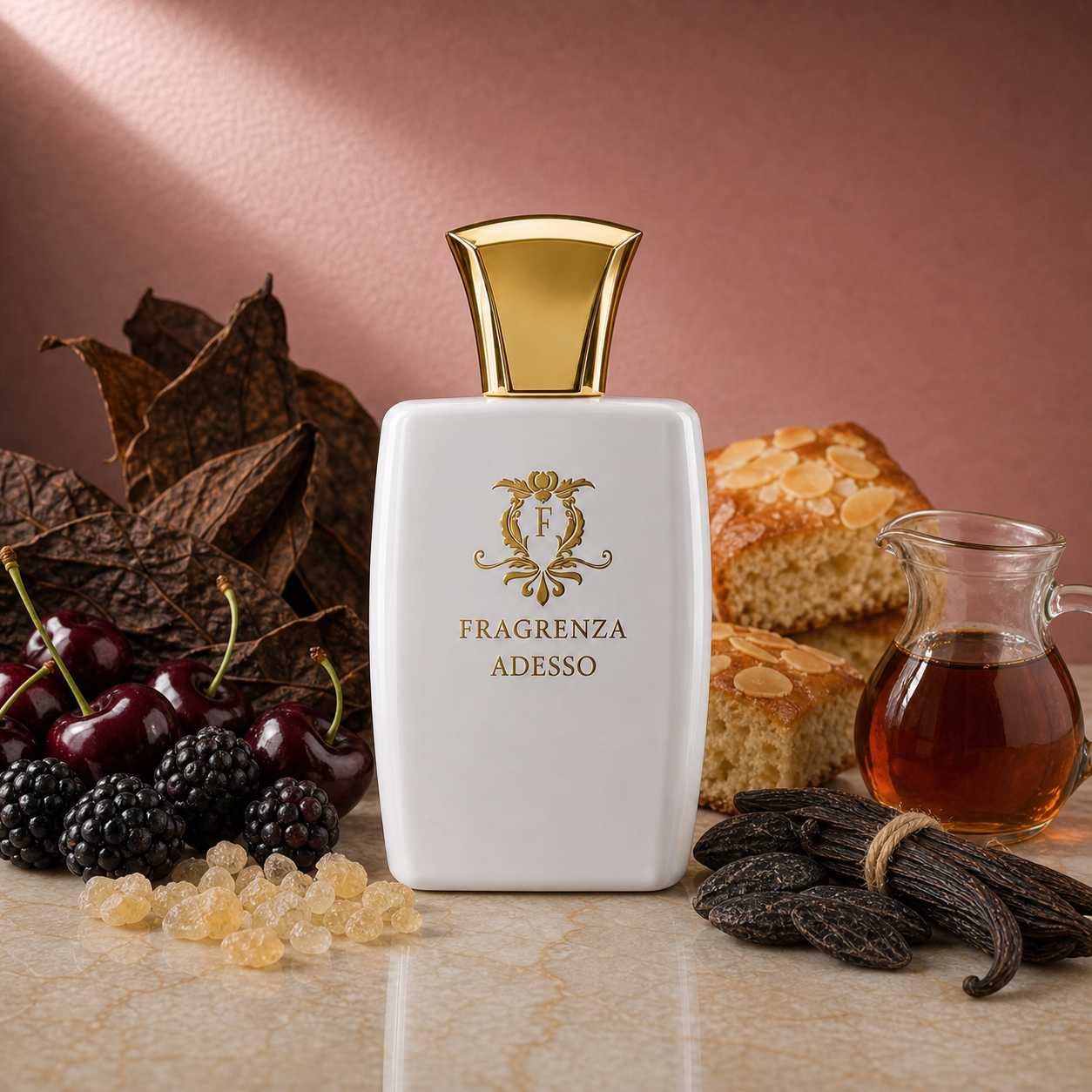
Several Fragrenza compositions place soft fruity character of the blueberry-adjacent kind at the structural heart of the wear.
is the most directly relevant — nectarine and apple blossom open into a heart of pink pepper, tuberose, and ylang ylang before settling into a base of patchouli, benzoin, tonka bean, vanilla, vetiver, and musk. The fruity-floral-with-depth structure is exactly the territory where blueberry-direction materials live in modern perfumery. takes the fruity-floral register into more masculine territory with bigarade, cardamom, plum blossom, and ylang at the heart, supported by leather, amber, and rosewood — demonstrating how soft fruity materials can anchor a more grown-up unisex composition.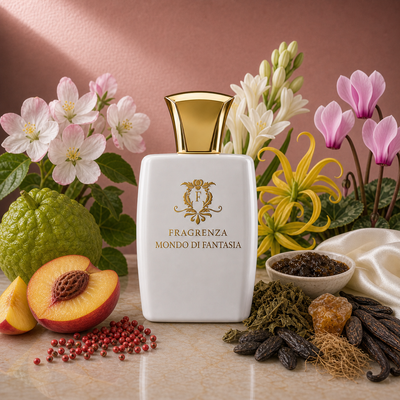
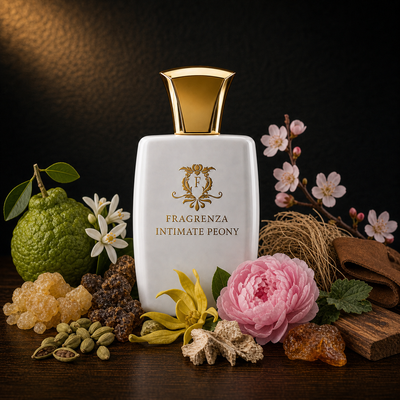
In the soft fruity-musk register,
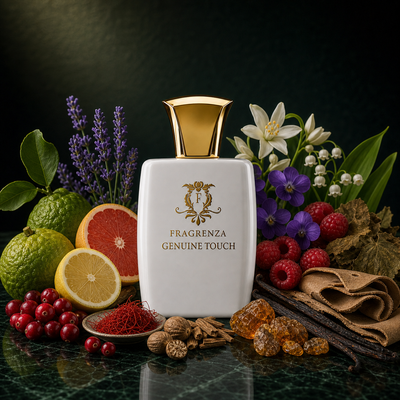
places gentle fruity facets over a clean, transparent musk core, the contemporary fruity-musk structure that blueberry-direction materials inhabit comfortably. And uses citrus-floral brightness in the opening that gives way to clean musks and soft woods — the kind of soft, contemporary structure that often hides blueberry-direction materials in its heart.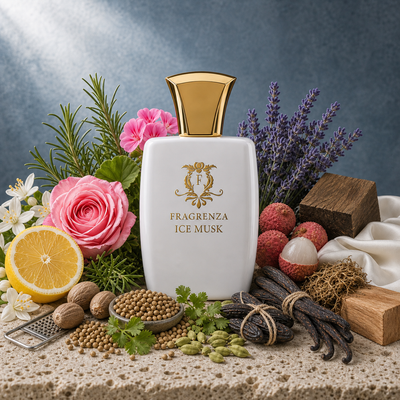
For more on related berry perfumery, see our entries on blackberry, blackcurrant (cassis), and raspberry — each part of the broader berry vocabulary modern perfumery draws on.
How blueberry interacts with other notes
Blueberry is one of the gentler heart-note materials in modern perfumery. It rarely dominates a composition; it lifts and softens other notes. The compositional patterns that use blueberry well are several.
With violet and violet-leaf, blueberry amplifies its own quiet violet undertone into a fuller fruity-floral accord. Several niche compositions use this pairing to deliver a soft, slightly powdery violet-and-fruit register that classical materials cannot quite reach.
With clean musks, blueberry produces the soft fruity-musk register that anchors a meaningful share of modern feminine and unisex perfumery. The fruit warms the clean musk; the musk extends the fruit’s wear well past its natural longevity.
With rose and other florals, blueberry adds a soft fruity facet without overpowering. Where blackberry would push a rose into modern fruity-floral, blueberry sits more quietly in the background and lets the floral remain the headline.
With vanilla, blueberry creates the muffin-and-jam gourmand register that occasional contemporary compositions inhabit. The note is rarely loud enough to anchor a true gourmand composition, but it adds soft fruity depth to vanilla-led structures.
With other berry materials, blueberry extends and softens. Several modern berry-medley compositions combine blueberry, raspberry, and blackcurrant materials to deliver complexity that no single berry can.
With light woods and aromatic herbs, blueberry contributes a soft fruity facet to the modern fresh-fruity-aromatic register that occasional contemporary masculine compositions explore. The fruit lifts the dry-aromatic base without feeling out of place in a more masculine structure.
Blueberry in the modern wardrobe
Blueberry-direction compositions wear comfortably across most seasons. The note’s soft, slightly powdery character is at home in spring fruity-florals, summer fresh-fruity compositions, and even in cooler-weather fruity-musk and fruity-vanilla structures. The constraint is presence: blueberry rarely projects loudly, so the wear depends on what surrounds the note. A blueberry-and-musk composition will read quietly and stay close to skin; a blueberry-and-amber structure will warm and project further.
The note carries no inherent gender coding. Blueberry-and-musk feminine fragrances are common; blueberry-and-aromatic-herbs masculine compositions exist (though rarer); contemporary unisex fragrances use blueberry-direction materials freely as a soft fruity bridge between top and base.
Application is conventional: pulse points, light spray, allow the heart and base to develop. Blueberry-direction materials tend to express most clearly in the first thirty to ninety minutes of wear, then gradually settle into the background as the base materials take over. If you want blueberry to be more present, layer with vanilla, soft musk, or another fruity material rather than amplifying the dose — the note rewards complementary structure more than weight.
Frequently asked questions
What does blueberry smell like in perfume?
Soft, slightly powdery, gently fruity-sweet, with a faintly waxy character that comes from the bloom on the fresh fruit’s skin. Less candied than strawberry, less sharp than raspberry, less jammy than blackberry. There is often a quiet violet or violet-leaf undertone that distinguishes blueberry from purer fruit accords.
Is blueberry a natural perfumery material?
No — like most soft-fruit notes, blueberry cannot be extracted directly from the fruit at fine-fragrance quality. The note is reconstructed from a combination of aromatic molecules including small esters, methyl anthranilate, ionone derivatives, and specialty captive bases developed by the major aroma-chemical houses. This is normal practice in modern perfumery and not a sign of lower quality.
Why is blueberry less common than blackberry or raspberry in perfumery?
Aromatic profile and historical convention. Blueberry’s natural smell is gentler and less distinctive than its bramble cousins, which makes it harder to use as a headline material. Blackberry and raspberry developed established perfumery histories earlier; blueberry largely arrived as a niche material in the contemporary era. The note shows up structurally in modern compositions but rarely takes top billing.
Is blueberry a feminine note?
It can be, but the note has no inherent gender coding. Most mainstream blueberry-direction compositions are marketed feminine because contemporary women’s fragrance often leans into soft fruity-floral and fruity-musk structures, but blueberry-direction materials appear in unisex and occasional masculine compositions without difficulty. The softness of the note makes it work in many registers.
What season is blueberry best for?
All four, with a slight bias toward spring and summer when the fresh-fruity character is most welcome. The note’s gentle character also works well in cooler-weather fruity-musk and fruity-vanilla compositions where it adds soft fruity depth without overpowering. Blueberry is one of the more season-flexible berry materials.
What perfumes use blueberry well?
Several niche compositions list blueberry explicitly in their pyramids; many more mainstream fruity-floral and fruity-musk fragrances use blueberry-direction materials structurally without naming the note. Where you see “berry,” “mixed berries,” or a soft fruity-floral heart on a contemporary pyramid, blueberry-direction materials are likely contributing.
Why does my blueberry perfume smell different from fresh blueberry?
Because perfumery blueberry is a stylized aromatic accord, not a literal extraction. Fine fragrance reconstruction picks the most aromatically interesting facets of ripe blueberry — the soft fruity-violet character, the powdery warmth, the slightly waxy edge — and amplifies them while suppressing the green-watery quality that dominates fresh fruit. The result smells like blueberry-the-idea more than blueberry-the-literal-fruit.
The quiet usefulness of blueberry
Blueberry rarely takes a starring role in fine perfumery, but it serves an important supporting function in dozens of contemporary compositions. The note’s combination of soft fruity-violet character, powdery roundness, and gentle waxy edge makes it one of the most useful quiet materials in modern fruity perfumery. Whether you are wearing a soft fruity-floral, a fruity-musk feminine, a fruity-aromatic unisex, or a fruity-vanilla gourmand, blueberry is probably contributing more to the wear than the front-of-bottle marketing language admits. The note rewards the wearer who pays attention.