

Raspberry in Perfumery: The Bright, Playful Note That Changed Modern Fragrance
Raspberry reads as a jam-warm, sun-ripe fruit: bright on opening, juiced through the heart, settling into a quiet sugared base.
By Julia Moretti 8 min read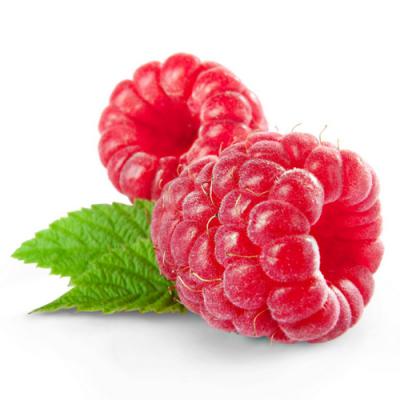
From Garden Cane to Fragrance Bottle
Raspberry is one of those ingredients that seems almost too cheerful for serious perfumery — too bright, too sweet, too obviously pleasant. And yet, in the hands of a skilled nose, the raspberry note is capable of extraordinary things: lending freshness to heavy orientals, adding a rosy dimension to florals, or anchoring a gourmand composition with a fruit that manages to be both edible and sophisticated.
The raspberry (Rubus idaeus) is a member of the Rosaceae family — the same botanical family that includes roses, apples, and strawberries. Native to Europe and northern Asia, it has been cultivated for food since at least the 4th century AD, when Roman writers documented its growth on Mount Ida in Turkey (hence the species name idaeus). By the 16th century, raspberry cultivation had spread across Europe, and by the 17th century it was prized not just as food but as medicine, with raspberry leaf teas used to treat everything from fever to digestive ailments.
The fruit itself is a composite: each "raspberry" is actually a cluster of around 40 small drupelets, each containing a seed and coated in microscopic hairs that give the berry its characteristic velvety texture. This complex structure contributes to a scent that is layered and nuanced — not simply "sweet fruit" but something with genuine depth, tartness, and even a slight floral quality that connects it, through chemistry, to the rose. The connection is not merely poetic: raspberry and rose share certain aromatic compounds at a molecular level, which is why raspberry notes so often appear alongside rose in fragrances, the two supporting and amplifying each other naturally.
Raspberry growing regions spread from Scandinavia to the Mediterranean and across to the cooler mountain zones of Asia. The berries thrive in temperate climates with distinct seasons, and some of the most aromatic varieties come from Scotland and the French Alps — places where slow ripening in cool summers concentrates the aromatic compounds to remarkable levels. This geographical spread means that raspberry's cultural associations are wide: it is a fruit of European summers, of jam-making and afternoon teas, of childhood abundance and the pleasures of the kitchen garden.
The Chemistry of Raspberry's Scent: The Ketone Connection
What makes raspberry smell the way it does is a remarkable molecule called raspberry ketone (4-(4-hydroxyphenyl)butan-2-one). First isolated in 1903 and characterized more fully in the mid-20th century, raspberry ketone is present in real raspberries in very small quantities — which is precisely why synthetic production became so important. To extract just one kilogram of natural raspberry ketone would require several tons of fresh raspberries, making natural extraction economically non-viable for commercial perfumery.
Raspberry ketone has a scent profile that is simultaneously fruity, floral, and slightly woody. It shares chemical structural similarities with certain rose compounds, which explains why a well-constructed raspberry note can feel like a distant cousin of rose absolute — bright, a little powdery, with a sweetness that never quite tips into candy territory. Alongside raspberry ketone, perfumers building a raspberry accord often employ:
- Ionones — violet-like molecules that add a powdery, slightly dark quality and extend the fragrance's body
- Aldehyde C-14 (peach lactone) — a lactonic molecule that adds juicy creaminess and rounds out the fruit's profile
- Rose oxide — which bridges the gap between fruit and flower, creating that characteristic rosy-fruity note. To learn more, explore rose oxide in perfumery.
- Various musks — to extend the scent, add skin warmth, and create a seamless drydown
- Ethyl maltol — adding a light, cotton-candy sweetness that amplifies the berry quality without making it overtly confectionery
The result, when balanced correctly, is a raspberry note that smells entirely convincing — not like raspberry candy or raspberry syrup, but like the real fruit: bright, slightly tart, faintly floral, and undeniably appealing. The best raspberry accords achieve this balance so naturally that they read as fresh and genuine even to noses that know perfectly well they are encountering a synthetic construction.
How Perfumers Deploy the Raspberry Note
In contemporary perfumery, raspberry is one of the most versatile fruit notes available. Its relationship to rose makes it a natural partner for floral fragrances — particularly rose compositions, where a touch of raspberry adds brightness and youthful energy without feeling contrived. The two notes support each other chemically, and the effect is a rose that feels fresher and more approachable.
In oriental and gourmand fragrances, raspberry provides an important counterbalance to heavier base notes. When a perfumer wants to lighten a composition built on resins, vanilla, or oud, raspberry in the top or heart can create an entry point that feels inviting and digestible before the richer elements unfold. It effectively "opens the door" to a complex fragrance, making the initial impression bright and pleasant while the composition's deeper architecture slowly reveals itself.
Raspberry is also a surprisingly effective tool in masculine fragrance design. While it might seem like an inherently feminine note, its tartness and slight acidity make it a useful contrast against spicy or woody materials. A raspberry note placed against black pepper, cedar, or vetiver creates a tension that feels sophisticated and modern — the fruit's brightness sharpening against the harder materials around it, preventing the composition from becoming too austere or too heavy.
In the structure of a fragrance, raspberry most often appears as a top or upper-heart note, where its volatility allows it to shine prominently in the opening before giving way to deeper elements. This is by design: the raspberry's brightness creates an immediate emotional response — happiness, appetite, sensuality — before the fragrance's more complex story unfolds beneath it. Perfumers sometimes describe raspberry as a "hook" note: one of the materials that catches the attention immediately and creates the desire to wear on and discover what comes next.
Iconic Fragrances That Feature Raspberry
Perhaps the most famous raspberry-forward fragrance in recent memory is Thierry Mugler's Angel, where a fruity-berry accord sits provocatively against chocolate, vanilla, and patchouli. The contrast between the bright, sweet fruit and the dark, earthy patchouli became one of the defining olfactory signatures of the 1990s — a fragrance that polarized opinion precisely because it did something genuinely new.
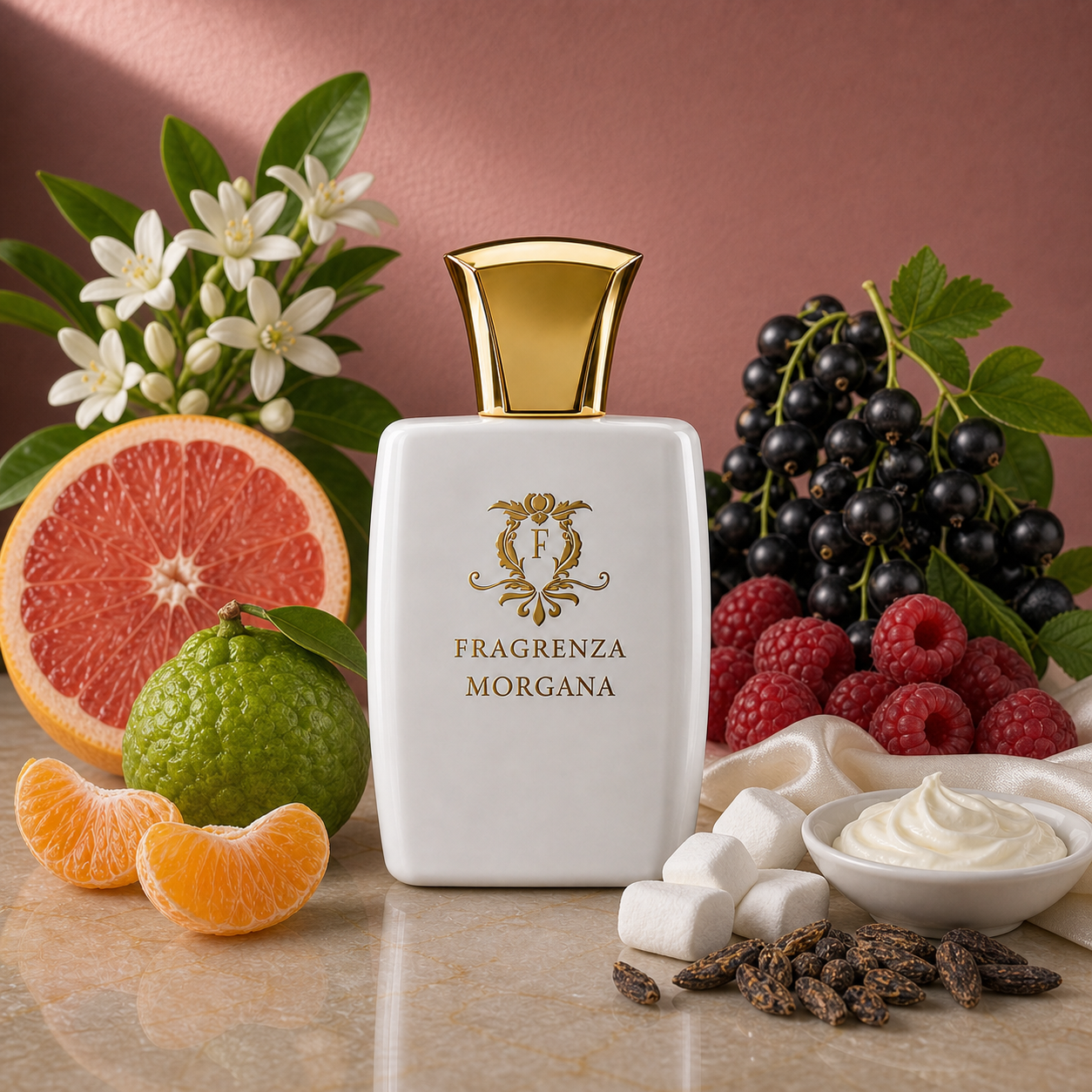
For a more explicitly raspberry-forward experience, Lancôme's Trésor in Love built an entire personality around raspberry and rose. The combination works because of the molecules they share: the two notes reinforce each other, creating a fragrance that feels simultaneously sweet and fresh, romantic and modern. Viktor & Rolf's Flowerbomb uses red fruit facets — including raspberry — to amplify its lush floral heart, creating a fragrance that feels simultaneously romantic and joyful. For those who love this kind of plush, berry-kissed florality, Fragrenza's Flowerbomb-inspired fragrance captures that same spirit beautifully — a rich floral-gourmand composition where red fruits and flowers intertwine in perfect harmony.
In niche perfumery, Frédéric Malle's Portrait of a Lady uses a raspberry-like facet of patchouli and rose to create its sense of lush, slightly dark opulence. The raspberry note here is almost hidden — a ghost of fruitiness that you sense rather than explicitly identify, adding sweetness and warmth without ever drawing attention to itself. Comme des Garçons' various explorations of fruit-in-context have also made interesting use of raspberry-adjacent materials, pushing the note into stranger, more conceptual territory.
Yves Saint Laurent's Mon Paris uses raspberry prominently in a contemporary floral-fruity context, demonstrating that the note has lost none of its commercial appeal or creative relevance in the current fragrance landscape. And Guerlain's La Petite Robe Noire uses a rich cherry-raspberry accord as the backbone of a fragrance that managed to feel both classically French and entirely contemporary — a difficult balance that the note's versatility made possible.
What Pairs Beautifully with Raspberry
Raspberry's bright, slightly tart character makes it one of the more accommodating notes in a perfumer's palette. Its affinities are wide, and it combines with surprising grace across fragrance families:
- Rose: The natural chemical kinship between raspberry ketone and rose compounds makes this the most intuitive pairing. The result is warm, romantic, and enduringly popular.
- Patchouli: The earthy darkness of patchouli against raspberry's brightness creates a contrast that feels simultaneously edgy and luxurious — the signature tension of the best gourmand-orientals.
- Vanilla: A raspberry and vanilla combination evokes dessert without becoming cloying — the tartness of the fruit keeps the composition grounded and prevents over-sweetness.
- Violet: Sharing structural similarities with raspberry ketone, violet adds a powdery, slightly cool dimension that refines the fruit's exuberance and gives it elegance.
- Black pepper and spice: Spicy notes slice through raspberry's sweetness elegantly, adding tension and a sophistication that pushes the note toward more unisex territory.
- Peach and apricot: Building a full red-and-stone-fruit accord adds sensuous depth and a jammy warmth that can be extraordinarily appealing in the right composition.
- Dark chocolate: The gourmand combination of raspberry and chocolate is beloved for a reason — the fruit's brightness and tartness perfectly complement chocolate's bitter richness. Explore this pairing further in Gourmand de Chocolat.
The Enduring Appeal of Raspberry
Raspberry has outlasted many fruit-note trends precisely because it does more than smell pleasant. It bridges categories — floral and fruity, sweet and tart, feminine and surprisingly unisex. It connects to the chemistry of flowers while remaining unmistakably itself. And it has the rare quality of making the wearer feel good immediately, triggering associations of summer, abundance, and natural beauty that resonate across cultures and demographics.
For the perfume enthusiast, raspberry is a note worth paying attention to rather than dismissing as merely sweet. The depth and complexity of a well-constructed raspberry accord — with its interplay of ketone, ionone, and lactonic elements — represents one of synthetic perfumery's genuinely impressive achievements. A hundred years of chemistry, botany, and artistic ambition have gone into making this note what it is. Nature gave us a remarkable fruit. Chemistry gave us the tools to carry it with us everywhere. Browse our floral fruity fragrances to discover compositions where raspberry and its fruit-family companions shine.